Day 01
Giza Pyramids, Old Cairo and the National Museum of Egyptian Civilization
- Meet your tour guide and head out to see the Great Pyramid of Khufu (Cheops), one of the Seven Ancient Wonders of the World, along with three small pyramids. Continue exploring the rest of the Giza Plateau, including Khafre's (Kaphren) Pyramid - the second-largest pyramid on the Giza site - the remains of the funerary temple, the Pyramid of Menkaure (Mykerinus), and three small pyramids.
- Proceed to visit the Great Sphinx, a statue with the head of a pharaoh and the body of a lion, dating from the time of Chephren. Then explore the Valley Temple, which belongs to the pyramids of Chefren. This temple served two functions: first, it was used for the purification of the king's mummy before burial; second, it was used for carrying out the mummification process of the king.
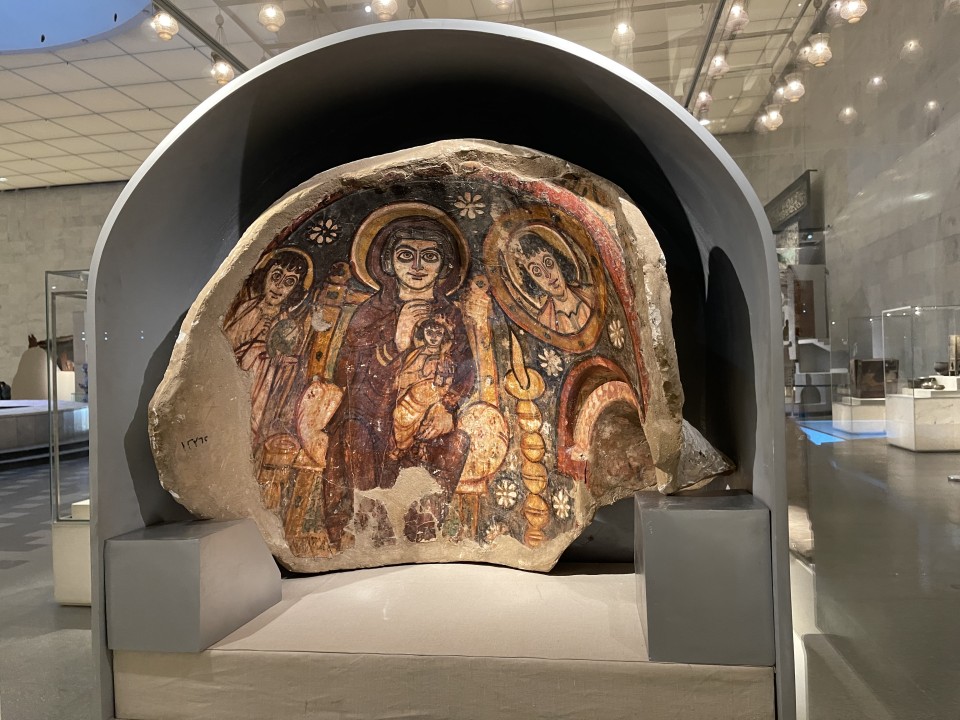
- Visit the National Museum of Egyptian Civilization, located near Old Cairo at the archaeological site of Fustat, the Egyptian capital about 1,400 years ago. Also known as the NEMEC Museum, it overlooks Lake Ain Al-Sira and displays collections from the Pharaonic, Roman, Coptic, Islamic, and modern civilizations. The main exhibition hall presents the four main crafts that shaped Egyptian civilization: pottery, wood, textiles, and ornaments. You can also see the world's oldest artificial finger, the skeleton of a man dating back 30,000 years, the Kiswa of the Kaaba, which was last made in Egypt during the era of President Nasser, and the Mahmal, which carried the covering from Egypt to Saudi Arabia every year. The National Museum of Egyptian Civilization is considered the first museum in the world to present a comprehensive view of Egyptian civilization throughout history, from prehistoric times to modern history. A large part of the museum is the hall where the mummies are now displayed; also wander through the royal mummies hall to see the golden sarcophagi and the remains of past pharaohs.
- Move to Old Cairo and visit the following places:
- Babylon Fortress - Known as the Wax Palace or Babylon Castle, this ancient fortress is located in Cairo, Egypt. It is considered one of the largest fortresses of the Roman civilization in Egypt and one of the largest fortresses built by the empire, as well as the center on which the city of Fustat was built.
- Hanging Church - Built in the 3rd and early 4th century in the Basilica style, it rises majestically on the ancient tower of the Fortress of Babylon. With an interior full of symbolism and icons, it has become one of the most visited monuments in Egypt's most magnetic city. With an essence that mixes Roman, Egyptian, and Babylonian architecture, it is a place where legend and history blur.
- The Church of St. Sergius and Bacchus - This church holds a special place among the other Coptic churches because it is linked to the path of the Holy Family during their escape from King Herod to the land of Egypt. According to Christian belief, the church's name is attributed to Saints Sergius and Bacchus, who were martyred in the region of Rusafa in Syria.
- Ben Ezra Synagogue - Located behind the Hanging Church of the Blessed Virgin Mary in Cairo, this synagogue was once called El-Shamieen Church.
- Drive to Khan ElKalili Bazar, if there is enough time. It is one of the most famous and oldest bazaars in the Middle East. The bazaar is loud, crowded, colourful, and exciting, full of all kinds of goods and shiny baubles. You can find typical tourist trinkets here, but do not let them distract you from the genuinely fine shopping to be found here.
- Return to the hotel.