

Day 01
Giza Pyramids, Egyptian Museum and Cairo Citadel
- Your tour representative will pick you up from your hotel in Cairo and transfer you to discover one of the Seven Wonders of the Ancient World - the Great Pyramid of Khufu (Cheops) and the 3 small pyramids.
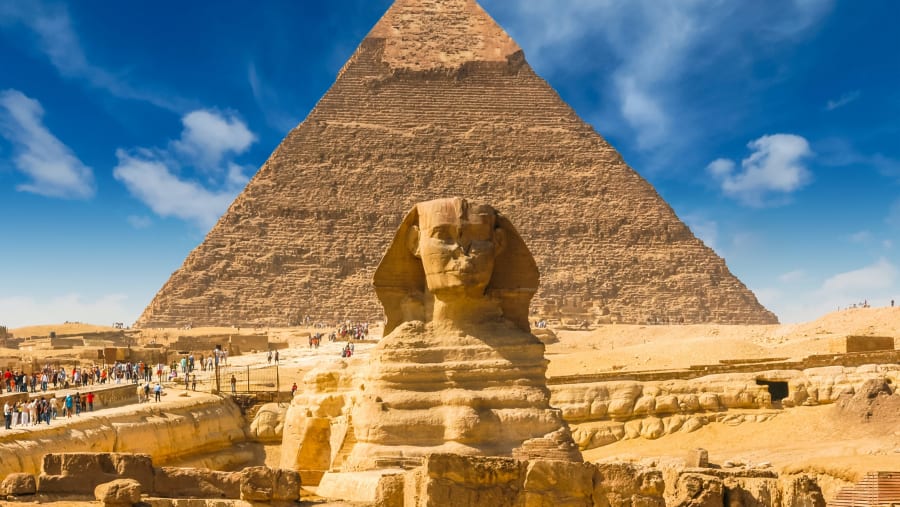
- You will continue to explore the rest of the Giza Plateau, including the sight of Khafre's (Kaphren) Pyramid, the second-largest pyramid on the Giza site, the remains of the funerary temple, and the Pyramid of Mankawra (Mykerinus) and 3 small pyramids.
- Then proceed to visit the Great Sphinx, the head of a pharaoh with a lion's body, which dates from the time of Chephren, and the Valley Temple, which belongs to the pyramids of Chefren. This temple definitely served two functions: first, it was used for the purification of the mummy of the king before burial; second, it was used for carrying out the mummification process of the king.
- After visiting the pyramids, you will continue across the plateau for a photo opportunity of the three pyramids rising from the sands.
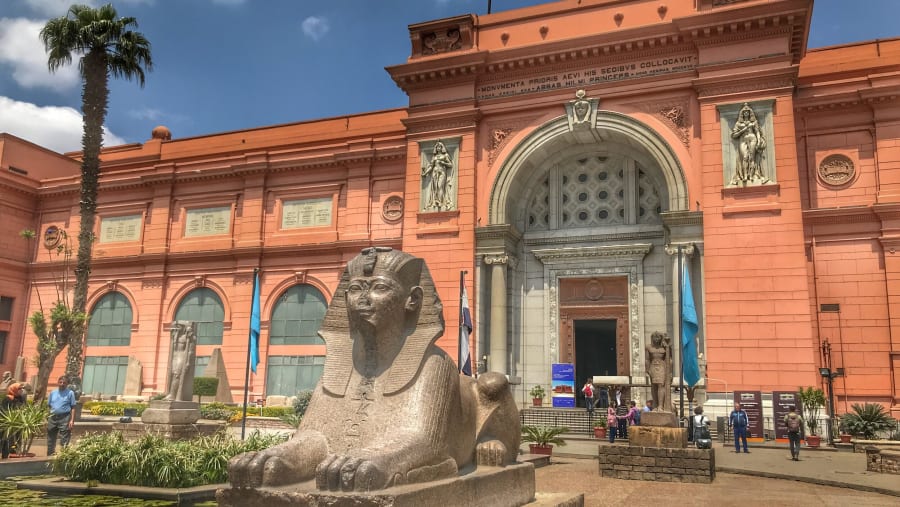
- Next, go to the Museum of Egyptian Antiquities, commonly known as the Egyptian Museum, in Cairo. It is home to an extensive collection of ancient Egyptian antiquities, dating back about 5,000 years of art, and is considered the largest and most valuable collection of Egyptian art in the world. More than 250,000 original artifacts are presented, with a representative amount on display while the rest are kept in storage. The Egyptian Museum is filled with thousands of pharaonic artifacts, including the golden treasures of King Tutankhamun. Fascinating objects such as jewels, headdresses, alabaster vases, and toys from ancient Egypt are all on display, and many priceless statues and other artifacts that were kept in his tomb for more than 3,500 years before their discovery in 1922 can also be seen. The Egyptian Museum is one of the first stops on most people's itineraries when travelling to Egypt.
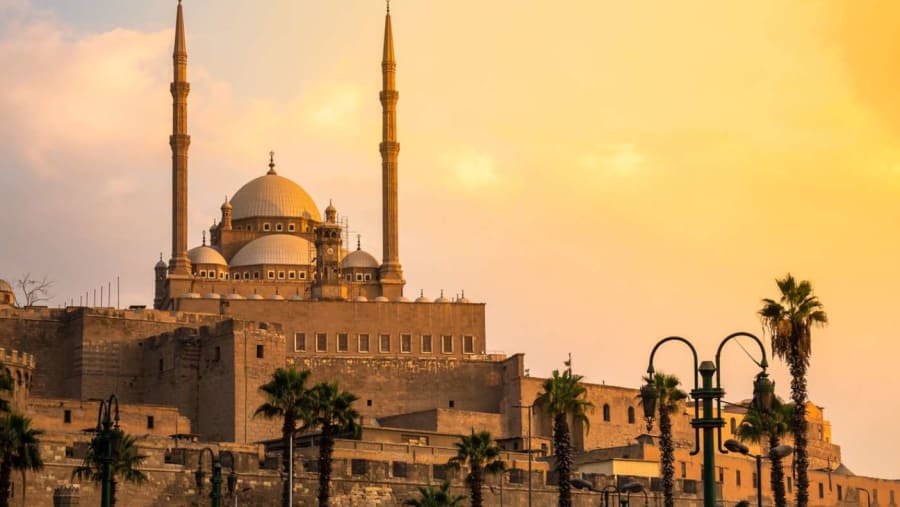
- Afterwards, move to the Citadel of Salah al-Din, which was built under the order of Saladin between 1176 and 1183 to protect the city from European attacks. Today, it is one of the main tourist attractions of Cairo and offers privileged views of the city. Here, you will see views across all of Cairo and visit Mohamed Ali's "Alabaster Mosque", which is considered the largest mosque built at the beginning of the 19th century by the ruler of Egypt (1805-1849), who ruled Egypt for over 45 years, and it is built in Turkish style.
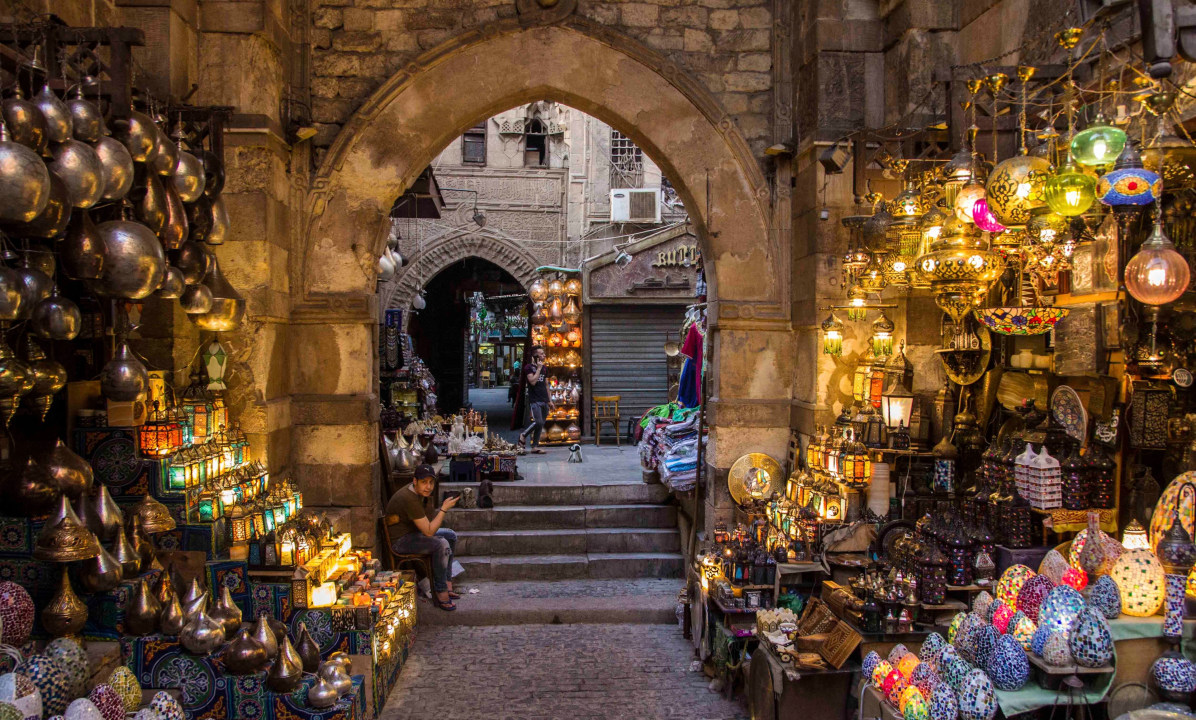
- Later, we will drive to Khan El-Khalili Bazaar, if there is enough time, one of the most famous and oldest bazaars in the Middle East. The bazaar is loud, crowded, colourful, and exciting - full of all kinds of goods and shiny baubles. You can find the typical tourist trinkets here, but do not let them distract you from the genuinely fine shopping to be found here.
- At the end, you will be transferred back to your hotel to conclude the tour.