Sri Lanka · Wildlife

18-Day Sri Lanka Wildlife and Heritage Tour with Safaris and Whales

18 Days Round trip from Canada Friendship Rd Easy pace

The journey

Trip highlights
  • 01 Discover the sacred city of Anuradhapura and its eight great places of veneration
  • 02 Climb Sigiriya Lion Rock and Pidurangala Rock for historic and scenic experiences
  • 03 Enjoy wildlife game drives in Wilpattu, Yala, Bundala, Minneriya, and Udawalawe National Park
  • 04 Head out from Mirissa for whale and dolphin watching on Sri Lanka's southern coast
  • 05 Visit the UNESCO-listed Dambulla Cave Temple and the architectural remains of Galle Dutch Fort
  • 06 Experience village life with bull cart driving, a river safari, and paddy field activities

Sign up for this exciting 18-day vacation through the highlights of Sri Lanka, where you will visit national parks, mountains, Buddhist and Hindu temples, and coastal beaches. Explore major attractions such as Sigiriya Rock, Dambulla Cave Temple, Galle Dutch Fort, Mirissa Beach, and the sacred sites of Anuradhapura, while enjoying wildlife experiences in Wilpattu, Minneriya, Yala, Bundala, and Udawalawe. The journey also includes dolphin and whale watching, village experiences, and time to relax by the sea, offering a rich mix of nature, culture, and heritage.

Experience village life and take part in bull cart driving, a river safari, and paddy field activities.

From the itinerary

At a glance

What this trip includes

Duration 18 Days
Tour type Shared
Activity level Easy
Accommodation Included · Standard
Transport Included
Wheelchair access Not applicable
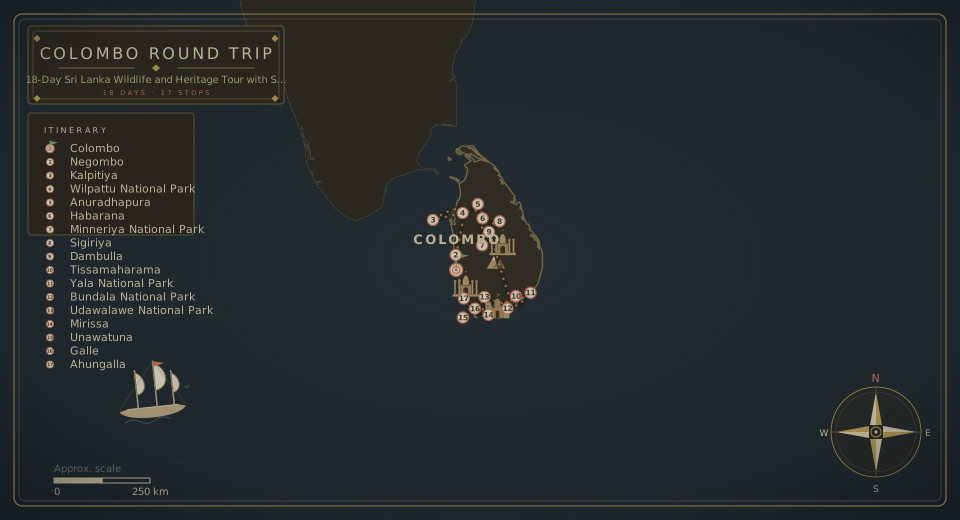
Cities Anuradhapura, Colombo, Galle, Dambulla, Mirissa, Negombo, Sigiriya, Yala National Park, Minneriya National Park, Habarana, Kalpitiya, Tissamaharama, Udawalawe National Park, Unawatuna, Wilpattu National Park, Bundala National Park, Ahungalla
Languages English

Day by day

The itinerary

1
Day 01

Arrival in Colombo and Transfer to Negombo

  • Arrive at Colombo Airport, meet your tour representative, and transfer to your hotel in Negombo.
  • Relax after your long flight and acclimatize by the pool or in the hotel gardens.

Stay overnight.

2
Day 02

Negombo City Tour and Fisherman Village

  • Today, go on a Negombo city tour and visit a fisherman village.
  • Relax on the beach and enjoy a fresh seawater bath.
  • Return to the hotel and stay overnight.
3
Day 03

Transfer to Kalpitiya via Anawilundawa

  • After breakfast, leave at 6:30 am and transfer to Kalpitiya.
  • En route, visit Anawilundawa Wetland Sanctuary.

Overnight stay at Kalpitiya Hotel.

4
Day 04

Dolphin Watching and Beach Time in Kalpitiya

  • Leave in the morning for a dolphin-watching excursion.
  • In the afternoon, enjoy a beach visit and spend a relaxing evening.

Overnight stay at the hotel.

5
Day 05

Full-Day Game Drive in Wilpattu National Park

  • Leave the hotel early in the morning at 5 am and transfer to Wilpattu National Park for a full-day game drive.

Overnight stay at the hotel.

6
Day 06

Sacred Anuradhapura Heritage Tour

  • Transfer to Anuradhapura, the first capital of Sri Lanka and a UNESCO World Heritage Site.
  • Explore the eight great places of veneration in Anuradhapura: Jaya Sri Maha Bodhiya, Ruwanwelisaya, Thuparamaya, Lovamahapaya, Abhayagiri Dagaba, Jetavanarama, Mirisaveti Stupa, and Lankaramaya.

Overnight stay at the hotel.

7
Day 07

Habarana and Minneriya National Park

  • Early in the morning, visit Habarana National Park.
  • Have a traditional Sri Lankan lunch, then head to Minneriya National Park.

Overnight stay at the hotel.

8
Day 08

Sigiriya Rock, Pidurangala, and Village Life

  • After breakfast, proceed to Sigiriya Lion Rock and climb Pidurangala Rock.
  • Experience village life and take part in bull cart driving, a river safari, and paddy field activities.

Overnight stay at the same hotel.

9
Day 09

Dambulla Cave Temple and Local Market Visit

  • Leave for Dambulla and visit the Golden Temple and Cave Temple.
  • Then continue to Kandalama Lake.
  • Next, explore Dambulla city and its local markets.

Overnight stay at the hotel.

10
Day 10

Transfer to Tissamaharama via Buthala

  • Transfer to Tissamaharama via Buthala.
  • En route, visit the Hindu temple and Kirivehara Temple.
  • Arrive at the eco hotel in Tissamaharama.

Overnight stay at the hotel.

11
Day 11

Full-Day Safari in Yala National Park

  • Early in the morning, leave the hotel at 5 am for Yala National Park and enjoy a full-day game drive.
  • Have breakfast en route.
  • Enjoy a traditional lunch at the Yala Park relaxing point.

Overnight stay at the hotel.

12
Day 12

Bundala National Park and Tissa Temple

  • Leave early in the morning for Bundala National Park.
  • Visit the temple of Tissa.

Overnight stay at the hotel.

13
Day 13

Udawalawe Safari and Elephant Transit Home

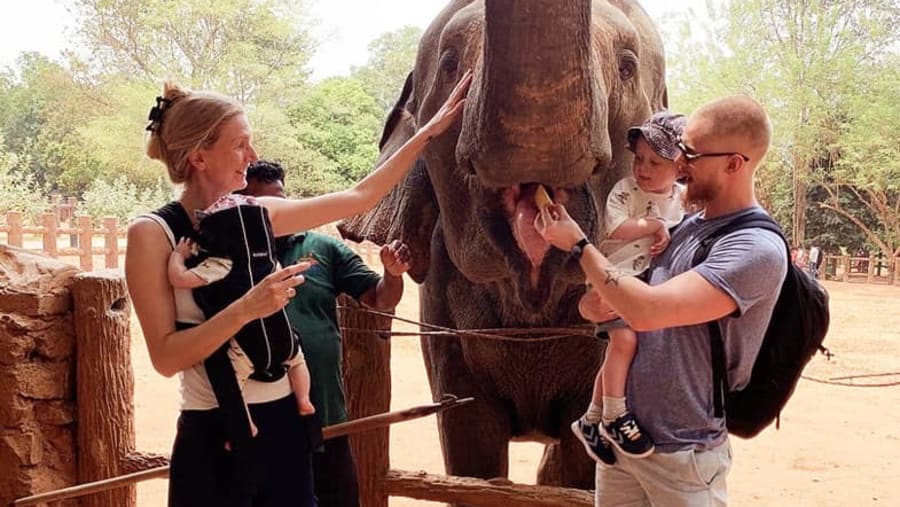
  • Transfer to Udawalawe and watch baby elephants being fed milk at the Elephant Transit Home.
  • Enjoy a game drive in Udawalawe National Park.

Overnight stay at the hotel.

14
Day 14

Transfer to Mirissa via Weligama

  • After breakfast, transfer to Mirissa.
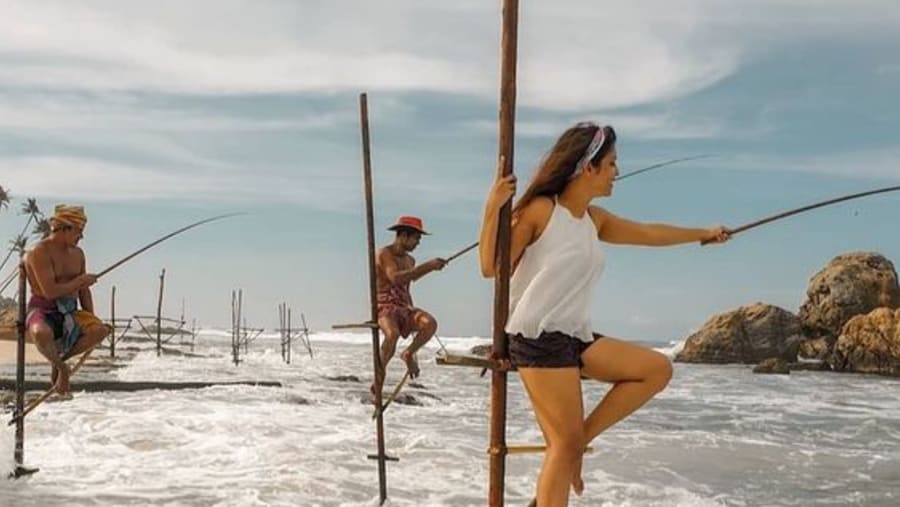
  • See the Weligama stilt fishermen in action.

Overnight stay at the hotel.

15
Day 15

Whale Watching and Unawatuna Beach Time

  • Transfer to Mirissa for whale and dolphin watching in the morning.
  • Head to Unawatuna and visit Wella Devalaya.
  • Spend the afternoon relaxing at the beach.

Overnight stay at the hotel.

16
Day 16

Galle Fort, Madu Ganga, and Coastal Heritage

  • Leave for Galle in the morning.
  • En route, visit Galle Dutch Fort and a spice garden.
  • Then visit the Meetiyagoda Moonstone Mine, a well-known moonstone center in Sri Lanka.
  • Enjoy a Madu Ganga safari tour through marshlands covered in mangrove forests.
  • Also visit Castle Farm in Ahungalla and a mask factory in Ambalangoda.

Overnight stay at the hotel.

17
Day 17

Colombo City Tour and Gangaramaya Temple

  • Leave in the morning for a Colombo city tour.
  • Visit Gangaramaya Temple, also known as the Water Lake Temple.

Overnight stay at the hotel.

18
Day 18

Departure from Colombo

  • Transfer from Colombo to Bandaranaike International Airport to board your return flight.

Tour ends.

Sigiriya Lion Rock, Dambulla Cave Temple, Mirissa Beach, Yala National Park

Where this trip takes you

Sigiriya Lion Rock, Dambulla Cave Temple, Mirissa Beach, Yala National Park

The route

Where you'll travel

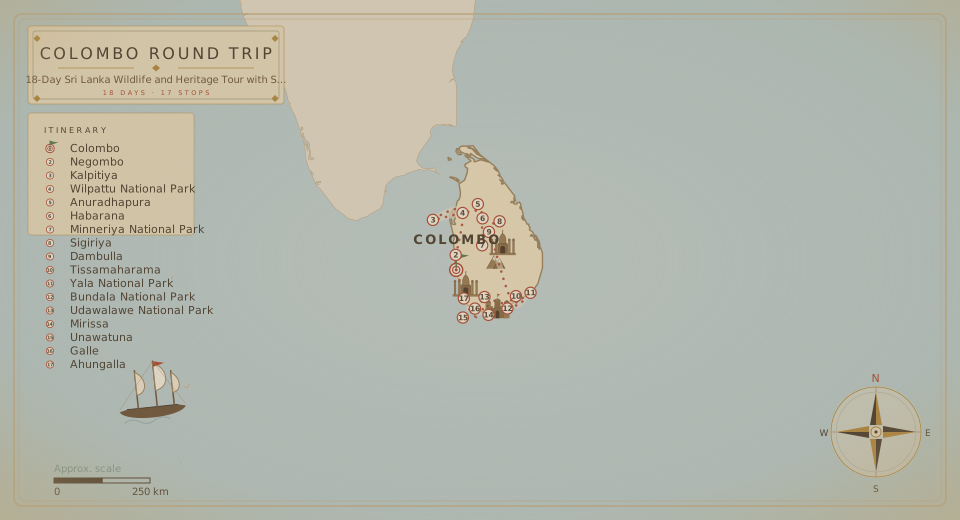
Tour route map
Round trip from Canada Friendship Rd 17 cities · 18 Days

The fine print

Trip details

What's Included

  • Accommodation for 17 nights in star hotels in different cities, as per the itinerary.
  • Accommodation on the first night of arrival is provided by our company.
  • English-speaking guide service, with the guide also acting as your driver.
  • Expert site guides who are reliable, experienced, and friendly, with excellent knowledge of nature, ancient archaeological sites, and cultural sites.
  • Day-to-day monitoring and communication with drivers and guests for smooth operation.
  • HB meal plans at the hotels where you will spend the night. Snacks are not included.
  • Experienced driver and luxury van, car, or bus with A/C, with a focus on safety, quality, and customer satisfaction.
  • Free entrance to the Spice Garden, Gem Museum, Wood Carving Center, and Tea Factory & Plantation.

What's Not Included

  • Tickets for various activities.
  • Medical and insurance expenses, and tickets to gardens.
  • Orphanage visits, boat rides, safaris, massage, laundry, trips, mini bar, shopping, and similar personal expenses.
  • Any phone calls made locally or internationally. If you prefer calling us, it will be free of charge; for other calls, the hotel will charge.
  • Entrance ticket price list per person is not included in the tour cost.

What to bring

  • Comfortable and safe clothing, shoes, and binoculars.
  • Personal protective equipment, sanitizer, and face masks.

Know before you go

  • We will follow COVID-19 rules and regulation guidelines from the WHO and Tourist Board to protect our clients and the country. Travel is a vital part of the human experience. It expands our understanding of people and cultures exponentially. Re-establishing confidence in tourism is crucial for the industry, the destinations and communities visited, and the travelling public.
  • With global recognition, Sri Lanka has gained by effectively managing and controlling the spread of COVID-19 within the country. Potential travellers and tour groups have already inquired about travel into the country. While welcoming such gestures of good faith by tourists, Stelaranholidays (Pvt) Ltd realizes the importance of implementing planned, organized, and well-structured health protocols when resuming tourism in the country, so as to ensure the safety and good health of all guests, industry stakeholders, and the general public.
  • PERSONAL SAFETY MEASURES
    • Ensure the use of the traditional greeting of Sri Lanka, 'Ayubowan', at all times instead of hugging or handshaking.
    • The driver/tour leader should maintain a minimum distance of 1.5 meters between two people at all times.
    • Ensure all tourists wear face masks and maintain a safe 1.5-meter distance at all times.
    • The driver/tour leader should wear face masks and gloves when interacting with passengers.
    • Travellers are requested to sanitize their hands frequently during the tour and site visits; they should also wash their hands with soap and running water at the end of each site visit.
    • Personal protective equipment is available in the vehicle, such as face masks, hand sanitizer, and wipes for passengers when needed.
  • Negombo is a city on the west coast of Sri Lanka, north of the capital, Colombo. Near the waterfront, the remains of the 17th-century Dutch Fort now house a prison. Negombo Lagoon, lined with fishermen's huts, feeds into the Dutch-era Hamilton Canal. The canal leads south to Colombo. Negombo is one of the major commercial hubs in the country and the administrative center of Negombo. It is known for its long sandy beaches and centuries-old fishing industry. Negombo has a large bilingual population dominated by Roman Catholics. The majority settled in the coastal belt speak Tamil as well, though most are Sinhala by ethnicity. The Sinhala name Migamuva means 'Village of the honeycomb', gaining its name from a legend mentioned in Rajaveliya. The army of King Kavantissa found bee honey in a canoe near the seashore for Viharamahadevi, who was pregnant with Prince Dutugamunu. Because of this, the place was named 'Mee-Gomuwa'. 'Negombo' is the Portuguese-corrupted form of its Tamil name, Neerkolombu.
  • Anawilundawa Wetland Sanctuary is one of the more obscure sanctuaries and lies on the coastal belt between Negombo and Puttalam. The Anawilundawa Wetlands are a birdwatcher's haven, with over 150 species of birds, both resident and migratory. Resident and endemic bird species can be seen throughout the year, while the period from October to April is the best time to catch a glimpse of the many rare migratory birds. Anawilundawa is also the nesting site for many exotic birds, including some of the rarer species of cormorants, egrets, storks, and ibis, along with the pheasant-tailed jacana and the purple swamp hen.
  • There are also over 20 species of mammals, including the Toque Macaque monkey, five threatened species of Slender Loris, Rusty-spotted Cat, Fishing Cat, and the Indian Otter. Over 70 species of butterflies breed here, while over 50% of the country's freshwater fish species are found in these waters. Anawilundawa Wetland Sanctuary is especially good for birdwatching, hiking, and boat rides, and is fast growing into one of Sri Lanka's most important ecotourism attractions. Negombo to transfer Kalpitiya.
  • Wilpattu National Park is a park located on the island of Sri Lanka. The unique feature of this park is the existence of 'Willus' - natural, sand-rimmed water basins or depressions that fill with rainwater. It is located in the northwest coast lowland dry zone of Sri Lanka.
  • Wilpattu Sanctuary was declared a National Park in 1938. Wilpattu National Park is located on the west coast close to the historical city of Anuradhapura. The dry zone jungle is thickly grown. Wilpattu National Park is home to many villus, or natural lakes, which dot the landscape. Except for two, these lakes contain rainwater and are important for resident and migratory water birds.
  • The history of the park is also of interest, with ancient ruins having been discovered in Wilpattu National Park. A queen named 'Kuweni' (considered to be the mother of the Sinhala race) is said to have lived in the place known as Kalli Villu. Historical evidence also shows that Prince Saliya, son of King Dutugemunu, lived in Wilpattu over 2,000 years ago. There are approximately 30 species of mammals in Wilpattu National Park, including the Sri Lankan Elephant, Sri Lankan Leopard, Lankan Sloth Bear, Spotted Deer, Buffalo, Sambar, and Mongoose. Reptiles and amphibians in the park include the Monitor Lizard, Mugger Crocodile, Common Cobra, Rat Snake, Indian Python, Pond Turtle, and Soft-shelled Turtle.
  • Birdlife in Wilpattu Park includes wetland bird species such as the Garganey, Pintail, Whistling Teal, Spoonbill, White Ibis, Large White Egret, Cattle Egret, and Purple Heron. Many species of gulls, terns, owls, kites, and eagles also live here, along with the endemic Sri Lanka Junglefowl, Little Cormorant, and Painted Stork. The annual temperature in the park is between 27°C and 30°C, and its annual rainfall is approximately 900 mm.
  • Anuradhapura is the first capital of Sri Lanka, located in the North Central Province of Sri Lanka. It is one of the ancient capitals of Sri Lanka and was the center of Theravada Buddhism for many centuries. It became a UNESCO World Heritage Site in 1982 under the name Sacred City of Anuradhapura. Anuradhapura is the greatest monastic city of the ancient world, dating back to the 5th century BC, and remained the majestic seat of the kingdom of Sri Lanka until the 11th century AD. Anuradhapura flourished as the capital of Lanka from 377 BC to the end of the reign in 1017 AD and was the royal seat for 1,400 years under 130 kings as the capital of the country.
  • Jaya Sri Maha Bodhi is a sacred fig tree in the Mahamewna Gardens, Anuradhapura, Sri Lanka. It is said to be the southern branch from the historical Sri Maha Bodhi at Buddha Gaya in India, under which Lord Buddha attained Enlightenment. The Sacred Bo tree, Jaya Sri Maha Bodhiya of Anuradhapura, Sri Lanka, is the oldest living tree in documented history. It is a sapling from the historical Bodhi tree under which Buddha attained enlightenment. It was planted in 288 BC and is the oldest living human-planted tree in the world with a known planting date. It was brought from Buddhagaya, India, by Ven. Sanghamitta Therini, a sister of Arhant Mahinda, who introduced the teachings of the Buddha to Sri Lanka. The area around the Sri Maha Bodhi, the Brazen Palace, and Ruwanweliseya Dagoba were once probably part of the Great Temple. The Sacred Bodhi tree is the oldest historically authenticated tree in the world and has been tended by a continuous succession of guardians for over 2,000 years, even during periods of Indian occupation. The Eight Great Places of Veneration in Anuradhapura - Atamasthana - are Jaya Sri Maha Bodhi, Ruwanwelisaya, Thuparamaya, Lovamahapaya, Abhayagiri Dagaba, Jetavanarama, Mirisaveti Stupa, and Lankarama.
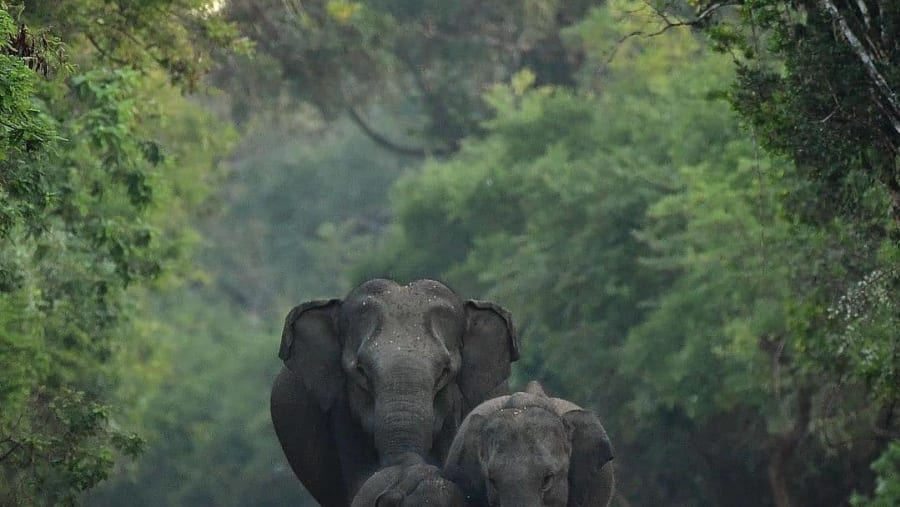
  • Minneriya National Park is reported as the largest known wild Asian elephant gathering at one place in the world. The area was designated as a national park on 12 August 1997, having originally been declared a wildlife sanctuary in 1938. Minneriya National Park has recorded over 170 species of birds. From migrating waders like Wood Sandpiper, Common Sandpiper, and Kentish Plover to forest birds like Malabar Pied Hornbill and Rufous Woodpecker, the globally endangered Lesser Adjutant and the endemic Sri Lanka Grey Hornbill, Sri Lanka Green Pigeon, Brown-capped Babbler, and Sri Lanka Junglefowl are some of the highlights. Minneriya National Park covers an area of 8,889 hectares and has a tropical monsoon climate. The vegetation of the park consists of tropical dry mixed evergreen forests, abandoned chena lands, grasslands, and wetlands. The open grasslands and old chena lands are dominated by many species of small shrubs.
  • Sigiriya was built by King Kashyapa. King Kashyapa created this great place to protect himself from his brother, King Mogallana. The Sigiriya rock is entwined with a tragic event. The heir to the throne had been King Mogallana, but King Kashyapa had taken power by force. King Kashyapa feared that his brother would return to reclaim his right to the throne. Therefore, to protect himself, he built this rock fortress. He did not want any invasion by his brother. The name refers to a site of historical and archaeological significance dominated by a massive column of rock nearly 200 meters high. The technology used in creating the fort is excellent. However, Moggallana was able to defeat Kashyapa, and after that, the rock fortress was destroyed.
  • Earlier, it had been a Buddhist monastery, and after the palace was destroyed, it became a Buddhist monastery once again. Sigiriya was later discovered in 1831 by Europeans. A major in the British army, Jonathan Forbes, discovered Sigiriya on his way from Polonnaruwa. Many historians and archaeologists began excavating this rock fortress, and it is through these excavations that all the glory of the rock was revealed.
  • Pidurangala is an enormous rock located a few kilometres north of Sigiriya. The two rocks have an interlinked history: while King Kasyapa was building Sigiriya Rock Fortress in the 5th century, he moved monks living around Sigiriya to a new monastery on Pidurangala Rock. It offers glorious vistas of the surrounding landscape and an incredible view of the majestic Sigiriya Rock. An ancient cave temple still houses objects from various periods that reflect Buddhist, Hindu, and Western beliefs, and the stupa to the left of the temple entrance is believed to mark the spot where King Kasyapa was cremated. Pidurangala is a more challenging climb than Sigiriya and rewards visitors with glorious vistas of the surrounding landscape and an incredible view of the majestic Sigiriya Rock.
  • Dambulla is a sacred pilgrimage site for 22 centuries. This cave monastery, with its five sanctuaries, is the largest and best-preserved cave-temple complex in Sri Lanka. The Buddhist mural paintings, covering an area of 2,100 m2, are of particular importance. The temple has five caves and 157 statues of Lord Buddha, along with many paintings on the ceilings and walls that emphasize the artistic talent of ancient times. The history of the caves, rock, and temple dates from the 1st century BC. The fascination of these caves lies not only in the statues but also in the many intricate and delicate paintings that cover the ceiling and walls, created with indigenous traditional paints. Because of its historical, archaeological, and artistic significance, the premises were declared a UNESCO World Heritage Site in 1991. Situated in the central part of the country, the temple has been in use for over 22 centuries and still holds a sense of benevolence and spirituality. Visitors may climb the steps to the temple, and the view from the top of the rock is as inspiring as the temple's golden interior.
  • Heritance Kandalama is a beautiful hotel designed by the acclaimed Geoffrey Bawa. The design of the hotel is breathtaking, having been built around its natural surroundings: a still forest of dense green, floating whispers of birdsong, the lake shimmering in the distance, and walls of rock cool to the touch, all amidst lush greenery covered by thick and dense forest.
  • Yala National Park is famous for the leopard, the most popular animal in the country, and they are the lords of the jungle. With a leopard density higher than anywhere else on the planet, these menacing predators prowl majestically in Yala, while elephants roam in numbers and cautious deer scamper by their side. Yala National Park is a huge area of forest, grassland, and lagoons bordering the Indian Ocean in southeast Sri Lanka. It is home to wildlife such as leopards, elephants, and crocodiles, as well as hundreds of bird species. Inland, Yala National Park gives the best opportunity to witness Sri Lanka's broad variety of wildlife: colorful painted storks perched at the shores of lagoons where crocodiles also doze off; lovely fantailed peacocks in resplendent blues and greens parading amidst the woods where monkeys hang, leap, and chatter; elephants in the bush jungle; and the star attraction of the park, the leopard, crossing the tracks and wandering off into the thorny scrub jungle. A total of 32 species of mammals have been recorded. Threatened species include the sloth bear (Melursus ursinus), leopard (Panthera pardus kotiya), elephant (Elephas maximus), water buffalo (Bubalus bubalis), wild boar (Sus scrofa), spotted deer (Axis axis ceylonessis), sambar (Cervus unicolor), and golden jackal (Canis aureus). Sri Lankan leopards (Panthera pardus kotiya) are said to be a distinct subspecies from their Indian neighbours. Leopards can be seen throughout the park, though the best period for enjoying leopard sightings is from January to July. Around 130 bird species have been recorded. Raptors include the crested serpent eagle and white-bellied sea eagle. Among the water birds attracted to the lagoons are Lesser Flamingo, Pelican, Spoonbill, Painted Stork, rare Black-necked Stork, Grey Heron, Purple Heron, Night Heron, and Darter. During the northeast monsoon, the lagoons are visited by thousands of migrating waterfowl, including Pintail, Garganey, Eurasian Curlew, Whimbrel, and Turnstone, which mix with resident species such as Whistling Duck, Yellow-wattled Lapwing, Red-wattled Lapwing, and Great Stone Plover. The forest is home to Orange-breasted Green Pigeon, hornbills, and flycatchers, including the Asian Paradise Flycatcher, barbets, and orioles. Notable reptiles include the Mugger Crocodile, abundant in the abandoned tanks, the Estuarine Crocodile found in the main rivers, and the Common Monitor. Other reptiles include the cobra and Russell's viper. A variety of sea turtles, including Olive Ridley and Leatherback, also nest along the Yala coastline.
  • Bundala National Park Wetland Sanctuary is one of the more obscure sanctuaries lying on the coastal belt between Hambantota. Birdlife in Bundala Park includes wetland bird species such as the Garganey, Pintail, Whistling Teal, Spoonbill, White Ibis, Large White Egret, Cattle Egret, and Purple Heron. Many species of gulls, terns, owls, kites, and eagles also live here, along with the endemic Sri Lanka Junglefowl, Little Cormorant, and Painted Stork. There are approximately 20 species of mammals in Bundala National Park, including the Sri Lankan Elephant, Spotted Deer, Water Buffalo, Sambar, and Mongoose.
  • Mirissa is a destination famed for some of the finest whale and dolphin sightings in the world. Take an exciting yet comfortable boat trip out to sea. Visit Weligama, famous for its stilt fishermen, for a lifetime experience. In chest-deep water just a few meters offshore, stilt fishermen perch one by one on a crossbar fixed to a single pole planted into the seabed. These fishermen, among the poorest of the poor, spend hours with their lines cast into the sea to catch small fish. Stilt fishing is one of the most interesting traditional fishing methods of Sri Lanka. Records indicate that it came into being just after World War II. This mode of fishing was more widely used all along the coast until the tsunami in 2004, which caused such activities to cease temporarily until recent years. The beautiful sight of fishermen perched on branched poles as they fish skillfully during dawn, noon, and dusk can now commonly be seen along the southern coast in towns such as Koggala, Kaththaluwa, and Ahangama. Occasional stilt fishermen can also be seen in the waters of the Madu River. Though stilt fishermen make the activity seem easy and comfortable, stilt fishing requires much skill and balance.
  • Galle Fort, in the Bay of Galle on the southwest coast of Sri Lanka, was first built in 1588 by the Portuguese and then extensively fortified by the Dutch during the 17th century from 1649 onwards. It is a historical, archaeological, and architectural heritage monument which, even after more than 432 years, maintains a polished appearance due to extensive reconstruction work carried out by the Archaeological Department of Sri Lanka. The heritage value of the fort has been recognized by UNESCO, and the site has been inscribed as a cultural UNESCO World Heritage Site under criterion iv for its unique exposition of 'an urban ensemble which illustrates the interaction of European architecture and South Asian traditions from the 16th to the 19th centuries'. Meetiyagoda, also spelled 'Mitiyagoda', is situated only 4 km from the ocean and 10 km north of Hikkaduwa.
  • Meetiyagoda is famous for its moonstone mines. Moonstone has been used in jewelry for millennia, including by ancient civilizations. The Romans admired moonstone, as they believed it was derived from solidified rays of the moon. Both the Romans and Greeks associated moonstone with their lunar deities. In more recent history, moonstone became popular during the Art Nouveau period; French goldsmith René Lalique and many others created a large quantity of jewelry using this stone.
  • Ambalangoda mask making is a popular tradition in Sri Lanka. Many Sri Lankan mask artisans ply their trade along the western, southwestern, and southern coasts of the island. Of these, the Ambalangoda area on the southwestern coast of Sri Lanka is renowned for its talented artisans. Ambalangoda is famed for its history, expertise in mask carving, and culture. The best place to get your fill of mask lore is the Ambalangoda Mask Workshop and Museum in Sri Lanka.
  • Madu Ganga is the second biggest wetland in Sri Lanka. The estuary spreads over 900 hectares, of which 770 hectares are covered with water, and is inhabited by 64 islands, 15 of which have a larger landmass. Abundantly rich in biodiversity, the area surrounding the Madu River features swampy marshlands covered in mangrove forests. It is also home to 300 species of plants and about 250 wildlife species. The Green Turtle is the most commonly found turtle in Sri Lanka. It is also found in the Indian, Pacific, and Atlantic Oceans. Its English name refers to the colour of the fat found under its shell, which unfortunately has been used to make turtle soup, though this practice is less common today. Young Green Turtles are mainly carnivores, while adults are herbivores, feeding only on marine vegetation with the help of their finely serrated jaws. They grow to a maximum length of 1 m and can weigh 250 kg. Adult females lay between 120 and 140 eggs at one time. Green Turtles are regularly found on the beach at night close to the KSTCP. They tend to nest only every few years, but when they do, they lay several times in one season.
  • Sri Lanka's capital, Colombo, is a port city with a rich colonial heritage on the western coast and is a potpourri of races, religions, and cultures. Colombo displays both the best and worst the country has to offer. The city is a contrast in itself, with mansions, lush gardens, fine dining options, and shopping malls packed with expensive designer brands standing next to urban slums, diesel-fumed congested roads, and street markets. It is the financial center of the island and a tourist destination. Sri Jayawardenepura Kotte, commonly known as Kotte, is the official administrative capital of Sri Lanka. As Sri Lanka's economic hub, all the major local and international corporations have their presence in the city, and so do all the major designer and high street retailers, so be ready to indulge in some retail therapy in the Western Province. The Colombo metropolitan area has a population of 5.6 million, and 752,993 in the city proper.

Logistics

Meeting & route

Meeting point
Colombo Airport Transfers, Colombo, Sri Lanka
Tour start
Canada Friendship Rd, කටුනායක 11450, Sri Lanka
Tour ends at the same location as the start point.
End of the journey

Your 18 days finish where they began, in Canada Friendship Rd.

Watch the tourHQ film Watch the film

Create your own adventure

Can't find the perfect tour? Tailor your dream trip.

  • Tell us your destination, dates and group size.
  • Our travel experts and local guides design a tailored itinerary, just for you.
  • Enjoy your trip with peace of mind, knowing everything is taken care of.
Plan my holiday

Say goodbye to travel stress.

Starting from

USD 2,800 /person
Book This Tour

When

Travellers

Total