6-Day Tanzania Safari through Tarangire Serengeti and Ngorongoro

6 Days Round trip from Kilimanjaro Airport Rd Easy pace

The journey

Trip highlights
  • 01 Witness vast African wildlife across Tanzania's famous national parks
  • 02 Visit the famous 2,000-ft-deep Ngorongoro Crater
  • 03 Spot Africa's Big 5: elephant, lion, leopard, buffalo, and rhinoceros
  • 04 Enjoy multiple game drives through Tanzania's wildlife reserves
  • 05 Watch the exciting wildebeest migration in Serengeti National Park

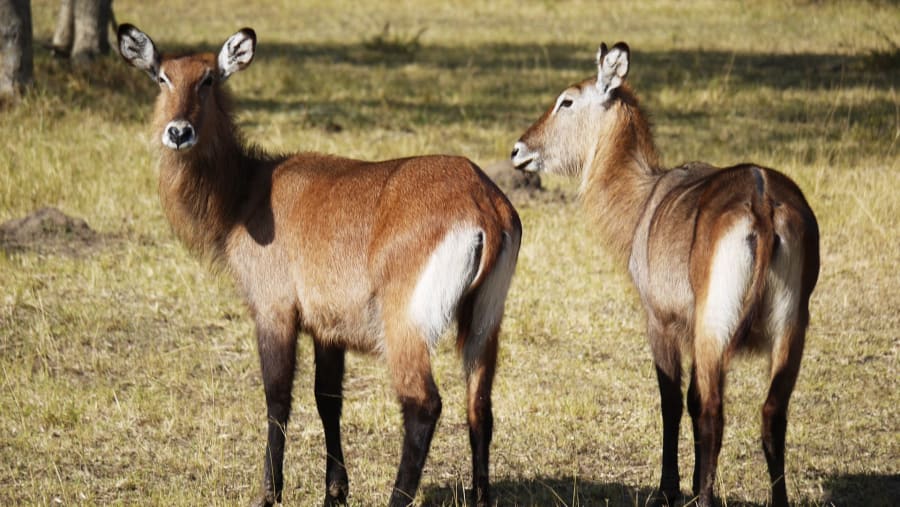
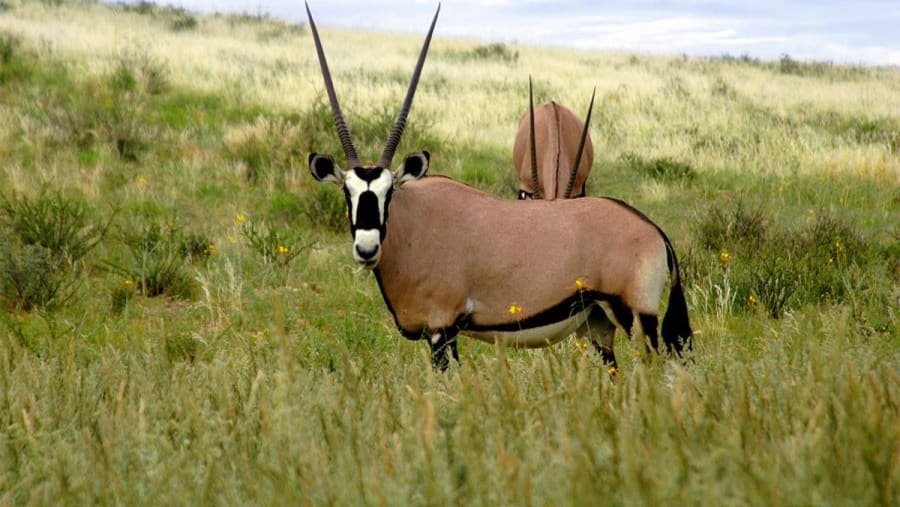
Embark on an incredible wildlife safari through Tanzania's world-famous national parks, including Tarangire, Serengeti, and the Ngorongoro Crater. Enjoy multiple game drives to spot remarkable wildlife such as lions, buffalos, elephants, reedbucks, and a wide variety of bird species, with the chance to see Africa's Big 5 along the way. Descend into the crater for exceptional wildlife viewing and, if lucky, witness the thrilling wildebeest migration in the Serengeti.

At a glance

What this trip includes

Duration 6 Days
Tour type Private
Activity level Easy
Accommodation Included · Budget
Transport Included
Wheelchair access Yes
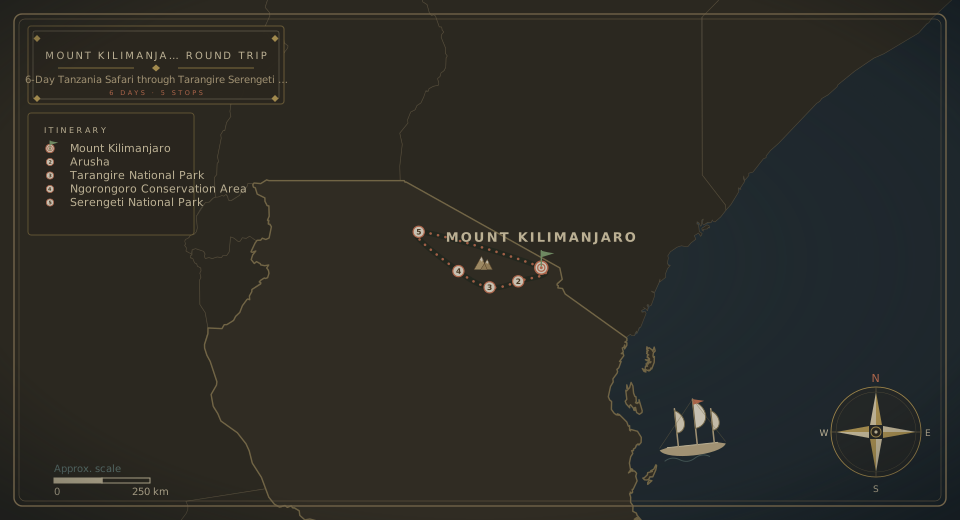
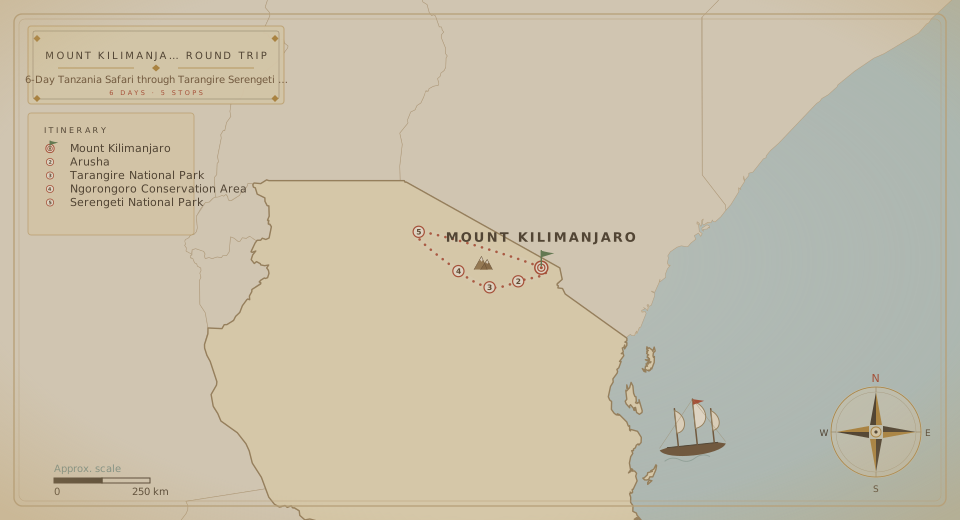
Cities Arusha, Mount Kilimanjaro, Serengeti National Park, Ngorongoro Conservation Area, Tarangire National Park
Languages English

Day by day

The itinerary

1
Day 01

Arrival at Kilimanjaro Airport and Transfer to Arusha

  • Meet and greet on arrival at Kilimanjaro International Airport with your driver-guide, then transfer to Arusha. The journey from the airport takes almost 1 hour.
  • After arriving in Arusha town, your driver will take you to Mount Meru Hotel for dinner and an overnight stay.
2
Day 02

Arusha to Tarangire National Park Safari

  • After breakfast at the lodge in Arusha, leave early for Tarangire National Park. This is the third-largest park in Tanzania.
  • Enjoy a full-day game drive in Tarangire National Park.
  • In the afternoon, take a break and have lunch in the park.

Overnight stay at Tarangire Sopa Lodge.

3
Day 03

Tarangire to Serengeti via Ngorongoro Conservation Area

  • Leave the wilderness of Tarangire National Park behind and begin your safari to Serengeti National Park, passing through the Ngorongoro Conservation Area.
  • Stop along the way to visit a Maasai village.
  • Continue with a game drive across the endless plains of the Serengeti.
  • After the game drive, head to Kubukubu Tented Camp for dinner and an overnight stay.
4
Day 04

Full-Day Game Drive in Serengeti National Park

  • Set out on a full-day game drive to discover more of the wonders of the Serengeti, with lunch en route. The Serengeti is most famous for the wildebeest migration.
  • Return dusty to Kubukubu Tented Camp for dinner and an overnight stay.
5
Day 05

Serengeti to Ngorongoro Crater Wildlife Viewing

  • After breakfast, depart from the Serengeti for an encore game drive in the Ngorongoro Crater.
  • Descend into the famed Ngorongoro Crater for wildlife viewing. This large caldera was formed when a giant volcano exploded and collapsed on itself some two to three million years ago. It is 610 m (2,000 ft) deep, and its floor covers 260 km² (100 miles²). Estimates of the height of the original volcano range from fifteen to nineteen thousand feet (4,500 to 5,800 meters). The crater has some of the highest densities of wildlife on the planet, including lions, elephants, zebra, rhino, leopards, buffalo, gazelle, wildebeest, hippo, and many different bird species. The Ngorongoro Crater is well deserving of its UNESCO World Heritage Site status, and this experience will be a highlight of your tour.

Dinner and overnight at Ngorongoro Sopa Lodge.

6
Day 06

Transfer from Ngorongoro to Kilimanjaro Airport

  • After breakfast at the lodge in Ngorongoro, transfer to Kilimanjaro International Airport for your flight back home.

The route

Where you'll travel

Tour route map
Round trip from Kilimanjaro Airport Rd 5 cities · 6 Days

The fine print

Trip details

What's Included

  • Professional English-speaking safari guide/driver
  • Guaranteed departure for passengers booking this safari
  • Full-board accommodation at the mobile camp
  • All applicable game park entrance fees
  • All meals while on safari
  • Camping fees
  • Pre-tour itinerary document
  • Extensive game drives as per the tour dossier above
  • All transfers
  • Crater service fee

What's Not Included

  • Travel insurance
  • Medical evacuation
  • Personal expenses
  • Optional hot air ballooning (USD 530 per person)
  • Nature walks at USD 20 per person
  • All flights
  • Tips to driver
  • Olduvai Gorge (USD 36 per person)

What to bring

  • A warm sweater or light fleece
  • Windbreaker or waterproof jacket

Know before you go

  • The United Republic of Tanzania is a nation in central East Africa bordered by Kenya and Uganda to the north, Rwanda, Burundi, and the Democratic Republic of the Congo to the west, and Zambia, Malawi, and Mozambique to the south. The country's eastern border lies on the Indian Ocean. The United Republic of Tanzania is a unitary republic composed of 26 mikoa (regions).
  • Required documents
    A passport is required and must be valid for at least six months after the date of departure. A visa is required and costs approximately EUR 50.00 or USD 50.00 per person. The visa can be obtained at the Tanzania Embassy in your country or upon arrival at one of Tanzania's international airports, although this is not applicable to all nationalities. For a visa application in Tanzania, you do not need a photograph or a copy of a ticket, which are required by embassies.
  • Money
    The currency in Tanzania is the Tanzanian Shilling. You can bring cash in Euros, Pounds, or Dollars and exchange it at the airport, hotel, or lodge for Tanzanian Shillings. In many places, such as accommodations and souvenir shops, people prefer payment in U.S. Dollars, and you will usually receive change in U.S. Dollars or Tanzanian Shillings at a normal exchange rate. In most places, credit card payments are also accepted. In bigger cities, there are opportunities to withdraw money from ATMs, but when you are on safari there is often no opportunity, so it is better to make arrangements in advance. When buying a souvenir in Tanzania, it is customary to bargain for a good price with the seller.
  • Vaccinations
    When you travel to Tanzania, there are no mandatory vaccinations, but you are strongly advised to get some of them.
    DTP (Diphtheria, Tetanus, and Polio): If you were previously vaccinated, such as in childhood, it is sufficient to have one injection every 15 years. If not, you should get two DTP injections with at least an interval of four weeks before you leave, and a third one after six months. The duration of protection is 15 years.
    Yellow fever: The injection must be obtained at least 10 days before departure. The duration of protection is 10 years. When you travel to multiple destinations in Africa, proof of vaccination is mandatory.
    Hepatitis A: One vaccination gives protection for a year and is best obtained two weeks before departure. When another vaccination is administered six months after the first one, the protection lasts 10 years.
    It is also increasingly advised to include Hepatitis B in your vaccination list. Most of Tanzania is also considered a malaria area, and you can take various types of anti-malarial drugs for prevention. Recommendations may change, so it is important to speak to a specialist for the exact information that applies to you.
    By far the best way to prevent malaria is to make sure mosquitoes cannot bite you. We recommend that you bring a good anti-mosquito repellent with a high percentage of DEET. For the tours we organize, it is not necessary to bring a mosquito net unless specifically stated otherwise.
  • Communications
    Internet: Tanzania is a country where internet is available in many places, and using the web is integrated into daily life. At various accommodations, you can use a computer with internet, but the speed may not always be what you are used to. When you are really on safari, keep in mind that you often cannot make use of the internet.
    Mobile telephones: In Tanzania there are 3 different networks (Safaricom, Zain, and Orange), which together have created a fairly strong network. It is surprising that even in the Serengeti or other remote areas you can be reached by mobile phone. However, if you travel to remote areas, do not count on network coverage being available. In and around cities, you usually have excellent opportunities to make a mobile telephone call. When you arrive in Tanzania, you can buy a mobile SIM card at the airport and make calls in East Africa at a good price.
    International calls: If you want to make a call abroad during your visit to Tanzania, it can be quite expensive, especially at hotels. It is often a better idea to call using your own mobile phone.
  • Currency
    The official Tanzanian currency is the Tanzanian Shilling. There are coins for 50, 100, and 1000 shillings, and notes for 500, 1000, 2000, 5000, and 10,000 shillings.
    The US Dollar is widely used, but may not be accepted in some establishments. It is also important to note that most businesses that do accept US currency will not do so if it is torn or wrinkled.
    Notes must not be older than 2006, as local businesses will automatically reject them due to a past counterfeiting problem.
  • Safety
    Tanzania is one of the safest countries in East Africa, but you can never be too careful when you're on the road. While safari areas are generally very safe, the country is no stranger to criminal activity. Like any other country in the world, there is always some risk of theft.
  • It is advisable to listen closely to your guide's advice at all times, especially in some urban areas. Either leave your valuables, such as money, electronics, credit cards, and documentation, in your hotel room safe, or carry them with you in concealed inner pockets.
    Do not flaunt your valuables in public, as this may draw unwanted attention. Pickpockets are particularly active in heavily touristed areas, so it pays to be cautious in cities and places popular with tourists.
    It is always a good idea to make copies of all your important documents and keep them in your luggage.
  • Language
    Tanzania has two official languages: Swahili and English. Swahili, which has its origins in Zanzibar, is the most commonly spoken language in both Tanzania and Kenya.
    English is widely spoken; however, you may wish to bring along a Swahili-to-English phrasebook to help with the basics. Locals always appreciate it if you know a little Swahili.

Logistics

Meeting & route

Meeting point
Arusha, Tanzania
Tour start
Kilimanjaro Airport Rd, Tanzania
Tour ends at the same location as the start point.
End of the journey

Your 6 days finish where they began, in Kilimanjaro Airport Rd.

Watch the tourHQ film Watch the film

Create your own adventure

Can't find the perfect tour? Tailor your dream trip.

  • Tell us your destination, dates and group size.
  • Our travel experts and local guides design a tailored itinerary, just for you.
  • Enjoy your trip with peace of mind, knowing everything is taken care of.
Plan my holiday

Say goodbye to travel stress.

Starting from

USD 2,050 /person
Book This Tour

When

Travellers

Total