General Information:
Location: East Africa. Set at the equator, Uganda comprises four regions (Central, Eastern, Northern, and Western), with its capital at Kampala.
Visa Requirements:
A passport valid for at least 6 months after your travel ends is mandatory.
You must have two empty pages in your passport per country you visit; the final page is not for visas. We recommend that you make two copies of your first passport page; keep one with you and leave one copy at home in the unlikely event that your passport is lost.
A valid passport and visa are required. Check before you travel in case of any changes. Visas are issued online, at Ugandan missions abroad, or on arrival. Visa fees: student - $50; single entry. Click here for more information.
- East Africa Tourist Visa:
The East Africa Tourist Visa will allow travel between Kenya, Rwanda, and Uganda with the same multiple-entry visa. This visa costs US$100 and is valid for 90 days, as long as one does not travel outside the partnering countries. The first entry point must be the country from which you obtained the visa. You can also apply for this online.
Getting There:
The national carrier has also recently been re-launched with connections within the East African region. Direct flights are available from Europe - Brussels Airlines, Turkish Airlines, and KLM offer direct flights from Europe, with Emirates being the major link to the East. There are no direct flights from America, but there are connections through codesharing airlines from Europe and South Africa. The only direct flights between Uganda and other African countries are operated by Ethiopian Airlines, Egypt Air, Kenya Airways, and South African Airways. Fly Uganda, Eagle Air, and Aerolink offer scheduled and charter internal flights, including to national parks.
AIR TICKETS MUST BE IN THE SAME NAME THAT APPEARS ON YOUR PASSPORT. PLEASE MAKE CERTAIN THAT YOU HAVE GIVEN US THE NAME USED ON YOUR PASSPORT AND THAT YOUR E-TICKETS ARE CORRECT.
Health/Immunisation:
Good medical facilities are available in the country. However, check with your physician on routine vaccines before every trip, e.g. malaria prophylaxis. Travel insurance is recommended before arrival.
All travellers to the Republic of Uganda must have a valid Yellow Fever Immunisation card.
It is only recommended to drink boiled or bottled water. Most hotels provide bottled water in their rooms, as tap water is not recommended. Milk is unpasteurised and should be boiled. Powdered or tinned milk is available and is advised. Avoid dairy products that are likely to have been made from unboiled milk. Only eat well-cooked meat and fish, preferably served hot. Vegetables should be cooked, and fruit should be peeled.
Insurance:
Our company is not responsible for any loss or damage to your baggage or other personal effects. It is recommended that valuable items, camera equipment, and medication be carried in hand luggage. It is a condition of booking that the sole responsibility lies with the guest to ensure that they carry the correct, comprehensive travel and medical insurance to cover themselves and any dependants/travelling companions for the duration of their trip. This insurance should include coverage in respect of, but not limited to, the following eventualities: cancellation or curtailment of the tour, emergency evacuation expenses, medical expenses, and repatriation expenses, damage/theft/loss of personal baggage, money, and goods.
Tipping:
Tipping is, and should be, a personal decision based on the level of service you receive. It is acceptable to tip in either USD and/or local currency. Based on that principle, we have compiled some guidelines on tipping appropriately in a variety of scenarios:
Transfers from the airport and within the city are $30 per person. If your transfer is longer than a couple of hours, consider doubling that amount to account for the driving time and round-trip distance.
There is often a tip box located near reception to be split among the staff in city lodging. $5 per person per day is generally appropriate. Keep in mind that you should give additional tips of a couple of dollars to whoever handles your bags and also to bartenders according to use.
Tips for a city tour or driver/guide should be approximately $10 per person for a full day.
Safari Driver/Guides
Your driver/guide will remain with you for the duration of your stay at each camp, or continue with you if your itinerary involves driving between camps rather than flying, so you will tip them after your stay all at once rather than day to day. For excellent knowledge and service, we recommend tipping $10-$15 per person per day. We recommend bringing envelopes to divide your tips discreetly.
There is often a tip box in the main tent area to leave your gratuity at the end of your stay for the camp staff. While on safari, you will not need to tip every person who handles your bags or brings you a drink; it simply rewards great service at the end of your stay for all to share.
We also suggest that you similarly tip camp staff to that of your guide, depending on the level of camp. We recommend tipping $5-$10 per person per day.
There is certainly some leeway when tipping as a family; a $20 tip for a quick transfer for a family of 4 seems high, so use your best judgment and decide on a case-by-case basis.
When to Visit:
Any time, though mountain hikes, gorilla tracking, and forest walks are more challenging during the rains.
Climate and Weather
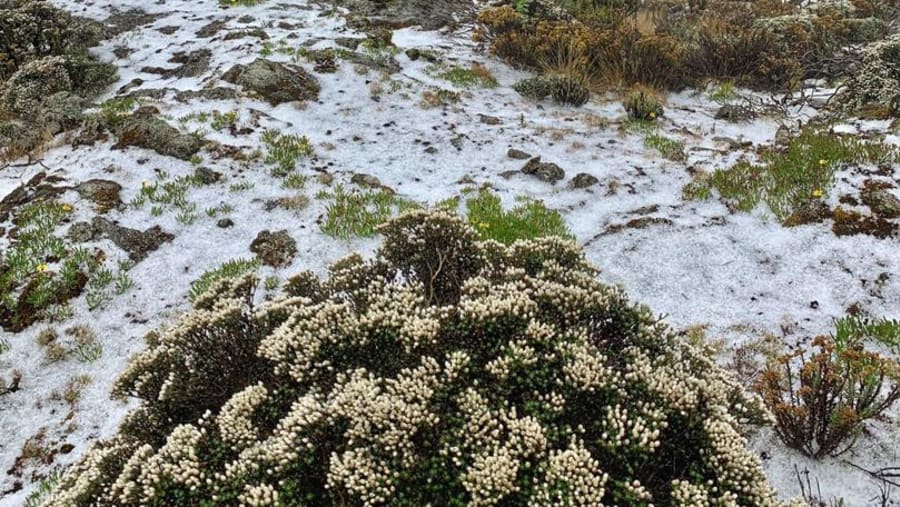
Uganda has a tropical climate, with temperatures ranging from 21-25°C (70-77°F), apart from in the mountainous areas, which are much cooler; the peak of the Ruwenzori ranges is often covered with snow. The hottest months are December to February. Evenings can feel chilly after the heat of the day, with temperatures around 12-16ºC (54-61°F).
Most regions of Uganda, apart from the dry area in the north, have an annual rainfall of between 1,000 mm and 2,000 mm. There is heavy rain between March and May and between mid-September and November, when road travel can become difficult. The best time for trekking is during the dry seasons, between January and February and June to September. Wildlife viewing is best at the end of the dry seasons when the game is more concentrated around water sources.
What to Wear:
Informality is the norm for daytime wear. Sports shirts and slacks are recommended for men, and light cotton dresses, skirts, and tops for women. In city hotels, a little more formality may be required in the evenings.
For visitors going into the country, a sweater and sturdy walking shoes will be needed. A hat for protection against the sun, sunglasses, and swimwear should also be packed. Brown, beige, dark green, and khaki clothing is recommended. Travellers can also pick up bargains at Kampala, Jinja, and Fort Portal markets that sell trousers, boots, and fleeces.
Packing & Luggage Allowance:
- Please note that any form of plastic bag is banned in Tanzania as of 1 June 2019. Please ensure that you do not bring any form of plastic bag into the country; otherwise, you could face a heavy fine.
- Packing can be a tricky issue - you want to bring enough clothing to avoid wearing the same shirt every day, but not so much that you do not have room in your luggage for souvenirs. The best advice we can give is to pack with layering in mind: slacks and shorts or skirts with a shirt, sweater, or other layers to shed as the day heats up are perfect.
- Sunscreen, sunglasses, and a hat are highly advisable to have on hand during the heat of the day.
- Earth tones (tan, olive, brown, grey, etc.) or pale colours are best for viewing wildlife and birds. Military camouflage clothes are illegal in many African countries, and white is not allowed on a walking safari. You may choose to wear white at other times, but you will find that it will come to look dusty and dirty quite quickly. Tsetse flies are attracted to black and blue, so although it is perfectly fine to pack those colours, you will be more comfortable wearing other clothes when you are in tsetse areas.
- Comfortable rubber-soled walking shoes, such as topsiders or running/tennis shoes, are recommended (worn with socks if you go out for a walk in the bush). Sandals are fine to wear for game drives or around the lodge, but not for walks where there may be thorns. In the early morning and evening, socks with your shoes deter mosquitoes. Include a fleece jacket, a lightweight raincoat, a scarf or wrap, and even a light pair of gloves, as early mornings and late evenings can be quite cold. As the day heats up, you will want a swimsuit, cover-up, and flip-flops to take advantage of the swimming pool (most camps have them).
- Whatever you bring, make sure it is comfortable. Safaris are pretty casual, and while you certainly do not need to dress up for dinner, you may appreciate slipping into something clean and fresh after a hot shower when you return to camp at night. If you are spending any time in a major city, dress as you would on the weekend back home. City restaurants will have dress codes that vary on a case-by-case basis.
- Laundry service is available back at camp and is either included in the cost or done for a small additional fee (depending on the camp or lodge). The lodge and camp staff may not wash underwear due to local traditions, but most will provide detergent so you can wash them yourself. Depending on the weather (most camps use the sun rather than a dryer), your clothes may not be dry the same day you give them to be laundered, so be sure to have some clean clothes to put on. Lightweight fabrics will dry fastest and will save space in your bag - leave your jeans at home. There are no dry-cleaning facilities at any of the properties in East Africa.
Packing Notes:
- Generators or the solar power systems at the properties may not be strong enough to run any hairdryer, even when using a converter with your adapter.
- Tented accommodations sometimes do not have electrical outlets - charging stations will be available in the main areas. Most lodges provide shampoo, conditioner, and soap.
- Laundry is often beaten on a rock and ironed with a charcoal iron, so nothing too special, please. Camps, lodges, and operators take no responsibility for damage to clients' goods.
- Please note the strict weight limitations (15 kgs per guest inclusive of hand luggage) for your destination(s) - all items must be packed in soft bags to fit within luggage compartments of small aircraft and in the back of the vehicle.
Pack for a Purpose:
Many safari camps and lodges now support local community initiatives in and around the wildlife parks, reserves, and concession areas. Please ask if you can bring any school supplies, medical supplies, clothing, or other light objects to help these projects.