India, Nepal · Religious & Spiritual

14-Day Buddhist Trail Tour from Delhi with India and Nepal

14 Days Round trip from Delhi Easy pace

The journey

Trip highlights
  • 01 See the ancient Nalanda monastery, one of India's great historic centres of learning
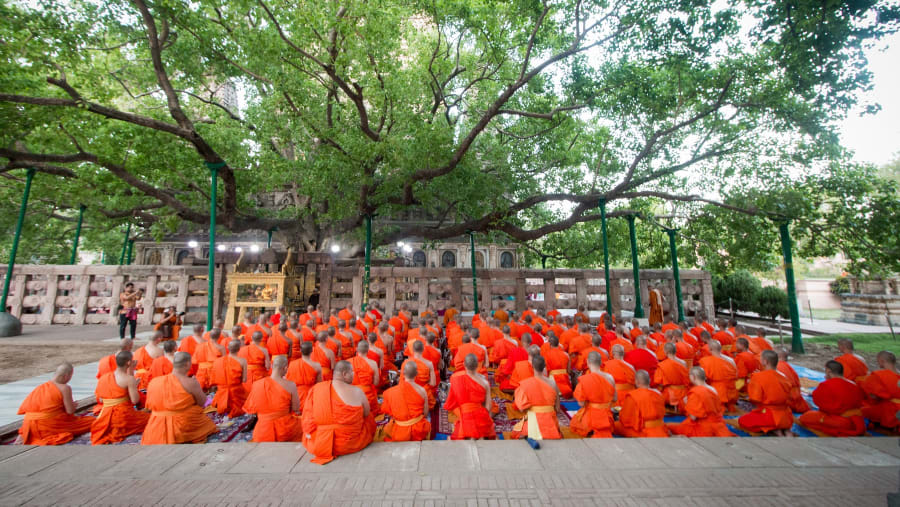
  • 02 Visit Bodhgaya, where Prince Siddhartha attained enlightenment beneath the sacred Bodhi Tree
  • 03 Examine the massive Dhamek Stupa at Sarnath, where Buddha first taught the Dhamma
  • 04 Travel through revered Buddhist pilgrimage cities including Lumbini and Kapilavastu in Nepal
  • 05 Stroll through Chandni Chowk and Khari Baoli Spice Market, with the option of a cycle rickshaw ride in Old Delhi

Uncover the legacy of Gautam Buddha, the founder of Buddhism, on this 14-day journey from Delhi through some of the most important Buddhist pilgrimage sites in India and Nepal. Travel to Vaishali, Nalanda, Rajgir, Bodhgaya, Sarnath, Kushinagar, Shravasti, Lumbini, and Kapilavastu while exploring places closely linked to the life and teachings of the Buddha. Along the way, also experience the spiritual atmosphere of Varanasi and discover iconic landmarks in Delhi. This tour combines sacred sites, archaeology, culture, and city experiences across two countries.

Uncover the legacy of Gautam Buddha, the founder of Buddhism, on this 14-day journey from Delhi through some of the most important Buddhist pilgrimage sites in India and Nepal.

From the itinerary

At a glance

What this trip includes

Duration 14 Days
Tour type Private
Activity level Easy
Accommodation Included · Standard
Transport Included
Wheelchair access Yes
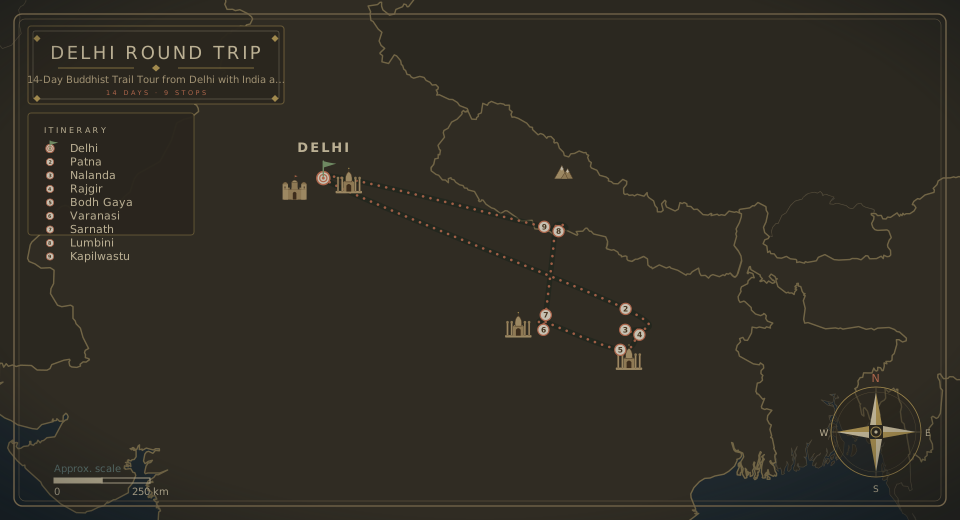
Cities Patna, Delhi, Kapilwastu, Varanasi, Lumbini, Bodh Gaya, Sarnath, Rajgir, Nalanda
Languages English

Day by day

The itinerary

1
Day 01

Arrival and Hotel Transfer in Delhi

  • Receive a warm welcome on arrival from our representatives and transfer to the hotel for an overnight stay.

2
Day 02

Flight to Patna and Vaishali Excursion

  • Transfer to the airport after breakfast to board the flight to Patna. Enjoy assistance on arrival and check-in at the hotel.
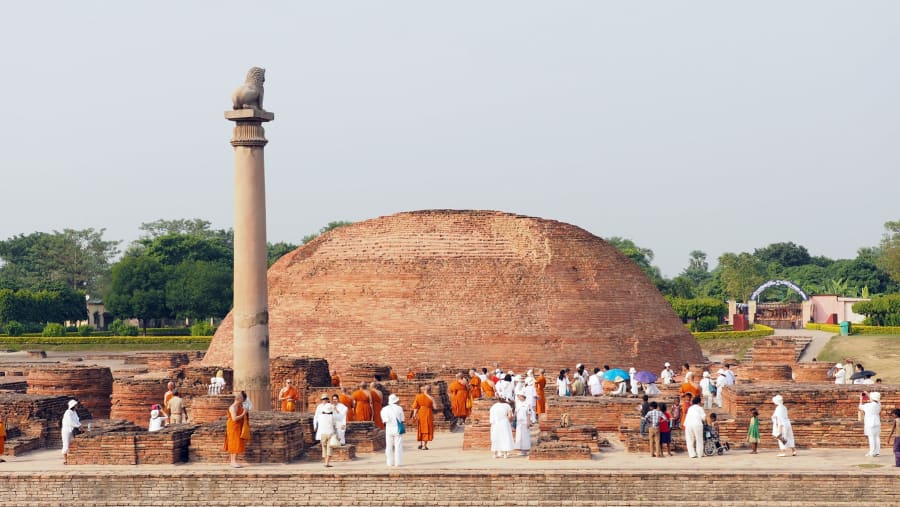
  • Visit major attractions around Vaishali, such as the Ashoka Pillar, Bawan Pokhar Temple, and the three Buddha Stupas. It is said that the Buddha visited this place three times and spent quite a long time here.

Overnight stay at Patna Hotel.

3
Day 03

Patna to Rajgir via Nalanda

  • Leave Patna after breakfast and head to Rajgir.
  • See Nalanda on the way. Nalanda was an acclaimed Mahavihara, a large Buddhist monastery in the ancient kingdom of Magadha, in modern-day Bihar, India.
  • Arrive in Rajgir, just 15 km from Nalanda, and explore the complex of temples and monasteries.

Overnight stay at Rajgir Hotel.

4
Day 04

Rajgir to Bodhgaya via Mahakala Caves

  • Proceed to Bodhgaya after breakfast via Mahakala Caves.
  • Drive about 12 km northeast of Bodh Gaya to reach the ancient Dungeshwari Cave Temples, also known as Mahakala Caves. It is believed that Lord Buddha meditated in the three caves here before continuing his journey to Bodhgaya. The caves also feature Buddhist shrines called Sujata Sthan by the locals.
  • Arrive in Bodhgaya and check in at the hotel. Enjoy free time for leisure or shopping.
5
Day 05

Mahabodhi Temple Sightseeing in Bodhgaya

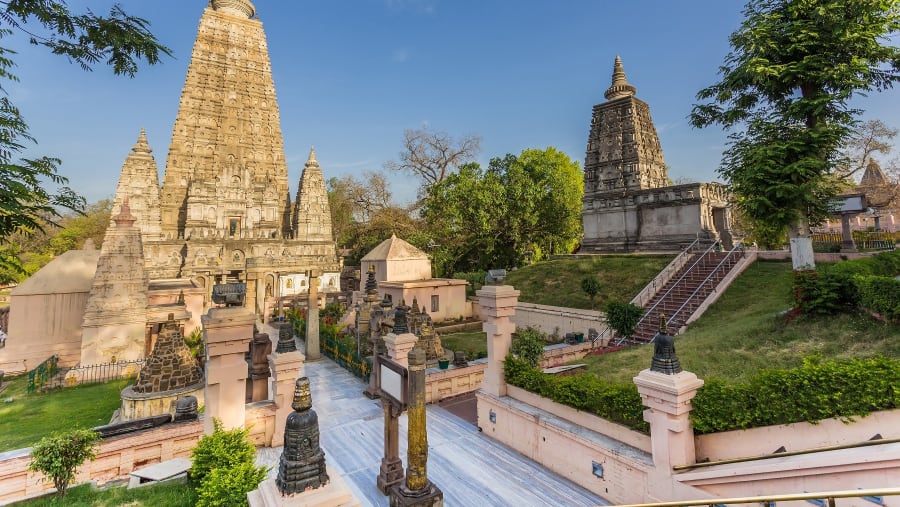
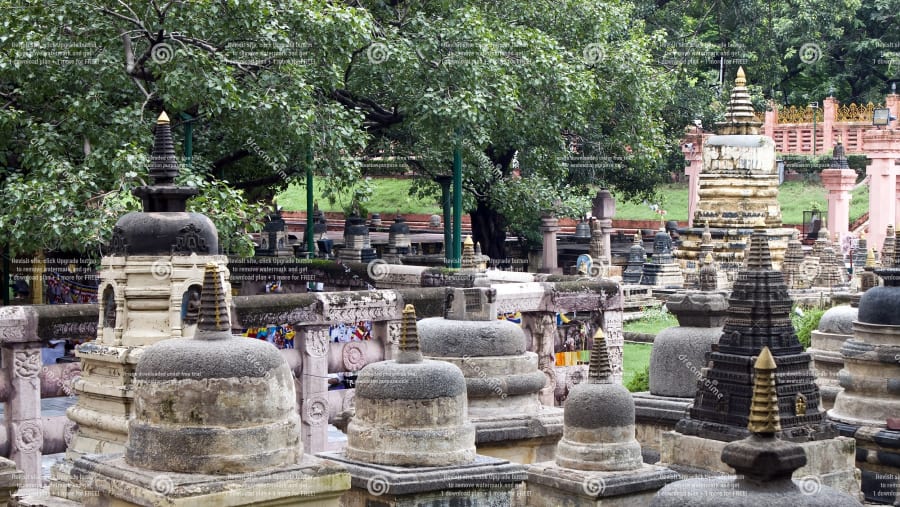
  • Visit the place where Prince Siddhartha attained the Buddha state. A magnificent Mahabodhi Temple and the Tree from the original sapling still stand on the temple premises. The temple is an architectural amalgamation of many centuries, cultures, and heritages.

Overnight stay at Bodhgaya Hotel.

6
Day 06

Drive to Varanasi and Sacred Temple Visit

  • Leave Bodhgaya for Varanasi after breakfast.
  • Visit Shri Kashi Vishwanath Temple. This impressive structure, dedicated to the Hindu deity Shiva, has earned the nickname "The Golden Temple" for its striking spire - plated in 800 kilograms of pure gold. The distinctive design of this temple has gone on to inspire the architecture of hundreds of other temples across India.
  • Then head to Manikarnika Ghat and witness the perpetual cremations that take place here. Hindus believe Manikarnika Ghat is one of the most auspicious places for the departed to reach moksha, or emancipation from the cycle of spiritual rebirth. The funeral pyre at this ghat burns 24/7, and around 100 cremations occur daily.

Overnight stay at Varanasi Hotel.

7
Day 07

Excursion to Sarnath

  • Visit Sarnath after breakfast. Sarnath is located 10 kilometres northeast of Varanasi near the confluence of the Ganges and the Varuna rivers in Uttar Pradesh, India. The deer park in Sarnath is where Gautama Buddha first taught the Dhamma and where the Buddhist Sangha came into existence through the enlightenment of Kondanna.
  • See Dhamek Stupa, situated in the village of Sarnath. This massive stone and brick structure stands 43.6 meters tall and 28 meters in diameter. The stupa was built more than 1,500 years ago to replace an earlier structure dating back to 249 BCE.
  • Return to Varanasi in the evening, with free time for leisure.
8
Day 08

Varanasi to Kushinagar

  • Leave Varanasi for Kushinagar after breakfast. It is one of the four sacred places related to Lord Buddha. Buddha delivered his last sermon here, attained Mahaparinirvana in 483 BC, and was cremated at Rambhar Stupa. The reclining nirvana statue of Lord Buddha inside the temple is 6.10 mt. long and is made of 5th-century red sandstone.
  • See other popular attractions such as the Indo-Japanese Temple, Burmese Temple, Chinese Temple, Thai Temple, Korean, Sri Lankan, and Tibetan temples, the 15 Acres Meditation Park, and the Museum.

Overnight stay at Kushinagar Hotel.

9
Day 09

Kushinagar to Shravasti

  • Leave Kushinagar after breakfast for Shravasti. Its most important religious site was the Jetavana Monastery, erected in a garden outside the city's walls and presented to the Buddha by a wealthy banker, Anathapindaka. Other important Buddhist monasteries were the Rajakarama and the Purvarama.

Overnight stay at Shravasti Hotel.

10
Day 10

Cross into Nepal for Lumbini

  • Cross the border into Nepal for Lumbini. Lumbini is the place where, according to Buddhist tradition, Queen Mahamayadevi gave birth to Siddhartha Gautama around 563 BCE. The site is now being developed as a Buddhist pilgrimage centre, where the archaeological remains associated with the birth of Lord Buddha form a central feature.

Overnight stay at Lumbini Hotel.

11
Day 11

Kapilavastu Tour from Lumbini

  • Visit Kapilavastu in Nepal. Kapilavastu ("Place of Kapila") is the name of the city where Siddhartha Gautama grew up and lived for the first 29 years of his life before leaving to pursue the spiritual path that led to his enlightenment. The Ashoka Pillar situated at Kapilavastu marks later references to the place.
  • Return to Lumbini. Evening time is free for leisure or shopping on your own.
12
Day 12

Lumbini to Gorakhpur and Flight to Delhi

  • Transfer to Gorakhpur Airport to board a flight to Delhi.
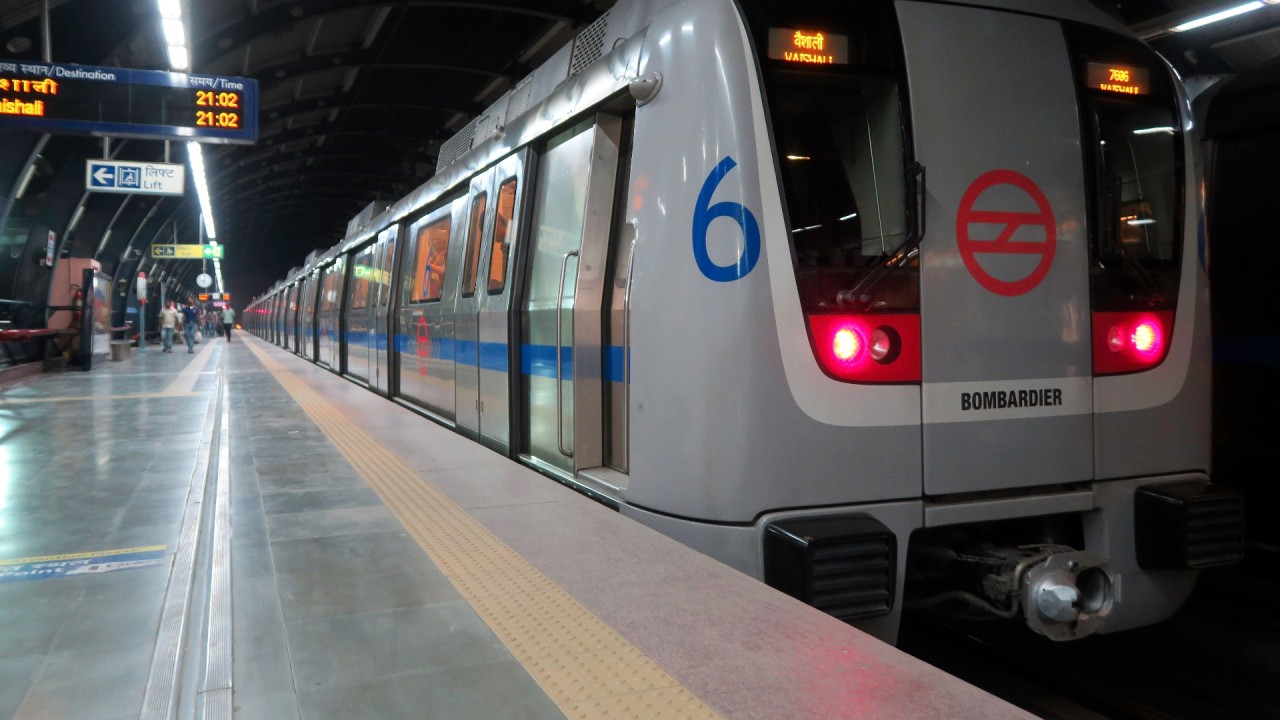
  • Transfer to a Delhi hotel later in the evening. The rest of the time is free for leisure or shopping in Delhi markets on your own.

Overnight stay in Delhi Hotel.

13
Day 13

Delhi City Sightseeing

  • Visit the Red Fort. Shah Jahan constructed the Red Fort in 1939. It was the main residence of the Mughal Dynasty and is located in the city centre.
  • Head to Qutub Minar. It is a five-story tapering tower with a height of 73 meters. The spiral staircase in this minaret has 379 steps.
  • Go to Lotus Temple, which is famous for its flower-like shape. It is a house of worship open to all.
  • Continue to Connaught Place. It is a frenetic business and financial hub centred on a ring of colonnaded Georgian-style buildings with global chain stores, vintage cinemas, bars, and Indian restaurants.

Overnight stay at Delhi Hotel.

14
Day 14

Old Delhi Visit and Departure

  • Check out from the Delhi hotel after breakfast.
  • Go to India Gate. It is a war memorial located near the Rajpath.
  • Stop by Raj Ghat, a memorial dedicated to Mahatma Gandhi. It is a great place to learn more about the country's history.
  • Stroll through the streets of Chandni Chowk or take a cycle rickshaw ride in Chandni Chowk and Khari Baoli Spice Market. It is a busy shopping area with markets full of spices, dried fruit, silver jewellery, and vivid saris. In contrast, the narrow side streets are crowded with tiny shops selling essential oils, stationery, and traditional Indian sweets.
  • Get dropped off at the airport to board your flight back home.
Mahabodhi Temple, Dhamek Stupa, Manikarnika Ghat, Chandni Chowk

Where this trip takes you

Mahabodhi Temple, Dhamek Stupa, Manikarnika Ghat, Chandni Chowk

The route
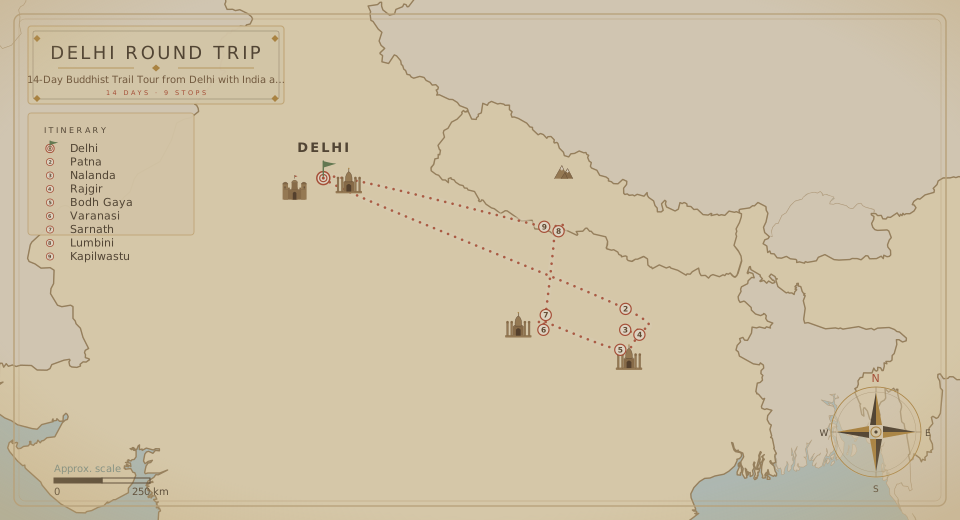
Where you'll travel

Tour route map
Round trip from Delhi 9 cities · 14 Days

The fine print

Trip details

What's Included

  • Breakfast
  • Private AC transport
  • Sightseeing tours
  • Hotel accommodation
  • Toll tax, parking, and fuel
  • Pick-up and drop-off

What's Not Included

  • Lunch and dinner
  • Any monument charges
  • Any drinks
  • Any personal expenses
  • Flight tickets are not included
  • Nepal visa charges are not included

What to bring

  • Camera

Know before you go

  • Guests can get a visa at the India-Nepal border.
  • Men and women must wear formal and civil dress while entering temples.
  • Buddhism was developed in the late 500 BC and was founded by Siddhartha Gautama. Buddha was born as Siddhartha Gautama in Lumbini and lived in India. In Bodhgaya, Gautama attained enlightenment under the sacred Bodhi tree and became known as Lord Buddha. In Sarnath, Buddha delivered his first sermon to his five disciples, preaching the middle path for attaining 'Nirwana'.
  • Vaishali: One of the greatest cities of the 5th century BC, Vaishali is credited with being the world's first republic to have a duly elected assembly of representatives and efficient administration. The place finds mention in the great epic Ramayana. Buddha spent the last days of his life near Vaishali, and Lord Mahavira, the founder of Jainism, was born here. The Buddha also delivered his last sermon at Vaishali and announced his Nirvana here. After his death, Vaishali also held the Second Buddhist Council.
  • Nalanda: The site is located about 95 kilometres southeast of Patna near the town of Bihar Sharif and was a centre of learning from the fifth century CE to 1200 CE. It is a UNESCO World Heritage Site. The highly formalized methods of Vedic learning helped inspire the establishment of large teaching institutions such as Taxila, Nalanda, and Vikramashila, which are often characterised as India's early universities. Nalanda flourished under the patronage of the Gupta Empire in the 5th and 6th centuries and later under Harsha, the emperor of Kannauj. The liberal cultural traditions inherited from the Gupta age resulted in a period of growth and prosperity until the ninth century. The subsequent centuries were a time of gradual decline, a period during which the tantric developments of Buddhism became most pronounced in eastern India under the Pala Empire.
  • Rajgir: It is one of the most important tourist places in India. Being located in a valley, Rajgir is a very scenic place. The small hill town is covered with lush green forest, which adds to the beauty of the place. The city of Rajgir was the first seat of power in the ancient kingdom of Magadha - the state centre of the powerful Mauryan emperors. Historically, Rajgir was also considered one of the places favoured by spiritual leaders like Lord Mahavira and Gautam Buddha. Rajgir is a major hub for pilgrims of both the Jain and Buddhist faiths.
  • Mahakala Caves: There is an interesting story behind the existence of these cave temples, which states that during his self-mortification, Gautama became extremely weak and starved. At that time, a lady named Sujata from a nearby village offered him food and water. Later, Gautama realised that one could not attain enlightenment by self-indulgence or self-abasement. He then carried on with his journey and reached Bodhgaya, where he finally attained enlightenment. In one of the cave temples, you can see a beautiful golden statue of Buddha, which is about 6 feet tall. When in Gaya, do not miss out on paying a visit to these ancient cave temples, as the journey will add to your Buddhist experience.
  • Bodhgaya: It is one of the most important and sacred Buddhist pilgrimage centres in the world. It was here, under a banyan tree, the Bodhi Tree, that Gautama attained supreme knowledge to become Buddha, the Enlightened One. Born in the foothills of the Himalayas as a Sakya prince of Kapilvastu, now in Nepal, most of the major events of his life, like enlightenment and the last sermon, happened in Bihar. Buddhism as a religion was truly born in Bihar and evolved here through his preaching and the example of his lifestyle of great simplicity, renunciation, and empathy for everything living. Significantly, the state's name of 'Bihar' originated from 'Vihara', meaning monasteries that abounded in Bihar. Several centuries after Buddha's passing away, the Maurya Emperor Ashoka (234-198 BC) contributed tremendously towards the revival, consolidation, and spread of the original religion. It is the monastery Ashoka built for the Buddhist monks, and the pillars known as Ashokan Pillars erected to commemorate innumerable historical sites associated with the Buddha's life, mostly intact to this day, that helped scholars and pilgrims alike trace the life events and preaching of a truly extraordinary man.
  • Lumbini: It is one of the seven UNESCO World Heritage Sites of Nepal. Lumbini is a celebrated and important pilgrimage site for Buddhists from all over the world. When Sakyamuni was 35 years old, he achieved enlightenment, becoming the Buddha and founding Buddhism. According to legend, many of his significant Buddhist events occurred under a Sal tree. As a site pivotal to the life of the Buddha, Lumbini is also the base of the modern Buddhist renaissance and a unique museum of international Buddhist temples, where over 20 countries have constructed representative temples in monastic zones.

Logistics

Meeting & route

Meeting point
Delhi, India
Tour start
Delhi, India
Tour ends at the same location as the start point.
End of the journey

Your 14 days finish where they began, in Delhi.

Watch the tourHQ film Watch the film

Create your own adventure

Can't find the perfect tour? Tailor your dream trip.

  • Tell us your destination, dates and group size.
  • Our travel experts and local guides design a tailored itinerary, just for you.
  • Enjoy your trip with peace of mind, knowing everything is taken care of.
Plan my holiday

Say goodbye to travel stress.

Starting from

INR 45,000 /person
Book This Tour

Estimated room rates

Single Room ₹45,000.00 — ₹160,000.00
Double Sharing ₹45,000.00 — ₹70,000.00

When

Travellers

Total