India · Architecture

17-Day Rajasthan, Agra and Varanasi Tour with Desert Camp Stay

17 Days Round trip from Delhi Easy pace

The journey

Trip highlights
  • 01 Explore Rajasthan's offbeat destinations, including Jaisalmer, Jodhpur, Ranakpur, Udaipur, Jaipur, and Pushkar
  • 02 Witness the sunset over the tall sand dunes at Sam and enjoy camel and jeep safaris
  • 03 Visit the Taj Mahal, Agra Fort, and the Mughal city of Fatehpur Sikri
  • 04 Experience Varanasi's sacred ghats, including Dashashwamedh Ghat, Manikarnika Ghat, and Assi Ghat
  • 05 Watch the famous Ganga Aarti and discover the spiritual atmosphere of Kashi Vishwanath Temple

Take a 17-day tour through Delhi, Rajasthan, Agra, and Varanasi, exploring a rich mix of history, architecture, and picturesque landscapes. Experience some of Rajasthan's exciting offbeat destinations, including Jaisalmer, Jodhpur, Ranakpur, Udaipur, Jaipur, and Pushkar. Continue to Agra, home to the monument of love, the Taj Mahal, and visit Varanasi to discover the beauty of the many ghats along the Ganges.

Witness the unparalleled views of the sunset over the tall sand dunes located 40 km from the Golden City of Jaisalmer.

From the itinerary

At a glance

What this trip includes

Duration 17 Days
Tour type Private
Activity level Easy
Accommodation Included · Standard
Transport Included
Wheelchair access No
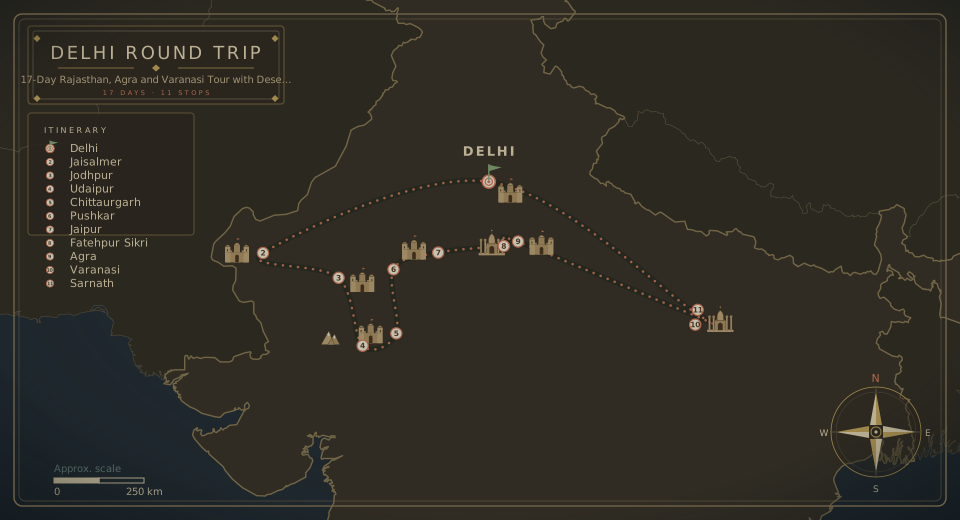
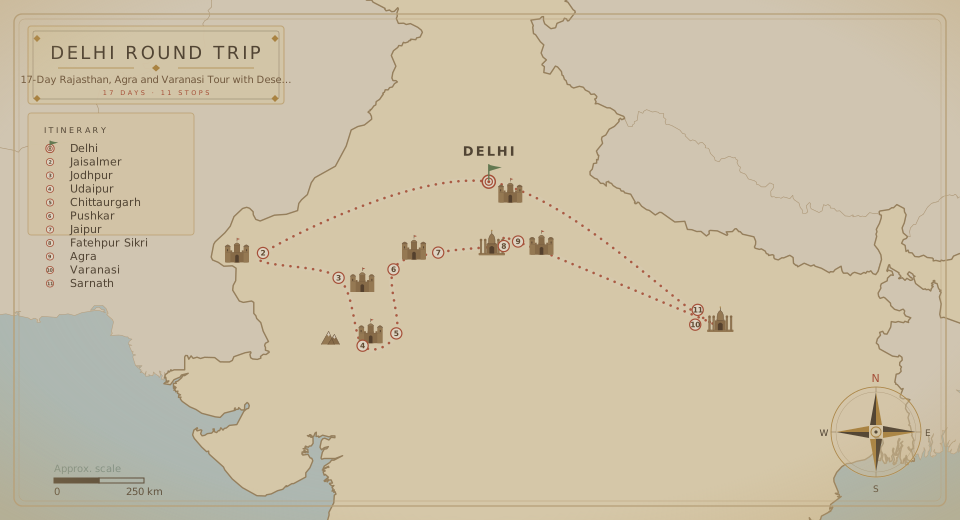
Cities Delhi, Jaipur, Jodhpur, Udaipur, Chittaurgarh, Agra, Varanasi, Jaisalmer, Pushkar, Fatehpur Sikri, Sarnath
Languages English

Day by day

The itinerary

1
Day 01

Arrival in Delhi

  • Arrive in Delhi and transfer to your hotel.
  • Relax and enjoy personal activities.
2
Day 02

Delhi Sightseeing and Train to Jaisalmer

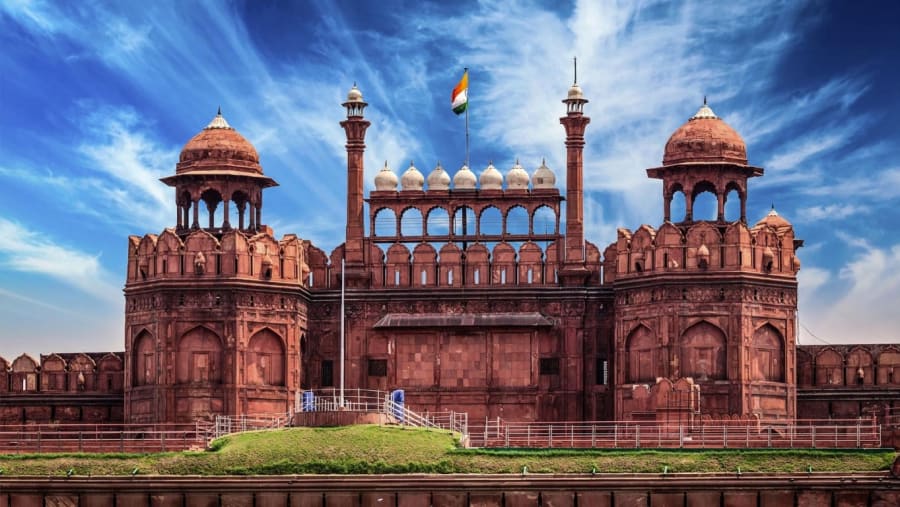
  • Visit Red Fort. Shah Jahan constructed the Red Fort in 1638. It was the main residence of the Mughal dynasty and is located in the city center. It is made from red sandstone, which is where it gets its name. It became a UNESCO World Heritage Site in 2007.
  • Continue to Qutub Minar, a five-story tapering tower with a height of 73 meters. The spiral staircase in this minaret has 379 steps. It is a UNESCO World Heritage Site and is visited by many people every day.
  • After sightseeing, go to Delhi Railway Station.

Overnight journey by train to Jaisalmer.

3
Day 03

Arrival in Jaisalmer and Gadisar Lake

  • In the morning, pick up from Jaisalmer Railway Station and transfer to your hotel in Jaisalmer city. After relaxing, enjoy Gadisar Lake and the local market.
  • Visit Gadisar Lake, one of the most well-known tourist attractions in Jaisalmer. Gadi Sagar Lake originally was a man-made reservoir that was founded to provide a source of water to the people of Jaisalmer. Founded in 1367 by the first ruler of the city, Maharawal Jaisal, this reservoir was later revamped by Maharawal Garsi Singh.
  • After that, the evening is free to visit the market.
4
Day 04

Jaisalmer Forts and Sam Sand Dunes Desert Camp

  • Visit Jaisalmer Fort, situated in the city of Jaisalmer. It is believed to be one of the very few "living forts" in the world, as nearly one-fourth of the old city's population still resides within the fort. For the better part of its 800-year history, the fort was the city of Jaisalmer.
  • Continue to the Patwa Havelis, a cluster of five havelis aligned in a narrow lane in the heart of the city. Of the five havelis, the first haveli in the lane, also known as Kothari's Patwa Haveli, is not only extraordinarily preserved and restored but is also open to visitors to experience the lifestyle of the erstwhile patwas.
  • Then see Salim Singh Ki Haveli, an architecturally notable residence built in 1815 with a peacock-shaped roof and numerous balconies.
  • Go to Bada Bagh, also called Barabagh, a garden complex located about six kilometres north of Jaisalmer. Overlooking a mango grove sits a set of royal chhatri cenotaphs constructed by the Maharajas of the Jaisalmer State in the 18th, 19th, and early 20th centuries.
  • Continue to Sam Sand Dunes for an evening jeep safari and camel safari in the desert. Witness the unparalleled views of the sunset over the tall sand dunes located 40 km from the Golden City of Jaisalmer. Enjoy music and dance performances by local artists who hold a mirror to the rich culture of Rajasthan. Satisfy your taste buds with delicious, authentic local cuisine served at the Sam Dunes. Indulge in stargazing as a million stars shine brightly through the cold, clear skies above the dunes.

Overnight stay in a desert camp.

5
Day 05

Jaisalmer to Jodhpur via Kuldhara Village

  • Visit Kuldhara Village, an abandoned village in the Jaisalmer district. Established around the 13th century, it was once a prosperous village inhabited by Paliwal Brahmins.
  • Continue to the Clock Tower, a popular landmark in the old city. The vibrant Sardar Market is close to the tower, and narrow alleys lead from here to a bazaar selling vegetables, spices, Indian sweets, textiles, silver, and handicrafts.

Overnight stay in a Jodhpur hotel.

6
Day 06

Jodhpur Sightseeing

  • Visit Mehrangarh Fort, a 5 km long majestic fort on a 125 m high hill. It is one of the most impressive and formidable structures. Although invincible from the outside, the fort has four gates approached by a winding road. Within the fort are some magnificent palaces with marvellously carved panels, latticed windows, and evocative names.
  • Stop by Moti Mahal, Phool Mahal, Sheesh Mahal, Sileh Khana, and Daulat Khana. These palaces house a fabulous collection of trappings of Indian royalty, including a superb collection of palanquins, elephant howdahs, miniature paintings of various schools, musical instruments, and costumes.
  • Go to Jaswant Thada, an imposing white marble memorial that marks the site of the royal crematorium. It houses portraits of successive rulers. The four cenotaphs around it commemorate notable acts of bravery and generosity of the four successive rulers.
  • Then see Umaid Bhawan Palace, a fabulous building split between the museum and a 5-star property.

Overnight stay at a Jodhpur hotel.

7
Day 07

Jodhpur to Udaipur via Ranakpur

  • Drive to Ranakpur Jain Temple. The Ranakpur Temple complex comprises 1,444 intricately carved pillars, 24 pillared halls accompanied by 80 domes borne by 400 columns. The apogee of this entire temple architecture is the fact that no two pillars here are the same.
  • Continue to Bagore Ki Haveli, and in the evening watch the "Dharohar" folk dance show at Bagore-ki-Haveli. This gorgeous 18th-century haveli has been converted into a museum showcasing Mewar art and architecture. The haveli puts on one of the best Rajasthani folk dance shows in Rajasthan. For an hour, performers dance to Rajasthani folk music wearing bright coloured ethnic dresses. The dances are varied and demonstrate the tradition and culture of Rajasthani folklore.

Overnight stay at a Udaipur hotel.

8
Day 08

Udaipur Sightseeing

  • Visit the City Palace. It is a palace complex situated in the city of Udaipur. It was built over a period of nearly 400 years, with contributions from several rulers of the Mewar dynasty.
  • Continue to Saheliyon Ki Bari, which was laid out for a group of forty-eight maidens. This garden is located on the banks of Fateh Sagar Lake, presenting a green retreat in the drylands of Rajasthan. It was built from 1710 to 1734 by Maharana Sangram Singh for the royal ladies.
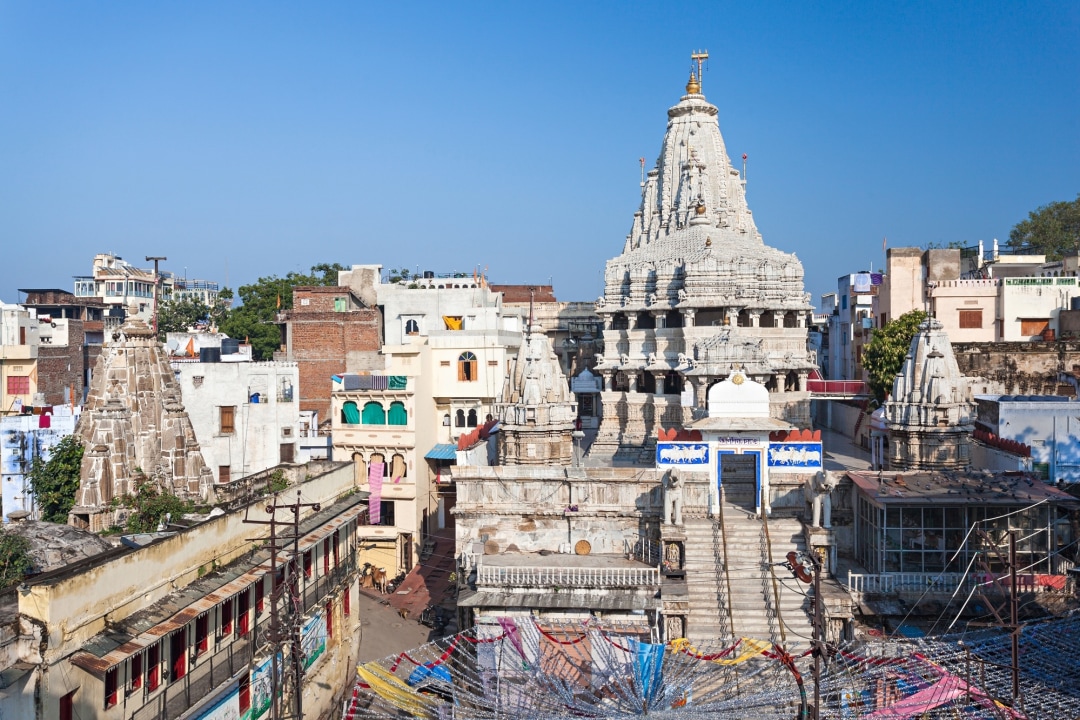
  • See Jagdish Temple, a world-renowned temple of Lord Vishnu. This three-storey, 79-foot-high temple was built by Maharana Jagat Singhji in 1651 and cost 1.5 million rupees. It is owned and managed by the royal family of Udaipur.
  • Move to Dudh Talai, located on the banks of Lake Pichola near the City Palace. Here you can enjoy the beautiful view of Lake Pichola, Jagmandir Island Palace, Lake Palace, Udaivilas, The Leela Palace, the gorgeous Aravalli ranges, and Udaipur old city.
  • Go to Bagore Ki Haveli, and in the evening watch the "Dharohar" folk dance show at Bagore-ki-Haveli. This gorgeous 18th-century haveli has been converted into a museum showcasing Mewar art and architecture. The haveli puts on one of the best Rajasthani folk dance shows in Rajasthan. For an hour, performers dance to Rajasthani folk music wearing bright coloured ethnic dresses. The dances are varied and demonstrate the tradition and culture of Rajasthani folklore.

Overnight stay at a Udaipur hotel.

9
Day 09

Udaipur to Pushkar via Chittorgarh Fort

  • Visit Chittorgarh Fort, the largest fort in India. It is a UNESCO World Heritage Site. The fort was the capital of Mewar and is located in the present-day town of Chittor. It sprawls over a hill 180 meters high and covers an area of 280 hectares (691.9 acres) above the plains of the valley drained by the Berach River. The fort has several historical palaces, gates, a temple, and two prominent commemorative towers.
  • Then go to Pushkar Lake, an artificial lake also credited to the 12th century, when a dam was built across the headwaters of the Luni River. The 10th Sikh guru, Guru Govind Singh (1666-1708), recited the Sikh sacred text Guru Granth Sahib on the banks of the lake.

Overnight stay in a Pushkar hotel.

10
Day 10

Pushkar to Jaipur

  • See Brahma Temple in Pushkar, though it is by no means the only temple here. There are as many as four hundred temples lining the banks of the lake.
  • Then continue to Chokhi Dhani in Jaipur.

Overnight stay at a Jaipur hotel.

11
Day 11

Jaipur Sightseeing

  • Visit Amber Fort, situated on top of a hill in Amer. It was built by Raja Man Singh I and is known for its artistic elements. The Maota Lake located in front of the monument acts as a source of water for the fort.
  • Continue to the City Palace of Jaipur. Spend one hour exploring Maharaja's City Palace. The City Palace of Jaipur was originally the administrative and ceremonial seat of the Maharaja of Jaipur, constructed in 1721. It was also the location of religious and cultural events that took place at that time. It now houses the Maharaja Sawai Man Singh II Museum and continues to be the home of the Jaipur royal family.
  • After that, go down the hill to Jal Mahal, a palace floating on Man Sagar Lake, for a photo opportunity. Jal Mahal is a palace located in the middle of Man Sagar Lake in the city of Jaipur. The palace and the lake around it were renovated and enlarged in the 18th century by Maharaja Jai Singh II of Amber. The palace and scenic beauty of the lake attract many tourists.
  • See Jantar Mantar, a UNESCO World Heritage Site built in 1734. It is a collection of nineteen architectural astronomical instruments built by the Rajput king Sawai Jai Singh II, the founder of Jaipur. The instruments allow the observation of astronomical positions with the naked eye.
  • Visit Hawa Mahal. It is famous as "The Palace of Winds" or "The Palace of Breeze." Built from red and pink sandstone, the palace sits on the edge of the City Palace, Jaipur, and extends to the Zenana, or women's chambers.
  • The rest of the time is free for leisure.

Overnight stay in a Jaipur hotel.

12
Day 12

Jaipur to Agra via Chand Baori and Fatehpur Sikri

  • Visit Chand Baori, built during the 8th and 9th centuries. It has 3,500 narrow steps arranged in perfect symmetry, descending 20 meters to the bottom of the well.
  • Then continue to Fatehpur Sikri, a small city in northern India just west of Agra, founded by a 16th-century Mughal emperor. Red sandstone buildings cluster at its center. Buland Darwaza gate is the entrance to Jama Masjid mosque. Nearby is the marble Tomb of Salim Chishti. Diwan-E-Khas hall has a carved central pillar, and Jodha Bai's Palace is a mix of Hindu and Mughal styles.
  • In the evening, visit the old Agra market.

Overnight stay in an Agra hotel.

13
Day 13

Agra Sightseeing and Train to Varanasi

  • Visit the Taj Mahal, an ivory-white marble mausoleum on the southern bank of the Yamuna River in the Indian city of Agra. It was commissioned in 1632 by the Mughal emperor Shah Jahan to house the tomb of his favourite wife, Mumtaz Mahal. It also houses the tomb of Shah Jahan himself.
  • Then go to Agra Fort, a historical fort in the city of Agra in India. It was the main residence of the emperors of the Mughal dynasty until 1638, when the capital was shifted from Agra to Delhi. Before its capture by the British, the last Indian rulers to occupy it were the Marathas.
  • Drop off at Agra Railway Station.
  • Take the overnight train to Varanasi.
14
Day 14

Arrival in Varanasi and Excursion to Sarnath

  • Drive 14 kilometres from the city center to Ramnagar Fort. This 18th-century sandstone fort and palace is no longer used as a defensive structure but instead houses a quirky museum brimming with vintage automobiles, elaborate hookahs, antique weapons, sedan chairs decked out in jewels, and a one-of-a-kind astronomical clock that is more than 150 years old.
  • See Dhamek Stupa, situated 12 kilometres away in the village of Sarnath. Here, find a massive stone and brick structure that is 43.6 meters tall and 28 meters in diameter. The stupa was built more than 1,500 years ago as a replacement for a structure that dated back to 249 BCE.
  • Go to Dasaswamedh Ghat and experience its lively atmosphere.

Overnight stay at a Varanasi hotel.

15
Day 15

Varanasi Sightseeing and Ganga Aarti

  • Visit Shri Kashi Vishwanath Temple. This impressive structure, dedicated to the Hindu deity Shiva, has earned the nickname "The Golden Temple" for its striking spire, plated in some 800 kilograms of pure gold. The distinctive design of this temple has gone on to inspire the architecture of hundreds of other temples across India.
  • Continue to Manikarnika Ghat and see the perpetual cremations that take place here. Hindus believe that Manikarnika Ghat is one of the most auspicious places for the departed to reach moksha, or emancipation from the cycle of spiritual rebirth. The funeral pyre at this ghat burns 24/7, and around 100 cremations take place every day.
  • Go to Banaras Hindu University. It has been a central part of Varanasi's identity since its inception in 1916. This well-respected public university is home to more than 25,000 students, making it one of Asia's largest residential universities.
  • See Assi Ghat, the city's southernmost main ghat. Assi Ghat's star attraction is a Shiva lingam beneath a sacred fig tree. It draws hundreds of pilgrims every day who come to worship Lord Shiva after rinsing in the Ganges River.
  • Watch the famous Ganga Aarti. Consider waking up early and taking a sunrise cruise along the river - negotiate with one of the countless boatmen hanging out along the ghats.

Overnight stay in a Varanasi hotel.

16
Day 16

Flight to Delhi and Delhi Sightseeing

  • Pick up from Delhi Airport and start a Delhi sightseeing tour.
  • See one of the largest mosques in the country, Jama Masjid. It is made of red sandstone and marble. It was constructed by Shah Jahan and is visited by hundreds of people every day. The courtyard of the mosque can accommodate about 25,000 people and was built for about one million Indian rupees.
  • Continue to Humayun's Tomb, the tomb of the Mughal Emperor Humayun in Delhi, India. The tomb was commissioned by Humayun's first wife and chief consort, Empress Bega Begum, in 1558 and designed by Mirak Mirza Ghiyas and his son, Sayyid Muhammad. Persian architects were chosen by her.
  • Go to Raj Ghat, a memorial dedicated to Mahatma Gandhi. Raj Ghat is situated in Delhi. It is a black marble platform open to the sky, and an eternal flame burns at one end. It is a great place to learn more about the history of the country.

Overnight stay at a Delhi hotel.

17
Day 17

Old Delhi Markets and Departure

  • Visit Connaught Place, a frenetic business and financial hub centred on a ring of colonnaded Georgian-style buildings with global chain stores, vintage cinemas, bars, and Indian restaurants. Stalls at Janpath Market sell saris, embroidered bags, and trinkets. The peaceful Sikh temple Gurdwara Bangla Sahib is known for its reflecting pool, and Jantar Mantar is a 1700s observatory with huge astronomical instruments.
  • Continue to Chandni Chowk and take a cycle rickshaw ride through Chandni Chowk and Khari Baoli Spice Market, a busy shopping area with markets full of spices, dried fruit, silver jewellery, and vivid saris. At the same time, the narrow side streets are crowded with tiny shops selling essential oils, stationery, and traditional Indian sweets.
  • In the evening, drop off at Delhi Airport, Delhi Railway Station, or any desired location in Delhi.
Sunset over Sam Sand Dunes, Jaisalmer Fort, Taj Mahal by the Yamuna, Lake Pichola

Where this trip takes you

Sunset over Sam Sand Dunes, Jaisalmer Fort, Taj Mahal by the Yamuna, Lake Pichola

The route
Where you'll travel

Tour route map
Round trip from Delhi 11 cities · 17 Days

The fine print

Trip details

What's Included

  • Breakfast
  • Private air-conditioned transport
  • Camel safari
  • Jeep safari
  • 1 night desert stay with gala dinner
  • Hotel accommodation
  • Pick-up and drop-off
  • Sightseeing
  • Toll tax, parking, and fuel
  • Delhi to Jaisalmer train ticket
  • Agra to Varanasi train ticket

What's Not Included

  • Lunch and dinner
  • Monument entrance charges
  • Drink charges
  • Personal expenses
  • Varanasi to Delhi flight tickets

What to bring

  • Camera

Logistics

Meeting & route

Meeting point
Delhi, India
Tour start
Delhi, India
Tour ends at the same location as the start point.
End of the journey

Your 17 days finish where they began, in Delhi.

Watch the tourHQ film Watch the film

Create your own adventure

Can't find the perfect tour? Tailor your dream trip.

  • Tell us your destination, dates and group size.
  • Our travel experts and local guides design a tailored itinerary, just for you.
  • Enjoy your trip with peace of mind, knowing everything is taken care of.
Plan my holiday

Say goodbye to travel stress.

Starting from

INR 95,000 /person
Book This Tour

Estimated room rates

Single Room ₹95,000.00 — ₹130,000.00
Double Sharing ₹95,000.00 — ₹130,000.00

When

Travellers

Total