India · Culture

10-Day Rajasthan Tour with Pushkar, Ranakpur and Sam Sand Dunes

10 Days Round trip from Jaipur Easy pace

The journey

Trip highlights
  • 01 Explore Rajasthan's major heritage cities, from Jaipur and Udaipur to Jodhpur and Jaisalmer
  • 02 Visit iconic landmarks including Amer Fort, Hawa Mahal, City Palace, and Chittorgarh Fort
  • 03 Discover spiritual and cultural sites such as Pushkar, Dilwara Temples, and Ranakpur Jain Temple
  • 04 Enjoy a desert experience at Sam Sand Dunes with a sunset camel ride and jeep safari
  • 05 Watch the 'Dharohar' folk dance show at Bagore-ki-Haveli in Udaipur

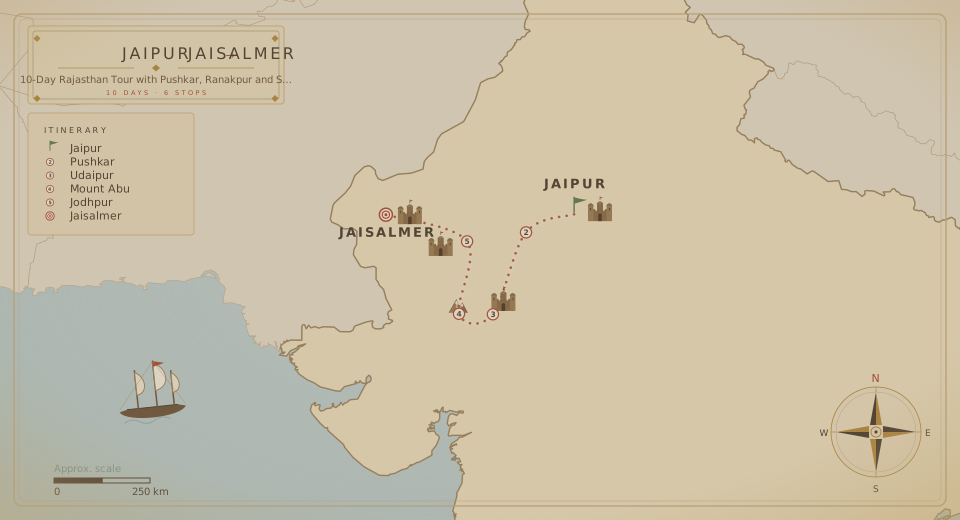
Enjoy a 10-day tour through the beautiful state of Rajasthan, covering Jaipur, Pushkar, Udaipur, Mount Abu, Jodhpur, and Jaisalmer. Visit popular symbolic attractions including Amer Fort, Hawa Mahal, Brahma Temple, Ranakpur Jain Temples, City Palace, Saheliyon ki Bari, Mehrangarh Fort, and Jaswant Thada. The journey also includes a desert experience at Sam Sand Dunes with a camel ride, jeep safari, dinner, and a folk dance program.

The journey also includes a desert experience at Sam Sand Dunes with a camel ride, jeep safari, dinner, and a folk dance program.

From the itinerary

At a glance

What this trip includes

Duration 10 Days
Tour type Private
Activity level Easy
Accommodation Included · Standard
Transport Included
Wheelchair access No
Cities Jaipur, Jodhpur, Udaipur, Chittaurgarh, Jaisalmer, Pushkar, Mount Abu
Languages English

Day by day

The itinerary

1
Day 01

Arrival in Jaipur and Chokhi-Dhani Visit

  • Arrive in Jaipur and meet the driver at the airport or railway station for your transfer to the hotel.
  • Visit Chokhi-Dhani, meet rural artisans, see their classic art, and support the rich heritage of the country.

Overnight stay in Jaipur hotel.

2
Day 02

Jaipur Sightseeing

  • Visit Amber Fort, situated on top of a hill in Amer. It was built by Raja Man Singh I and is known for its artistic elements. The Maota Lake located in front of the monument acts as a source of water for the fort.
  • Go to the City Palace of Jaipur and spend one hour exploring the Maharaja's City Palace. The City Palace of Jaipur was originally the administrative and ceremonial seat of the Maharaja of Jaipur and was constructed in 1721. It was also the location of religious and cultural events that took place at that time. It now houses the Maharaja Sawai Man Singh II Museum and continues to be the home of the Jaipur royal family.
  • Head down the hill to Jal Mahal, a palace floating on Man Sagar Lake, for a photo opportunity. Jal Mahal is a palace located in the middle of Man Sagar Lake in the city of Jaipur. The palace and the lake around it were renovated and enlarged in the 18th century by Maharaja Jai Singh II of Amber. The palace and scenic beauty of the lake attract various tourists.
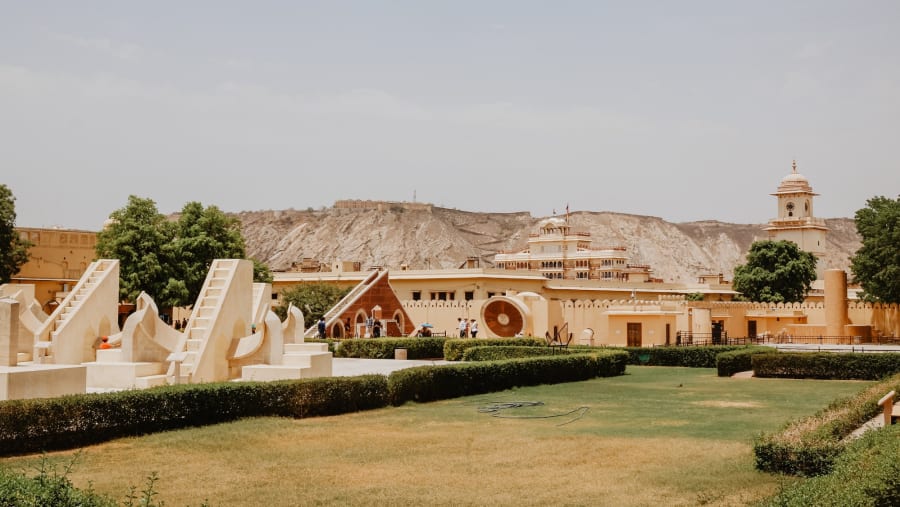
  • Then see Jantar Mantar, a UNESCO World Heritage Site built in 1734. It is a collection of nineteen architectural astronomical instruments built by the Rajput king Sawai Jai Singh II, the founder of Jaipur. The instruments allow the observation of astronomical positions with the naked eye.
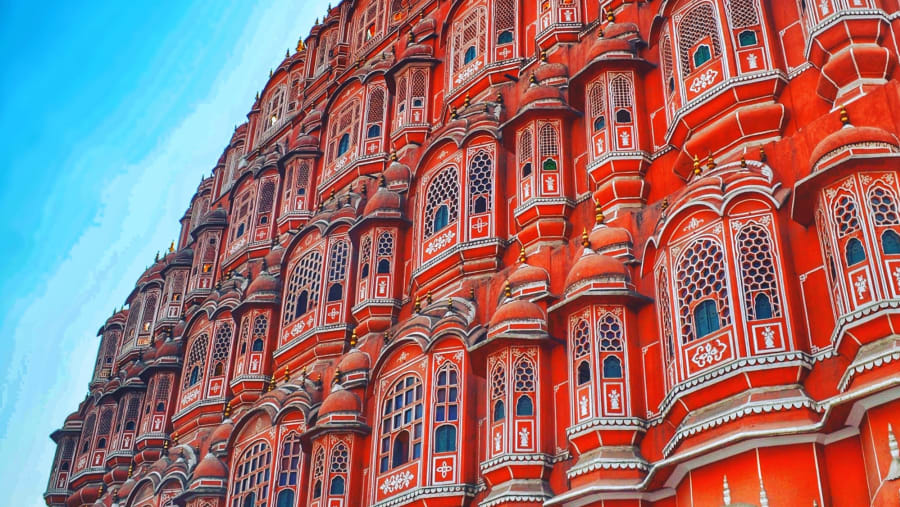
  • Visit Hawa Mahal, famous as "The Palace of Winds" or "The Palace of Breeze." Built from red and pink sandstone, the palace sits on the edge of the City Palace, Jaipur, and extends to the Zenana, or women's chambers.
  • Rest of the time free for leisure.

Overnight stay in Jaipur hotel.

3
Day 03

Jaipur to Udaipur via Pushkar and Chittorgarh Fort

  • Leave Jaipur early in the morning for Udaipur. On the way, visit Pushkar, best known for its Brahma Temple, though it is by no means the only temple here, as many as four hundred temples line the banks of the lake.
  • Then drive to Chittorgarh Fort, the largest fort in India and a UNESCO World Heritage Site. The fort was the capital of Mewar and is located in the present-day town of Chittor. It sprawls over a hill 180 meters in height over an area of 280 hectares (691.9 acres) above the plains of the valley drained by the Berach River. The fort has several historical palaces, gates, a temple, and two prominent commemorative towers.

Overnight stay in Udaipur hotel.

4
Day 04

Udaipur Sightseeing and Folk Dance Show

  • Visit the City Palace, a palace complex situated in the city of Udaipur. It was built over a period of nearly 400 years, with contributions from several rulers of the Mewar dynasty.
  • Head to Saheliyon Ki Bari, which was laid out for a group of forty-eight maidens. This garden is located on the banks of Fateh Sagar Lake, presenting a green retreat in the dry lands of Rajasthan. It was built from 1710 to 1734 by Maharana Sangram Singh for the royal ladies.
  • See Jagdish Temple, a world-renowned temple of Lord Vishnu. This three-storey, 79-foot-high temple was built by Maharana Jagat Singhji in 1651 and cost 1.5 million rupees. It is owned and managed by the royal family of Udaipur.
  • Then move to Dudh Talai, located on the banks of Lake Pichola near the City Palace. Here you can enjoy the beautiful view of Lake Pichola, Jagmandir Island Palace, Lake Palace, Udaivilas, The Leela Palace, the gorgeous Aravalli ranges, and Udaipur old city.
  • Go to Bagore Ki Haveli and in the evening watch the 'Dharohar' folk dance show at Bagore-ki-Haveli. This gorgeous 18th-century haveli has been converted into a museum showcasing Mewar art and architecture. The haveli puts on one of the best Rajasthani folk dance shows in Rajasthan. For an hour, performers dance to Rajasthani folk music wearing brightly colored ethnic dresses. The dances are varied and demonstrate the tradition and culture of Rajasthani folklore.

Overnight stay at Udaipur hotel.

5
Day 05

Udaipur to Mount Abu

  • In the early morning, go to the Dilwara Temples in Mount Abu. Built in the 11th century and dedicated to the Jain Tirthankaras, the complex is completely made of marble and houses five small temples. Take a walk and notice the staggering features, intricate carvings, incised paintings, carved pillars, mandaps, arches, and beautified ceilings.
  • Then move to Guru Shikhar, a peak in the Arbuda Mountains of Rajasthan and the highest point of the Aravalli Range. It rises to an elevation of 1,722 metres. It is 15 km from Mount Abu, and a road from there leads almost to the top of the mountain.
  • See the Brahma Kumaris, a spiritual movement that originated in Hyderabad, Sindh, during the 1930s. The Brahma Kumaris (Sanskrit: ब्रह्माकुमारी, 'Daughters of Brahma') movement was founded by Lekhraj Kripalani. The organisation is known for the prominent role that women play in the movement.
  • Go to Nakki Lake. As per the first legend, the lake was built by Gods to protect themselves from their enemy, the Bashkali demon. The second legend is based on the love story of the sage Rakshiya Balam. There was a king who ordered that whoever dug a lake with his nails overnight would marry his daughter.
  • In the evening, enjoy boating on Nakki Lake.
  • Later, stroll through the local market up to Sunset Point and enjoy the wonderful view of the setting sun.

Overnight stay in Mount Abu hotel.

6
Day 06

Mount Abu to Jodhpur via Ranakpur Temple

  • In the morning, drive to Ranakpur Jain Temple. The Ranakpur Temple complex comprises 1,444 intricately carved pillars, 24 pillared halls accompanied by 80 domes borne by 400 columns. The apogee of this entire temple architecture is the fact that no two pillars here are the same. The temple structure has five spires, each of which houses a shrine underneath, and it is under the largest spire in the axis of the main entrance (Chaumukha Shrine) that one can locate the 6-foot-tall statue of Lord Adinath.
  • See the Ghanta Ghar, or Clock Tower, a prominent landmark in Jodhpur. It was built by Maharaja Sardar Singh between 1880 and 1911.
  • In the evening, free for leisure in the local markets.

Overnight stay in Jodhpur hotel.

7
Day 07

Jodhpur Sightseeing

  • Visit Mehrangarh Fort, a 5 km long majestic fort on a 125 m high hill. It is one of the most impressive and formidable structures. Although invincible from the outside, the fort has four gates approached by a winding road. Within the fort are some magnificent palaces with marvellously carved panels, latticed windows, and evocative names. Stop by Moti Mahal, Phool Mahal, Sheesh Mahal, Sileh Khana, and Daulat Khana. These palaces house a fabulous collection of trappings of Indian royalty, including a superb collection of palanquins, elephant howdahs, miniature paintings of various schools, musical instruments, and costumes.
  • Then go to Jaswant Thada, an imposing white marble memorial that marks the site of the royal crematorium. It houses portraits of successive rulers. The four cenotaphs around it commemorate notable acts of bravery and generosity of the four successive rulers.
  • See Umaid Bhawan Palace, a fabulous building split between the museum and a 5-star hotel.

Overnight stay at Jodhpur hotel.

8
Day 08

Jodhpur to Jaisalmer Desert Camp

  • Visit Gadisar Lake, one of the most well-known tourist attractions in Jaisalmer. Gadisar Lake originally was a human-made reservoir founded to provide a source of water to the people of Jaisalmer. Founded in 1367 by the first ruler of the city, Maharawal Jaisal, this reservoir was revamped by Maharawal Garsi Singh.
  • See Kuldhara Village, an abandoned village in Jaisalmer established around the 13th century. Over the years, Kuldhara acquired a reputation as a haunted site, and the Government of Rajasthan decided to develop it as a tourist spot in 2010.
  • Head to the Sam Sand Dunes and, in the evening, go for a unique experience in the desert.
  • Enjoy a sunset camel ride and a jeep safari.
  • Afterwards, have dinner and watch a folk dance program.

Stay overnight at a desert camp in Swiss tent accommodation.

9
Day 09

Jaisalmer Sightseeing with Longewala and Tanot

  • Wake up early in the morning and, after breakfast, leave the desert camp for Longewala.
  • Visit the Longewala War Memorial, which marks a 1971 war. Longewala War Memorial shows the aftermath of the war between Pakistan and India through a range of military items.
  • Then head to Tanot Temple, situated at the Indo-Pak border in Rajasthan, and listen to the miraculous tale of how the local deity Tanot, also known as Awad Mata, did not let any Pakistani tank bomb explode. Indian soldiers who were certain of martyrdom and defeat went on to crush the Pakistanis in both wars of 1965 and 1972.
  • Move to Bada Bagh, a fertile oasis on the bank of an artificial lake. Surrounded by dense trees are the royal cenotaphs with beautifully carved ceilings and equestrian statues of the former rulers.
  • Stop by Jaisalmer Fort, famously known as the Golden Fort in India. It was constructed by Raja Jaisal, a Rajput ruler, in 1156 AD. It is believed to be one of the very few living forts in the world.
  • See Patwa Havelis, a cluster of five havelis aligned in a narrow lane in the heart of the city. Of the five havelis, the first haveli in the lane, also known as Kothari's Patwa Haveli, is not only extraordinarily preserved and restored but is also open to visitors to experience the lifestyle of the erstwhile patwas.
  • Then go to Nathmalji ki Haveli, constructed by Maharawal Berisal in 1885 CE to serve as the residence of Diwan Mohata Nathmal, the then Prime Minister of Jaisalmer. The chief architects of this haveli were two brothers named Hathi and Lulu. There is a fascinating story regarding its construction. It is believed that both brothers started building the facets of the haveli simultaneously. The two sides are similar but not identical.
  • Continue to Salim Singh Ki Haveli, an architecturally notable residence built in 1815 with a peacock-shaped roof and numerous balconies.

Overnight stay in Jaisalmer hotel.

10
Day 10

Departure from Jaisalmer

  • Drop-off at Jaisalmer Airport, Jaisalmer Railway Station, or any desired location in Jaisalmer, marking the end of this tour.
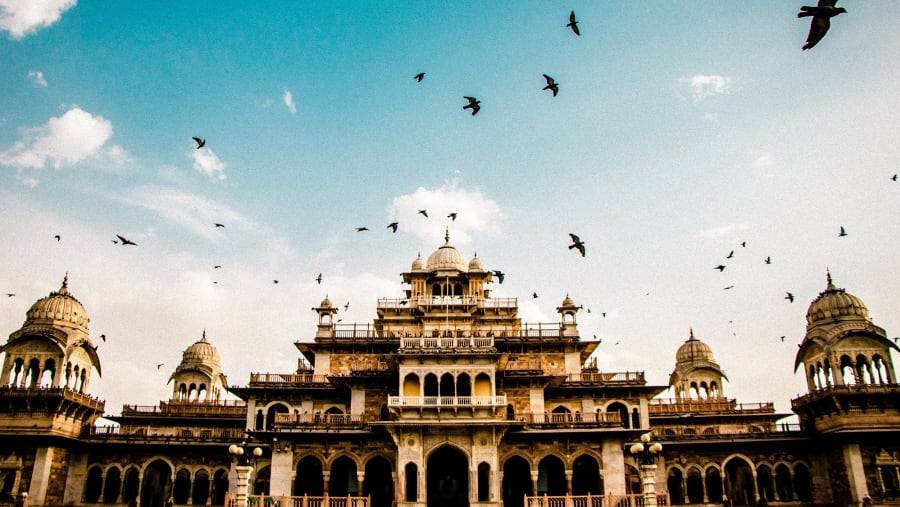
Hawa Mahal, City Palace, Jaisalmer Fort, Sam Sand Dunes

Where this trip takes you

Hawa Mahal, City Palace, Jaisalmer Fort, Sam Sand Dunes

The route

Where you'll travel

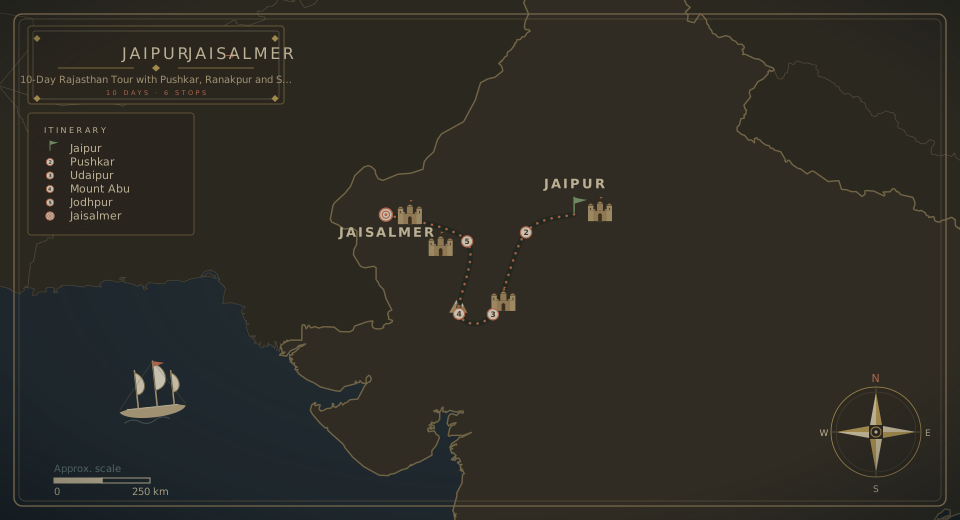
Tour route map
Round trip from Jaipur 7 cities · 10 Days

The fine print

Trip details

What's Included

  • Breakfast
  • Private air-conditioned transport
  • Camel safari
  • Jeep safari
  • 1 night in desert accommodation with gala dinner
  • Hotel accommodation
  • Toll tax, parking, and fuel

What's Not Included

  • Lunch and dinner
  • Any type of monument charge
  • Any type of drinks
  • Any type of personal expenses

What to bring

  • Camera

Logistics

Meeting & route

Meeting point
Jaipur, Rajasthan, India
Tour start
Jaipur, Rajasthan, India
Tour ends at the same location as the start point.
End of the journey

Your 10 days finish where they began, in Jaipur.

Watch the tourHQ film Watch the film

Create your own adventure

Can't find the perfect tour? Tailor your dream trip.

  • Tell us your destination, dates and group size.
  • Our travel experts and local guides design a tailored itinerary, just for you.
  • Enjoy your trip with peace of mind, knowing everything is taken care of.
Plan my holiday

Say goodbye to travel stress.

Starting from

INR 25,000 /person
Book This Tour

Estimated room rates

Single Room ₹25,000.00 — ₹37,000.00
Double Sharing ₹25,000.00 — ₹37,000.00

When

Travellers

Total