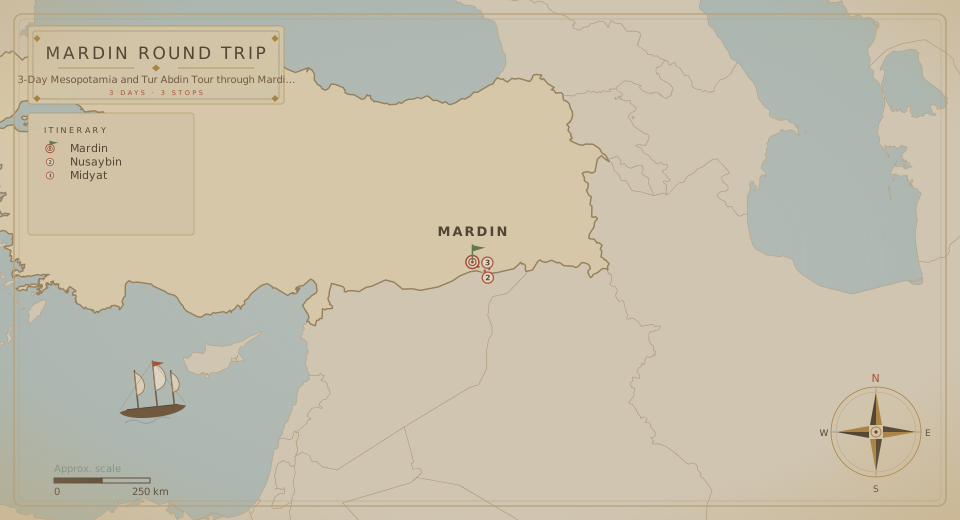
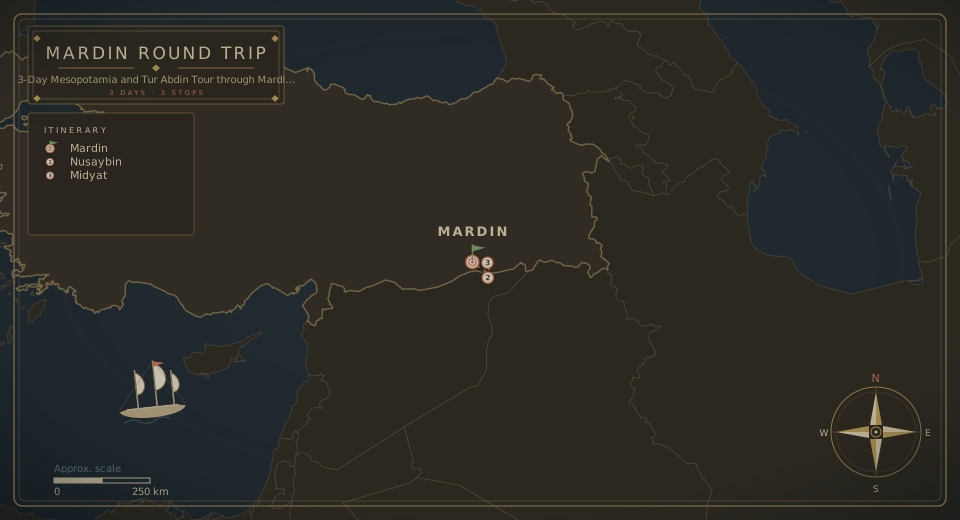
Three days in the land where civilization was born: the Fertile Crescent, Mesopotamia, and Tur Abdin.
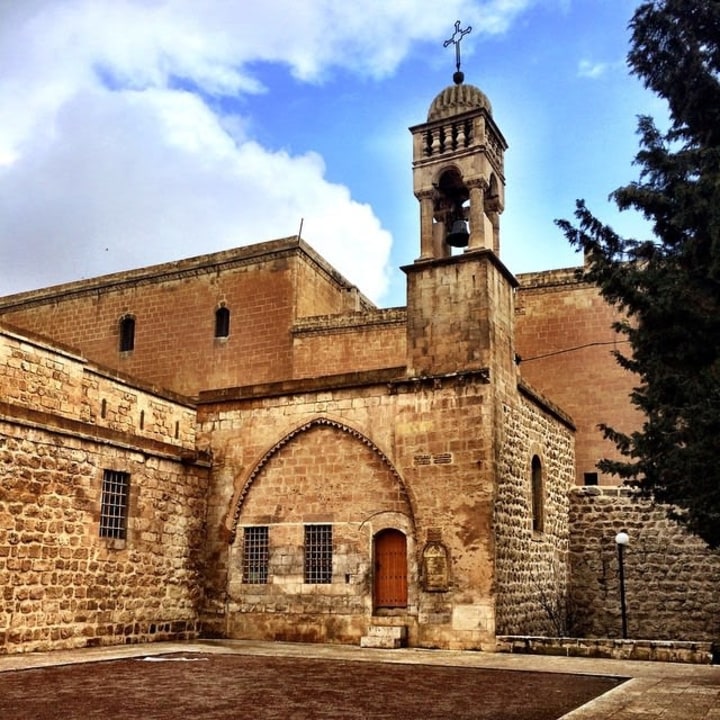
Monastery of the Virgin Mary in Anıtlı village near Midyat: the Monastery of the Virgin Mary (Meryem Ana Manastırı), with its beautiful church, is located 30 kilometres east of Midyat in Anıtlı village. The old name of this village is Hah, which comes from the Aramaic language. Even today, Anıtlı is a Christian village populated mainly by Assyrians (Süryani).
Mor Gabriel (Deyrulumur) Monastery is the oldest surviving Syriac Orthodox monastery in the world. It is located on the Tur Abdin plateau near Midyat. Mor Gabriel was founded in 397 by Mor Shem'un (Samuel) and his student Mor Shem'un (Simon). The monastery's importance grew, and by the 6th century, there were over 1,000 local and Coptic monks there. The monastery became so famous that it received contributions from Roman emperors such as Arcadius, Honorius, Theodosius II, and Anastasius. Between 615 and 1049, the Episcopal seat of Tur Abdin was based here, and from 1049 until 1915, the monastery had its diocese.
Midyat: known as the place where Orthodox churches were established most prominently in history, the historical ancient city of Midyat is in the centre of the Abdin (mountain of the servants) region. The old city is the centre of a centuries-old Hurrian town in Southeast Turkey. Throughout its long history, Midyat has been ruled by many different leaders and nations. The foundation of this ancient city, famous for its grapes, Midyat stone, and history, goes back to 3000 BC.
Nusaybin: the School of Nisibis, for a time absorbed into the School of Edessa, was an educational establishment in Nisibis (now Nusaybin, Turkey). It was an important spiritual centre of the early Church of the East and is sometimes referred to as the world's first university. The school had three primary departments: theology, philosophy, and medicine. Its most famous teacher was Narsai, formerly head of the School of Edessa. The school was founded in 350 in Nisibis. In 363, when Nisibis fell to the Persians, St. Ephrem the Syrian, accompanied by a number of teachers, left the school and went to the School of Edessa, where Ephrem took over its directorship. It had been founded as early as the 2nd century by the kings of the Abgar Dynasty. When Ephrem took over, its importance grew even further. After the Nestorian Schism, when the Byzantine emperor Zeno ordered the school closed for its teachings of Nestorian doctrine, deemed heretical by Chalcedonian Christianity, the school moved back to Nisibis. The church was built by Jacob of Nisibis between 313-320. It is considered one of the oldest churches in Upper Mesopotamia. According to some inscriptions and texts, the church was built as the baptistery of a cathedral at that place. However, it was converted into a church after the cathedral and some other buildings were ruined.
Dara Ancient City: the eastern Roman Empire's last logistics and resistance point against the Sasanians in the east is the Dara Garrison. It features a unique 3-storey cemetery, incredible gigantic cisterns, defensive walls, and an agora. Some sources say the ancient city of Dara was named after Darius, who was defeated by Alexander the Great and died there; other sources say it was founded by the Armenian king Tridates. The Romans needed a garrison city in the east. After Anastasius, Emperor Justinian strengthened the city walls. General Belisarius, who famously resisted the siege of the Sasanians in the Battle of Dara in 530 AD, went down in Roman history in golden letters.
Deyrulzafaran Monastery: the Za'faran, or Mar Hananya's Monastery, is an ancient, spacious, and well-built edifice. It is one of the greatest and most famous monasteries of Beth Nahrin (Mesopotamia). It is built on a mound about 25 minutes east of Mardin. The monastery measures 36 x 71 metres and is fortified by a strong wall. Its buildings are solid but not symmetrical because they were built at different times. They consist of two stories, except those in the southern part of the monastery, which have three stories. These are the finest buildings of the monastery. They house rooms for the residence of patriarchs and cells for monks. Traces of its original edifices, built with bricks and large carved stones, are still visible in its temples and in the ceilings of the lower story. Its notable buildings are the Church of Mar Hananya, the Church of the Sayyida (the Virgin Mary), the Church of the Patriarchal Throne, the Mausoleum of the Fathers, and the Paradise.
Grand Mosque of Mardin: one of the oldest mosques in Anatolia, it was built by the Artuqids (Mardin Artuqids), who were among the first Anatolian principalities connected to the lands of civilization in Mesopotamia and the mountains of Izala. The Artuqid Dynasty had three branches: Hasankeyf Artuqids, Harput Artuqids, and the longest-lasting branch, the Mardin Artuqids. As can be clearly seen from its foundation, the mosque had two long minarets, one in the east and the other in the west. Only the eastern minaret has survived. The base of the minaret belongs to the original structure, while its body was renewed later. Since the western minaret no longer exists, it must have stood in a position corresponding to the eastern one. Although it is not known exactly when it was destroyed, sources state that it was destroyed in 803/1400 during Timur's occupation of Mardin. The square base of the existing eastern minaret is original. The shoe, body, honeycomb, and cone sections belong to later periods. The minaret was struck by lightning and destroyed in 1304/1887. Its repair began in 1305/1888 with the help of philanthropists and was completed in 1306/1889 by an architect named Muhammedu'l-Fadıl.
Zinciriye Madrasa: a masterpiece that will fascinate you with its incredible stonework, this is one of the jewels of the ancient city of Mardin and offers magnificent views over the Mesopotamian Plain. Zinciriye Madrasa is one of the most beautiful historical sights in the old part of Mardin. It was built in 1385 by Melik Necmeddin Isa bin Muzaffer Davud bin El Melik Salih, the last sultan of the Artuqid Dynasty ruling in Mardin. The basic principles of the original Mardin architectural style were formed during the Artuqid period. The madrasa covers a large rectangular area below Mardin Castle and consists of a two-storey courtyard, mosque, tomb, and various additional spaces.
Kasımiye (Sultan Kasım) is one of the most important historical buildings in Mardin. There are no inscriptions giving the exact date of construction. The madrasa was built toward the end of Artuqid rule, possibly after Zinciriye Madrasa and perhaps by the same architect. It was left unfinished due to Timur's invasion and Akkoyunlu pressure, and was later completed by Sultan Kasım, son of Cihangir, between November 1457 and 1502. It offers incredible Mesopotamian scenery and is an architectural masterpiece made of Mardin stone.
Mor Behnam (Kırklar Kilisesi) Church is one of the most significant historical sites in the old part of Mardin. It is located in the Şar neighbourhood of the city centre, where many Christians still live today. This church was constructed in 569 BC and consecrated in honour of Syriac Saint Behnam and his sister Saro. While Mardin Castle was being repaired, one of the seven churches built was considered part of a church belonging to Shams (the sun goddess) before the 6th century, indicating its early date. The bones of forty martyrs from Sivas in the 4th century were brought to this church in 1170, which is why it received its name. The church has three entrance doors, fine stone craftsmanship, altars, four-hundred-year-old wooden doors, 1,500-year-old painted curtains, a bell tower in its vast courtyard, and stone carving almost like lace. Built in the name of Mor Behnam and his sister Saro and now known as the Forty Church, it draws both names from early Christian legends. The church, which also contains a Bible dating from 1230, is also the metropolitan church of Mardin.