Turkey · Archaeology

3-Day Turkey History Tour with Göbeklitepe and Mount Nemrut

3 Days Round trip from Şanlıurfa Moderate pace

The journey

Trip highlights
  • 01 Explore Göbeklitepe, the world's oldest ritual archaeological site
  • 02 Cruise the Euphrates on a boat tour in Halfeti and see Rumkale
  • 03 Visit the holy Balıklı Lake and wander through Şanlıurfa's old bazaars
  • 04 See the black rose farm in Halfeti, known for roses found only there
  • 05 Watch the sunrise on Mount Nemrut at 2,200 meters among giant ancient statues

Uncover Turkey's rich history on a 3-day journey through Şanlıurfa, Harran, Halfeti, and Mount Nemrut. Visit Göbeklitepe, the world's oldest ritual archaeological site, explore the archaeology and mosaic museums of Şanlıurfa, see the holy Balıklı Lake and old bazaars, and enjoy a boat ride on the Euphrates in Halfeti. The tour also includes the black rose farm, Atatürk Dam, ancient cities, the Septimius Severus Bridge, and a sunrise experience at 2,200 meters on Mount Nemrut among the monumental gods of the ancient world.

Start the third day by climbing Mount Nemrut to greet the sunrise with the gods and goddesses Zeus, Apollo, Heracles, and Commagene (Tyche-Bakht) at an altitude of 2,200 meters.

From the itinerary

At a glance

What this trip includes

Duration 3 Days
Tour type Private
Activity level Moderate
Accommodation Not included
Transport Included
Wheelchair access Not applicable
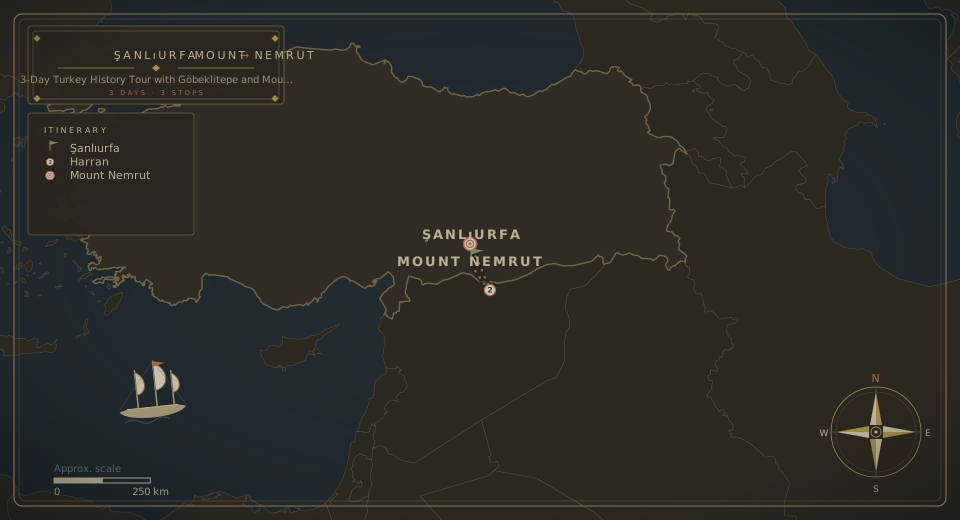
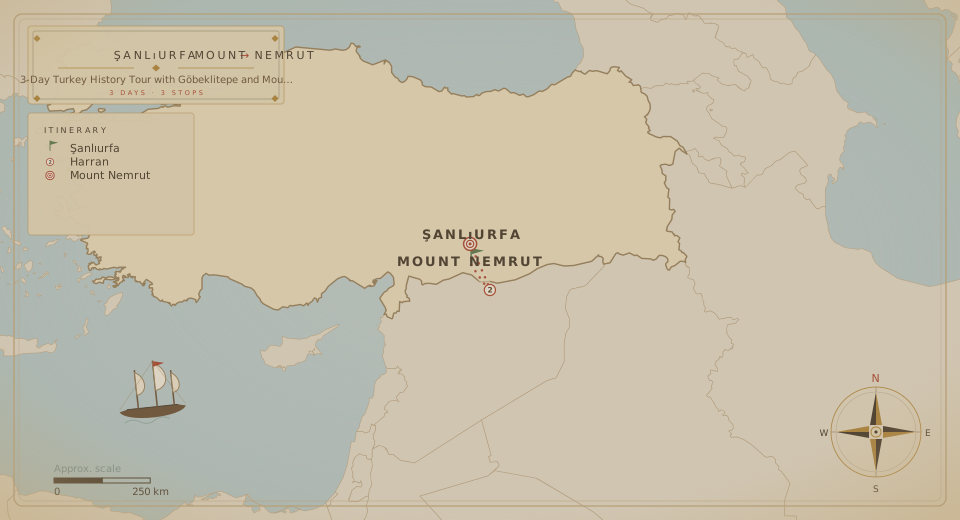
Cities Şanlıurfa, Mount Nemrut, Harran
Languages English, Turkish

Day by day

The itinerary

1
Day 01

Şanlıurfa, Göbeklitepe, Harran and Museum Visits

  • Welcome at the airport, then begin the trip to Göbeklitepe. It is the oldest ritual archaeological site in the world and challenges much of what is known about the Neolithic period.

  • Continue to Harran, where you will visit the beehive houses whose form and name have remained unchanged for 5,000 years. This is the land of the moon god Sin, the land of the last Babylonian king Nebuchadnezzar, the homeland of the Sabians, and the home of the Harran school of philosophy, whose roots go back 4,000 years and which guided the Islamic world.

  • After Harran, visit the largest archaeological museum in Turkey. As the artefacts are arranged chronologically, you will find yourself on a 15,000-year journey through history.

  • Then go to the Haleplibahçe Mosaic Museum, very close to the Archaeological Museum. The Haleplibahçe Garden mosaics are described as among the most valuable mosaics in the world because of their technique, artistry, and 4 mm2 pieces made from original stones from the Euphrates River. The museum includes masterpieces featuring the Amazon warrior queens - Hippolyte, Melanipe, Antiope, and Penthesilea - as well as Achilles, Ktisis, Orpheus, Jesus, and more.

  • Settle in at the hotel.

  • In the evening, go to the local sıra night, where you will see and listen to the songs and dances of the people of the ancient lands of Mesopotamia. This brings the first day to an end.

2
Day 02

Balıklı Lake, Halfeti, Rumkale and Atatürk Dam

  • Start the second day at the holy Balıklı Lake, the sacred place where the prophet Hz Ibrahim was born and was thrown into the fire. Continue with a visit through markets and bazaars, where a historical, colourful, and cultural life with very old origins still continues.

  • Set out for the natural and historical wonder of Halfeti, identified with the sacred Euphrates River and the black rose.

  • Embark on a boat tour on the Fırat that lasts about one hour.

  • Visit Rumkale, surrounded by water on three sides, and see the village with sunken minarets that has been the subject of films and advertisements.

  • Visit the black rose farm, where the black rose that grows only in Halfeti is cultivated, and buy black rose cologne.

  • Continue to the massive Atatürk Dam, Turkey's largest hydroelectric plant, built in a narrow valley of the Euphrates, to see the river and this remarkable structure.

3
Day 03

Mount Nemrut Sunrise and Commagene Heritage

  • Start the third day by climbing Mount Nemrut to greet the sunrise with the gods and goddesses Zeus, Apollo, Heracles, and Commagene (Tyche-Bakht) at an altitude of 2,200 meters. Departure from the hotel is 3 or 4 hours in advance, depending on the sunrise time.

  • After watching the magnificent sunrise, drive to the ancient city of Arsemia.

  • Next, visit the Septimius Severus Bridge, a magnificent work of Roman architecture.

  • Then see the sacred mausoleum where the royal queen and princesses were buried.

  • Learn about the ancient city of Perre.

Göbekli Tepe, Balıklı Lake, Mount Nemrut sunrise

Where this trip takes you

Göbekli Tepe, Balıklı Lake, Mount Nemrut sunrise

The route

Where you'll travel

Tour route map
Round trip from Şanlıurfa 3 cities · 3 Days

The fine print

Trip details

What's Included

  • Airport pick-up

  • Airport drop-off

  • Private boat tour

  • Museum tickets

What's Not Included

  • Meals

  • Flight tickets

  • Accommodation

Know before you go

  • Witness the sunrise with the gods on Mount Nemrut.

  • The tour includes Göbeklitepe, Harran, museums (archaeology and mosaic), the holy fish lake, old bazaars, Halfeti (black rose and boat tour), Atatürk Dam, sunrise on Mount Nemrut, the ancient city of Arsemia, the Septimius Severus Bridge, Karakuş Tumulus, and the ancient city of Perre.

  • Arsemia was the ancient city, hierothesion, and capital of Commagene. It was built as the summer capital founded by Antiochus I, the magnificent king of the Commagene kingdom, through his ancestor Arsames. Antiochus built his father's holy mausoleum here, and it contains the largest Greek inscriptions in Turkey. The site also includes the sacred river for the priest Mithradates and an ancient city set within an amazing natural landscape. Built on the sacred Kahta (Nymph) River, it offers an incredible view of nature and stands on a high hill against enemy attack.

  • Pirin (Perin) ancient city: this ancient necropolis and its surrounding area was an important settlement centre during the Commagene period. It later became a developed city during the Roman period. Most of the remains are carved into the rocks in the form of burial sites. Sarcophagi were placed inside the rooms, and their entrances were decorated with reliefs. The ancient city, located on the Malatya route in ancient times, is also mentioned for the beauty of its water, which is still used today. It also sent a representative to the Iznik (Nikea) council in the 4th century AD.

  • Karakuştümülüs (Hierothesion) is a sacred monument built by the Commagene king Mithridates II for the royal Commagene queen and her princesses. Mithridates II built this tumulus for his mother Isias, his sisters Laodike and Antiochis, and his nephew Aka. As can be understood from the inscriptions here, King Mithridates decorated this monumental tomb with columns consisting of three groups: the column with a handshake scene for Laodike in the northwest, a column with a bull sculpture for Isias in the northeast, and the south column with an eagle for Antiochis and his daughter Aka. When the Romans dominated Commagene, the building stones here were taken and used in the construction of the Cendere Bridge (Severus Bridge). It is widely believed that the burial chamber inside the tumulus may have been entered by the Romans.

  • Septimius Severus (Cendere) Bridge is a masterpiece of Roman architecture, built by the XVI Flavia Firma legion for Septimius Severus, the first Roman emperor of African (Libya) origin. Emperor Severus had four columns erected at the entrance and exit of the bridge in the name of himself, his wife Julia Domna (mater castrorum - "mother of the army camps"), and his children Caracalla and Geta. The bridge is built on the Cendere (Chabinas) River.

  • Mount Nemrut and its giant statues of gods and goddesses offer the chance to watch the world's most beautiful sunrise and sunset at 2,200 meters above sea level with the most influential gods of the ancient world. This is the sacred ceremony and sacred mausoleum tumulus (hierothesion) created by the great king Antiochus for himself and his father Mithradates I. The sanctuary, where giant seated gods accompany you from their thrones, was formed by small limestones stacked about 50 meters high and began to be built in the 1st century BC. King Antiochus pursued his dream of uniting east and west by bringing together the gods of both worlds on the summit of Nemrut, a vision even Alexander the Great could not achieve. From King Antiochos to all people: "The Great King Antiochus, the God, the Righteous One, the Manifest Deity, the Friend of the Romans and the Greeks, the Son of King Mithradates Callinicus and of Laodice the Brother-loving Goddess, the Daughter of King Antiochus Epiphanes, the Mother-loving, the Victorious, has recorded for all time, on consecrated pedestals with inviolable letters the deeds of his clemency. Therefore, as you see, I have set up these divine images of Zeus - Oromasdes and of Apollo - Mithras - Helios - Hermes and of Artagnes - Heracles - Ares, and also of my all-nourishing homeland Commagene; and from one and the same quarry, throned likewise among the deities who hear our prayers, I have consecrated the features of my own form, and have caused the ancient honour of great deities to become the coeval of a new Tyche."

Logistics

Meeting & route

Meeting point
To be confirmed
Tour start
Şanlıurfa, Türkiye
Tour ends at the same location as the start point.
End of the journey

Your 3 days finish where they began, in Şanlıurfa.

Watch the tourHQ film Watch the film

Create your own adventure

Can't find the perfect tour? Tailor your dream trip.

  • Tell us your destination, dates and group size.
  • Our travel experts and local guides design a tailored itinerary, just for you.
  • Enjoy your trip with peace of mind, knowing everything is taken care of.
Plan my holiday

Say goodbye to travel stress.

Starting from

EUR 2,000 /group
Book This Tour

When

Travellers

Total