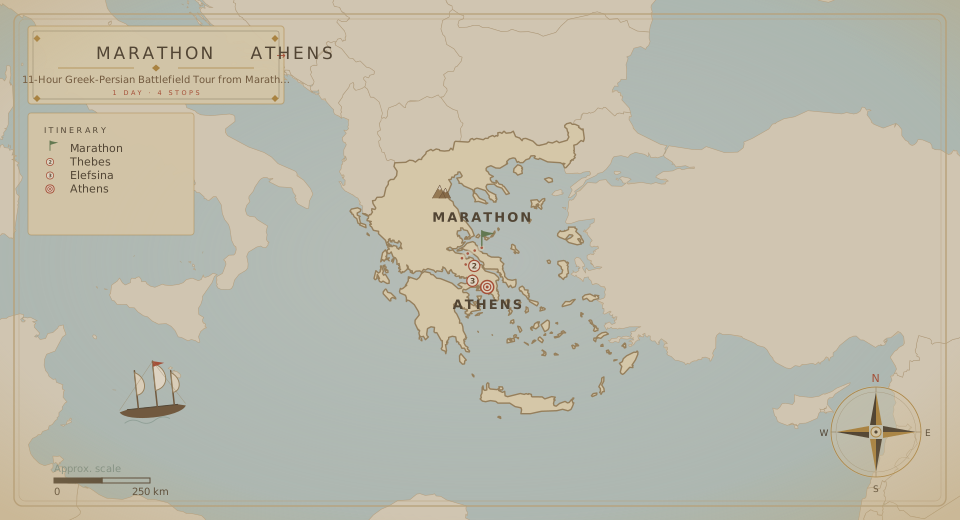

Marathon, Thermopylae, Thebes, Plataea and Perama Journey
Visit historical battlefields as travellers, not as tourists. Your Greek tour driver is as excited as you are to travel and enjoy the history, scenery, culture, and photography.
Head to the following sites:
Marathon Tomb: Visit the Marathon battlefields and discover the amazing history captured by the location and the burial mound, which gives the area a unique meaning. This 10 m-high burial mound sits 1 km west of Marathon Beach. Ticket: 6€; reduced: 3€.
Marathon Bay: These battlefields have become one of the most popular coastal resorts in Attica, located 40 km northeast of Athens. Marathon Bay, or Schinias, has an excellent reputation for its crystalline waters and comfortable facilities.
Marathon Museum: Located 5 km from Marathon Bay, this excellent museum displays local discoveries from various periods, including Neolithic pottery from the Cave of Pan and finds from the Tomb of the Athenians.
Marathon town: The Athens Marathon is like no other on Earth. The starting line is in the modern town of Marathon, and the finish line is in Athens' magnificent Olympic Stadium, the birthplace of the modern Olympic Games.
Marathon Lake: Pass by Lake Marathon, a water supply reservoir formed by the construction of Marathon Dam at the junction of the Charadros and Varnavas torrents near the town of Marathon. It was the primary water supply for Athens from 1931, when it became operational, until 1959. In 1959, water from Lake Yliki became available.
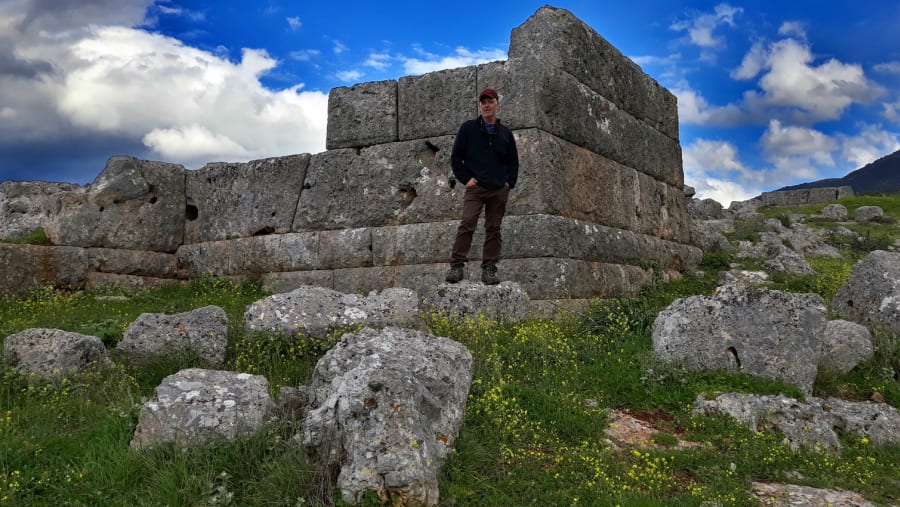
Thermopylae: This site is world-famous for the battle that took place there between the Greek forces, notably the Spartans, and the invading Persian forces. It was commemorated by Simonides in the famous epitaph, "Go tell the Spartans, stranger passing by, That here obedient to their laws we lie." This passage from north to south along the east coast of the Greek peninsula requires use of the pass, and for this reason Thermopylae has been the site of several battles.
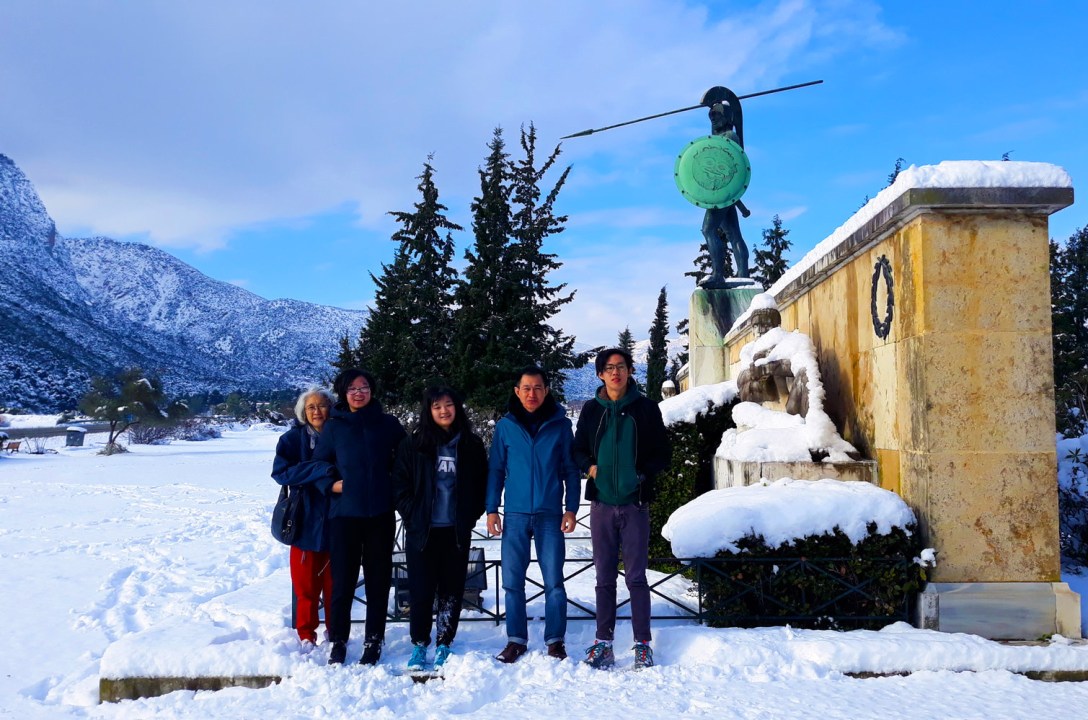
Thermopylae Monument: Next to Leonidas' monument, in historic Thermopylae, lies the innovative museum dedicated to the 480 BC battle that changed the course of Greek history. Ticket: 3€.
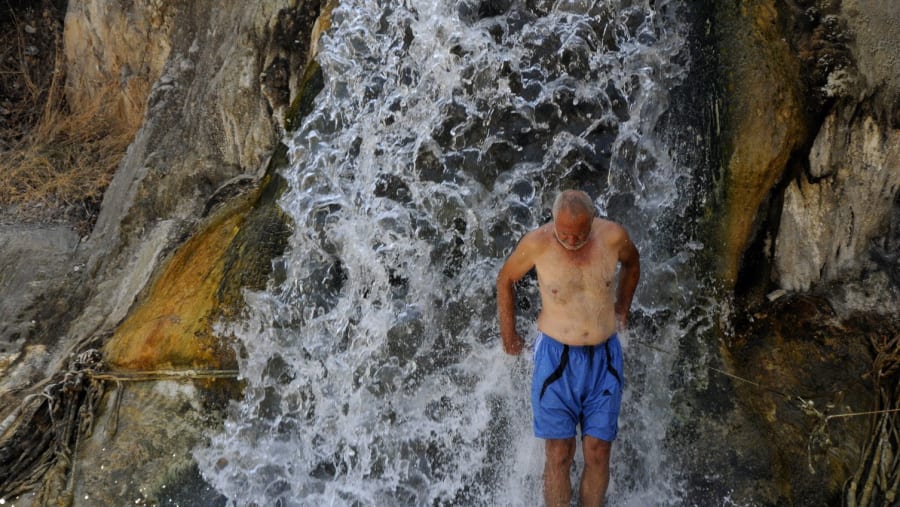
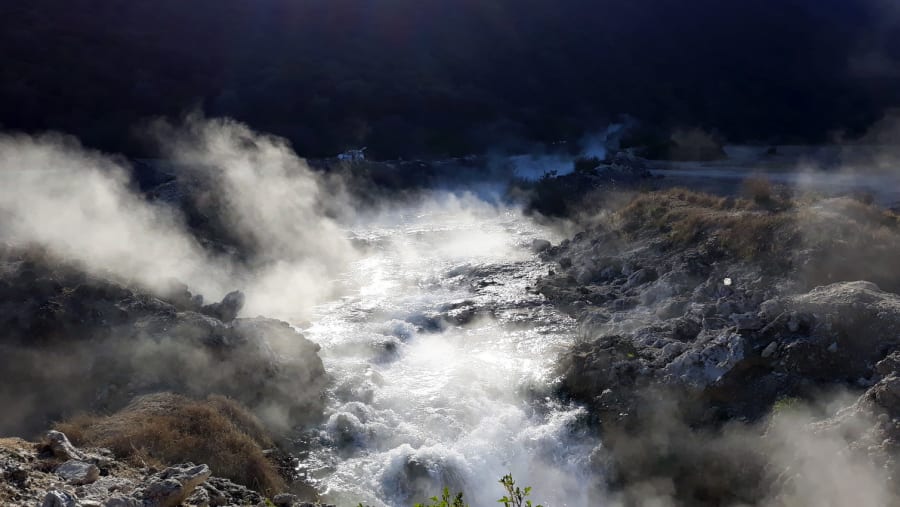
Thermopylae Therms: The baths of Thermopylae are known for the battle of Thermopylae between the Greeks and Persians in 480 BC. The Hot Gates means "the place of hot springs," and in Greek mythology it is the cavernous entrance to Hades.
Thebes Museum: Drive via Thebes and visit the Archaeological Museum, one of the most important museums in Greece, as some of its collections are rare or unique. The exhibits originate from excavations all around Boeotia and cover a long chronological period spanning from the Paleolithic to the Post-Byzantine periods. General summer admission: 6 €; reduced winter admission: 3 €.
Plataea: Visit the battlefields in Plataea and travel back in time to 479 BC. See Gargathia Spring, which was the place where this battle began.
Mount Cithaeron, Eleuthera, Elefsina, and the coastal road: Drive via Mount Cithaeron and Eleuthera on the old Athens-Thebes National Road, north of the Villia junction, which encompasses part of the lowland and rocky hill where the ancient fortress known as Gyftokastro stands. Eleutherai was allegedly the birthplace of Dionysus, who founded the homonymous city and was thus called Dionysus Eleuthereus. Originally a Boeotian city, Eleutherai passed to Athens in the sixth century BC. The cult statue of Dionysus Eleuthereus was reportedly moved from Eleutherai to Athens on Peisistratus' orders, leading to the establishment of the homonymous sanctuary on the south slope of the Acropolis. Strategically located on the border of Athenian territory, with control over the narrow passage between Athens and Thebes and overlooking the plain of Oinoe, Eleutherai was part of the Athenian defence network in the fourth century BC. Next, pass by seaside Elefsina and follow the coastal road to Piraeus and Perama.
Perama/Salamis: This is a port city and part of the Athens urban area and Piraeus regional unit. It lies on the southwest edge of the Aegaleo mountains, on the Saronic Gulf coast. The name Perama comes from the Greek word "perasma," which means "passage."