

Explore Luxor's East and West Bank Treasures
Get picked up by your Egyptologist tour guide from your hotel or Nile cruise.
Visit the archaeological sites of the ancient Egyptians on the west bank of the Nile, including the Valley of the Kings, where you will see the well-preserved tombs belonging to the kings of the New Kingdom, such as the great ruler Ramses II and the child king Tut Ankh Amon.
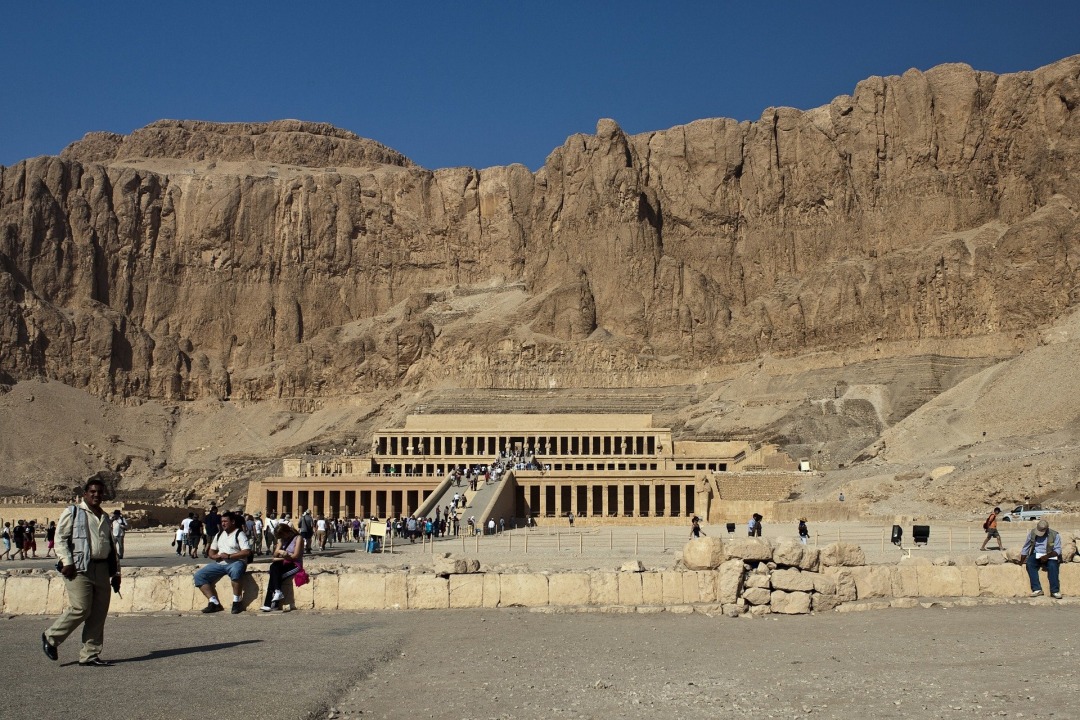
Visit the Mortuary Temple of Queen Hatshepsut, called the "Holy of Holies." It is one of the finest architectural buildings and consists of three levels connected by ramps. Its walls display different scenes depicting the divine birth of the Queen and her commercial expedition to Punt Land. The temple is mainly dedicated to the worship of the supreme god Amon-Ra. You will also see the 2 Colossi of Memnon, two massive statues representing King Amenhotep III in a seated position.
Head to visit the two massive temples on the eastern bank of the Nile:
The first is the Karnak Temple Complex, which comprises a vast mix of decayed temples, chapels, pylons, and other buildings. Construction at the complex began during the reign of Senusret I in the Middle Kingdom and continued until the Ptolemaic Period. It is a vast open-air museum and the second largest ancient religious site in the world. It was mainly a place of worship for the Theban triad - the gods Amon, his consort Mut, and their son Khunso.
The second temple is Luxor Temple, where one of the ancient Egyptian festivals is believed to have been held, as different scenes on the walls represent the celebration of the festival. Its inner part was built by King Amenhotep III, while the outer part was built by King Ramses II. After entering the temple, you will find the Abu Al-Haggag Mosque, built on the ruins of a church that had itself been built inside the temple. To the rear of the temple are chapels built by King Thutmosis III and Alexander the Great.
Return to your hotel in Luxor, escorted by your tour guide in an air-conditioned vehicle after completing this amazing tour through ancient Egyptian civilisation.