
8-Day Mount Kilimanjaro Rongai Route Trek to Uhuru Peak

8 Days Round trip from Moshi Kilimanjaro Easy pace

The journey

Trip highlights
  • 01 Climb Mount Kilimanjaro on the unspoiled Rongai Route
  • 02 Trek through forest, moorland, and the lunar desert of the Saddle
  • 03 Watch a spectacular sunrise over Mawenzi from Gillman's Point
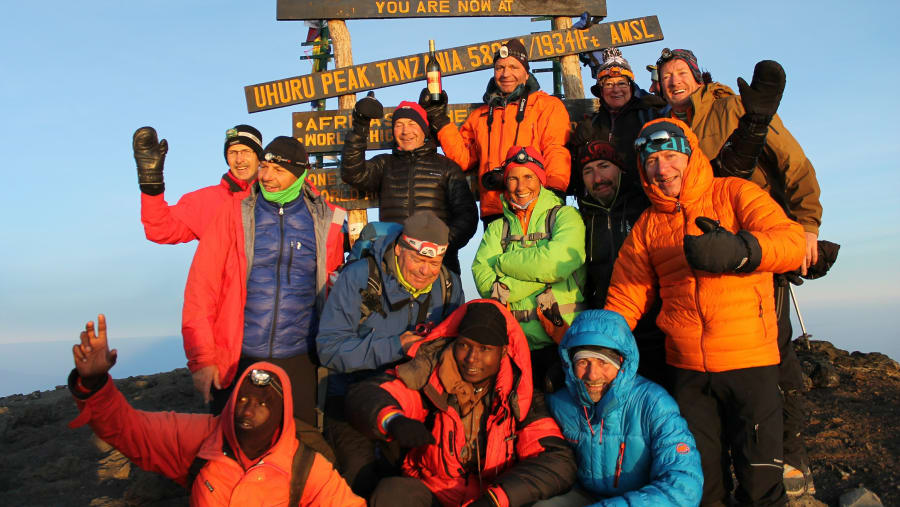
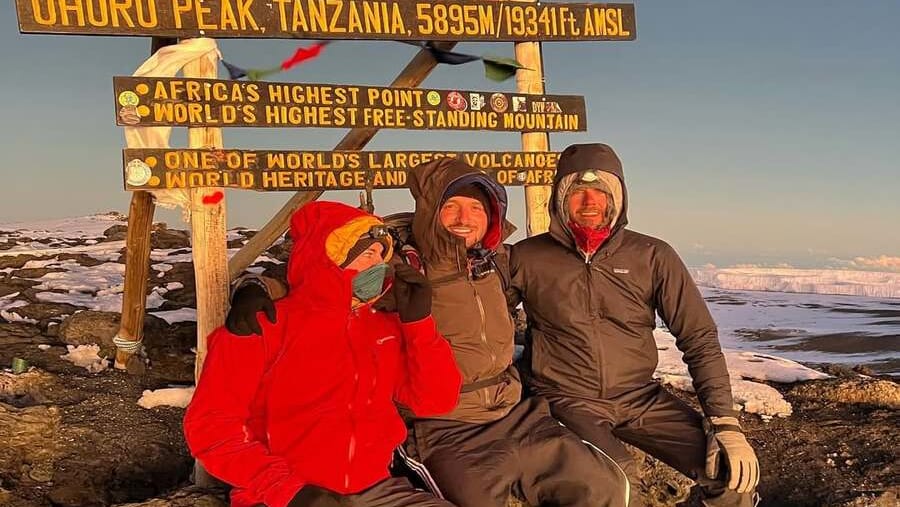
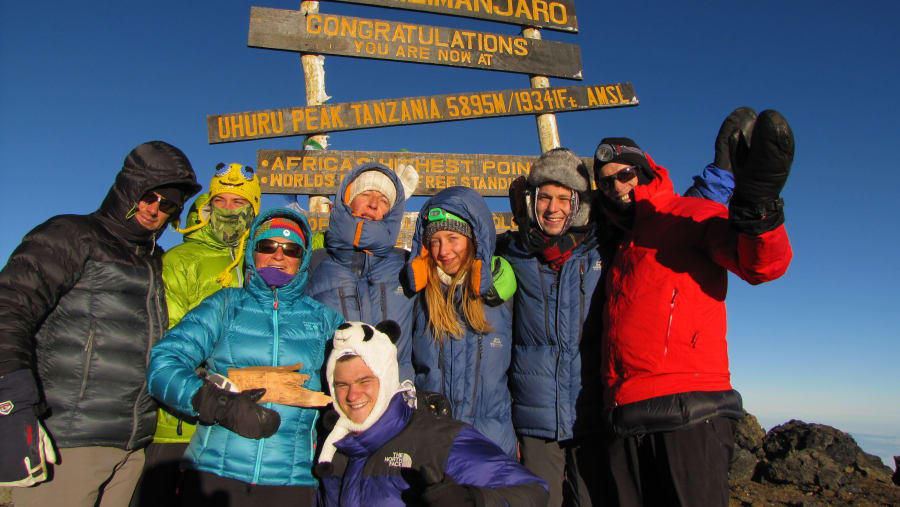
  • 04 Reach Uhuru Peak beside Kilimanjaro's glaciers and ice cliffs

Summit Mount Kilimanjaro, the tallest mountain in Africa, on the thrilling Rongai Route in Tanzania. Trek through unspoiled forest that shelters a variety of wildlife, cross beautiful moorlands and the lunar desert of the Saddle, and climb toward the crater rim by torchlight. Along the way, marvel at spectacular glaciers and ice cliffs near the summit area, with the chance to reach Uhuru Peak and watch sunrise over Mawenzi.

At a glance

What this trip includes

Duration 8 Days
Tour type Private
Activity level Easy
Accommodation Included · Standard
Transport Included
Wheelchair access Not applicable
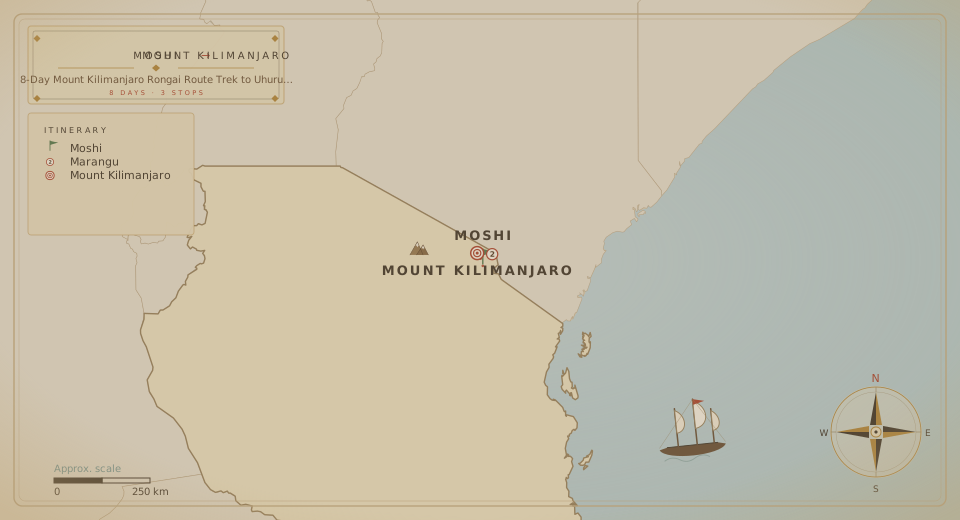
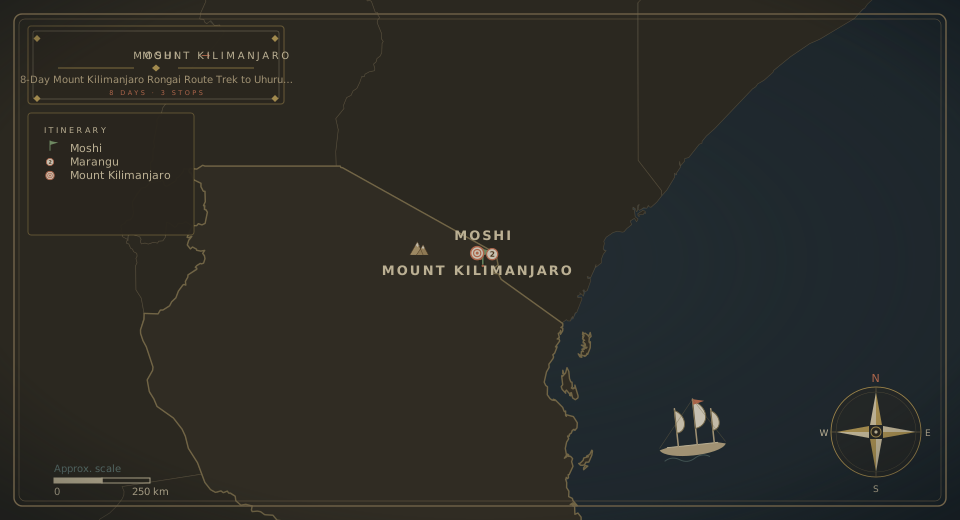
Cities Moshi, Mount Kilimanjaro, Marangu
Languages English

Day by day

The itinerary

1
Day 01

Arrival in Tanzania and Pre-Climb Briefing

  • Stay at Kilimanjaro Mountain Resort, a beautiful hotel located on the lower slopes of Mount Kilimanjaro and a perfect place to prepare for your adventure.

  • Gather in the evening at 5:30 pm for a pre-climb briefing and equipment check. The Kilimanjaro hiking guide will also confirm that you have the appropriate mandatory medical coverage and travel insurance.

Dinner and overnight at Kilimanjaro Mountain Resort: bed, dinner, and breakfast included.
2
Day 02

Rongai Gate to Camp One

  • After an early breakfast in Marangu, drive to the Rongai (Nalemoru) Gate near the Kenya border.

  • Begin your climb on this unspoiled wilderness route. The walk starts with a consistent but gentle ascent through attractive forest that shelters a variety of wildlife. The forest begins to thin out, and the first camp is at the edge of the moorland zone (2,600 m), with extensive views over the Kenyan plains. The first day is only a half-day walk.

[3-4 hours walking]

3
Day 03

Second Cave to Kikelelwa Camp

  • The morning walk is a steady ascent up to the 'Second Cave' (3,450 m), with superb views of Kibo and the Eastern Icefields on the crater rim.

  • After lunch, leave the main trail and strike out across the moorland on a smaller path toward the jagged peaks of Mawenzi. The 'Upper Kikelelwa' campsite is on a small plateau above a sheltered valley with giant senecios, past Kikelelwa Caves (3,750 m).

[7-8 hours walking]

4
Day 04

Climb to Mawenzi Turn Hut

  • A short but steep climb up grassy slopes is rewarded by superb all-round views and a tangible sense of wilderness.

  • Leave the vegetation behind shortly before reaching the next camp at 'Mawenzi' (4,300 m), spectacularly situated beneath the towering spires of Mawenzi.

  • The afternoon will be free to rest or explore the surrounding area as an aid to acclimatization.

[3-4 hours walking]

5
Day 05

Across the Saddle to School Hut

  • Cross the lunar desert of the 'Saddle' between Mawenzi and Kibo to reach 'School Hut' campsite (4,750 m) at the bottom of the Kibo crater wall.

  • The remainder of the day is spent resting in preparation for the final ascent before a very early night.

[5-6 hours walking]

6
Day 06

Summit Attempt to Uhuru Peak and Descent to Horombo Hut

  • Start the final, and by far the steepest and most demanding, part of the climb by torchlight around 1 a.m.

  • Plod very slowly in the darkness on a switchback trail through loose volcanic scree to reach the crater rim at Gillman's Point (5,685 m).

  • Rest at Gillman's Point for a short time to enjoy the spectacular sunrise over Mawenzi.

  • Those who are still feeling strong can make the three-hour round trip to Uhuru Peak (5,896 m), passing close to the spectacular glaciers and ice cliffs that still occupy most of the summit area.

  • The descent to School (4,700 m) is surprisingly fast and, after some refreshment, continue descending to reach the final campsite at Horombo (3,720 m).

[11-15 hours of walking]

7
Day 07

Horombo Hut to Marangu Gate

  • A steady descent takes you down through moorland to Mandara Hut (2,700 m), the first stopping place on the Marangu Route.

  • Continue descending through lovely lush forest on a good path to the National Park gate at Marangu (1,830 m).

[5-6 hours of walking]

Dinner and overnight at Kilimanjaro Mountain Resort: bed, dinner, and breakfast included.
8
Day 08

Departure Day

  • After saying goodbye to the team of Kilimanjaro trekking guides, take your included private departure transfer from Marangu to Kilimanjaro International Airport (JRO) for your flight, unless you choose the option of a short safari or another extension to be discussed.

The route

Where you'll travel

Tour route map
Round trip from Moshi Kilimanjaro 3 cities · 8 Days

The fine print

Trip details

What's Included

  • Tanzania VAT on tourism activities and park fees

  • Return transfers from Kilimanjaro Airport to Arusha and from Arusha to Kilimanjaro Airport

  • Hotel lodging the night before and the night after the climb, with bed, dinner, and breakfast included (double occupancy)

  • Transfer from your hotel to the starting point for your climb, and return to your hotel after your climb

  • Large portions of fresh, healthy, nutritious food

  • All Kilimanjaro National Park gate fees, camping fees, and climbing permits

  • Kilimanjaro National Park rescue fees (Kilimanjaro Rescue Team)

  • Emergency oxygen (for use in emergencies only - not as a summiting aid)

  • Basic first aid kit (for use in emergencies only)

  • Qualified Kilimanjaro mountain guide, assistant guides, porters, and cook

  • Salaries for the mountain crew as per guidelines set by Kilimanjaro National Park

  • Breakfast, lunch, and dinner, as well as hot drinks on the mountain

  • Camping equipment (tents, camp chairs, tables, and sleeping mattress)

  • Water for washing up daily

  • A porter to carry your duffel bag (maximum weight 15 kg / 32 lbs) from one camp to the next

  • Kilimanjaro National Park certificate for your successful summit attempt

  • A comprehensive Climbing Kilimanjaro travel info pack

  • Flying Doctor Service

What's Not Included

  • Flights and airport taxes

  • Items of a personal nature

  • Compulsory tips for guides, porters, and cook (average tip is anything from US$230 to US$300 per hiker, depending on the number of days, how many hikers are in the group, and the route chosen)

  • South African passport holders do not require a visa for Tanzania; however, most other nationalities require a visa for Tanzania

  • Health requirements (Yellow Fever compulsory if travelling to Tanzania recommended)

  • Highly recommended travel and medical insurance

  • Personal hiking/trekking gear - some gear can be rented from the equipment store in Tanzania

  • Optional but highly recommended portable toilet

  • Snacks, personal medicine, and water-purifying tablets

  • Meals and drinks not specified, and snacks

What to bring

  • Being properly equipped is one of the biggest factors in a successful, comfortable Kilimanjaro climb. Use this checklist as your guide, and reach out if you'd rather rent certain items from us instead of buying them.

  • One important limit: porters carry your main duffel bag, and it needs to stay at or under 15 kg (32 lbs). Anything you don't need on the mountain - a clean change of clothes for afterward, for instance - can be left at your hotel in Arusha or Moshi and picked up when you're back down.

  • Footwear

  • Sturdy hiking boots with good ankle support and a solid grip sole, ideally waterproof. Break them in for several weeks before you travel - summit week is the wrong time to discover a boot doesn't fit well. Bring a spare pair of laces, and a lightweight pair of camp shoes (sandals or similar) to change into at the end of each day's trekking.

  • Outer Layers

    • A waterproof, windproof jacket - your main outer shell, ideally with a hood.

    • Waterproof, windproof trousers - worn on summit night and any wet afternoons.

    • A warm down jacket - genuinely important for summit night and cold evenings at the higher camps.

    • Waterproof gaiters - keep loose scree and moisture out of your boots.

  • Base and Mid Layers

  • Pack moisture-wicking thermal base layers (top and bottom) for cold mornings and evenings, plus a couple of lightweight trekking shirts for daytime hiking in warmer stretches. A fleece top worn over your base layer and under your outer jacket adds a genuinely useful mid layer for cold starts.

  • For your legs, convertible or lightweight trekking trousers work well for most of the climb, plus a warmer pair for chilly evenings around camp.

  • Hands, Head, and Feet

    • Warm gloves or mittens, ideally waterproof, for summit night specifically.

    • A lightweight pair of gloves for general use lower down the mountain.

    • A warm hat and, for summit night, a balaclava or neck gaiter for extra warmth.

    • A sun hat for the lower, warmer days.

    • Several pairs of good hiking socks - a mix of lighter socks for warmer days and thicker wool-blend socks for cold mornings and camp evenings.

  • Sun Protection

  • The sun is intense at altitude even when it's cold - sunglasses with strong UV protection, high-SPF sunscreen, and lip balm with SPF are all genuinely necessary, not optional extras.

  • Camp and Practical Gear

    • A headlamp, with spare batteries - camp gets dark early and summit night starts well before dawn.

    • A daypack (around 30 liters) for anything you want on hand during the day's trek.

    • A refillable water bottle or hydration bladder - 2-3 liters of carrying capacity is a sensible target.

    • Trekking poles - genuinely helpful on steep descents and easier on the knees.

    • A camp towel that packs down small and dries quickly.

    • A dry bag or liner to keep valuables and electronics protected if it rains.

  • Nice-to-Haves

    • A paperback book or journal for evenings at camp, hand sanitizer, a personal first-aid kit for minor issues (blister care, pain relief, any regular medication you take), and a portable phone charger, since charging options are limited once you're on the mountain.

Know before you go

  • Mount Kilimanjaro Rongai Route 8 Days Itinerary.

  • The Rongai Route 8-day tour begins and ends at Kilimanjaro Mountain Resort in Marangu. Arrive anytime at Kilimanjaro International Airport (JRO), and there will be a private transfer waiting at the airport to take you to Kilimanjaro Mountain Resort in Marangu. All airport transfers are part of the package, and no extra fee is required.

  • Normally, March, April, and May are the months with long rains and should be avoided. November is usually the short-rains season, but it does not often rain every day, so climbing is possible. The best months for climbing Mount Kilimanjaro are January, February, August, and September. July can be colder, and November to December can be wet. January to February are the warmest months, with skies almost clear of clouds each evening and morning. The success rates with our guides are outstanding compared to the overall success rates for all climbers who attempt to reach the top.

Logistics

Meeting & route

Meeting point
Kilimanjaro International Airport
Tour start
Moshi Kilimanjaro
End of the journey

Your 8 days run from Moshi Kilimanjaro to Moshi Kilimanjaro.

Watch the tourHQ film Watch the film

Create your own adventure

Can't find the perfect tour? Tailor your dream trip.

  • Tell us your destination, dates and group size.
  • Our travel experts and local guides design a tailored itinerary, just for you.
  • Enjoy your trip with peace of mind, knowing everything is taken care of.
Plan my holiday

Say goodbye to travel stress.

Starting from

USD 2,400 /person
Book This Tour

When

Travellers

Total
