


Nymphs Hill
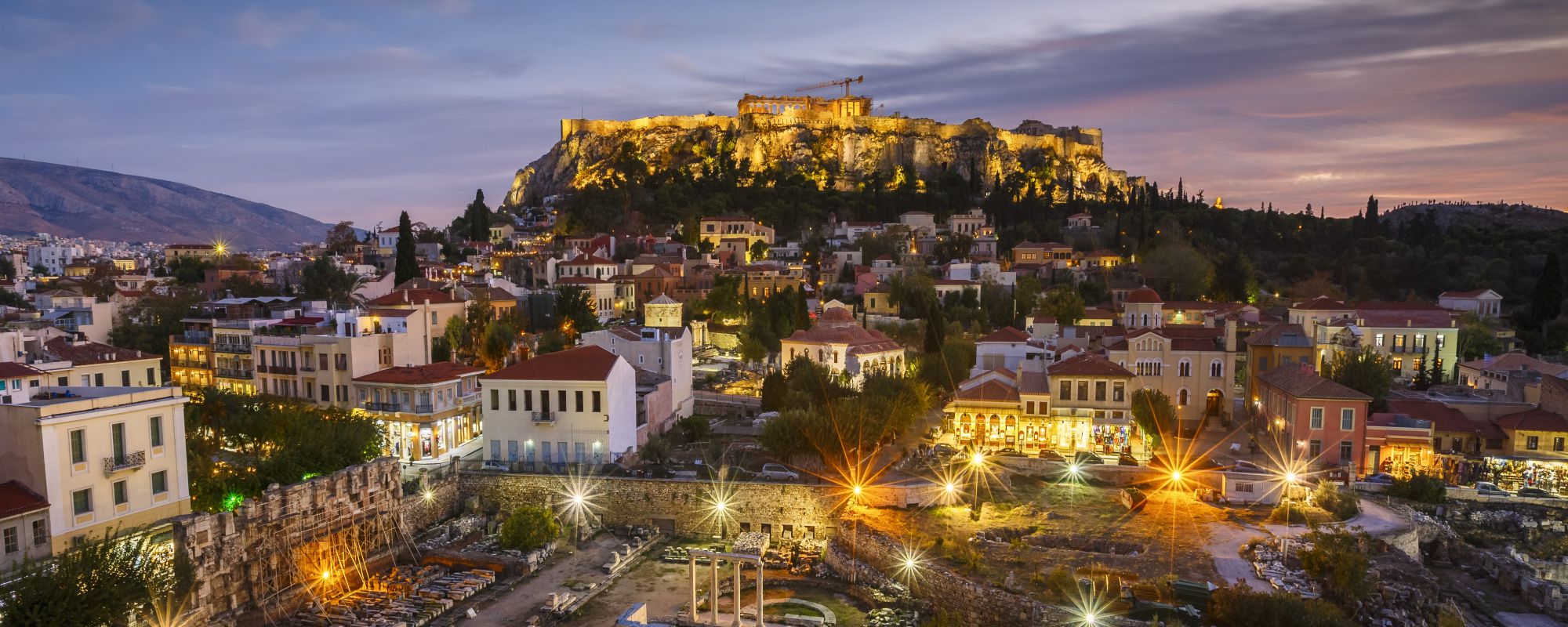
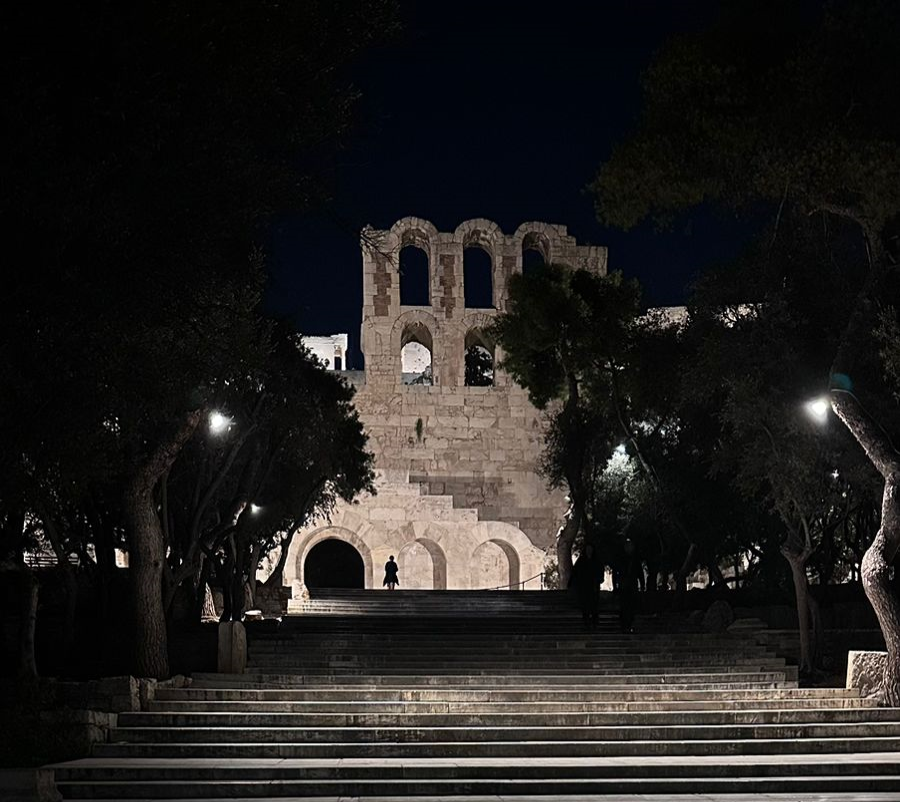
The name of the hill is derived from an inscription that was dedicated to the nymphs, who were worshiped here in times of antiquity. Unlike the Gods of Mount Olympus, the Nymphs never lost their place in popular legend, and today they are still spoken about, in terms of fairies.
Temple of Olympian Zeus
The Temple of Olympian Zeus in Athens, also known as the Olympieion, was built over several centuries starting in 174 BCE and only finally completed by Roman emperor Hadrian in 131 CE. Its unusually tall columns and ambitious layout made the temple one of the largest ever built in the ancient world
Hadrian's Arch
Hadrian's Arch, is a monument which, in spite of the marks of time and repetitive acts of vandalism, still preserves its elegant silhouette and an admirable patina through the gradual oxidation of its pentelic (from the quarries of Mt. Penteli) white marble.
Hellenic Parliament
A beautiful columned building styled in the neo-classical Greek fashion, the Hellenic Parliament is an imposing building located in Syntagma Square in the centre of Athens. Completed in 1843, the Parliament building was originally the Royal Palace of Greece and was designed by German architect Friedrich von Gärtner for King Otto.
Panathenaic Stadium
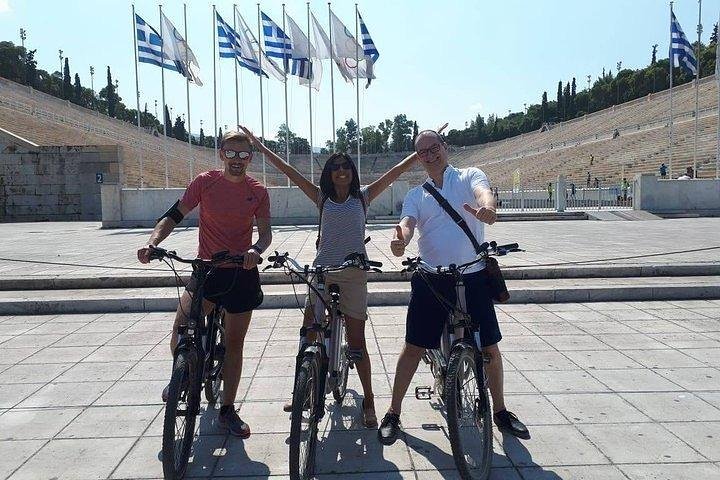
The Panathenaic Stadium is a classical cultural monument of Greece. Its history is directly connected to the Modern Olympic Games, from their revival in 1896 until the Athens Olympic Games in 2004. It is also the place from which the Olympic Flame is delivered to all the Olympic Games, Winter, Summer and Youth, as well as the Athens Authentic Marathon.
Plaka Athens
Plaka is one of the oldest neighborhoods of Athens, located right below the Acropolis hill. It is extremely beautiful and picturesque, distinguished for its authentic character and traditional layout. The largest part of Plaka consists of neoclassical houses that date back to the 19th century, although archeological findings suggest that the region has been continuously inhabited since the prehistoric times.
Ancient Agora
Situated to the north-west of the Acropolis, the Ancient Agora of Athens was originally established as the administrative and trade centre of the city – hence its name, the ‘trade marketplace’. The Agora witnessed the Panathenaic Procession, the greatest celebration in the ancient city of Athens, memorialising the unification of Attica under King Theseus.