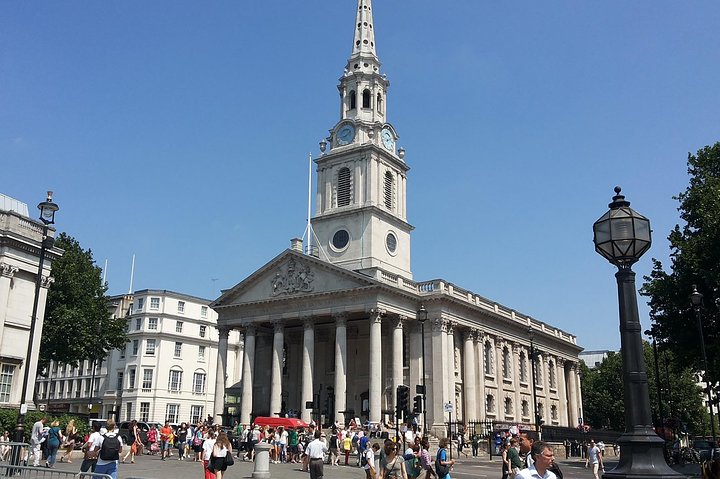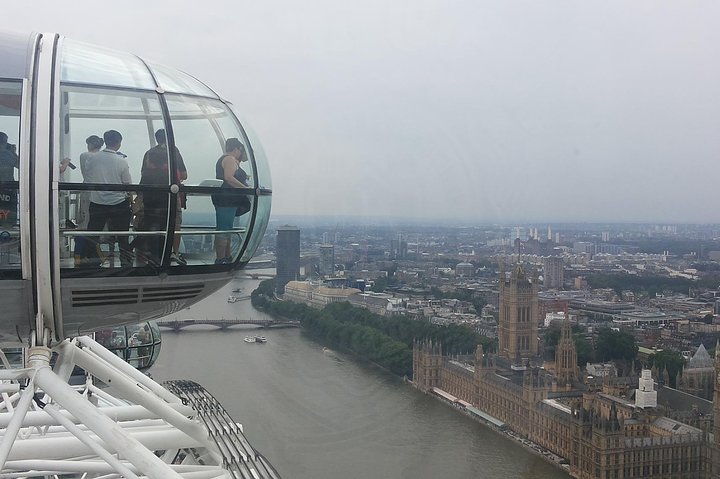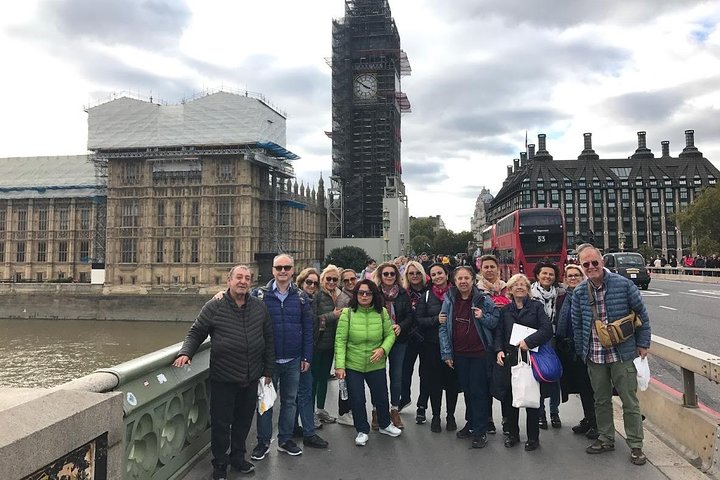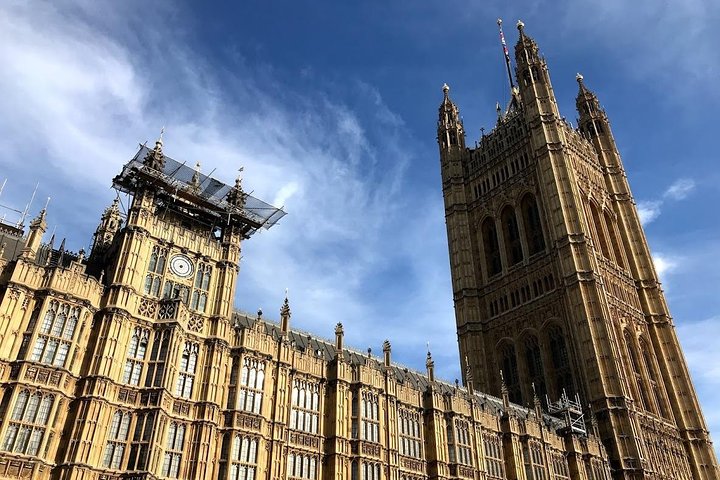

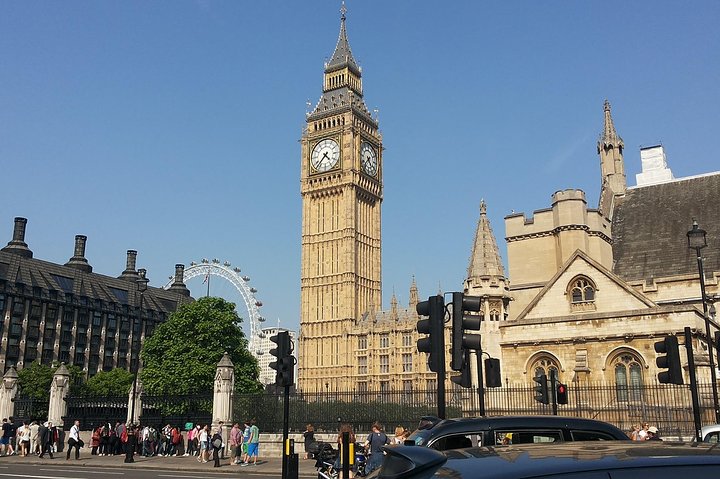
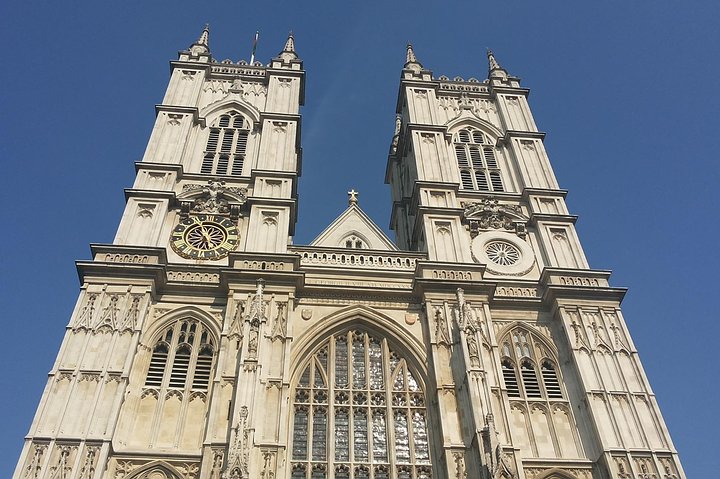
Located right in the middle of London's iconic landmarks such as Houses of Parliament, Elizabeth Tower (a.k.a Big Ben), Whitehall, Saint-Margaret's Church, Westminster Abbey and Westminster Bridge. Parliament Square houses eleven state figures and world leaders, including Sir Winston Churchill, Gandhi and Nelson Mandela. Parliament Square in London is a popular destination among tourists. The atmosphere is magnificent and it's one of the must-visit locations in the city.Westminster Abbey is a Church, burial ground, coronation site and much more, Westminster Abbey continues to attract visitors over 900 years after its founding. In many respects the architecture is common. There's the traditional cross-shaped floor plan with a nave, north and south transepts and several round side areas. But both its execution and use raise The Collegiate Church of St Peter, Westminster (the official name) to among the highest examples of church construction. Here at Westminster Abbey lie buried kings and poets, scientists and philosophers who have themselves raised humankind to the highest levels. Isaac Newton and James Clerk Maxwell (discoverer of electromagnetic theory, which later lead to radio and TV), Chaucer and Kipling, Dr. Samuel Johnson (creator of the first English dictionary) and many other justly famous names are interred here.The Houses of Parliament, known also as the Palace of Westminster is where the two Houses of the Parliament of the United Kingdom (the House of Lords and the House of Commons) conduct their sittings. The Houses of Parliament (Palace of Westminster) lie on the north bank of the River Thames in the London borough of the City of Westminster, close by other government buildings in Whitehall. The oldest part of the Houses of Parliament (Palace of Westminster) is still in existence, Westminster Hall, which dates from 1097.The palace originally served as a royal residence, but no monarch has lived in it since the 16th century. Most of the present Houses of Parliament (Palace of Westminster) structure dates from the 19th century, when the Palace was rebuilt after it was almost entirely destroyed by a fire in 1834. The architect responsible for rebuilding the Palace was Sir Charles Barry and Augustus Welby Pugin, and the building is an example of the Gothic revival.Buckingham Palace is still the official residence of Britain's monarchy, as it has been since Queen Victoria's designation in 1837. Much of the Buckingham Palace was constructed as early as 1703 for the Duke of Buckingham. Buckingham House (as it was then known) was purchased in 1762 by George III, who used it as a private residence. Over the following 75 years, the house was expanded to form three wings around a central courtyard.
When Queen Victoria discovered Buckingham Palace lacked several 'necessary' rooms - such as a formal ballroom, a nursery, visitor's bedrooms and others - major additions were undertaken, including adding an entire wing to form a quadrangle.
The Marble Arch was moved to Hyde Park, where it still resides near Speaker's Corner. With the refacing using Portland stone in 1913, the palace received its last major change.
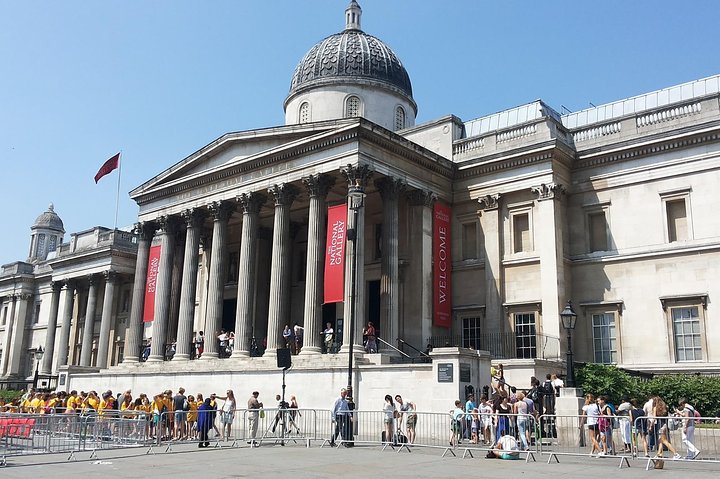
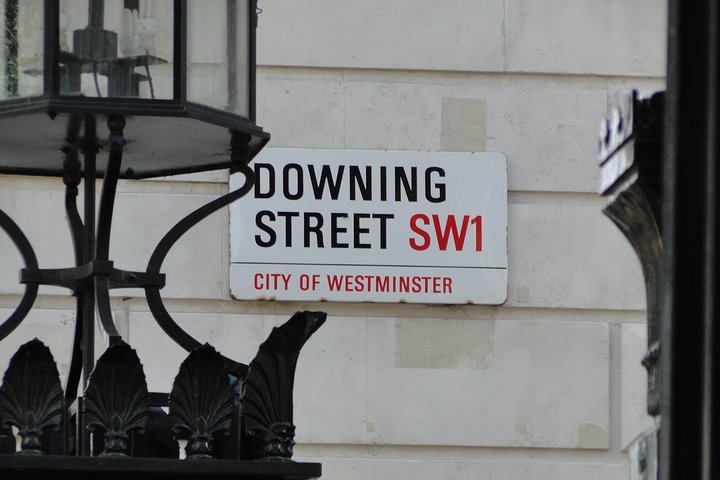
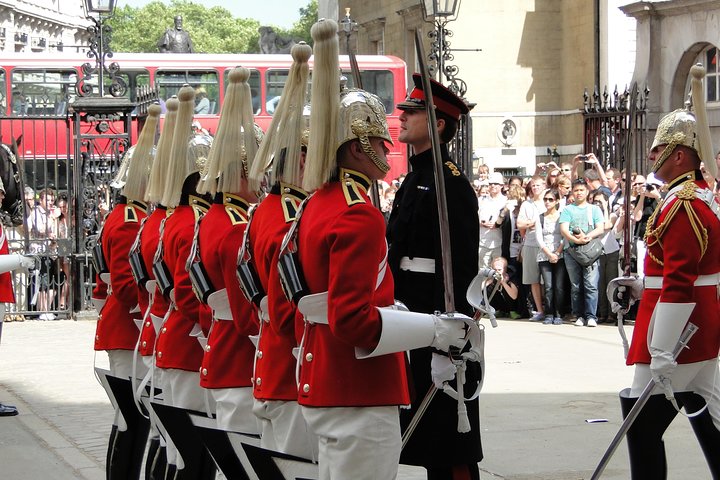
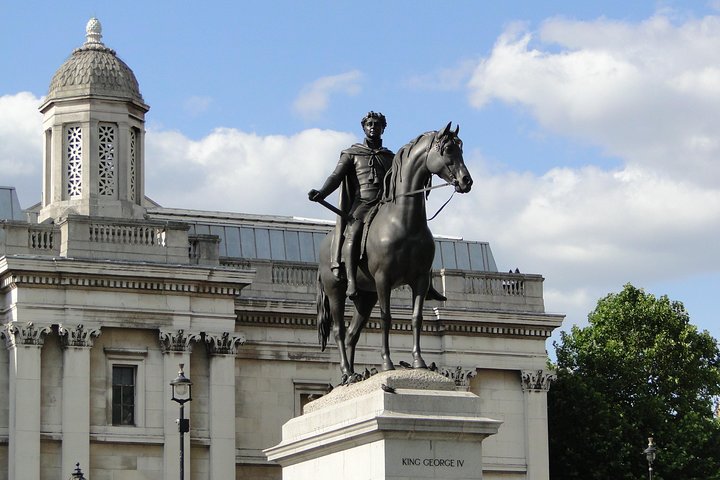
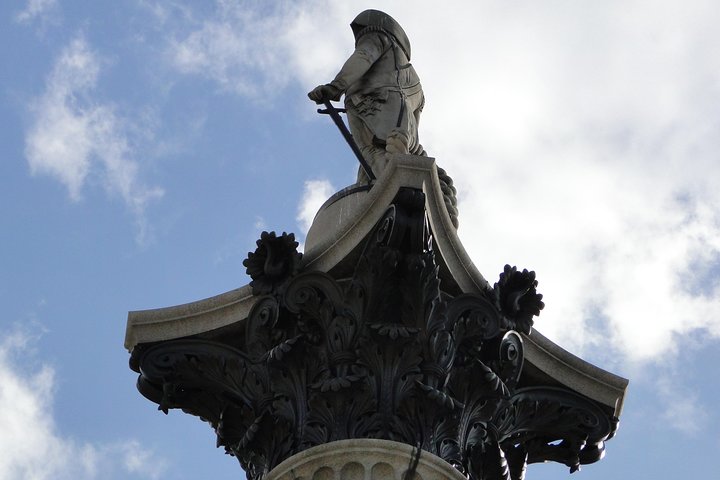
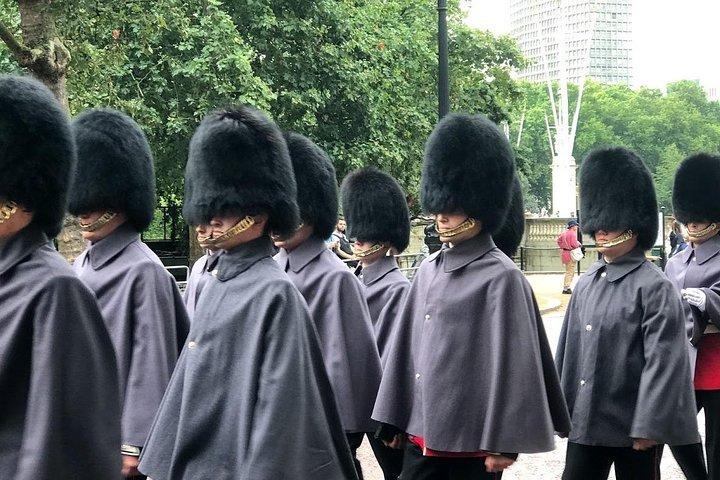
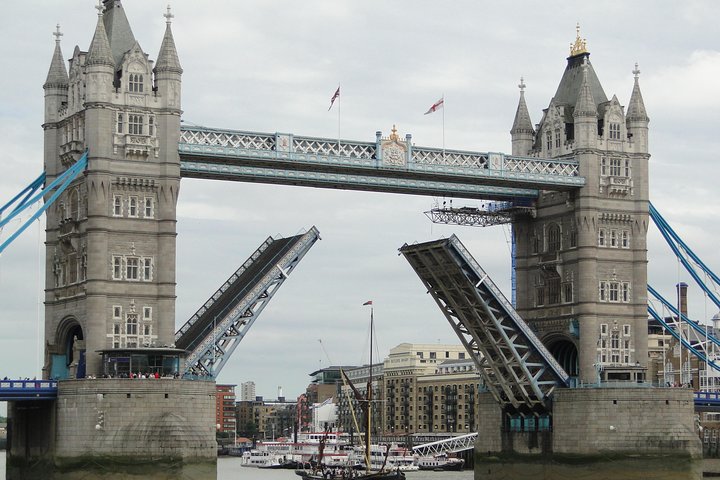
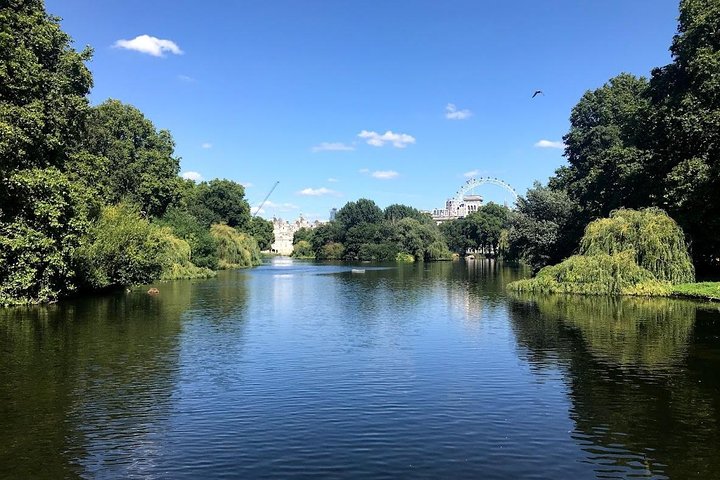
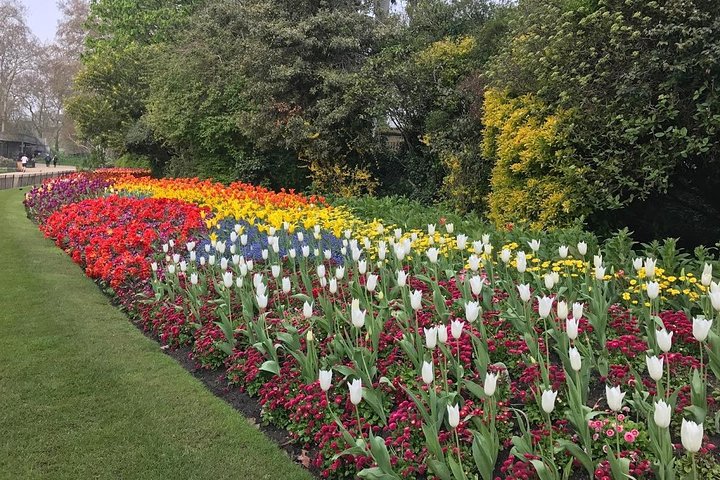
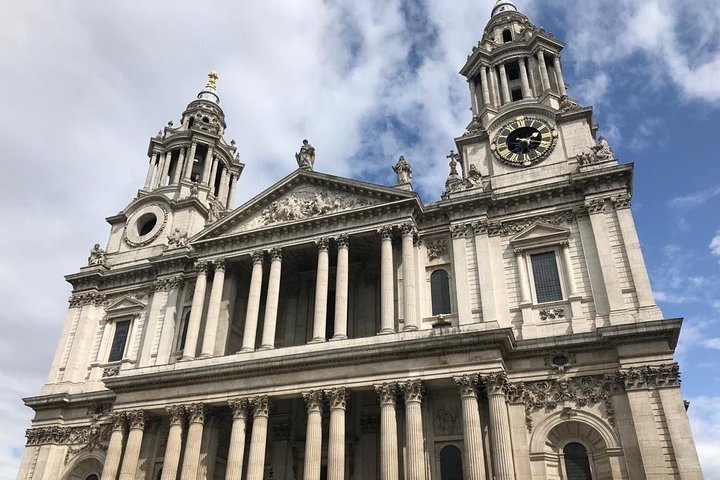
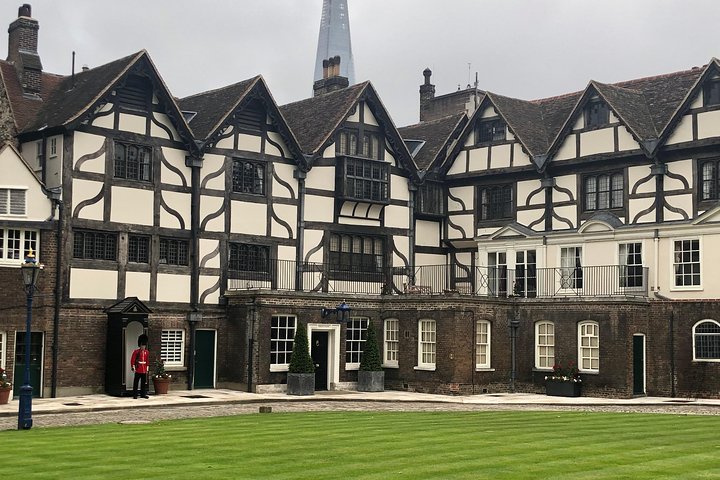
Buckingham Palace is still actively used as both residence and offices, over 50,000 guests and invited diplomats to visit per year who interact with over 400 individuals for whom this is 'the office'. Nevertheless, several parts of Buckingham Palace are open to the public.The Queen's Guard and Queen's Life Guard (called King's Guard and King's Life Guard when the reigning monarch is male) are the names given to contingents of infantry and cavalry soldiers charged with guarding the official royal residences in the United Kingdom. The British Army has regiments of both Horse Guards and Foot Guards predating the English Restoration (1660), and since the reign of King Charles II these regiments have been responsible for guarding the Sovereign's palaces. Despite tourist perceptions, the Guards are not purely ceremonial and are fully operational soldiers.St. James's Park is one of the Royal Parks of London in the City of Westminster, London, just east of Buckingham Palace and west of Downing Street. For more than four hundred years, St James ' Park has been the center of the royal and ceremonial life of the country. Many features of the park have been shaped by Royal ambitions and national events. We will show hidden gems and the best spots for your best photo shots in the park.The London Wall was the defensive wall first built by the Romans around Londinium in 250 AD, their strategically important port town on the River Thames in what is now London, England, and subsequently maintained until the 18th century. It is now the name of a road in the City of London running along part of the course of the old wall in Tower Hill. Until the later Middle Ages, the wall defined the boundaries of the City of London. Let's see and explore this masterpiece of Roman engineering.St Katharine Docks is a former dock and now a mixed-used district in Central London, in the London Borough of Tower Hamlets and within the East End. It lies on the north bank of the River Thames, immediately downstream of the Tower of London and Tower Bridge. From 1828 to 1968 it was one of the commercial docks that made up the Port of London. It is in the redevelopment zone known as Docklands, and is now a popular housing and leisure complex with full of offices, public and private housing, a large hotel, shops and restaurants, an 18th century hidden gem in this yachting marina and other recreational facilities. It remains a popular leisure destination where you can enjoy and admire. Just follow Tourope UK's APTG qualified blue badge tourist guides.Tower Bridge is probably city's most distinctive symbol for today. Bridge shows a lot to its medieval predecessor London Bridge with its starlings and elaborate twin towers that give the bridge its name but it's not just a homage to the past, hidden inside that medieval looking exterior there's a rather wonderful piece of Victorian engineering and in its day it was the biggest and most sophisticated lifting bridge in the world. Unlike London Bridge, the genius of the design is that the bridge can act as a gateway swinging open to allow tall ships to pass through. Plenty of things we will tell you about this masterpiece in London, just follow us!Few prisons can claim to be as popular as the Tower of London, an attraction - unpleasant for some - for over 900 years. Its twenty towers are filled with an ancient tradition of royal blood, armor and jewels and the history to match. The Tower of London central structure began as a fort - used by the original builder William the Conqueror who completed the first tower around 1100 AD. At its completion it was the tallest building in London. Henry III had it whitewashed in the 13th century and the name, White Tower, has stuck. Later it evolved into a prison, used by Henry VII (and many others). Still later - and continuing to this day - it has acted as a repository for the extensive collection of crown jewels. Henry VII, nearly always short of money, had few jewels to store. But the stone complex, near the Tower Bridge alongside the River Thames, has also been used at various times to house the Royal Mint, the Public Records, the Royal Menagerie (later to form the starting point of the London Zoo) and an observatory (built in 1675). Listen to the rest of the story of the Tower of London from us today.St Paul's Cathedral is a cathedral on Ludgate Hill, in the City of London, and the seat of the Bishop of London. The present building dates from the 17th century and is generally reckoned to be London's fourth St Pauls Cathedral, although the number is higher if every major medieval reconstruction is counted as a new cathedral. The first cathedral was built by the Saxons in wood. It burned down in AD 675 and was rebuilt, again in wood, ten years later. After this version was sacked by the Vikings in 962, the "second" St Pauls was built, this time mainly in stone. The predecessor to Wren's cathedral,The third St Pauls (known as Old St Pauls), was begun by the Normans after the late Saxon cathedral suffered in a fire of 1087. Work took over two hundred years, and a great deal was lost in a fire in 1136. Nonetheless, the roof was once more built of wood, which was ultimately to doom the building. St Paul is the symbol of a nation's resistance. We have plenty of stories to tell about Sir Christopher's masterpiece in the heart of London.Trafalgar Square is a very touristic public square with some of London's most popular attractions, from galleries and historic buildings to monuments and statues, you can be a witness of deep-seated British history. Square also holds a series of events all year round. Listen to the stories of the kings such as Charles I, Charles IV, Admiral Horatio Nelson, General Sir Charles James Napier and Major General Sir Henry Havelock who shaped the history of this nation. Tourope UK's APTG qualified blue badge tourist guides will ready to take you an immaculate journey through the timeline of our nation.Explore the official entrance to St James and Buckingham Palace, since the Restoration of King Charles II in 1660. Life Guards have stood guard at Horse Guards and ready to offer you a true British ceremony. Although Changing The Queen's Lifeguard is not as well-known as Changing the Guard at Buckingham Palace smaller crowds and no railings between you and the men and horses taking part make it ideal for those with younger children and those looking for some amazing pictures. The ceremony lasts about half an hour, and the mounted sentries change every hour, or half hour in very cold weather during the day until 16:00 when a dismounting ceremony takes place. The Queen's Life Guard is normally provided by men of the Household Cavalry Mounted Regiment which consists of a Squadron of The Life Guards, who wear red tunics and white plumed helmets, and a Squadron of The Blues and Royals with blue tunics and red plumed helmets. Our APTG qualified blue badge tourist guides will be ready to tell you amazing stories about this ceremony. A simply not to be missed attraction in the heart of the city.Being one of the most important political buildings in the world United Kingdom's White House Number 10 continuously hosts the British prime ministers since 1735. The main decisions affecting Britain's destiny in the last 275 years have seriously been taken behind its iconic black door. Today it's not possible to enter the street as a tourist but knowing the idea that an actual prime minister lives and works in the street is heart beating. Have this experience with us.