Drive Through Lisbon's Landmarks and Panoramic Viewpoints
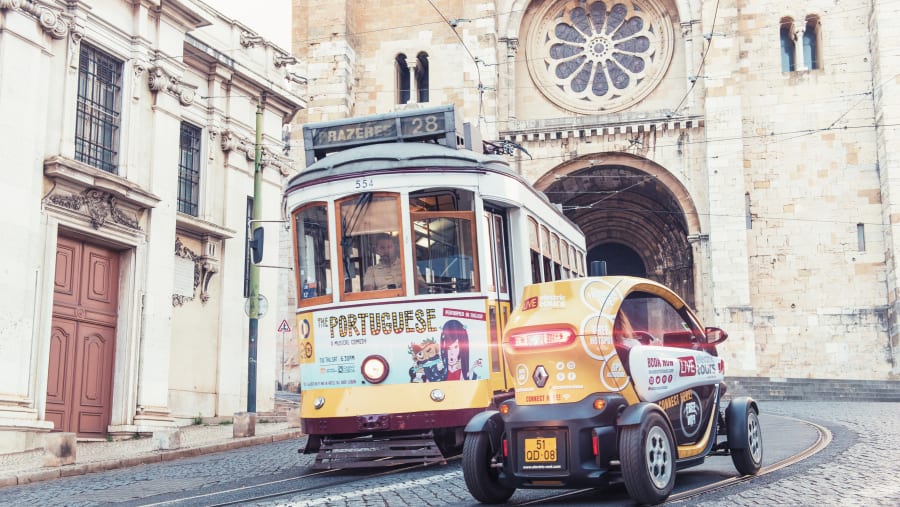
Pick up the electric car from your tour provider's office and drive to the city's famous sites with the help of your Lisbon audio guide.
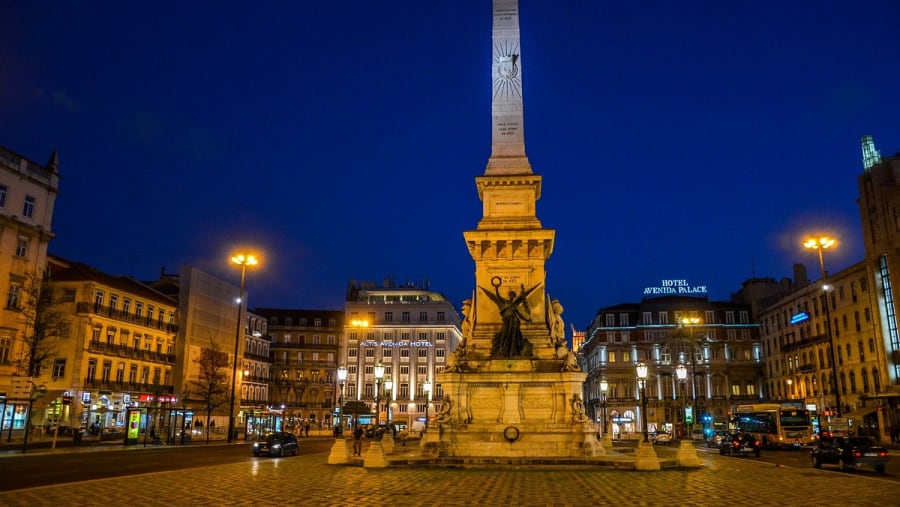
Visit Restauradores, the square dedicated to the restoration of Portugal's independence in 1640 after 60 years of Spanish domination. In the middle of the square, the obelisk, inaugurated in 1886, bears the names and dates of the battles fought during the Portuguese Restoration War.
Head to Rossio, the liveliest square in the city. People stop here to sit and relax or grab a drink from one of the several atmospheric cafés with outdoor seating, the most popular being the art-deco Café Nicola on the western side. On either side of the square are two baroque fountains, and in the center stands a 27-meter-high monument. It consists of a pedestal with marble allegories of Justice, Wisdom, Strength, and Moderation, qualities attributed to Dom Pedro IV, whose statue stands on top.
Arrive at Cais do Sodré. Sodré was the name of a 15th-century family with businesses in this neighbourhood, which has always been linked to maritime trade. Over time, the entire area from the waterfront to two blocks inland came to be known as Cais do Sodré.
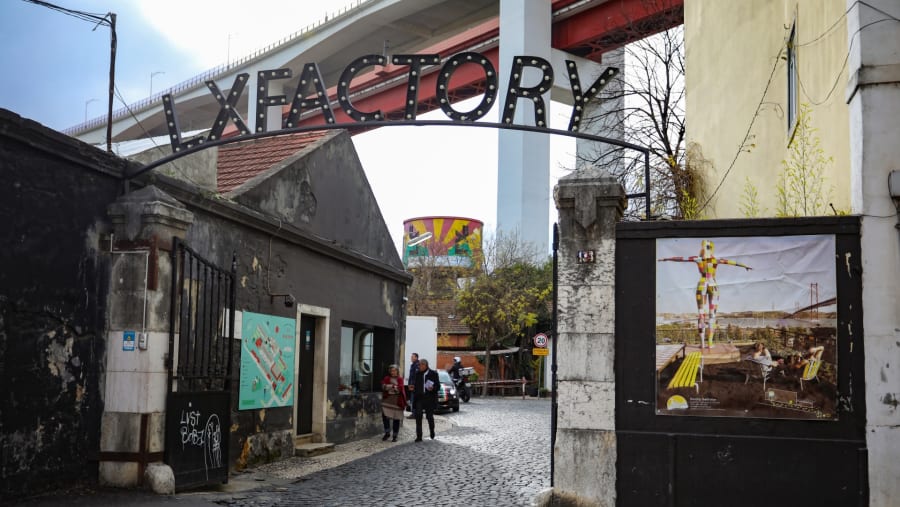
Proceed to LX Factory, a complex dating from 1846 that was reborn in 2008 as a hub of creativity and experiences. It preserved its industrial spaces and welcomed companies connected to the arts, bringing in shops, cafés, and restaurants. Today, there is a little bit of everything here, from fashion and books to vintage furniture and contemporary design, alongside dining options that include pizza, sushi, burgers, and more creative cuisine. The interiors retain many old pieces, while most of the façades are covered in street art.
Explore Belém, Lisbon's most monumental and historical area. From here, many of the great Portuguese explorers embarked on their voyages of discovery, including Prince Henry, Bartholomeu Dias, Ferdinand Magellan, and Vasco da Gama. Christopher Columbus also stopped here on his way back to Europe after discovering the New World.
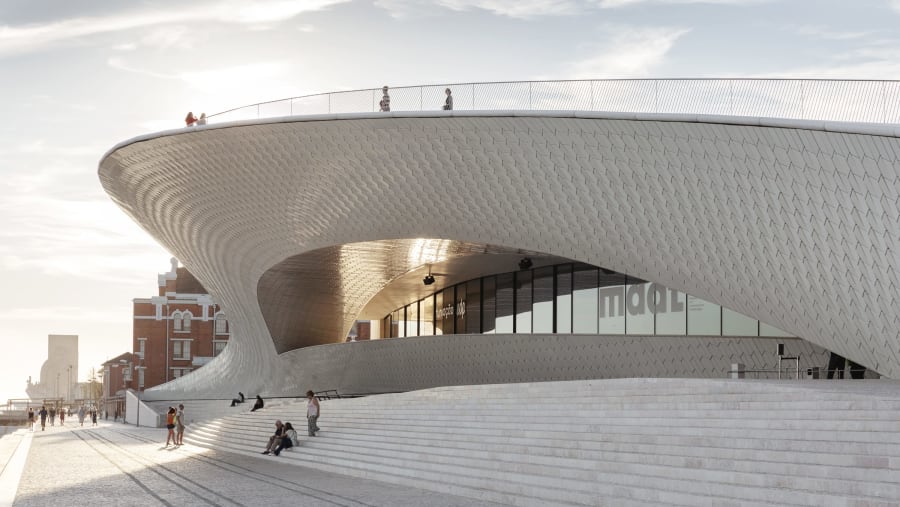
Marvel at MAAT, Lisbon's new cultural project focused on art, architecture, and technology. The €20 million museum sits on the Tagus River to the west of the city centre and is one of Europe's most lyrical new museums. It creates a connection between the new building and the Tejo Power Station, one of Portugal's most prominent examples of industrial architecture from the first half of the 20th century and one of the country's most visited museums. It also has a restaurant overlooking the 25 de Abril Bridge, and it is possible to walk over the new undulating, shell-shaped building with its curved lines. The exterior staircase descends toward the water, creating a generous public space.
Head to the 25 de Abril Bridge, a suspension bridge connecting Lisbon to the municipality of Almada on the left, or south, bank of the Tagus River. It was inaugurated on August 6, 1966, and is often compared to the Golden Gate Bridge in San Francisco because both are suspension bridges of a similar colour. Please note that you cannot go there with the Twizy.
Visit Terreiro do Paço. Lisbon's grandest square faces the river and was originally designed to welcome those arriving in the city by boat. What you see today is the 18th-century version, as the original square, named Terreiro do Paço and home to the royal palace, was destroyed in the 1755 earthquake. It was rebuilt with a triumphal arch facing the Tagus, and the surrounding arcaded buildings housed government offices for many years. At the center stands a monument to King José I. The square is also home to the city's oldest café, Martinho da Arcada, as well as the monumental Pousada hotel. There is also a tourist office, while across from it is the Lisboa Story Centre, which presents the city's history. Under the arcades, there are cafés and restaurants with outdoor tables.
Explore Miradouro São Pedro de Alcântara, a garden with a panoramic view across the city toward St. George's Castle and central Lisbon. A map made of tiles marks all the distinctive buildings, and the lower geometric garden contains busts of heroes and gods from Greco-Roman mythology, such as Minerva and Ulysses.
Proceed to Miradouro Portas do Sol. The view from this miradouro is one of the most memorable in the city. Admire Alfama's rooftops, towers, and domes descending toward the river.
Reach Miradouro da Graça. Trees provide plenty of shade at this miradouro, making it ideal for a late afternoon snack at the café while enjoying views of the castle.
Visit Nossa Senhora do Monte. One of the most romantic miradouros, it offers some of the city's most beautiful sunsets along with striking views of the castle and practically the entire town.
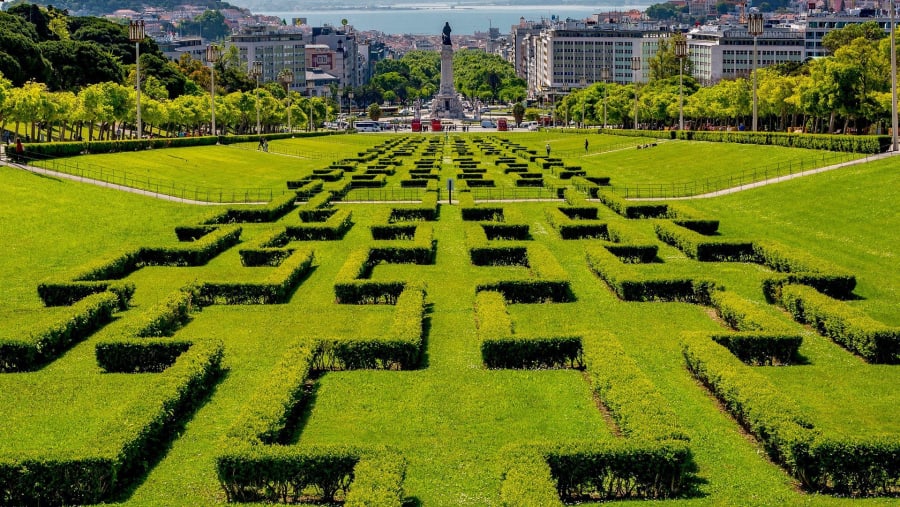
Explore Parque Eduardo VII. The top of this park offers views down Avenida da Liberdade toward the river in the distance.