Russia · Castles & Palaces

10-Hour Saint Petersburg Heritage Tour with Peterhof and Kronshtadt

10 Hours Round trip from Peterhof Grand Palace Easy pace

The journey

Trip highlights
  • 01 Ride the hydrofoil to Peterhof for a water approach to the palace complex
  • 02 Explore Peterhof's Lower Park, Grand Palace, and Upper Gardens
  • 03 Visit Oranienbaum's Chinese Palace and park ensemble
  • 04 See the Big Navy Cathedral and harbour area on Kronshtadt Island

Explore Saint Petersburg's imperial and maritime heritage on a 10-hour tour through Peterhof, Oranienbaum, and Kronshtadt. Ride a hydrofoil to Peterhof, visit the Lower Park, Grand Palace, and Upper Gardens, then continue along the Gulf of Finland to Oranienbaum for the Chinese Palace and Park. Finish on Kronshtadt Island, where Russian naval history comes to life at the Big Navy Cathedral and the harbour area.

Finish on Kronshtadt Island, where Russian naval history comes to life at the Big Navy Cathedral and the harbour area.

From the itinerary

At a glance

What this trip includes

Duration 10 Hours
Tour type Shared
Activity level Easy
Accommodation Not included
Transport Not included
Wheelchair access Not applicable
City Saint Petersburg
Languages English

Day by day

The itinerary

1
Day 01

Peterhof, Oranienbaum, and Kronshtadt Discovery

  • 09:00 - Pick up from the hotel by your Saint Petersburg tour guide.

  • 09:30-10:30 - Go on a hydrofoil boat ride to Peterhof.

  • 10:30-12:00 - Enjoy a tour of Peterhof's Lower Park.

  • 12:00-12:30 - Stop for a coffee break.

  • 12:30-13:30 - Tour the Grand Palace and Upper Gardens.

  • 13:30-14:30 - Stop for lunch.

  • 14:30-15:00 - Drive to Oranienbaum.

  • 15:00-16:00 - Embark on the Chinese Palace and Park tour.

  • 16:00-16:30 - Proceed to Kronshtadt Island by road.

  • 16:30-17:30 - See the Big Navy Cathedral and the harbour area.

  • 17:30-19:00 - Ride back to the city.
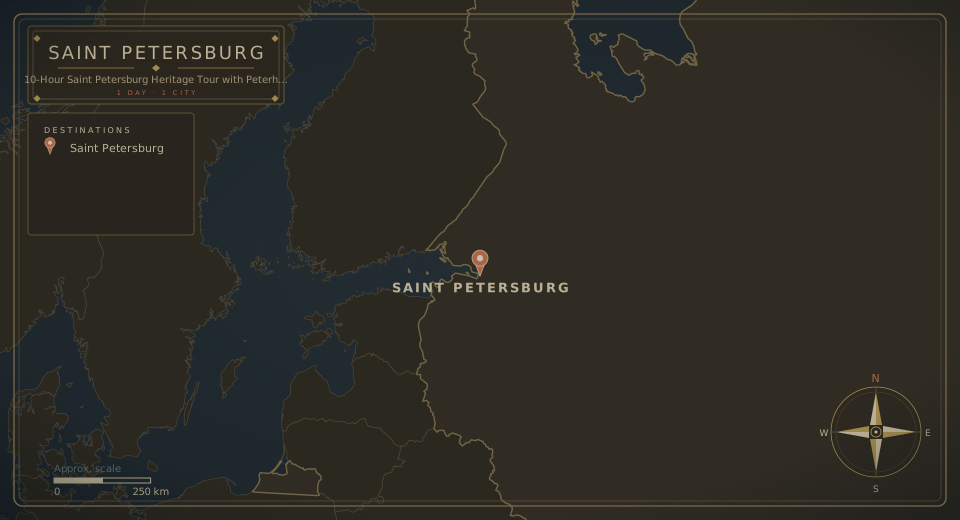
Peterhof Grand Palace and Lower Park, Oranienbaum Chinese Palace and Park, Kronshtadt Island harbour area

Where this trip takes you

Peterhof Grand Palace and Lower Park, Oranienbaum Chinese Palace and Park, Kronshtadt Island harbour area

The route

Where you'll travel

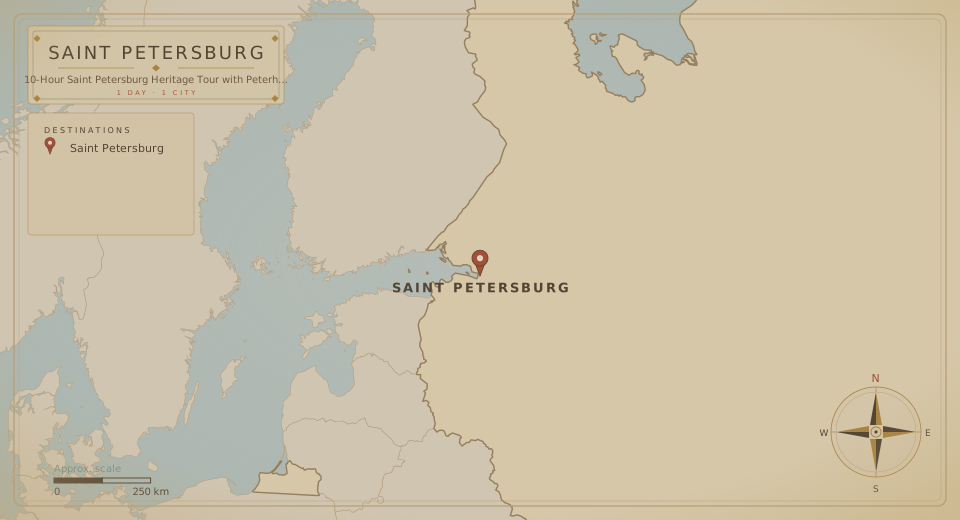
Tour route map
Round trip from Peterhof Grand Palace 1 city · 10 Hours

The fine print

Trip details

What's Included

  • Saint Petersburg tour guide

What's Not Included

  • Entry tickets
  • Transportation
  • Food

Know before you go

  • You will visit places closely connected with Russian maritime history from the time of Peter I, who laid the foundation of the Russian navy base on Kronshtadt Island, which played a significant part during WWII when the Baltic Fleet was fighting Nazi Germany.
  • You will start from Peterhof, which Peter the Great conceived as a seafront official imperial residence and as a gigantic monument commemorating the victory over the Swedish Empire and the triumph over nature itself. You will then continue your tour along the coastline of the Gulf of Finland to Oranienbaum and Kronshtadt Island by dam.
  • You will arrive from St. Petersburg by hydrofoil boat to catch the view of the palaces and fountain complexes from the water, as it was intended by Peter himself. After going through the Upper Garden, you continue on land to the next former royal residences built in Oranienbaum. You finish your tour in Kronshtadt, where you will visit the Big Navy Cathedral and see the forts, the first city port area, Peter I's dry dock, and the lighthouse.
  • Peter I started the Northern campaign in 1700 against Sweden, which had occupied this territory for the previous 100 years. In spite of being defeated initially by Charles XII, who was almost an alter ego for Peter in age and character, he found himself in the marshy lands of the former Great Novgorod city principality. His resilience and ability to learn from defeat gave Peter I the opportunity not only to create from scratch the most advanced army and navy, but also to build, practically on an empty spot, a new capital surrounded by fortresses and sea forts defending all approaches from the enemy side.
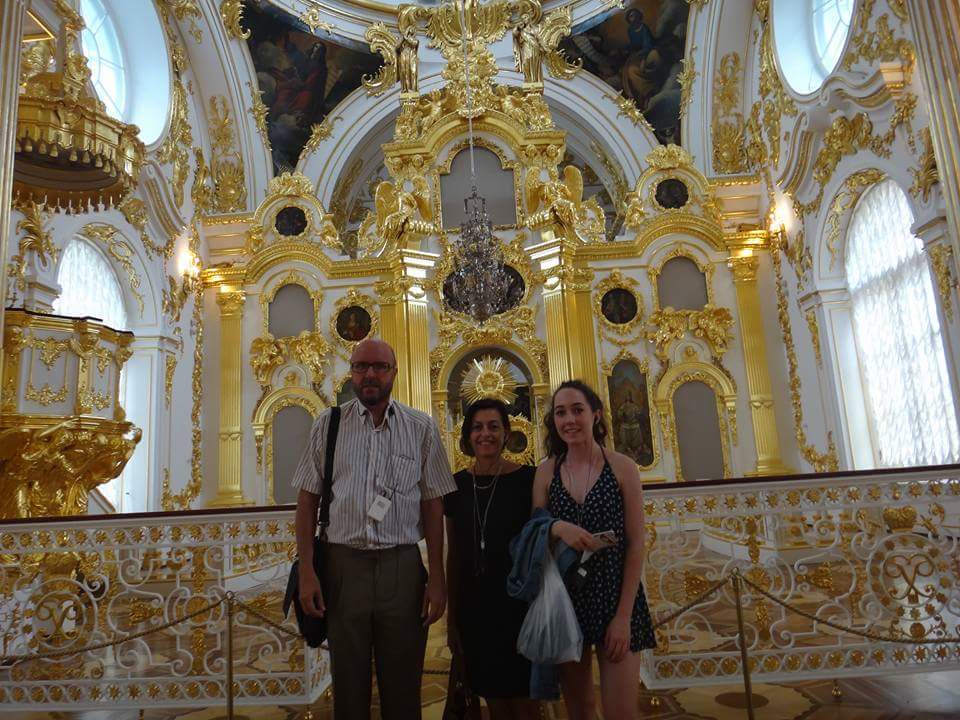
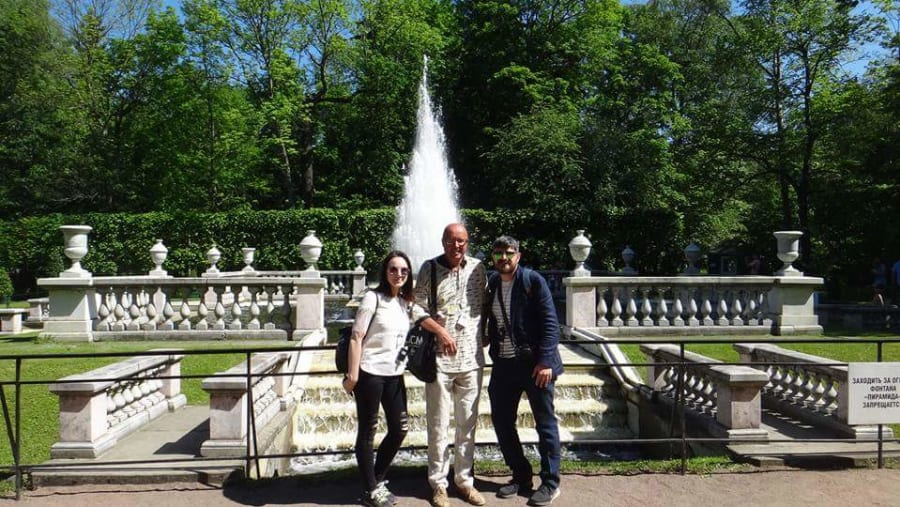
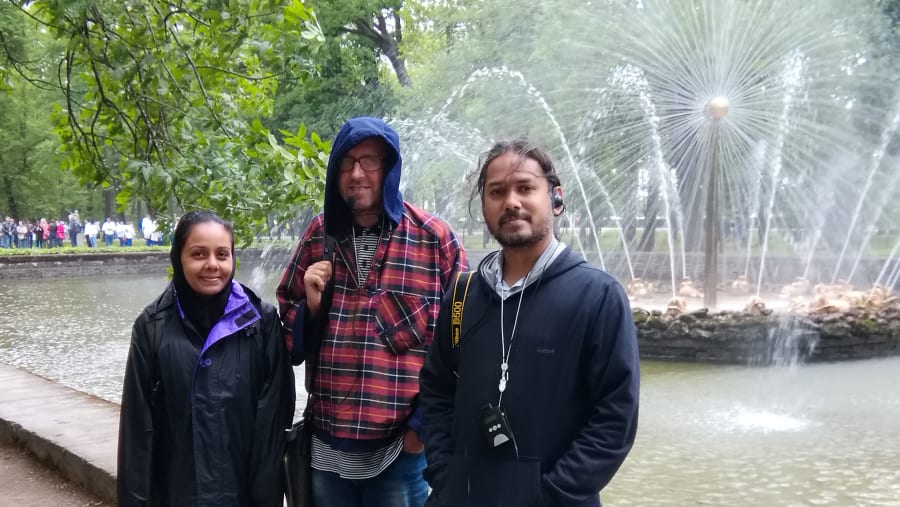
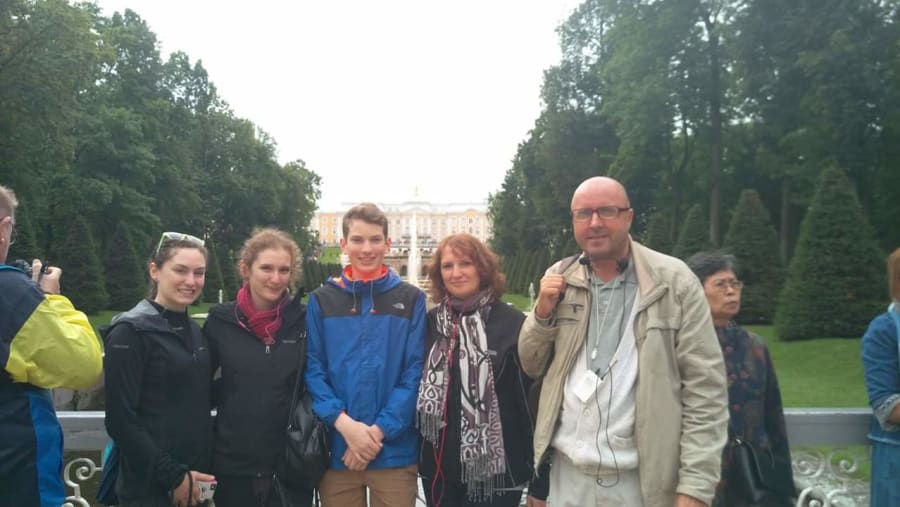
  • Upon arrival, you can start by visiting the Imperial Yacht Museum. You continue through the Lower Park, which Peter I called his paradise and which, with all the constantly flowing cascades and running fountains, was supposed to outshine Versailles. Along the way, you see the Big Palace, Marly, Hermitage, and Monplaisir palaces. After visiting the Grand Palace and going through the Upper Garden, continue on land to the next imperial residence built in Oranienbaum.
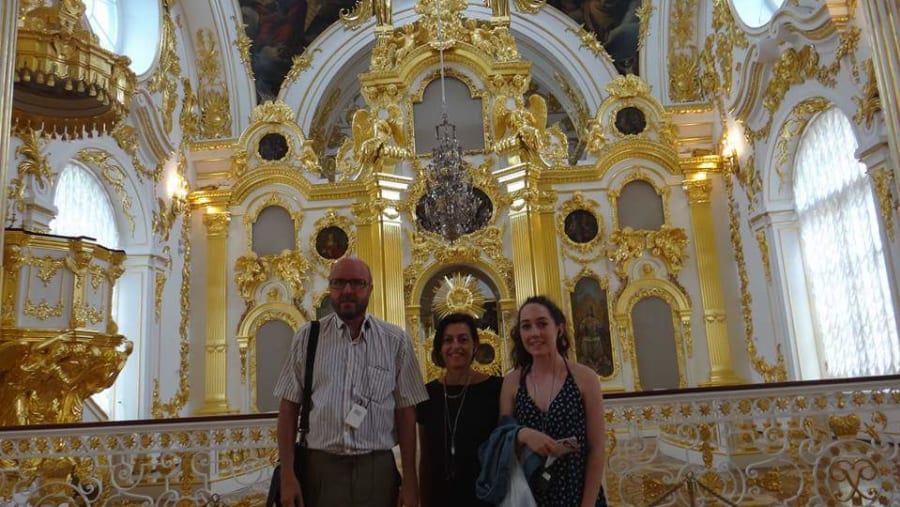
  • For about twelve years after Peter III's abdication and death, Catherine and Rinaldi worked together on Oranienbaum with wonderful effect. Like Peter, they did not significantly alter the Great Palace, though Rinaldi could not resist leaving his own mark on the grand staircase and on the interiors of the two pavilion wings. But in the Upper Park, to the north of the Great Palace, they joined in creating what has been described as "the most miraculous palace of eighteenth-century Russia". It must certainly be one of the most unapologetically self-indulgent. In the Chinese Palace (Kitáyskiy dvoréts), they seem to have dared each other to greater and greater visual extravagances - the farewell, for both, to Baroque and the beginning of their Classical period. There is not much that is Chinese about this palace except the excuse for it, which was to house a fashionable collection of Chinese artefacts. The ceilings were purchased in Italy and originally included a Tiepolo in the Light Blue Hall, which was taken for safety to Peterhof at the beginning of the war, where it was stolen by the Germans. It was replaced in 1980 by one painted by Torelli. The walls are covered sometimes in chinoiserie, sometimes in sheer Rococo, and sometimes, as in the Steklyárusny Kabinét, with pale silk velvet embroidered with bugle beads. The floors, to Rinaldi's designs, have to be seen to be believed. In the great Dining Room (Bolshóy zal) are some rare bas-reliefs in marble of Peter the Great and the Empress Elisabeth.
  • You will visit Menshikov Palace, the Rollercoaster Pavilion, and the Chinese Palace, which was built by Catherine the Great and is the only one that was not destroyed during WWII because it was in a pocket of resistance that the Germans failed to capture. The origin of this place dates back, as usual, to the time of Peter I, when he presented this plot of land to his trusted advisor and childhood friend Menshikov, who briefly ran Russia after Peter's death, but was accused of embezzlement and exiled to Siberia. The next hapless owner was Grand Duke Peter III, who became a czar according to the wishes of his aunt Elizabeth, but was in turn dethroned and killed by his wife, Catherine the Great.
  • Continue your trip to the other side of the Gulf of Finland, this time not by boat but by land transportation, because you will use the road to the former Kronshtadt Island running on top of the protective barrier, which is now connected by it to the mainland on both sides of the Gulf of Finland. You will be able to see the first Russian navy base located in the city of Kronshtadt, which was closed until recently and is now open to visitors.
  • See the remnants of the first little manmade island, which appeared during winter, when Peter had wooden logs dragged on ice to make crates filled with stones. After they sank in spring, he had an artificial fortification built on top of them, named Kronshlot. By this structure, designed and strategically placed off Kronshtadt Island, no enemy ship was able to pass thereafter because of the forward-thinking of Peter the Great, who waded through freezing water, sometimes chest-deep, to measure the navigable depth of the Gulf of Finland and calculate gun-range coverage to prevent the unobstructed passage of Swedish ships.
  • You will be able to see the city harbour, dry dock, and fortifications that were designed and personally supervised during construction by Peter the Great and his closest associates. After that, you visit the recently restored Main Navy Cathedral with its distinct sea-world-themed decoration, such as dolphins and sea creatures, built to commemorate Russian maritime glory. You also visit navy memorials to WWII heroes, such as Russian submarine captain Marinesko, who was proclaimed Hitler's enemy number one after the so-called attack of the century, when he managed to sink the biggest transport carrying the elite of German navy officers.

Logistics

Meeting & route

Meeting point
Peterhof Grand Palace, Razvodnaya ulitsa, Sankt-Peterburg, Russia, 198510
Tour start
Peterhof Grand Palace, Razvodnaya ulitsa, Sankt-Peterburg, Russia, 198510
Tour ends at the same location as the start point.
End of the journey

Your 10 hours finish where they began, in Peterhof Grand Palace.

Watch the tourHQ film Watch the film

Create your own adventure

Can't find the perfect tour? Tailor your dream trip.

  • Tell us your destination, dates and group size.
  • Our travel experts and local guides design a tailored itinerary, just for you.
  • Enjoy your trip with peace of mind, knowing everything is taken care of.
Plan my holiday

Say goodbye to travel stress.

Starting from

USD 100 /person
Book This Tour

When

Travellers

Total