

Serra da Estrela – High Mountains, Glacial Landscapes and the Living Culture of Portugal’s Roof
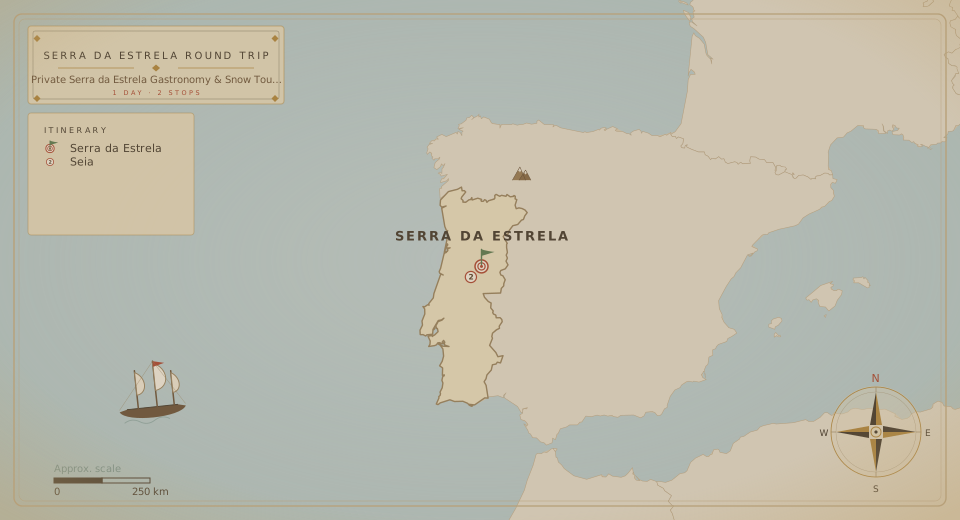
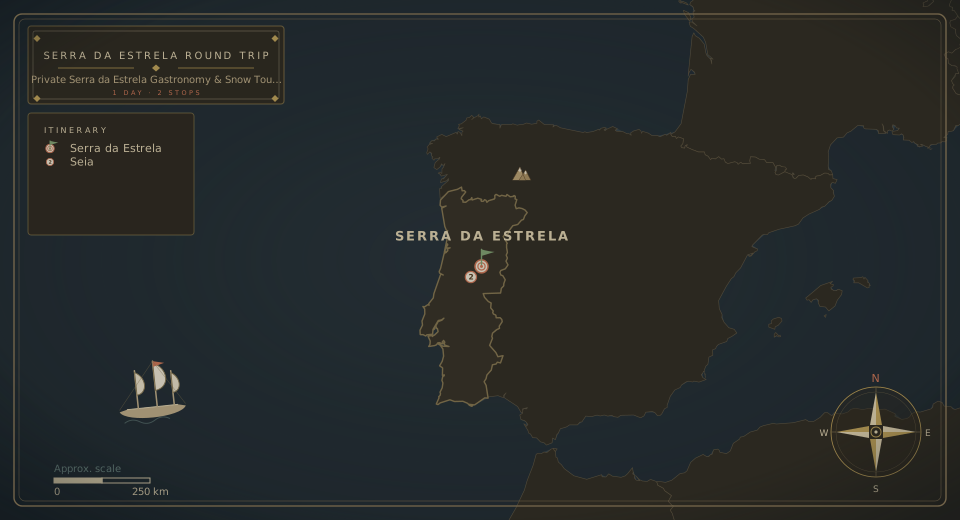
Set in central Portugal, Serra da Estrela is the country’s highest mountain range and one of its most distinctive landscapes, where altitude, granite, pastoral life, and glacial forms come together with unusual clarity. The Serra da Estrela Natural Park, created in 1976, protects a territory shaped by geology, seasonal movement, and long-standing human adaptation, while Torre rises to 1,993 metres, the highest point in mainland Portugal.
For visitors, Serra da Estrela reveals itself through contrasts: shepherd culture and alpine exposure, reservoirs and river sources, granite villages and open plateaus. It is a mountain region where settlement patterns, food traditions, and landscape all shift with altitude, making the day feel not like a series of stops, but like a gradual ascent through different ways of living with the land.
This is a stop that brings scale, freshness, and strong regional identity to any itinerary through inland Portugal. Serra da Estrela offers one of the country’s most memorable mountain experiences, where natural grandeur and cultural continuity remain inseparable.
Optional – Celorico da Beira and the Solar do Queijo – Serra da Estrela Cheese Heritage and the Cultural Threshold of the Day
Set on the western approach to the mountains, Celorico da Beira is widely associated with the identity of Serra da Estrela cheese and offers one of the most meaningful cultural introductions to the region. Today, the municipality has a resident population of 6,635 inhabitants, preserving a small scale that suits the clarity and authenticity of its pastoral character.
For visitors, the optional visit to the Solar do Queijo adds a stronger interpretive layer to the day. Installed in a building dating from the 18th century, this museum and tasting space helps explain the origins of Queijo Serra da Estrela, from sheep’s milk and the use of thistle to traditional methods, local economy, and the wider symbolic importance of cheese in mountain life.
This is an optional stop that adds flavour, context, and strong cultural grounding to the beginning of the day. Celorico da Beira and the Solar do Queijo offer one of the clearest ways to understand Serra da Estrela through altitude, craftsmanship, and living pastoral heritage.
Optional – Queijaria Vale da Estrela in Mangualde – Serra da Estrela Cheese Through Contemporary Craft
Set in the municipality of Mangualde, the Queijaria Vale da Estrela offers an optional stop that complements the more traditional pastoral narrative of Serra da Estrela with a focused contemporary reading of cheese production. Here, visitors can approach the making of Queijo Serra da Estrela through a space that remains closely tied to regional identity, raw materials, and artisanal knowledge.
For visitors, this stop is valuable because it adds another perspective to the mountain food culture introduced earlier in the day. Rather than repeating the same experience, it helps show how Serra da Estrela cheese continues to be interpreted and produced today, linking inherited methods with a more structured visitor-facing environment.
This is an optional stop that adds gastronomic interest, regional continuity, and another meaningful way to understand the cultural importance of Serra da Estrela cheese. The Queijaria Vale da Estrela offers a rewarding complement between the broader heritage approach of Celorico da Beira and the more intimate scale of a traditional cheesemaker.
Optional – Traditional Cheesemaker in Pinhanços – Handcrafted Continuity in the Mountain Economy
The visit to a traditional cheesemaker in Pinhanços offers one of the most direct encounters with the working identity of the Serra da Estrela region. Here, cheese production remains tied to small-scale pastoral life, where raw ewe’s milk, thistle flower, salt, and manual technique continue to define a product deeply rooted in local knowledge.
For visitors, this experience stands out because it feels lived rather than staged. The value lies not only in the cheese itself, but in the continuity of family methods and everyday rhythms that have allowed mountain production to endure despite remoteness, climate, and economic change.
This is an optional stop that adds authenticity, craft, and strong human scale to the itinerary. The traditional cheesemaker of Pinhanços offers one of the most rewarding ways to understand Serra da Estrela through living pastoral practice.
Optional – Quinta da Bica – Dão Wine and Granite-Soil Elegance
Set near Seia, Quinta da Bica offers a refined optional contrast to the pastoral side of Serra da Estrela. Family tradition places the estate’s origins between 1550 and 1650, and wine has been produced on the property since the 17th century, linking the visit to a longer agricultural history shaped by granite soils, altitude, and inland climate.
For visitors, this stop adds another register to the day. If cheese, shepherding, and highland life explain one side of the region, the Dão wine context reveals another: cultivated landscape, historic estate architecture, and a more formal reading of terroir and regional expression.
This is an optional stop that adds elegance, regional contrast, and a broader gastronomic narrative to the route. Quinta da Bica offers a rewarding wine-based complement to the mountain character of Serra da Estrela.
Seia – Gateway Town to the Mountain Interior
Set on the southwestern edge of the range, Seia serves as one of the main gateways into Serra da Estrela and an important transition between lowland Portugal and the mountain interior. Today, the municipality has a resident population of 21,410 inhabitants, giving the town a modest urban presence while preserving its close relationship with the surrounding slopes and upland culture.
For visitors, Seia is valuable not because it competes with the high mountain scenery, but because it prepares the ascent. It offers a pause in the route, where local food culture, mountain products, and a first sense of altitude and exposure begin to frame the day ahead.
This is a stop that adds clarity, rhythm, and a useful threshold between settlement and open mountain landscape. Seia offers one of the most coherent gateways into the Serra da Estrela experience.
Optional – Bread Museum of Seia – Rural Memory, Daily Life and a Culture Built Around Bread
The Bread Museum of Seia, inaugurated in 2002, is one of the most distinctive thematic museums in Portugal and a compelling optional cultural pause before the higher mountain route unfolds. Entirely dedicated to bread, it connects food history with social life, rural labour, and the symbolic role of bread in Portuguese daily culture.
For visitors, the museum helps explain how mountain economies were sustained not only through herding and cheese, but also through cereal traditions, ovens, storage, labour, and family life. It is also an especially meaningful optional stop when the group includes small children, since the museum’s accessible format and familiar theme make it easier for younger visitors to engage with rural heritage in an intuitive and enjoyable way.
This is an optional stop that adds interpretation, warmth, and a human domestic scale to the itinerary. The Bread Museum of Seia offers a meaningful cultural counterpart to the more open and elemental landscapes that follow.
Sabugueiro – Mountain Life at Altitude
Set at around 1,050 metres above sea level, Sabugueiro is one of the best-known high-altitude villages in mainland Portugal and one of the clearest examples of settlement adapted to severe mountain conditions. The parish had 405 inhabitants in the 2021 Census, preserving a small scale that helps maintain the village’s compact and characterful identity.
For visitors, Sabugueiro offers something immediate and authentic. Granite houses, narrow streets, wool products, and small-scale local commerce reflect a place shaped less by scenic performance than by climate, resourcefulness, and long continuity of everyday life in the mountains.
This is a stop that adds altitude, atmosphere, and a strong lived dimension to the itinerary. Sabugueiro offers one of the most memorable encounters with village life in Serra da Estrela.
Lagoa Comprida – Reservoir, Plateau and the Open Silence of the High Serra
At around 1,600 metres of altitude, Lagoa Comprida is the largest reservoir in Serra da Estrela and one of the clearest introductions to the region’s high plateau landscape. Surrounded by sparse vegetation, granite, and open skies, it offers a striking visual break from the enclosed villages and slopes below.
For visitors, the stop is powerful because of its scale and simplicity. The stillness of the water, the broad openness of the plateau, and the sense of exposure to altitude create one of the first moments in the day when Serra da Estrela feels truly alpine by Portuguese standards.
This is a stop that adds space, calm, and strong geographic clarity to the route. Lagoa Comprida offers one of the most effective transitions into the high-mountain character of Serra da Estrela.
Torre – The Summit of Mainland Portugal
At 1,993 metres, Torre is the highest point in mainland Portugal and the symbolic summit of the Serra da Estrela experience. More plateau than peak, it occupies a broad exposed setting where altitude, climate, and horizon become the real attraction.
For visitors, Torre offers the emotional and geographic high point of the day. The value of the stop lies not in a single monument or view, but in the knowledge of where one stands: at the roof of mainland Portugal, surrounded by highland light, weather, and the rare feeling of open elevation.
This is a stop that adds altitude, symbolism, and a strong sense of completion to the ascent. Torre offers one of the simplest yet most memorable geographic experiences in Portugal.At 1,993 metres, the Torre da Serra da Estrela is the highest point in mainland Portugal. In winter, it becomes one of the country’s most visited locations and hosts Portugal’s only ski resort.
Outside the cold season, wide views stretch across plateaus and glacial valleys and, on particularly clear days, the Atlantic Ocean may be visible on the horizon.
Vale do Rossim – Water, Pasture and the Softer Face of the Mountain
In the heart of Serra da Estrela lies the highest river beach in Portugal, located at approximately 1,400 metres above sea level, historically linked to transhumance and mountain pastures.The Vale do Rossim reveals a different register of Serra da Estrela, where water, pasture, and seasonal movement create a softer landscape than the exposed plateau above. The valley is linked to the ribeira da Fervença and to old transhumance paths that once connected mountain grazing grounds with village life.
For visitors, Rossim offers a gentler and more pastoral reading of the mountain. Open meadows, granite outcrops, and water infrastructure coexist with the memory of shepherd routes, making this one of the most balanced stops of the day between nature, livelihood, and landscape history.
This is a stop that adds quietness, variety, and a sense of how mountain resources sustained rural life. The Vale do Rossim offers one of the most graceful and legible valley landscapes in Serra da Estrela.
Mondeguinho – The Source of Portugal’s Longest River
At Mondeguinho, visitors encounter the humble source of the Mondego River, the longest river with its entire course in Portugal. Here in the high mountains, what later becomes one of the country’s great river systems begins in an unexpectedly modest and quiet setting.
For visitors, the stop is compelling because it turns geography into continuity. Seeing the Mondego at its origin links Serra da Estrela to the agricultural plains, river towns, and urban centres far downstream, giving the mountain landscape a wider national meaning.
This is a stop that adds scale, connection, and a subtle sense of wonder to the itinerary. Mondeguinho offers one of the clearest reminders that Serra da Estrela is not only a destination in itself, but also a source landscape for much of Portugal beyond it.
Cabeça do Velho – Granite Form, Folklore and the Imagination of the Mountain
The Cabeça do Velho is one of the most recognisable granite formations in Serra da Estrela, known for its profile resembling a human face. More than a geological curiosity, it has long encouraged local interpretation and folklore, turning an outcrop of stone into a symbolic landmark of the mountain.
For visitors, this brief stop works because it adds a more imaginative layer to the day. After water, villages, and high plateau scenery, the rock formation introduces a pause where geology becomes story and the landscape feels not only observed, but interpreted.
This is a stop that adds visual interest, symbolic value, and a lighter folklore dimension to the route. The Cabeça do Velho offers one of the simplest and most memorable anthropomorphic images in Serra da Estrela.
Optional – Folgosinho – Medieval Memory, Village Character and Castle Views
Set on the slopes of the mountain within the municipality of Gouveia, Folgosinho is one of the region’s most characterful historic villages. Today, the municipality of Gouveia has a resident population of 12,301 inhabitants, and Folgosinho preserves the atmosphere of a smaller upland settlement marked by legend, old privileges, and rural continuity. It received a foral from King Sancho I in 1187, later confirmed and renewed by subsequent monarchs.
For visitors, Folgosinho offers a final cultural perspective before descent. Its village setting and the so-called Castle of Folgosinho, a scenic structure built in the 1940s atop a dramatic quartzite outcrop, create a memorable combination of medieval echo, landscape reading, and local identity.
This is an optional stop that adds historical texture, village atmosphere, and a rewarding final look over the mountain world. Folgosinho offers one of the most evocative cultural endings to a Serra da Estrela day.
Optional – Covão dos Conchos – Mountain Engineering and a Singular High-Altitude Hike
The Covão dos Conchos is one of the most distinctive and unexpected places in Serra da Estrela, known for the striking circular funnel that appears at the centre of a mountain lake. Although it can seem like a dramatic natural formation, it is in fact a remarkable work of hydraulic engineering connected to a tunnel of around 1.5 kilometres, built to channel water from the Ribeira das Naves toward Lagoa Comprida.
For visitors, this optional experience is meaningful not only for its visual impact, but also for the sense of discovery it creates. Reaching the site involves a hike of around 5 kilometres each way, through a high-altitude mountain environment, so it is only carried out when time allows and conditions are suitable. The result is a setting that feels cinematic, unusual, and very different from the easier-access stops of the main route.
This is an optional stop that adds adventure, rarity, and a memorable encounter with the engineered landscape of Serra da Estrela. The Covão dos Conchos offers one of the most unusual hiking extensions in the mountain range when weather, timing, and walking comfort all align.