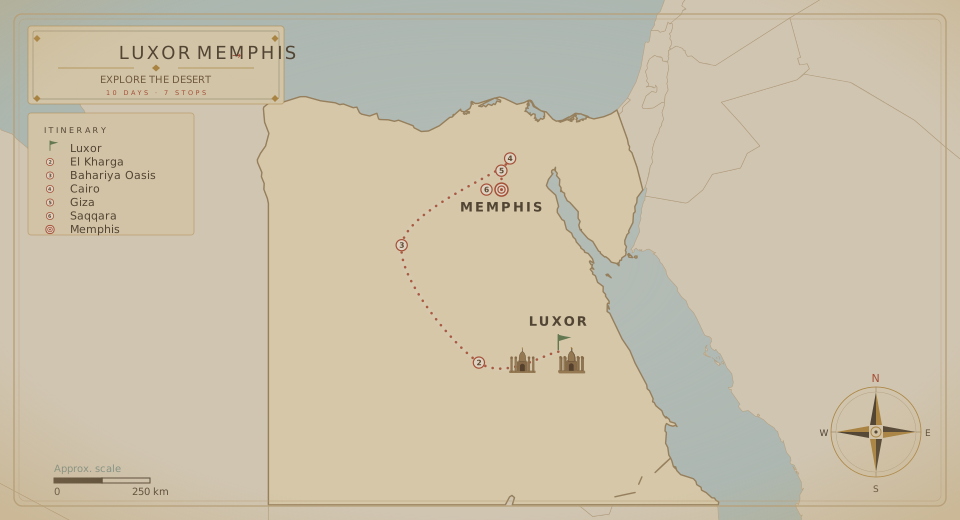
Welcome to Luxor
- Our representative will pick you up from Luxor airport to your hotel to check-in.
Luxor East bank visits
- Start your visit to the East bank of Luxor, where you will see the captivating Karnak (the biggest complex in Egypt) and these temples dedicated to the god Amon Ra and different gods and goddesses.
The Karnak Temple Complex, commonly known as Karnak, comprises a vast mix of decayed temples, chapels, pylons, and other buildings near Luxor, in Egypt. Construction at the complex began during the reign of Senusret I in the Middle Kingdom and continued into the Ptolemaic period, although most of the extant buildings date from the New Kingdom. The area around Karnak was the ancient Egyptian Ipet-isut ("The Most Selected of Places") and the main place of worship of the eighteenth dynasty Theban Triad with the god Amun as its head. It is part of the monumental city of Thebes. The Karnak complex gives its name to the nearby, and partly surrounded, modern village of El-Karnak, 2.5 kilometres (1.6 miles) north of Luxor.
Luxor temple
- continue to visit Luxor temple (you can see the oldest mosque and church in built in Luxor city)
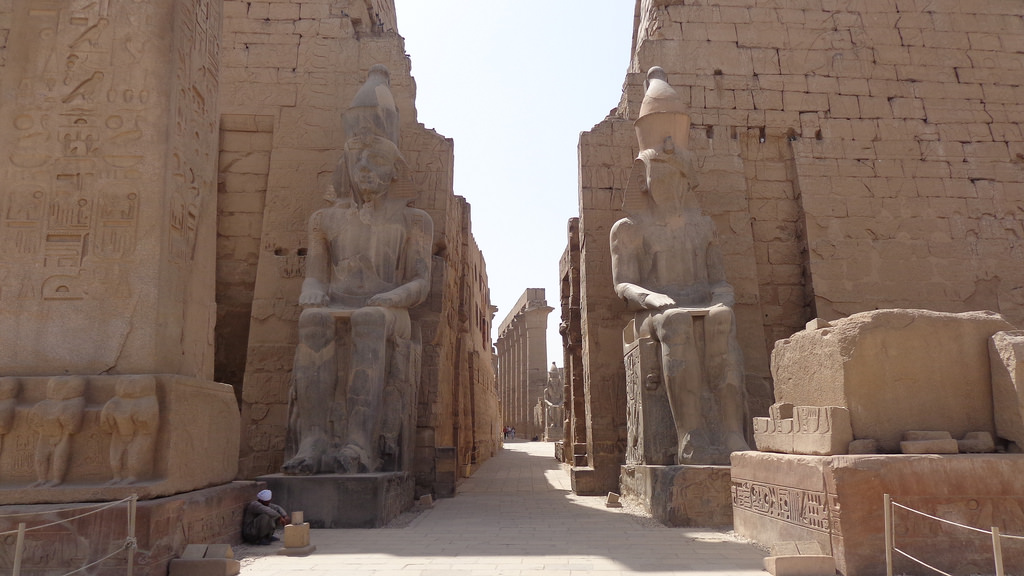
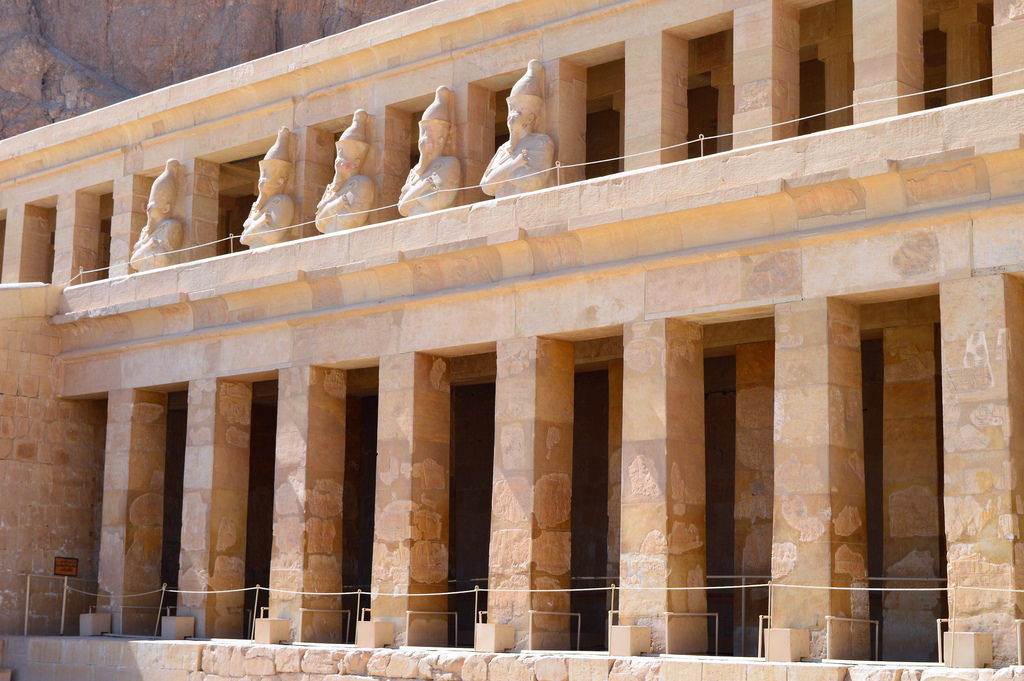
Luxor Temple is a large Ancient Egyptian temple complex located on the east bank of the Nile River in the city today known as Luxor (ancient Thebes) and was constructed approximately 1400 BCE. In the Egyptian language, it is known as "ipet resyt", "the southern sanctuary". In Luxor, there are several great temples on the east and west banks. Four of the major mortuary temples visited by early travellers and tourists include the Temple of Seti I at Gurnah, the Temple of Hatshepsut at Deir el Bahri, the Temple of Ramesses II (a.k.a. Ramesseum), and the Temple of Ramesses III at Medinet Habu; the two primary cults temples on the east bank are known as the Karnak and Luxor.
- Overnight Luxor.