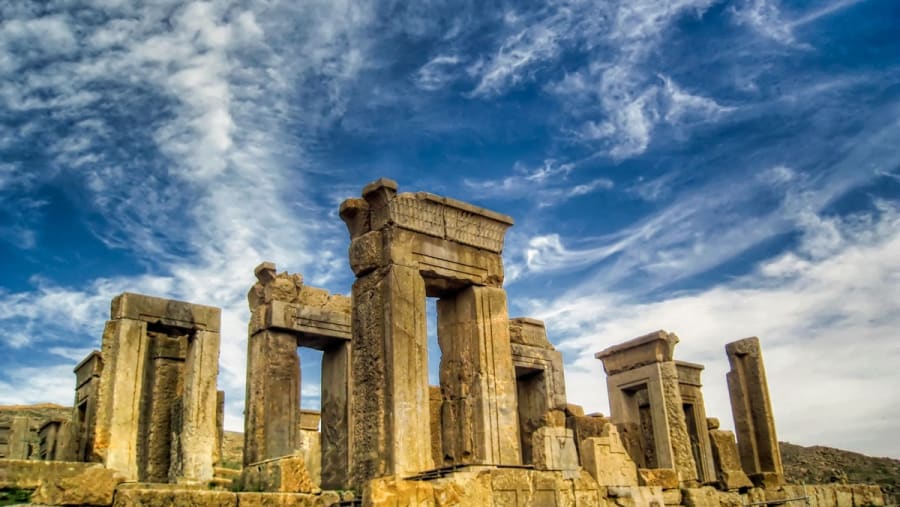

Persepolis, Naqsh-e-Rustam, and Pasargadae
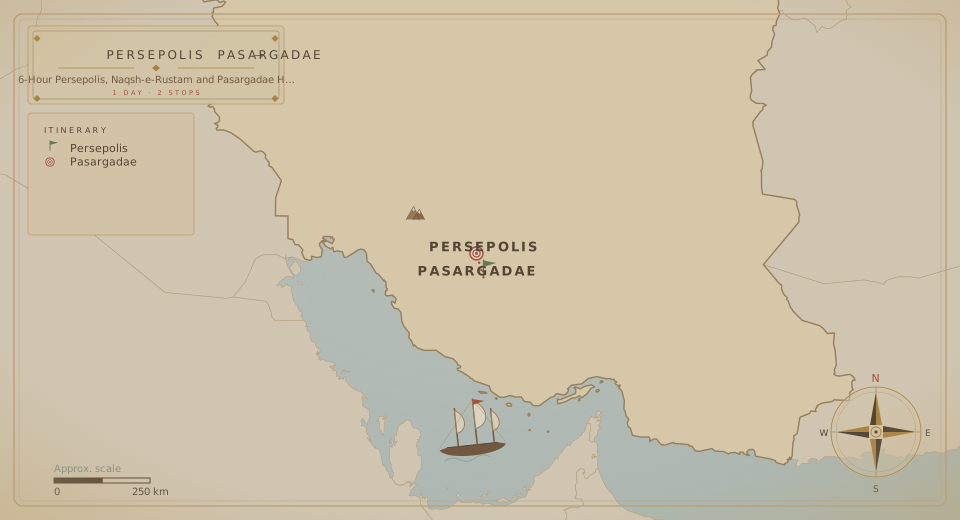
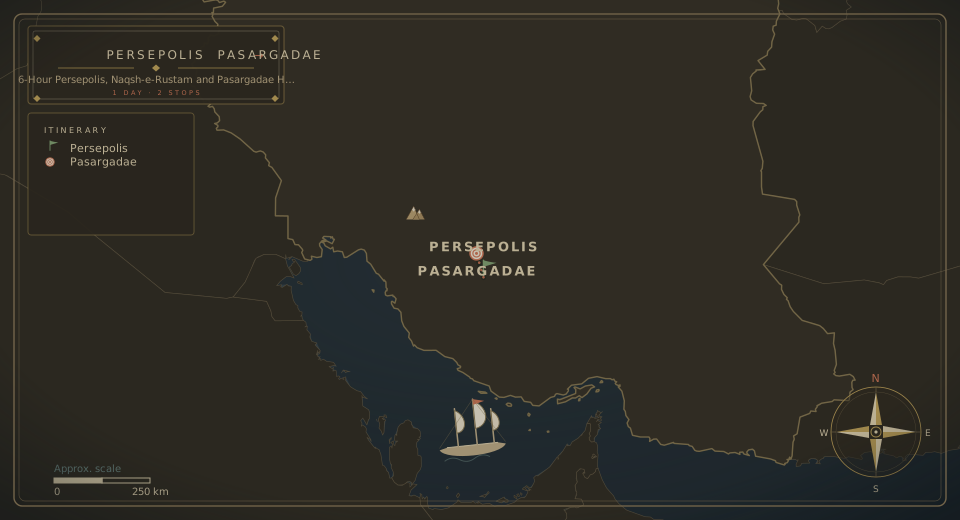
Begin with a visit to Persepolis, the ceremonial capital of the Achaemenid Empire. The earliest remains of Persepolis date back to 515 BCE, and the site exemplifies the Achaemenid style of architecture. Alexander the Great entered Persepolis in January 330 BC and committed an uncharacteristic act of complete destruction that still mystifies historians today and explains why the city now survives in ruins. Though only a shadow of its former self, the site still reveals soaring pillars, terraces, and sculptures. The most impressive sights here are the bas reliefs that line the entire site and tell stories of the ancient kings who once came to this capital city.
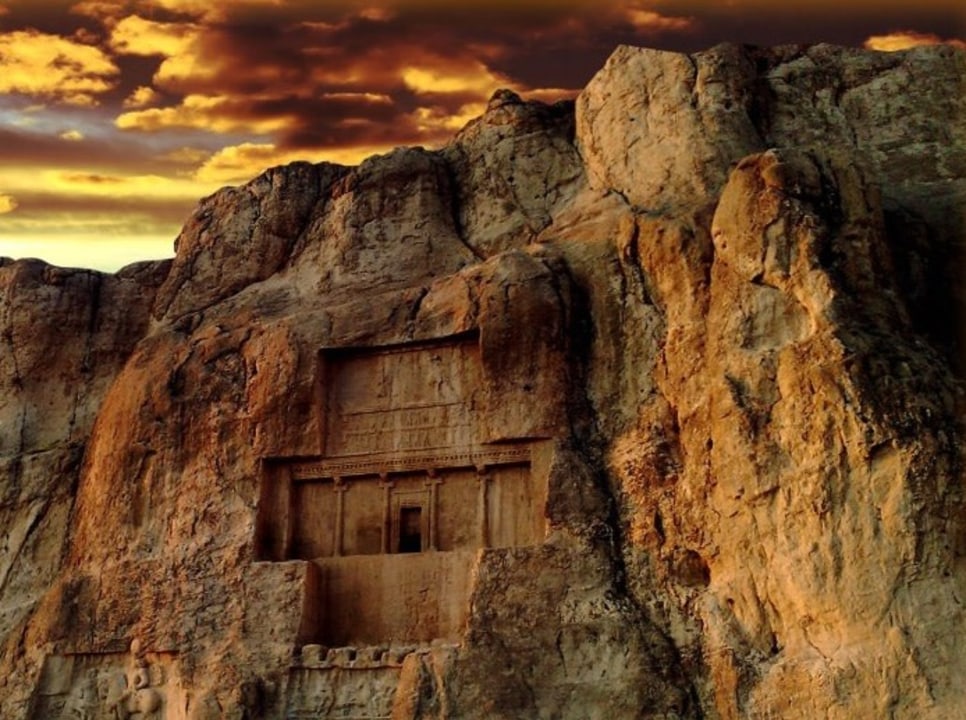
Drive a couple of miles to the ancient necropolis of Naqsh-e-Rustam of the Achaemenid dynasty. See four large tombs here, along with many ancient rock-cut reliefs carved into the cliff. It is at this necropolis that Darius and his successors were buried. Carved into the side of a cliff, the site is extraordinary in both magnitude and sheer ambition, and it does not disappoint even after the impressive visit to Persepolis.
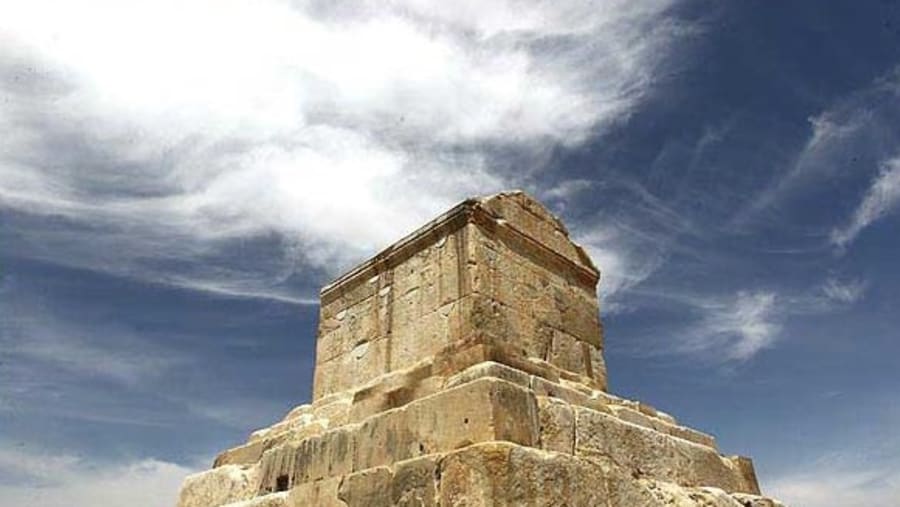
End the tour with a final stop at Pasargadae, a UNESCO World Heritage Site. This was the capital of the Achaemenid Empire under Cyrus the Great (559-530 BC) and contains his tomb. Spend some time exploring the site and enjoy scenic views of the surrounding area.