

Peneda-Gerês – Mountain Landscapes, Water and the Living Culture of Portugal’s Only National Park
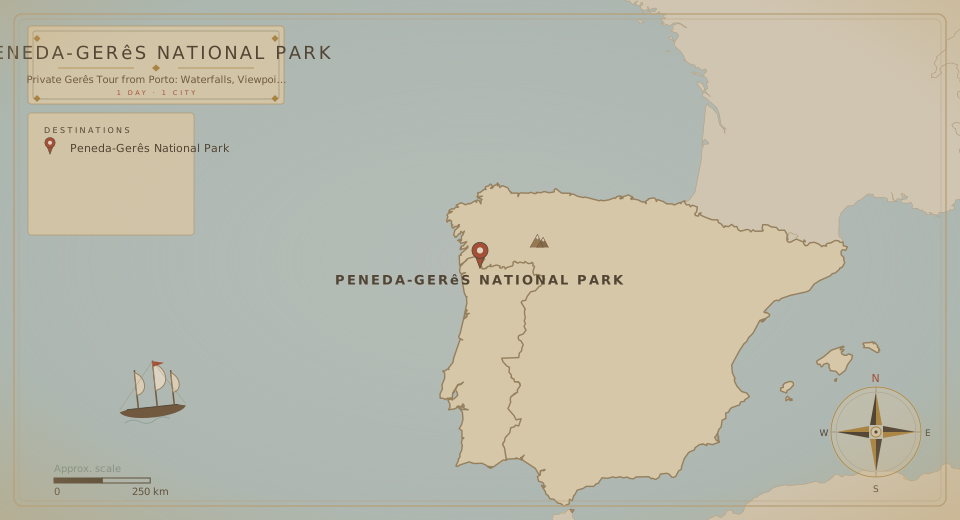
Set in the far north of Portugal, Peneda-Gerês National Park is the country’s only national park and one of its most distinctive protected landscapes, officially created in 1971. Here, granite mountains, highland villages, forests, rivers, waterfalls, and pastoral traditions come together in a territory where nature and human adaptation still remain closely intertwined.
For visitors, Gerês is compelling because its beauty is not limited to a single viewpoint or monument. The region unfolds through contrasts: wild scenery and community memory, dramatic cascades and thermal calm, elevated lookouts and small villages shaped by resilience, isolation, and long continuity with the land.
This is a stop that gives the day breadth, freshness, and a strong sense of immersion in northern Portugal. For travellers seeking mountain scenery with cultural substance rather than scenery alone, Peneda-Gerês offers one of the most rewarding full-day experiences from Porto.
Fafião – A Highland Village of Community Memory and Mountain Identity
Set on the Barroso side of the park, Fafião is one of the mountain villages that best preserves the cultural atmosphere of the upper Gerês landscape. Its identity is closely linked to communal traditions, pastoral rhythms, and the long history of coexistence between people, livestock, and the surrounding wild terrain.
For visitors, Fafião offers more than a scenic stop. It introduces the human dimension of the park, where stone houses, mountain silence, and local memory help explain how life was organised in a demanding environment shaped by altitude, weather, and distance.
This is a stop that adds authenticity, context, and cultural grounding to the beginning of the day. Fafião offers one of the clearest introductions to the living mountain identity of the Gerês region.
Ecomuseum of Barroso – Interpreting the Landscape Through Rural Life
The Ecomuseum of Barroso helps transform the Gerês landscape from scenery into meaning, offering visitors a stronger understanding of how highland communities adapted to climate, isolation, and shared natural resources. Rather than presenting a single monument, it frames an entire territory through ethnography, memory, and local knowledge.
For visitors, the museum adds clarity at exactly the right moment in the day. Before the waterfalls and viewpoints take over, it offers a useful cultural key: the idea that these mountains are not empty wilderness, but a lived territory shaped by agricultural knowledge, community organisation, and regional identity.
This is a stop that adds depth, interpretation, and strong cultural value to the itinerary. The Ecomuseum of Barroso offers one of the most effective ways to understand the Gerês landscape as both natural and human.
Fojo dos Lobos – Stone Architecture of Survival in the Mountains
The Fojo dos Lobos of Fafião is one of the most distinctive ethnographic landmarks in the region, preserving the memory of historical strategies used to deal with wolves in a demanding pastoral landscape. These long stone trapping structures, built through communal effort, reflect a time when mountain life depended on practical intelligence, cooperation, and close observation of the surrounding environment.
For visitors, this is one of the most original stops of the day. The structure itself is visually striking, but its real power lies in what it reveals: the harsh conditions of highland survival and the ingenuity with which rural communities responded to ecological challenges.
This is a stop that adds rarity, intelligence, and historical substance to the route. The Fojo dos Lobos offers one of the most memorable examples of how human life in Gerês was shaped by adaptation rather than domination.
Tahiti Waterfall – The Wild Beauty of Fecha de Barjas
The Tahiti Waterfall, the popular name for the Cascades of Fecha de Barjas, is one of the most photogenic natural settings in the Gerês. Located near the village of Ermida, it is formed by a sequence of cascades and clear pools running through granite formations in a particularly dramatic stretch of mountain landscape.
For visitors, the waterfall delivers immediate visual reward. The movement of the water, the layered rock, and the relative wildness of the setting create one of those classic Gerês scenes where the park’s raw and untamed character becomes instantly legible.
This is a stop that adds freshness, drama, and strong photographic appeal to the day. The Tahiti Waterfall offers one of the most striking early encounters with the natural beauty of the Gerês.
Ermida Viewpoint – A Clear Reading of Gerês at Mountain Scale
The Ermida Viewpoint offers one of the clearest broad readings of the park’s geography, opening a landscape of ridgelines, slopes, valleys, and scattered rural traces that immediately communicates the scale of the Gerês. It is a classic big-landscape stop, where the topography itself becomes the attraction.
For visitors, this viewpoint works especially well because it combines visual amplitude with ease. Without requiring major effort, it delivers a sense of distance and terrain that helps make the rest of the route more intelligible, especially after the more enclosed waterfall settings.
This is a stop that adds scale, clarity, and orientation to the itinerary. The Ermida Viewpoint offers one of the most effective panoramic readings of the mountain landscape.
Rocas Viewpoint – A Different Angle on the Gerês Landscape
The Rocas Viewpoint complements the broader panoramas of the day by offering a different framing of the surrounding relief. Rather than repeating the same visual experience, it adds variation in ridgelines, depth, and light, revealing how Gerês constantly shifts character depending on position and altitude.
For visitors, this stop is valuable because it proves that the park is not defined by a single iconic image. The changing lines of the mountains, the open sense of exposure, and the contrast with the previous viewpoint help build a richer understanding of the landscape.
This is a stop that adds variety, visual rhythm, and another layer of mountain perspective to the day. The Rocas Viewpoint offers a rewarding complementary panorama within the Gerês sequence.
Arado Waterfall – Granite, Sound and the Sensory Heart of Gerês
The Arado Waterfall is one of the best-known natural landmarks in the Gerês and one of the most satisfying places to encounter the park at close range. Descending through granite formations at around 900 metres of altitude, it creates a striking sequence of water, rock, and movement within one of the most recognisable valleys of the region.
For visitors, Arado offers a more sensory experience than a distant panorama. The sound of the water, the freshness of the air, and the tactile presence of the surrounding rock make this one of the most immediate and immersive stops of the day, especially when conditions allow contact with the water.
This is a stop that adds vitality, freshness, and strong natural presence to the itinerary. The Arado Waterfall offers one of the most complete waterfall experiences in the Gerês.
Pedra Bela Viewpoint – The Signature Panorama of the Gerês
The Pedra Bela Viewpoint is one of the most iconic panoramas in the Gerês and the clearest expression of the park’s large-scale beauty. From this elevated position, the landscape opens into a broad composition of mountain slopes, forest, valleys, and the water of the Caniçada reservoir, creating one of the most celebrated views in northern Portugal.
For visitors, this is the panorama that brings the day into focus. It combines visual breadth with a strong sense of harmony, allowing Gerês to be understood not only as rugged and dramatic, but also as expansive, structured, and unexpectedly serene.
This is a stop that adds climax, grandeur, and unforgettable visual reward to the route. Pedra Bela offers one of the defining viewpoints of the entire national park.
Gerês Thermal Village – The Calm Identity of a Mountain Retreat
The Thermal Village of Gerês offers a striking change of tone within the day, shifting the experience from wild landscape to cultivated retreat. The village grew in importance through its thermal waters, known since ancient times and more formally developed from the 18th century onward, giving Gerês a refined spa identity within the mountain setting.
For visitors, this short walk adds elegance and contrast. Tree-lined streets, historic spa references, and a slower atmosphere reveal another side of Gerês: not only as a place of waterfalls and viewpoints, but also as a destination associated with wellbeing, seasonal retreat, and thermal tradition.
This is a stop that adds calm, refinement, and historical contrast to the itinerary. The Gerês Thermal Village offers one of the most graceful pauses of the day.
Portela do Homem Waterfall – A Final Immersion in Mountain Water
The Portela do Homem Waterfall is one of the classic water stops of the Gerês, set in a landscape where forest, granite, and clear mountain water combine with unusual immediacy. Its appeal lies in the simplicity of the experience: a natural pool, a strong flow of water, and a setting that feels vivid, fresh, and unmistakably alpine by Portuguese standards.
For visitors, this stop often becomes one of the most memorable of the day because it feels so direct. There is little need for explanation when water, stone, and shade create such an immediate sensory experience, especially when conditions make contact with the water possible.
This is a stop that adds freshness, contact, and a strong final nature highlight on the Portuguese side of the route. The Portela do Homem Waterfall offers one of the clearest expressions of Gerês as a landscape to be felt as much as seen.
Lobios Thermal Area – A Cross-Border Pause of Water and Calm
When timing allows, the stop at Lobios, just across the border in Galicia, adds a subtle but memorable international dimension to the day. Known for its thermal waters and calm setting within the wider Gerês-Xurés transboundary landscape, Lobios extends the mountain experience into a neighbouring cultural context without breaking the flow of the route.
For visitors, this brief thermal pause feels both relaxed and distinctive. It adds a sense of exclusivity and contrast, showing how the same mountain territory continues beyond Portugal into Galicia, where water, wellbeing, and borderland identity remain part of daily life.
This is a stop that adds novelty, calm, and cross-border character to the itinerary. The Lobios thermal area offers a gentle and memorable final variation when conditions and timing permit.