Nepal · Trekking

14-Day Everest Base Camp Trek with Kathmandu Valley Sightseeing

14 Days Round trip from Kathmandu 44600 Moderate pace

The journey

Trip highlights
  • 01 Trek one of Lukla's most popular routes to Everest Base Camp
  • 02 Behold sensational mountain vistas of Lhotse, Nuptse, and other Himalayan peaks
  • 03 Explore Sherpa villages in the Khumbu region and learn about local culture
  • 04 Visit Pashupatinath Temple, Bauddhanath Stupa, and Bhaktapur Durbar Square
  • 05 Climb Kala Patthar for a majestic Himalayan sunrise and Everest views

Take one of Lukla's most popular trekking routes to Everest Base Camp and behold sensational mountain vistas of Lhotse, Nuptse, and many more magnificent peaks. Pass through Sherpa villages in the Khumbu region, explore local culture with a Nepali tour guide, and enjoy a scenic Kathmandu Valley excursion to Pashupatinath Temple, Bauddhanath Stupa, and Bhaktapur Durbar Square. This trek combines high Himalayan landscapes, spiritual heritage, and a rewarding personal challenge in Nepal's most iconic mountain region.

Take one of Lukla's most popular trekking routes to Everest Base Camp and behold sensational mountain vistas of Lhotse, Nuptse, and many more magnificent peaks.

From the itinerary

At a glance

What this trip includes

Duration 14 Days
Tour type Shared
Activity level Moderate
Accommodation Included · Standard
Transport Included
Wheelchair access No
Cities Kathmandu, Everest Base Camp-South, Lukla, Dingboche, Namche Bazaar, Tengboche, Phakding, Lobuche, Kala Patthar, Gorakshep, Sagarmatha National Park, Pheriche
Languages English, Nepali

Day by day

The itinerary

1
Day 01

Arrival in Kathmandu

  • Pick up from the airport and transfer to the hotel for an overnight stay.

2
Day 02

Kathmandu Valley Sightseeing Tour

  • Explore the historical and spiritual attractions with the tour guide:

    • Pashupatinath Temple is a famous sacred Hindu temple complex located on the banks of the Bagmati River.

    • Bauddhanath Stupa is famous for its massive mandala, which makes it one of the largest spherical stupas in the world.

    • Bhaktapur Durbar Square is the royal palace of the old Bhaktapur Kingdom.

Overnight stay at the hotel.

3
Day 03

Fly to Lukla and Trek to Phakding

  • Catch an early morning scenic flight to Lukla.

  • Trek from Lukla and take a downhill stroll to the Dudh Koshi River.

  • Pass through the Sherpa village of Chhupulung Ghat and arrive at Phakding.

  • See the majestic and alluring views of the mountains and explore the beautiful landscapes.

Overnight stay at the lodge.

4
Day 04

Trek Through Pine Forests to Namche Bazaar

  • Trek through the lush pine forest, crossing the Dudkosi River.

  • Witness amazing views of Mount Everest, Mount Kusum Kangaroo, Mount Thamserku, Mount Kangtega, and more.

  • Climb towards Namche Bazaar, the capital of the Khumbu region and also a trading centre.

  • Explore the market area in the afternoon.

Overnight stay at the lodge.

5
Day 05

Namche Bazaar Sightseeing and Acclimatization

  • Enjoy the great mountainous views of Mt. Everest, Lhotse, Cholatse, Thamserku, Kwangde, and Khandala.

  • Ascend the gorgeous Ama Dablam Valley, one of the most beautiful valleys in this region.

  • Climb higher towards Syangboche and arrive at the Everest View Hotel.

  • Explore the quaint Namche Bazaar and visit its shops, restaurants, bakery, and colourful market.

  • Visit the Sherpa Museum and the photo gallery.

Overnight stay at the lodge.

6
Day 06

Trek to Tengboche Monastery

  • Trek along the highway of Mount Everest.

  • Descend to the Dudh Koshi River and discover the rhododendron forests.

  • Travel through Phunki Thanga, across the Imja Khola River, and up to Tengboche Monastery.

  • Visit the Tengboche Monastery.

Overnight stay in Tengboche.

7
Day 07

Trek via Pangboche to Dingboche

  • Trek through a beautiful forest down to the river and back up to the village of Pangboche.

  • Pass several chortens, Mani-stone walls, and small villages, and marvel at one of the most beautiful mountains in the world, Ama Dablam.

  • Have lunch and trek past the towering north face of Ama Dablam into the Imja Khola Valley.

  • Cross the Lobuche River and hike up to Dingboche.

Overnight stay in Dingboche.

8
Day 08

Dingboche Village Sightseeing Tour

  • Explore Dingboche Village, filled with an array of beautiful fields enclosed by stone walls to protect barley and potatoes from the cold wind.

  • Go on a hiking tour of either Nagarjuna Hill or Chukkhung Valley and witness magnificent views of Makalu, Lhotse, Chalotse, Tawache, and Ama Dablam.

Overnight stay at the lodge.

9
Day 09

Trek to Lobuche via Duglha

  • Climb to Duglha and follow the trail leading to the Chukpo Lari ridge at the top.

  • Walk towards Lobuche and get a glimpse of the Himalayan border.

Overnight stay at the lodge.

10
Day 10

Trek to Everest Base Camp and Gorak Shep

  • Leave from Lobuche and follow the trail that leads to the flat meadows.

  • Go towards Khumbu Glacier in the north.

  • Climb on the lateral moraine of the Khumbu Glacier to arrive at Gorak Shep.

  • Enjoy the majestic view of the massive Khumbu Glacier and the trans-Himalayas.

  • Check in at the hotel and have lunch.

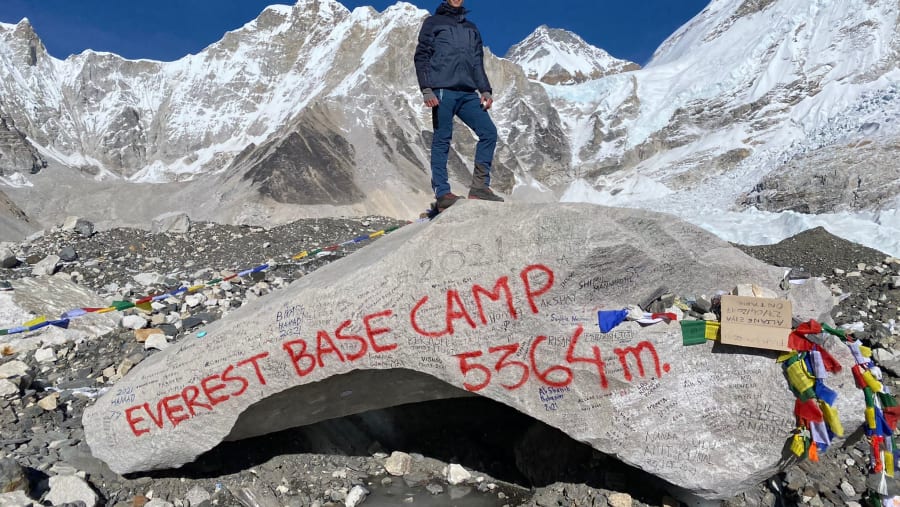
  • Walk to Everest Base Camp.

  • Travel to Gorak Shep for an overnight stay at the lodge.

11
Day 11

Kala Patthar Sunrise and Trek to Pheriche

  • Climb to Kala Patthar, situated at the bottom of Mt. Pumori.

  • Enjoy the majestic sunrise view from the Himalayas, including spectacular views of Mt. Everest, Nuptse, Lola, Khumbutse, Ama Table, Tabuchi, Cholatse, Thamserku, and numerous other peaks.

  • Have breakfast and walk through the moraine of Khumbu Glacier.

  • Pass through Lobuche and descend from the beautiful valley towards Pheriche.

Overnight stay at the lodge.

12
Day 12

Return Trek to Namche Bazaar

  • Pass through the beautiful Sherpa village and arrive at the Dudkosi riverbank.

  • Cross the river and go into the forest via Dingboche.

  • Climb to Tengboche and then descend through the rhododendron forest.

  • Walk up to Kanjuma and enjoy the splendid views of the mountains on the way, from Ama Table to Namche Bazaar.

Overnight stay at the lodge.

13
Day 13

Trek Back to Lukla

  • Trek to Lukla and pass through Jorsalle, Manjo, Benkar, Phakding, and other small villages on the way.

  • Enjoy walking over the suspension bridges above the Dhud Koshi River.

14
Day 14

Fly from Lukla to Kathmandu

  • Take a 35-minute scenic flight back to Kathmandu from Lukla.

  • Get transferred to the hotel in Kathmandu.

  • Have a farewell dinner in the evening at Thamel.

Overnight stay at the hotel.
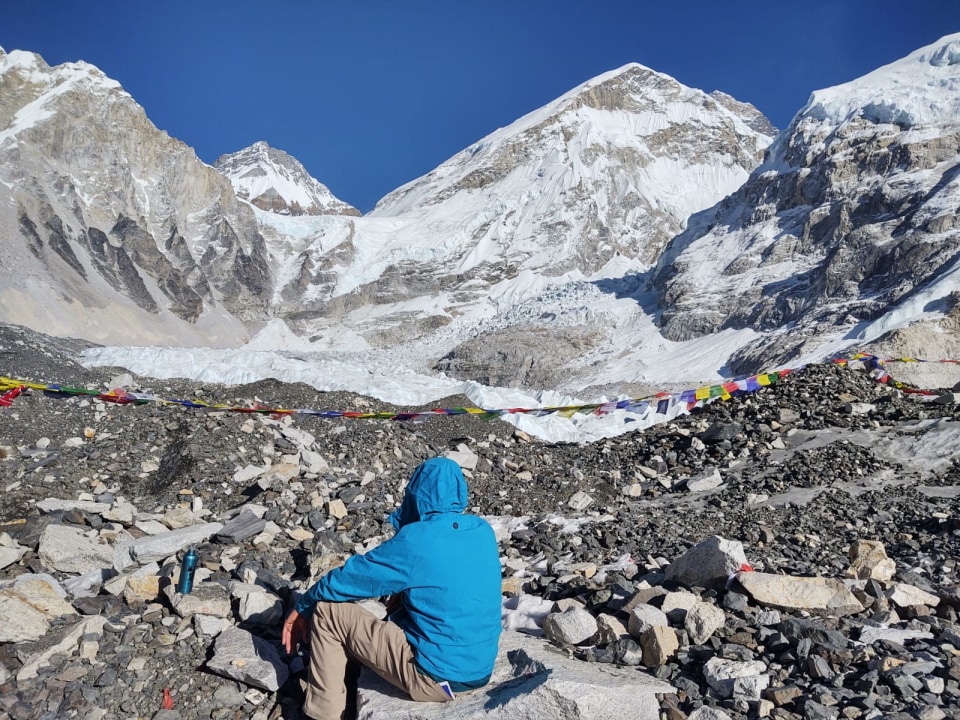
Kala Patthar, Everest Base Camp, Khumbu Glacier, Tengboche Monastery

Where this trip takes you

Kala Patthar, Everest Base Camp, Khumbu Glacier, Tengboche Monastery

The route
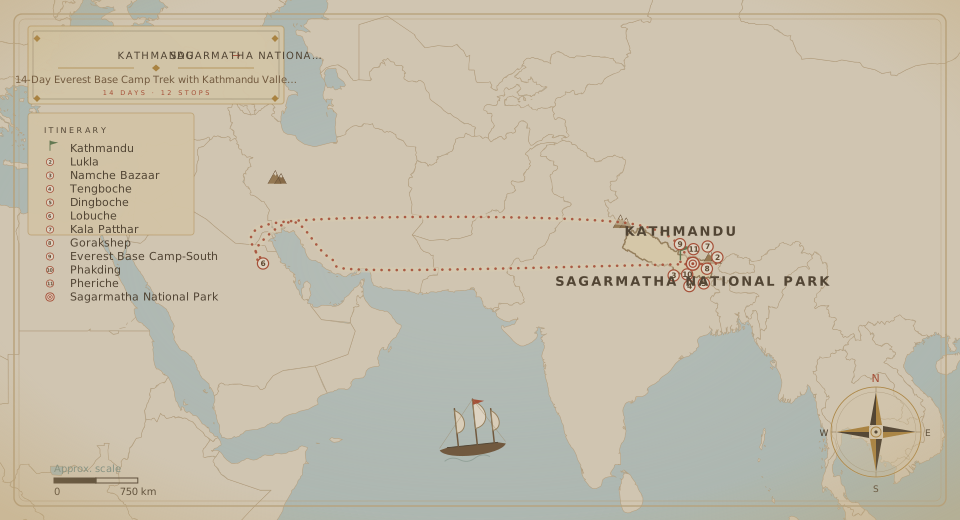
Where you'll travel

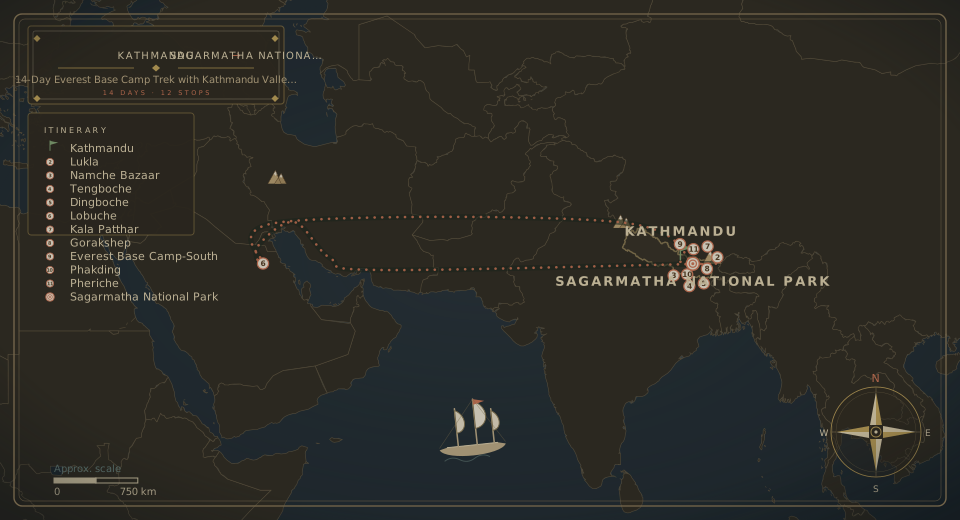
Tour route map
Round trip from Kathmandu 44600 12 cities · 14 Days

The fine print

Trip details

What's Included

  • International and domestic airport pick-up and drop-off services by private vehicles

  • Three meals a day - breakfast, lunch, and dinner with hot drinks

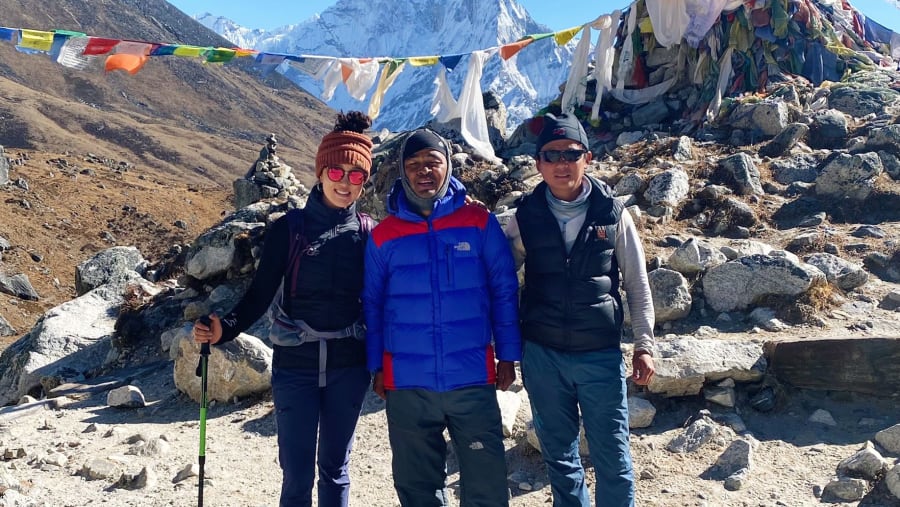
  • Experienced and knowledgeable English-speaking tour guide

  • Accommodation during the trek at the tea house and transportation

  • TIMS Card - Trekkers Information Management System

  • Trekking equipment such as the sleeping bag, down jacket, etc.

  • Exclusive first-aid box

  • A round-trip domestic flight ticket between Kathmandu and Lukla

  • Farewell dinner at a typical Nepalese restaurant with traditional music and dance

  • Appreciation certificate after the successful trek

  • All government and local taxes

What's Not Included

  • Nepal entry visa fee

  • Surplus luggage charges for domestic airports

  • Additional costs incurred due to weather conditions, illness, changes in government policies, or strikes

  • Personal expenses

  • Travel insurance

  • Tips for guide and staff

What to bring

Recommended trekking equipment list

Head

  • Sun hat
  • Warm hat and scarf
  • Headlight

Face

  • Sunscreen +40
  • Sunglasses
  • Face wipes and towels

List for hands

  • Lightweight gloves
  • Gloves

Body clothing

  • Down jackets (rental is included if needed)
  • Sleeping bag (rental is included if needed)
  • 2 pairs of hiking T-shirts, preferably quick-drying, possibly thermal tops for the treks
  • Fleece jacket and sweaters
  • Poncho and rain jacket
  • Socks, preferably a cotton-mix
  • Lightweight cotton trekking pants with a folding option

Lists of footwear

  • Proper trekking boots
  • Socks, preferably cotton sports socks, but take some extra pairs
  • Crampon (optional)

Essential gear

  • Day backpack above 30 L
  • Pack covers
  • Thermos bottle - hard bottle that can be used for boiled drinking water
  • Water peals
  • Umbrella / poncho
  • Walking pole if you need it
  • Thick sleeping bag
  • Deodorant
  • Laundry soap
  • Antibacterial gel
  • Toiletries
  • Toothbrush
  • Shampoo
  • Personal accessories
  • Camera
  • Cell phone
  • Money wallet with money
  • Padlocks
  • Plastic bag
  • Watch
  • Sewing kit
  • Extra photos and passport photocopies
  • First-aid kit
  • Diamox (acetazolamide)
  • Lozenges
  • Elastic bandages
  • Moleskin
  • Cotton bandages and band-aids
  • Lancing needle
  • Antibiotic eye-drops
  • Thermometer
  • Sling
  • Paracetamol
  • Antiseptic antibacterial cream or solution
  • Painkillers
  • Anti-emetic for nausea (not at high altitude)
  • Loperamide to control diarrhoea
  • Norfloxacin or Cipro to cure diarrhoea and other infections
  • Oral rehydration salts

Know before you go

  • The most important precondition and the best way to avoid altitude sickness whilst trekking in Nepal is to gradually and systematically increase altitude. In Nepal, a safe altitude to which you can climb rapidly and straight away is 2,700 - 3,000 metres. The most popular mountain airports in Nepal are located in this altitude range: Lukla and Jomsom. On the day of your arrival, you must definitely spend the night at the same altitude.
  • Thereafter, you must stick to a set climbing regime: 300 - 400 altitude metres a day. Accordingly, every overnight stay must be at an altitude of 300 - 400 metres higher than your previous overnight accommodation. Having climbed a total of 1,000 altitude metres, you must devote one whole day to altitude acclimatization and stay overnight at the same altitude. It is advisable to spend the day of altitude acclimatization doing a little trekking leading up to a short stay at a greater altitude (300 - 400 m) before returning and staying overnight at the previous altitude. In Nepal, you will not find it possible to stick to exactly this climbing regime on all trekking routes in the Himalayas; therefore, altitude acclimatization days are individually planned for each trekking route.
  • 2nd altitude acclimatization rule: consume lots of liquids while trekking.
  • In the mountains, atmospheric pressure falls as the altitude above sea level increases, and this affects your body. Therefore, when trekking in the mountains, it's very important to consume a lot of liquids by drinking lots of tea, juice, soup, and clean water. You should drink at least 3 - 4 liters of liquid a day. You can buy a liter of bottled water in teahouses along all the most popular trekking routes in Nepal. You should avoid drinking too much black tea while trekking, as well as giving coffee a miss on tough days, because these drinks can induce heart palpitations and create additional pressure on your heart.
  • 3rd altitude acclimatization rule: avoid alcohol, smoking, and using sleeping tablets.
  • When trekking in the mountains, particularly during your ascent, you must categorically avoid the use of alcoholic drinks and sedatives or sleeping pills. Like smoking, sedatives artificially reduce the flow of oxygen to the brain, particularly in mountain conditions in which the concentration of oxygen is already reduced. In turn, alcohol has the heightened effect of depriving the body of water or dehydrating it, which is a similarly undesirable process when trekking in the Himalayas in Nepal.
  • 4th altitude acclimatization rule: use preventive medicines whilst trekking.
  • Mountain medicine has discovered a range of medicinal products that improve the altitude acclimatization process and reduce the side effects of altitude acclimatization in the mountains, such as sleepless nights. These products are widely used by trekkers on popular trekking routes in Nepal like the Everest Base Camp trek, Gokyo trek, Annapurna Circuit trek, etc.
  • Acetazolamide or Diamox®.
  • Of all the medicinal products used to aid altitude acclimatization and treat altitude sickness, the most popular is Diamox, whose active substance is Acetazolamide. On the Everest Base Camp trek, Diamox is widely on sale without a prescription in Kathmandu, Lukla, and Namche Bazaar. One strip of Diamox contains 10 x 250 mg tablets, and in Nepal, you can buy it for 150 - 200 rupees.
  • Possible alternative names (trademarks) for Acetazolamide include: Acetamox, Acetazolam, Ak-Zol, Apo-Acetazolamide, Atenezol, Cidamex, Dazamide, Defiltran, Dehydratin, Diacarb, Diakarb, Diamox, Didoc, Diluran, Diuramid, Diureticum-Holzinger, Diuriwas, Diutazol, Donmox, Duiramid, Edemox, Eumicton, Fonurit, Glaupax, Glupax, Natrionex, Nephramid, Nephramide, Phonurit, Storzolamide, and Vetamox.
  • Before trekking, it is advisable to start using Diamox 24 hours before your ascent, and once you've started trekking, you should use Diamox twice a day in doses of 125 - 250 mg depending on your body weight, in the late morning and in the evening. Kids should be administered a Diamox dose of 2.5 mg per kg of body weight twice a day. It's important to take Diamox before going to bed, because it deepens the depth of inhalation during sleep, thus improving the body's supply of oxygen. Diamox is an effective means of preventing pulmonary oedema.
  • It's true that Diamox can cause some side effects, of which the most common are light tingling of the hands and fingertips, blurred vision, etc. Diamox can also induce allergic reactions; therefore, it is recommended that you consult your doctor before use. According to some sources, you should stop taking Diamox on the second or third day after reaching the maximum height on your trekking route, while others say that it is not recommended to use Diamox for longer than 3 - 5 days in a row. Based on my own experience during the Everest Base Camp trek, I would recommend starting to think about using Diamox upon reaching Namche Bazaar (3,440 m).
  • In traditional medicine, Acetazolamide is also used to treat epilepsy and glaucoma.
  • Ginkgo biloba extract.
  • Studies of the effectiveness of Ginkgo biloba extract during the altitude acclimatization process and of its impact in mountain conditions are still continuing, but experiments have shown that it is effective in helping to reduce symptoms of altitude sickness during trekking. Ginkgo biloba functions as an antioxidant, reducing stress and improving the supply of oxygen to the brain.
  • It is recommended that you start using Ginkgo biloba extract at least five days before climbing in doses of 80 - 120 mg twice a day and that you continue using it in the mountains.
  • Ginkgo biloba extract is a natural product made from ginseng and may be used for prophylactic purposes to improve the functioning of the brain and not just in mountain conditions. It can be bought in pharmacies as a nutritional supplement without prescription.
  • Garlic soup.
  • One of the best natural recipes for aiding altitude acclimatization that is often recommended by trekking guides in Nepal is garlic and the popular garlic soup served in Nepal's trekking lodges and teahouses. At first it is likely to taste quite strange, but as you get used to it, you'll begin to get a taste for it. Garlic soup is also widely available along the Everest Base Camp trek route.
  • 5th altitude acclimatization rule: avoid overexertion from carrying overly heavy rucksacks whilst trekking.
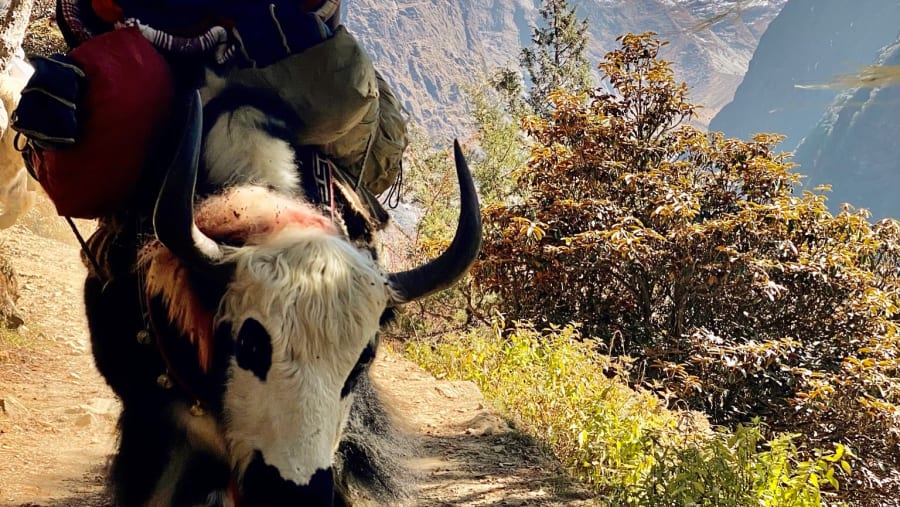
  • Bearing in mind the physical strain and changes in mountain conditions, whilst trekking you would be well advised to avoid overexertion and leave the carrying of your heavy bags to bearers. This doesn't cost much, and you can hire a Sherpa to carry your bags on almost any stage of the Everest Base Camp trek starting from Lukla right through to Pheriche or Dingboche. If you still plan to carry your own rucksack, optimally its weight should not exceed 10 - 12 kg.
  • 6th altitude acclimatization rule: don't go trekking alone.
  • You should always take a guide with you when trekking in the mountains. Altitude sickness symptoms can induce panic or wild behavior, so you must have somebody alongside you who can help you at any time you find yourself in trouble. Typically, altitude sickness symptoms get worse at night due to problems acclimatizing to the new altitude reached during the day. If symptoms of altitude sickness force you to depart and descend at night, you simply must have your guide with you at all times.
  • 7th altitude acclimatization rule: don't climb higher even if you are only suffering from mild symptoms of altitude sickness.
  • If, after reaching a new altitude on your trekking route, you begin to experience mild symptoms of altitude sickness, you must not climb higher under any circumstances. You must remain at your current altitude and monitor your symptoms. Usually, altitude sickness symptoms begin to appear 6 - 12 hours after reaching a new altitude. Symptoms start appearing in the form of a mild headache, which may disappear in a few hours or, on the contrary, get worse, accompanied by panic, loss of appetite, and nausea. Trying to fall asleep, you may experience wild dreams and mild hallucinations.
  • During this period, even though you've lost your appetite, it's very important to drink a lot of fluids and to eat, if you haven't already done so. Garlic soup is recommended, as well as Diamox or some headache tablets which liquefy blood and improve blood flow: Paracetamol, Aspirin, Tylenol, or Ibumetin.
  • A real example of inadequate altitude acclimatization was that which I personally experienced during my Everest Base Camp trek. The first altitude acclimatization day usually occurs at Namche Bazaar, but we skipped it and the next day continued climbing to stay overnight at Khumjung (3,870 m), which is 400 m higher than Namche Bazaar. We completed that day's trekking at about 16:00 and stopped at a Khumjung teahouse. Gradually, I began to feel a light all-encompassing pressure at the top of my head, which left me feeling as if I was wearing a swimming cap.
  • Gradually, the pain grew stronger in my forehead, but at about 22:00, when I was getting ready to fall asleep, I was overcome by a feeling of alarm that I'd never felt before and a slight case of nausea. It was as if I was short of air. I took some Diamox, drank a lot of fluids, and headed to the teahouse's big bedroom to sleep because it was cooler there. I struggled with sleeplessness and nightmares for another few hours and only fell asleep towards morning. The next day I ate breakfast and felt a lot better again. We continued trekking because the planned altitude regime along the route favored the continued altitude acclimatization process.
  • It was a mistake to climb higher without a full day's altitude acclimatization at Namche Bazaar.
  • 8th altitude acclimatization rule: descend immediately if your altitude sickness symptoms get worse.
  • If the usual painkillers used to treat headaches (Aspirin, Tylenol, Ibumetin, etc.) don't help and your headache doesn't pass, this indicates that the altitude sickness is getting worse. In the event that, upon reaching a new altitude along the trekking route, the symptoms of altitude sickness don't pass and get worse, the most effective treatment is to descend without delay to a lower altitude. You must descend without delay even at night. You must be accompanied by your guide and take everything with you that you need for the journey. Under no circumstances should you descend alone. At the Himalayas Khumbu region Machermo HRA Medical Point, I heard a story about a trekker who died at night after falling into a gulley from a narrow or icy hill path whilst suffering from altitude sickness, resulting in a loss of balance and sense of disorientation.
  • In such circumstances, you should reduce your altitude to at least the altitude at which you made your previous overnight stay where you didn't notice any signs of altitude sickness and, if possible, descend even lower. You will feel the benefits after reducing your altitude by 500 - 1,000 altitude metres. You should use medicines, additional oxygen, and your compression bag or Gamow Bag if you have them available.
  • 9th rule: never leave anybody alone with signs of altitude sickness.
  • Never leave a person showing signs of altitude sickness alone. He could begin to experience rapidly deteriorating altitude sickness symptoms, and it may be necessary to urgently evacuate him to a lower place.
  • 10th acclimatization rule: dress warmly when trekking and don't overexert yourself.
  • You should keep warm at all times when trekking and prevent your body from cooling, particularly during the first stage of altitude acclimatization. Check to make sure that your clothing is always dry. In the mountains, the air is dry and it's usually windy.
  • As sweat evaporates, it increasingly cools the body, narrowing arteries and reducing the supply of blood and oxygen reaching your organs, thus creating conducive conditions for altitude sickness to get worse. Special technical clothing has been invented for trekking in the mountains, which ensures that the body breathes and gets rid of sweat as effectively as possible.
  • By observing all of these rules, trekking in Nepal, especially the Everest Base Camp trek, will be a fun experience and you'll arrive home with fantastic memories and impressions of your time in Nepal and the Himalayas.

Logistics

Meeting & route

Meeting point
Thamel, Kathmandu, Nepal
Tour start
Kathmandu 44600, Nepal
Tour ends at the same location as the start point.
End of the journey

Your 14 days finish where they began, in Kathmandu 44600.

Watch the tourHQ film Watch the film

Create your own adventure

Can't find the perfect tour? Tailor your dream trip.

  • Tell us your destination, dates and group size.
  • Our travel experts and local guides design a tailored itinerary, just for you.
  • Enjoy your trip with peace of mind, knowing everything is taken care of.
Plan my holiday

Say goodbye to travel stress.

Starting from

USD 1,099 /person
Book This Tour

Estimated room rates

Single Room $1,099.00 — $1,179.00
Double Sharing $1,099.00 — $1,179.00

When

Travellers

Total