7-Day Kilimanjaro Machame Route Trek to Uhuru Peak

7 Days Round trip from moshi Strenuous pace

The journey

Trip highlights
  • 01 Trek the scenic Machame Route through rainforest, moorland, and alpine desert
  • 02 Follow the "climb high, sleep low" acclimatization profile via Lava Tower
  • 03 Scramble up the famous Barranco Wall with sweeping valley views
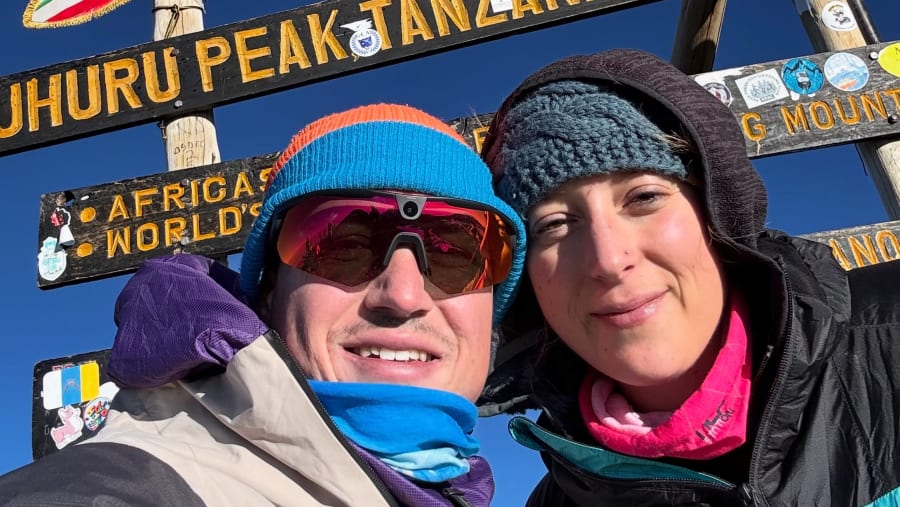
  • 04 Reach Uhuru Peak (5,895m) after a midnight summit push via Stella Point
  • 05 Collect your official summit certificate at Mweka Gate

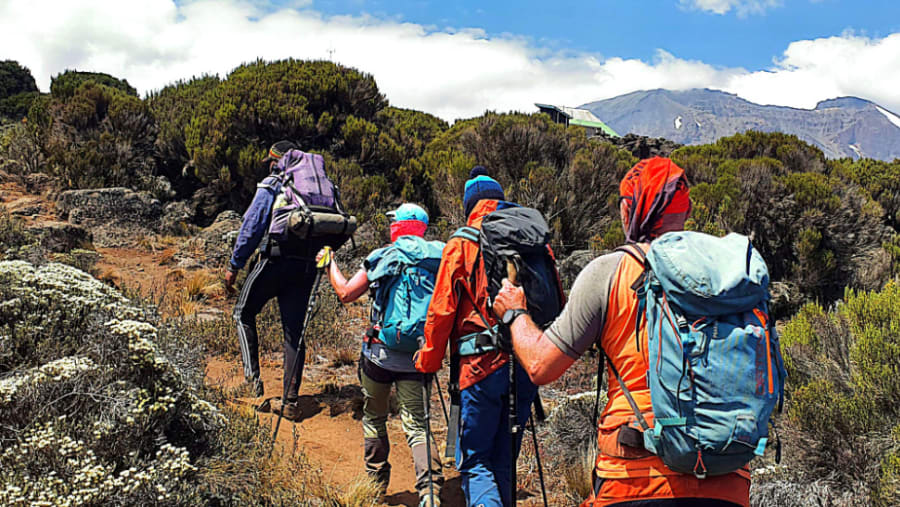
Take on Africa's highest peak on the classic 7-day Machame Route, a scenic journey known for its varied landscapes and strong acclimatization profile. From mossy rainforest and open moorland to stark alpine desert, each day brings a new environment and ever-bigger views of Kibo Peak. The trek includes the key "climb high, sleep low" acclimatization day via Lava Tower, an early-morning scramble up the Barranco Wall, and a midnight summit push to Uhuru Peak (5,895m) for sunrise. Descend through rainforest to Mweka Gate and collect your official summit certificate at the end of the adventure.

At a glance

What this trip includes

Duration 7 Days
Tour type Private
Activity level Strenuous
Accommodation Included · Standard
Transport Included
Wheelchair access No
Cities Arusha, Moshi, Mount Kilimanjaro, Machame
Languages English, French, German, Italian, Swahili

Day by day

The itinerary

1
Day 01

Machame Gate to Machame Camp Through Rainforest

Moshi / Arusha to Machame Gate (1,800m) to Machame Camp (2,835m)

Morning pickup from your hotel and drive to Machame Gate for registration. Walk through dense, moss-draped tropical rainforest along a ridge trail, keeping an eye out for colobus monkeys and exotic plant species. Arrive at Machame Camp in the late afternoon for dinner and your overnight stay.

Distance: 11 km | Hiking Time: 5-7 Hours | Habitat: Rainforest
2
Day 02

Machame Camp to Shira 2 Camp Across Moorland

Machame Camp (2,835m) to Shira 2 Camp (3,850m)

Leave the forest canopy behind and cross a steep valley into open moorland. Traverse rocky ridges and heather fields with expanding views of Kibo Peak. Reach the Shira Plateau and set up camp at Shira 2 Camp for sunset views over Mount Meru.

Distance: 5 km | Hiking Time: 4-6 Hours | Habitat: Moorland

3
Day 03

Lava Tower Acclimatization and Descent to Barranco

Shira 2 Camp (3,850m) to Lava Tower (4,630m) to Barranco Camp (3,960m)

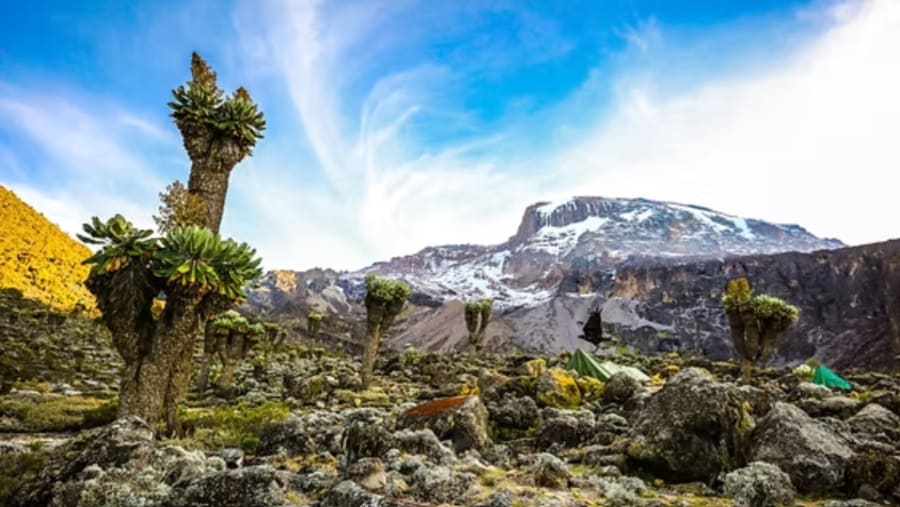
This is a crucial acclimatization day following the principle of "climb high, sleep low." Ascend east toward Lava Tower (4,630m) for lunch near the volcanic tower. Afterward, descend through the Great Barranco Valley past giant senecio plants to Barranco Camp for rest.

Distance: 10 km | Hiking Time: 6-8 Hours | Habitat: Alpine Desert

4
Day 04

Barranco Wall to Karanga Camp

Barranco Camp (3,960m) to Karanga Camp (3,995m)

Begin the morning by scrambling up the famous Barranco Wall ("Breakfast Wall"). Enjoy sweeping valley views from the top before descending into Karanga Valley and climbing up to Karanga Camp. This extra night provides key acclimatization ahead of summit night.

Distance: 5 km | Hiking Time: 4-5 Hours | Habitat: Alpine Desert

5
Day 05

Karanga Camp to Barafu Base Camp

Karanga Camp (3,995m) to Barafu Camp (4,673m)

Leave Karanga and join the Mweka trail junction before climbing through rocky alpine desert to Barafu Camp, your base camp. Prepare your headlamps, warm clothing, and water bottles for the midnight summit attempt. Eat an early dinner and rest.

Distance: 4 km | Hiking Time: 3-4 Hours | Habitat: Alpine Desert

6
Day 06

Summit Uhuru Peak and Descend to Mweka Camp

SUMMIT DAY: Barafu Camp (4,673m) to Uhuru Peak (5,895m) & Descend to Mweka Camp (3,100m)

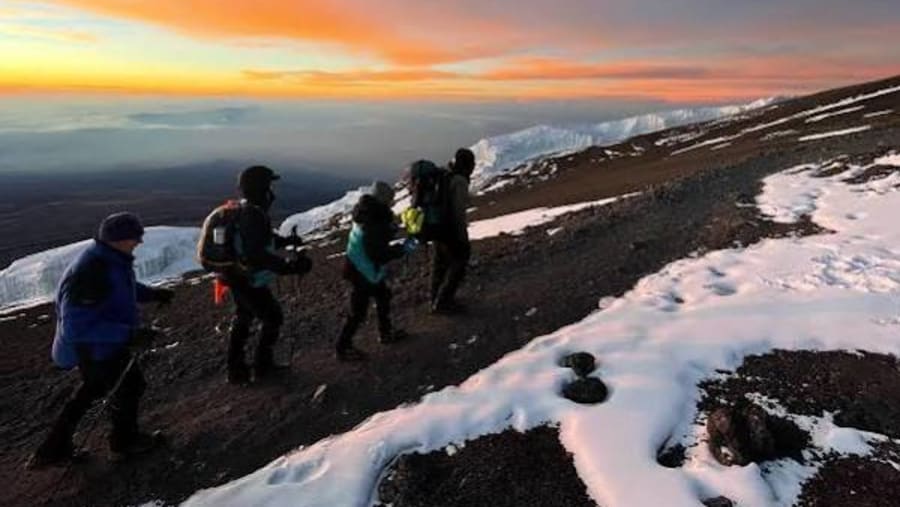
Wake at 11:30 PM for hot tea and snacks. Begin the steep midnight trek across heavy scree past Rebmann Glacier to Stella Point (5,756m) for sunrise. Continue along the crater rim to Uhuru Peak (5,895m) - the summit of Mount Kilimanjaro. Take photos, then descend back to Barafu Camp for lunch and rest before continuing down to Mweka Camp for your final mountain night.

Distance: 17 km | Hiking Time: 11-15 Hours total | Habitat: Arctic / Scree

7
Day 07

Mweka Gate Descent and Return to Moshi or Arusha

Mweka Camp (3,100m) to Mweka Gate (1,640m) & Return to Moshi / Arusha

After breakfast and a traditional mountain celebration with your crew, descend through the rainforest to Mweka Gate. Collect your official summit certificates - Gold for Uhuru Peak and Green for Stella Point - bid farewell to your crew, and transfer back to your hotel in Moshi or Arusha.

Distance: 10 km | Hiking Time: 3-4 Hours | Habitat: Rainforest

The route

Where you'll travel

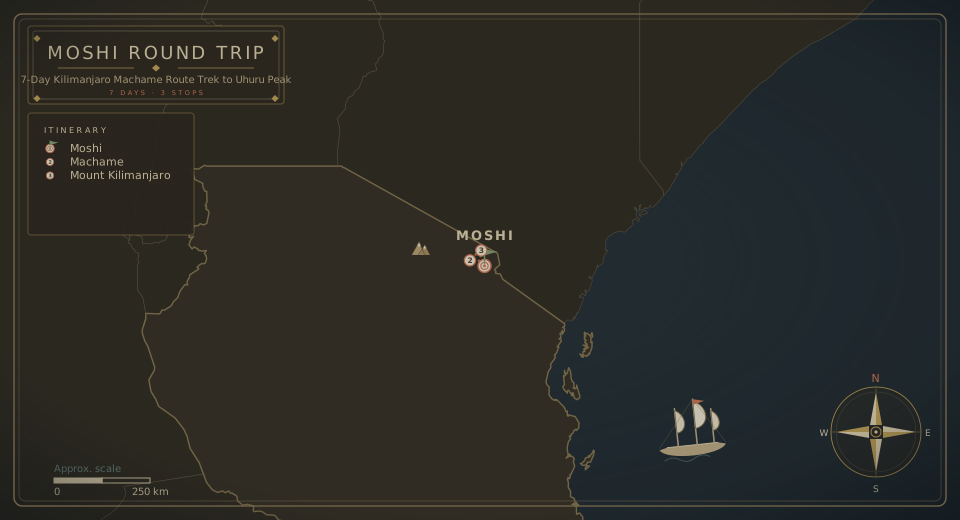
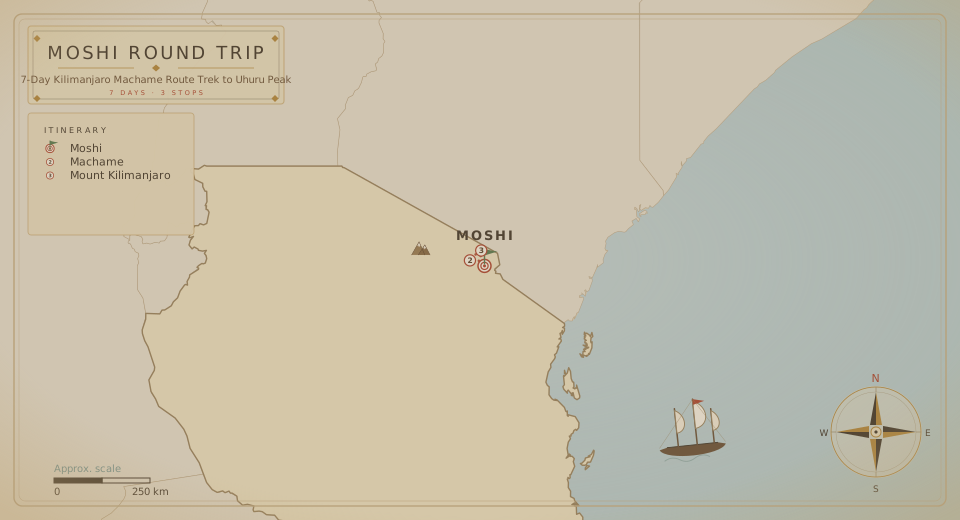
Tour route map
Round trip from moshi 4 cities · 7 Days

The fine print

Trip details

What's Included

  • Park & Camping Permits: All official Kilimanjaro National Park entry, conservation, camping, and rescue fees.

  • Camping Equipment: Four-season mountain tents, foam sleeping mattresses, and a mess dining tent with chairs.

  • Professional Crew: Licensed English-speaking mountain guides, assistant guides, a chef, and porters.

  • Meals & Catering: Freshly prepared hot meals (breakfast, lunch, and dinner) throughout the trek.

  • Private Transfers: Round-trip ground transfers between your hotel and the park gates.

  • Safety Equipment: A first aid kit, pulse oximeter for daily health checks, and emergency oxygen bottles.

  • Certificates: Official Kilimanjaro National Park summit certificate.

What's Not Included

  • Pre/Post Hotel Nights: Accommodation in Moshi or Arusha before or after the trek.

  • Personal Trekking Gear: Sleeping bag (-10°C rated), clothing layers, hiking boots, trekking poles, and daypack.

  • Crew Gratuities: Recommended tipping for mountain guides, cook, and porters ($200-$300 total per climber).

  • International Flights & Visas: Overseas airfare and Tanzania visa fees.

  • Travel Insurance: High-altitude travel and medical insurance.

What to bring

  • 1. Clothing (Layering System)

  • Using a layer-by-layer system is essential for managing changing climates, from tropical rainforest to sub-zero alpine conditions:

    • Base Layer: Moisture-wicking thermal underwear (tops and bottoms) made from synthetic materials or merino wool. Avoid cotton.

    • Mid Layer: Long-sleeve shirts, a fleece jacket, or a lightweight pullover.

    • Outer Layer: A windproof and waterproof jacket (such as Gore-Tex).

    • Insulation Layer: A heavy-duty down jacket capable of withstanding extreme sub-zero temperatures at the summit.

    • Trousers: Durable hiking pants and one pair of waterproof, windproof rain trousers.

    • Socks: 4 to 5 pairs of thick hiking socks (wool or synthetic), plus thermal socks specifically for summit night.

  • 2. Footwear & Trekking Gear

    • Hiking Boots: Sturdy, waterproof, ankle-support hiking boots that have been broken in beforehand to help prevent blisters.

    • Camp Shoes: Lightweight shoes, sneakers, or sandals to wear around camp in the evenings.

    • Gaiters: To keep dust, small stones, and mud out of your boots.

    • Trekking Poles: Highly recommended to reduce impact on your knees, especially during descents.

  • 3. Bags & Luggage

    • Duffle Bag: For your main gear and clothing, which will be carried by the porters, preferably water-resistant or used with a rain cover.

    • Daypack: A small backpack (20-30 liters) to carry your daily essentials yourself, such as drinking water, a light jacket, camera, sunglasses, and snacks.

  • 4. Sleeping Gear

    • Sleeping Bag: A four-season, high-quality down sleeping bag rated for sub-zero temperatures.

    • Sleeping Pad: An insulated sleeping mat, usually provided or to be checked with your operator.

  • 5. Health, Safety & Personal Care

    • Water Bottles / Hydration Pack: Capacity to carry 2 to 3 liters of water daily.

    • Sun Protection: High-SPF sunscreen and sunglasses, essential as UV rays reflect off glacial snow at high altitudes.

    • First Aid & Personal Medications: Painkillers, blister plasters, altitude sickness medication (such as Diamox - consult your doctor), and personal prescriptions.

    • Toiletries: Travel towel, wet wipes, which are crucial as showers are not available on the mountain, and lip balm with SPF.

  • 6. Electronics & Miscellaneous

    • Headlamp: Along with extra batteries, critical for the midnight push to the summit.

    • Power Bank: Since there is no electricity at the campsites to charge phones or cameras.

  • Documentation & Cash: Valid passport, permits, and cash (USD/TZS) for purchasing small items and tipping your guides, cooks, and porters on the final day.

Know before you go

  • The 7-Day Machame Route, famously known as the "Whiskey Route," is widely regarded as the most popular and scenic trail on Mount Kilimanjaro. Approaching the mountain from the southwest, this route offers dramatic scenery, diverse habitats, and exceptional acclimatization, giving trekkers a significantly higher summit success rate compared to shorter routes. The 7-day itinerary features a critical extra acclimatization day in Karanga Valley after crossing the formidable Lava Tower (4,630m) and scrambling up the thrilling Barranco Wall. This "climb high, sleep low" progression allows your body to adjust more smoothly to high altitudes before the final push to Uhuru Peak (5,895m). Accommodation throughout the trek consists of comfortable wilderness campsites managed by our professional mountain support team.

Logistics

Meeting & route

Meeting point
Any hotel or lodge in Arusha or Moshi, or Arusha / Kilimanjaro Airport.
Tour start
moshi
Tour ends at the same location as the start point.
End of the journey

Your 7 days finish where they began, in moshi.

Watch the tourHQ film Watch the film

Create your own adventure

Can't find the perfect tour? Tailor your dream trip.

  • Tell us your destination, dates and group size.
  • Our travel experts and local guides design a tailored itinerary, just for you.
  • Enjoy your trip with peace of mind, knowing everything is taken care of.
Plan my holiday

Say goodbye to travel stress.

Starting from

USD 1,990 /person
Book This Tour

When

Travellers

Total