22-Day West Africa Overland Expedition from Cotonou to Banjul

22 Days Round trip from Cotonou Moderate pace

The journey

Trip highlights
  • 01 Cross ten West African countries in one continuous 22-day coastal expedition
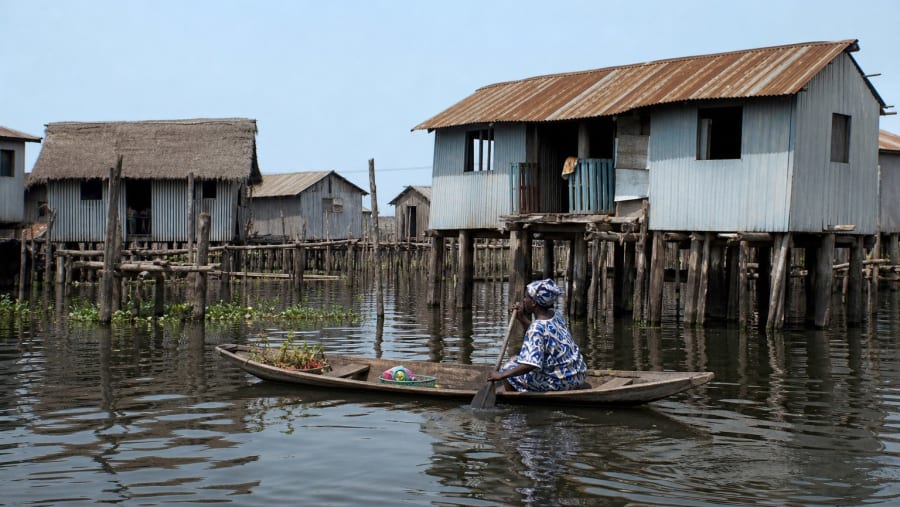
  • 02 Cruise by pirogue across Lake Nokoué to Ganvié, the stilt village on the lagoon
  • 03 Walk Ouidah's Route des Esclaves to the Gate of No Return
  • 04 Explore Abomey's UNESCO-listed Royal Palace Museum and the history of Dahomey
  • 05 Trek with a local guide in Guinea's cooler Fouta Djalon highlands
  • 06 Reach the Atlantic again through Guinea-Bissau and the green Casamance
  • 07 Watch the Zaouli masked dance in a village setting rather than on a stage
  • 08 Finish at Banjul after three weeks on the Atlantic coast of Africa

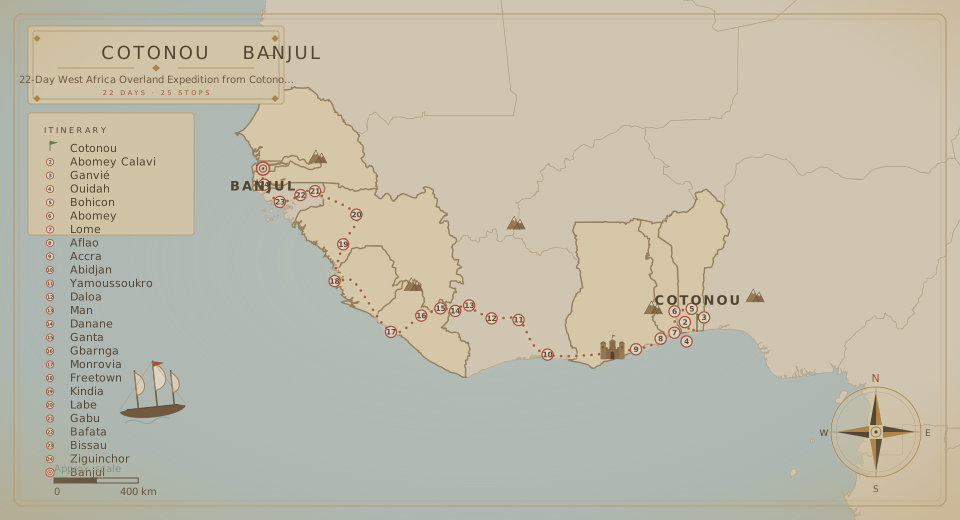
Follow the West African coastline on a 22-day overland expedition from Cotonou to Banjul, crossing ten countries in one continuous line. This journey is built around places that define the region: lagoon villages on stilts, royal history in Dahomey, the Route des Esclaves in Ouidah, and the changing rhythms of coastal capitals from Lomé and Accra to Abidjan and Monrovia. Along the way, the route leaves the shoreline for Guinea's cooler Fouta Djalon highlands, where a guided hike adds a different pace before the journey returns to the Atlantic through Guinea-Bissau, the green Casamance, and The Gambia. Expect real distances, long border days, and a route that feels earned from beginning to end.

At a glance

What this trip includes

Duration 22 Days
Tour type Private
Activity level Moderate
Accommodation Included · Luxury
Transport Included
Wheelchair access No
Cities Abomey Calavi, Ouidah, Bafata, Kindia, Bissau, Gbarnga, Man, Danane, Gabu, Accra, Daloa, Yamoussoukro, Abidjan, Cotonou, Lome, Monrovia, Labe, Ganta, Aflao, Freetown, Ziguinchor, Bohicon, Banjul, Ganvié, Abomey
Languages English

Day by day

The itinerary

1
Day 01

Arrival in Cotonou

Land in Cotonou, where your driver meets you at the airport and takes you straight to the hotel. Nothing else is planned: the day is yours to recover from the flight, so book whatever arrival time suits you.

2
Day 02

Ganvié, Ouidah and the Route des Esclaves

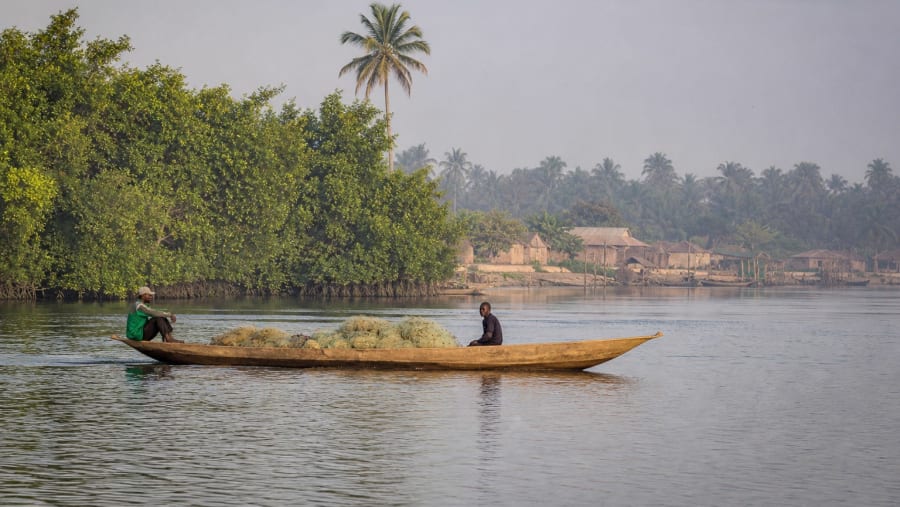
Out in the morning to Calavi and across Lake Nokoué by pirogue to Ganvié, where thirty thousand people live on stilts in the lagoon, in a place founded because the Dahomey raiders would not follow anyone onto the water. Then continue about an hour west to Ouidah for lunch.

In the afternoon, walk the Route des Esclaves past the slave posts out to the Gate of No Return on the beach, marked at every stage of what was done along it. Continue to the Sacred Forest, the Ouidah monument, and the salt village.

3
Day 03

Abomey and the Kingdom of Dahomey

Travel about two and a half hours inland to the old heart of Dahomey. Visit the Chameleon Temple first, then the underground village at Bohicon, dug as a refuge during the wars of the kingdom.

Continue to the Royal Palace Museum in Abomey, a UNESCO site and the seat of the Dahomey kings, whose wealth came largely from the trade you walked through yesterday. Return to Ouidah for the night.

4
Day 04

Ouidah, Togoville and Agbodrafo to Lomé

Spend the morning in Ouidah at the Cathedral and the Temple of the Sacred Pythons, which face each other across the square. Then cross the first border at Hillacondji and enter Togo.

Take a pirogue across Lake Togo to Togoville, where the 1884 German protectorate treaty was signed and where the vodun shrines are still in daily use. Stop at the preserved slave house in Agbodrafo before the last stretch into Lomé.

5
Day 05

Lomé and the Aflao Border to Accra

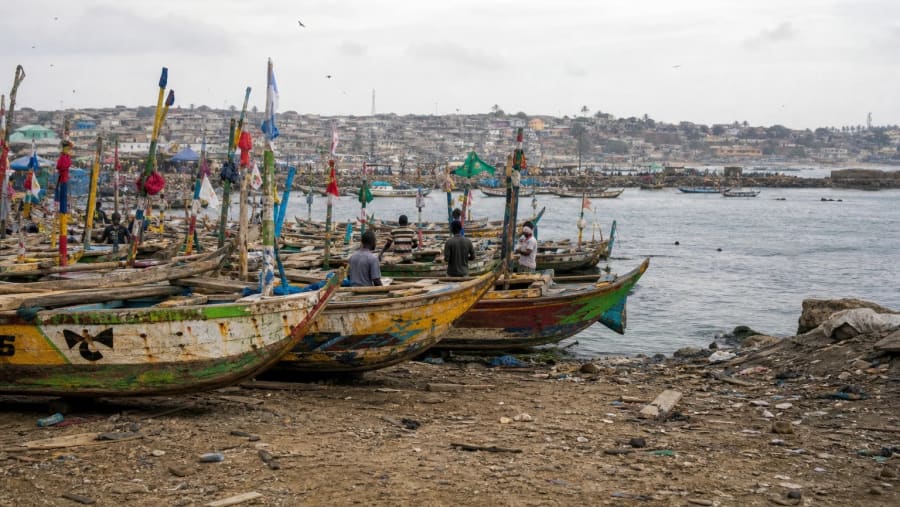
Spend the morning in Lomé visiting the fishing harbour, the fetish market, where healers and vodun practitioners buy their herbs and carved figures, Independence Square, and the Grand Marché.

After lunch, cross at Aflao, minutes from the centre in the only capital in Africa that sits directly on its own border, then continue about three and a half hours along the coast road to Accra.

6
Day 06

Accra's Historic Landmarks and Markets

Spend a full day in Ghana's capital. Visit Osu Castle, the old Danish fort that became the seat of government, then Makola Market, the Kwame Nkrumah Memorial Park, and Jamestown, the oldest neighbourhood in the city, where you climb the lighthouse above the fishing beach.

Finish at Black Star Square, where the nation holds its parades.

7
Day 07

Flight from Accra to Abidjan

Enjoy a slow last morning in Accra, then take the short flight west to Abidjan, a little over an hour, where the Ivorian convoy is waiting. The language changes to French.

Abidjan in the afternoon is towers, lagoon ferries, the Plateau skyline, and traffic, and the evening is in Treichville.

8
Day 08

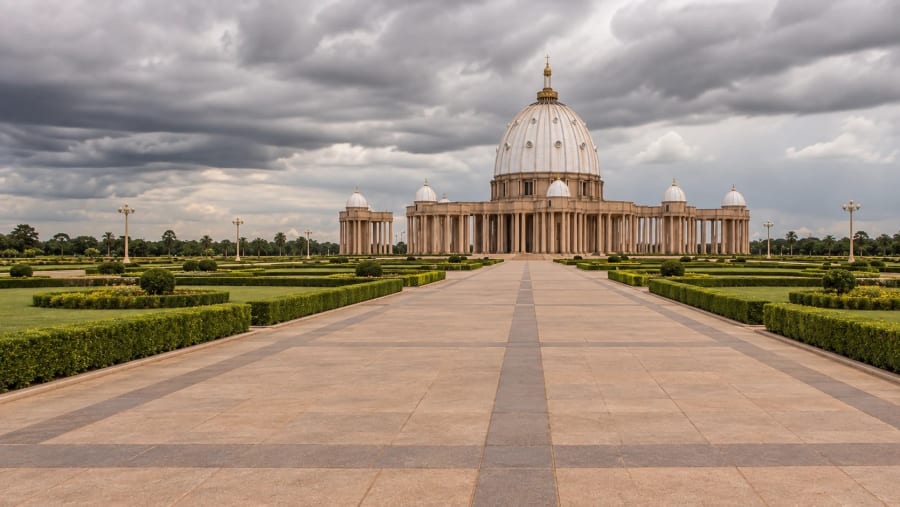
Yamoussoukro and the Basilica of Our Lady of Peace

Head north out of Abidjan on good tar to the political capital that Félix Houphouët-Boigny built out of his home village, and to the Basilica of Our Lady of Peace standing in the bush at the end of it.

Spend the afternoon there under a dome that answers St Peter's, with room inside for eighteen thousand people and rarely more than a handful.

9
Day 09

The Zaouli Dance and Onward to Man

Travel west into Guro country in the morning for the Zaouli, a masked dance performed at a speed the eye cannot resolve, the dancer's feet blurring under a carved face that never moves. Watch it in a village that keeps it rather than on a stage.

Then continue west through Daloa to Man, a town ringed by forested hills close to the Liberian border, for the night.

10
Day 10

Into Liberia at Ganta and On to Monrovia

This is the day the flight used to take, now driven. Leave Man early, cross the hills to Danané and the border into Liberia, then continue from Ganta south on the paved road through Gbarnga to Monrovia, arriving as the light goes.

With the border, it is a ten- to twelve-hour day, and we say so plainly. Monrovia is where the hard half of the expedition begins.

11
Day 11

Monrovia at a Slower Pace

Liberia's capital rewards a slow day. Visit Providence Island, where the first settlers from America landed in 1822, the Waterside market, the burnt-out Ducor Hotel on its hill above the city, and street names that read like a road map of the American east coast.

You also re-provision here, because the hardest week of the route starts tomorrow.

12
Day 12

Monrovia to Freetown via the Mano River

This is the defining overland day of the expedition. Travel north-west from Monrovia to the Mano River, cross into Sierra Leone, and continue through the rice country to Freetown, arriving in the dark if the border is slow.

It is a long, hot, uncertain day, and we do not pretend otherwise. It is also the reason the line on the map holds together.

13
Day 13

Freetown and the Peninsula Beaches

Spend a day in one place. The morning is in the city: the Cotton Tree, the Krio board houses on the hillsides, and the market streets that run straight downhill to the water.

In the afternoon, head to the peninsula beaches south of town, at Tokeh or River Number Two, which is where Freetown goes on a Sunday and where the convoy crews catch up on sleep.

14
Day 14

From Freetown to Kindia

Set out along the peninsula road, with the city on its steep green hills above one of the largest natural harbours in the world behind you, then continue north into Guinea.

Past the border, the road runs inland to Kindia, at the foot of the highlands, where you leave the coast for the next four nights.

15
Day 15

Kindia to Labé in the Fouta Djalon

Head north onto the plateau on the long climb to Labé, passing through the mining towns and the mango belt, with the temperature dropping as the altitude rises.

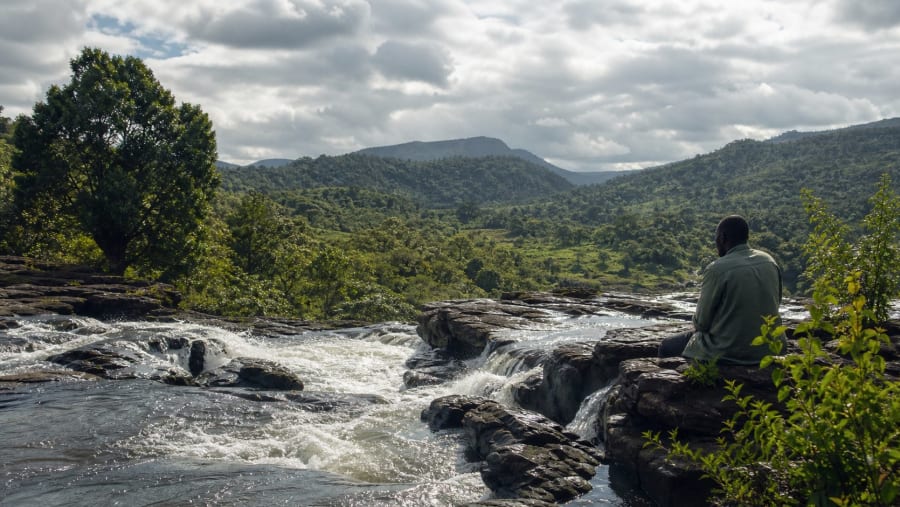
By the afternoon, you are in the Fouta Djalon: plateau grassland, waterfalls off the escarpment edges, and air ten degrees cooler than the coast. Labé, the capital of the highlands, is where you sleep for two nights.

16
Day 16

Walking the Fouta Djalon

Spend a day out of the vehicles. Walk a section of the escarpment with a local guide, down through terraced Fula smallholdings to one of the falls, and back up in the afternoon.

The highlands are the reason to come to Guinea and the reason you do not simply drive through them, which is what almost every crossing of this region does.

17
Day 17

From Labé to the Border and Gabú

Face the hardest border on the route, so leave Labé early and give it the middle of the day. The road comes down off the plateau toward Guinea-Bissau.

On the far side, Gabú, a Fula trading town at the edge of the plateau country, hot and busy and entirely unvisited, is where you sleep. The paperwork is put in order here for the rest of the run to the coast.

18
Day 18

Gabú to Bissau via Bafatá

Travel west toward the Atlantic again, stopping en route at Bafatá, the colonial river town where Amílcar Cabral was born.

Bissau at the end of it is a city of collapsing Portuguese facades, bougainvillea growing out of the plasterwork, and a waterfront that has stopped pretending to be a port. It is one of the strangest capitals in Africa.

19
Day 19

Into Senegal and On to Cap Skirring

Head north through cashew country on a road that alternates without warning between tar and red earth, to the crossing at São Domingos.

Senegal changes character below the Gambia River: the Casamance is green, slow, and threaded with mangrove creeks, and it has spent decades feeling separate from Dakar. Finish on the Atlantic at Cap Skirring, in time for the sunset, which is the best on this stretch of the ocean.

20
Day 20

Cap Skirring to Ziguinchor

This is a light day on purpose, after the borders behind you. The morning is for the coast: the fishing beach, the palm line, and whatever the tide has left.

Then take a short run east on back roads through Diola villages and stands of sacred forest to Ziguinchor, the old river port, reaching the waterfront at dusk.

21
Day 21

Ziguinchor to Banjul, the Final Border

Travel north out of the Casamance on the last crossing of the trip, a gentle one by the standards of what is behind you, and into The Gambia.

Banjul, the smallest capital on the Atlantic coast of Africa, is where the convoy stops after three weeks and ten countries, and the last evening is spent together on the riverfront.

22
Day 22

Departure from Banjul

Enjoy a last morning to walk Albert Market and the riverfront before transfers to the airport. The expedition ends here, at the mouth of the Gambia River.

Book departures from early afternoon onward.

The route

Where you'll travel

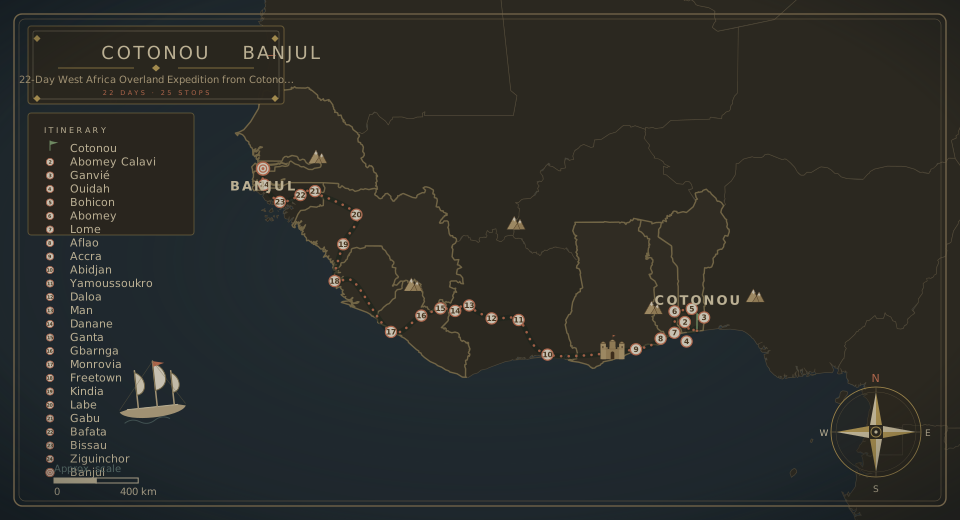
Tour route map
Round trip from Cotonou 25 cities · 22 Days

The fine print

Trip details

What's Included

  • Supported 4WD convoys the whole way, with a single expedition leader from Cotonou to Banjul and local fixer teams in all ten countries

  • Eight land crossings plus the Accra to Abidjan flight: assistance, permits, and paperwork handled at every one

  • Twenty-one nights in hotels: boutique in the capitals, comfortable along the Gulf of Guinea, genuinely basic between Monrovia and Gabú

  • Ganvié by pirogue; Ouidah and the Route des Esclaves; the palaces of Abomey; Togoville by pirogue; Lomé; a day in Accra; the Basilica of Yamoussoukro; the Zaouli dance; Monrovia and Freetown; a walking day in the Fouta Djalon; the Casamance and Cap Skirring

  • Accra to Abidjan on the evening of Day 7, included

  • Two built in, at Monrovia on Day 11 and Freetown on Day 13, on the hardest stretch of the route

  • Daily breakfast. Lunches and dinners are at your own expense; on convoy days your leader picks the roadside stops and you pay as you go.

What's Not Included

  • International flights (arrive Cotonou, depart Banjul)

  • Visas for the ten countries

  • Travel insurance

  • Lunches and dinners

  • Alcohol

What to bring

  • Comfortable walking shoes
  • Sun protection and a hat
  • A light layer for cooler evenings
  • Your passport valid for at least six months
  • Some cash in local currency

Know before you go

  • This is a 22-day overland expedition crossing ten countries in one continuous line.
  • Expect real distances, long border days, and some demanding travel days, especially between Monrovia and Gabú.
  • Accommodation is genuinely basic between Monrovia and Gabú.
  • Book whatever arrival time suits you on Day 1, as nothing else is planned that day.
  • Book departures from Banjul from early afternoon onward on Day 22.
  • Your passport should be valid for at least six months.
  • Visas for the ten countries are not included.

Logistics

Meeting & route

Meeting point
Cotonou
Tour start
Cotonou
Tour ends at the same location as the start point.
End of the journey

Your 22 days finish where they began, in Cotonou.

Watch the tourHQ film Watch the film

Create your own adventure

Can't find the perfect tour? Tailor your dream trip.

  • Tell us your destination, dates and group size.
  • Our travel experts and local guides design a tailored itinerary, just for you.
  • Enjoy your trip with peace of mind, knowing everything is taken care of.
Plan my holiday

Say goodbye to travel stress.

Starting from

USD 17,490 /person
Book This Tour

When

Travellers

Total