
7-Day Bhutan Festival Tour with Tiger's Nest and Phobjikha

7 Days Round trip from Airport Terminal Easy pace

The journey

Trip highlights
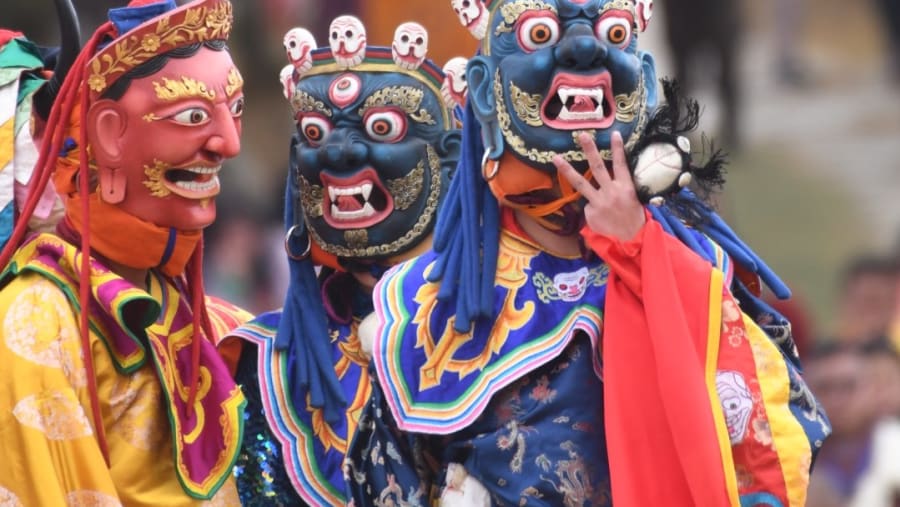
  • 01 Experience the grand Thimphu Festival with sacred masked dances and cultural performances
  • 02 Visit Buddha Dordhenma at Kuensel Phodrang and enjoy a bird's-eye view of Thimphu
  • 03 Cross Dochula Pass and see its 108 memorial chortens against the Himalayan backdrop
  • 04 Explore Phobjikha Valley, the winter roosting ground of the Black-necked Crane
  • 05 Discover the 400-year-old Punakha Dzong, the Palace of Great Bliss
  • 06 Hike to Taktsang Monastery, Bhutan's iconic Tiger's Nest

Discover Bhutan on a richly immersive 7-day journey through sacred festivals, living traditions, dramatic Himalayan scenery, and revered monasteries. Experience the grand Thimphu Festival, explore historic dzongs and textile traditions, cross Dochula Pass, and visit the serene Phobjikha Valley, winter home of the Black-necked Crane. The tour also includes Punakha's cultural landmarks, a hike to the iconic Taktsang Monastery, and meaningful local experiences that reveal Bhutan's spiritual and artistic heritage.

At a glance

What this trip includes

Duration 7 Days
Tour type Private
Activity level Easy
Accommodation Included · Standard
Transport Included
Wheelchair access Yes
Cities Thimphu, Paro, Punakha, Phobjikha, Gangtey
Languages English

Day by day

The itinerary

1
Day 01

Arrival in Paro and Welcome to Thimphu

  • Holidays Bhutan's tour guide will greet you at Paro International Airport and transfer you to Thimphu, the capital city.

  • Paro Valley lies at an altitude of 2,200 m and is located in western Bhutan.

  • The transfer to Thimphu takes about 1 hour 30 minutes. The capital city sits at an altitude of 2,330 m.

  • En route, stop at Tachogang Temple. Drubthob Thangtong Gyalpo (1385-1485) built this 3-storey temple. Popularly known as Chakzampa, the iron-bridge builder, he engineered 118 ferries, 120 temples, 111 stupas, 60 wooden bridges, and 58 rust-resistant iron-chain suspension bridges in Tibet, China, and Bhutan. He also built 8 rust-resistant iron-chain footbridges in Bhutan.

  • Check in to the hotel for refreshments, then join the welcome tea followed by lunch, a formal introduction, and a tour briefing.

  • Rest for 1 to 2 hours to recover from jet lag.

  • Drive to Motithang Takin Preserve in Thimphu, located about 10 minutes from the hotel. It is a wildlife reserve dedicated to the conservation of the takin, Bhutan's national animal.

  • Join the locals in their daily circumambulation, or kora, of the city's landmark Memorial Stupa, built in 1974 in memory of the late Third King of Bhutan, Jigme Dorji Wangchuck.

  • Visit the National Institute of Zorig Chusum, where you can watch and learn about the thirteen arts and crafts of Bhutan. The institute remains closed on Sundays and public holidays.

  • In the evening, join a welcome dinner at the hotel. Please feel free to share your dietary restrictions so the cuisine can be adjusted to suit your palate.

  • Accommodation: Hotel in Thimphu

2
Day 02

Thimphu Festival and Cultural Heritage

  • Today, guests will dress up for the grand Thimphu Festival. Your seasoned tour guide will help guests wear Gho for men and Kira for women, the national dress of Bhutan.

  • Before visiting the fortress for the festival, drive up to the Buddha Dordhenma Statue (169 ft., one of the largest Buddha statues in the world) at Kuensel Phodrang, Thimphu. Enjoy a bird's-eye view of Thimphu city.

  • Visit the historic Tashichho Dzong, built in 1641, for the grand festival held in its courtyard.

  • See the Atsaras, divine jesters who entertain and manage the crowd during the festival.

  • Witness the Shinje dance, which is believed to clear obstructions and pacify haughty earth spirits.

  • Watch the De-gyad Cham, the esoteric dance of the Eight Spirits. The dance propitiates the 8 spirits of the 3 realms of heaven, earth, and the subterranean: Lu (nagas), Dud (demons), Tsen (mountain spirits), Gyalpo (arrogant spirits), Za (planetary spirits), Mamo (nocturnal spirits), Nodjin (yakshas), and Shinje (yamas).

  • See the exorcism dance of the Black Hat dance, enacting the legend of Guru Padmasambhava's disciple Pelge Dorji subjugating the Ox-headed Anti-dharma King in Tibet.

  • Enjoy a cultural performance of Zhungdra dance.

  • Spend half your day enjoying the vibrant colours and performances of the Thimphu Tshechu.

  • Visit the Royal Textile Academy of Bhutan museum, instituted in 2005, or Gagyel Lhundrup Weaving Center, and learn about the history and craft of textile weaving in Bhutan.

  • Stroll through the craft market showcasing the authentic crafts of rural Bhutanese artisans.

  • Lunch venue will be chosen according to time convenience.

  • Visit the Centenary Farmers Market (CFM) in Thimphu, a vibrant hub showcasing Bhutan's agricultural heritage and modern progress, where visitors can experience authentic Bhutanese culture, interact with locals, and sample unique foods like dried yak cheese and chili chutney.

  • Visit Changlimithang Stadium.

  • Dinner will be at the hotel or a local restaurant, depending on convenience.

  • Accommodation: Hotel in Thimphu

3
Day 03

Dochula Pass and Journey to Phobjikha Valley

  • Transfer from Thimphu to Phobjikha (travel distance: 3 hours 40 minutes, 129 km).

  • Drive from Thimphu to Punakha.

  • En route, stop at Dochula Pass for tea or coffee and enjoy the spectacular view of the pan-Himalayas from this 3,100-m mountain pass.

  • See the 108 memorial chortens (stupas) built by Ashi Dorji Wangmo Wangchuck, the eldest Queen Mother, in honour of the Fourth King of Bhutan, His Majesty Jigme Singye Wangchuck.

  • Visit the spectacular and historic Druk Wangyel Temple, built in 2005. The murals inside the temple are inspired by and dedicated to the founder of Gross National Happiness, the Fourth King.

  • En route, visit Aum TeobZam Homestay to experience Bhutanese culinary cooking (one or two menu items), explore the village, and enjoy lunch. Note: there is a 10-to-15-minute downhill drive from the road point via a farm road to the homestay.

  • After lunch, continue driving to the very beautiful Phobjikha Valley, the winter roosting ground of the Black-necked Crane, affectionately known as the Bird of Heaven.

  • Phobjikha lies at an altitude of 3,000 m. The average temperature in Phobjikha in March on a typical day ranges from 10°C to a low of 5°C.

  • Accommodation: Hotel in Phobjikha

4
Day 04

Gangtey Monastery, Phobjikha Valley and Punakha

Activities

  • In the morning, visit Gangtey Monastery, built in 1613 by Pema Lingpa's grandson, the first Gangtey Tulku, Rigdzin Pema Thinley. The monastery's history begins with the terton (treasure revealer) Pema Lingpa (1450-1521), one of Bhutan's most revered saints. He prophesied that a great monastery would be built on this spot and that his descendants would be its guardians. Today, it is the largest Nyingma monastery in Bhutan.

  • Optional for those who can walk: explore Phobjikha Valley by hiking the Gangtey Nature Trail, which circles the roosting ground of the cranes. Those who cannot walk will be driven to Kawang Temple to explore the valley.

  • The heavenly migratory bird is sighted in the valley from November through February.

  • Watch and learn about the fabled crane at the valley's Black-necked Crane Visitor Centre.

  • Guests will hoist prayer flags on Lawala Pass (3,250 masl), a beautiful alpine motorable pass and favoured pastureland for nomads and yaks.

Guest Information

The Blessed Rainy Day (known as Thruebab) is celebrated across Bhutan annually on September 23. This public holiday holds deep cultural and religious significance, marking the end of the monsoon season and the beginning of the harvest period. As part of this unique cultural experience, we will be celebrating the day. This is a wonderful opportunity to immerse yourself in the authentic customs and warm hospitality of Bhutan, sharing a meal and stories during this auspicious festival. Venue and activities will be informed later.

  • Continue driving to Punakha in the afternoon (travel distance: 78.7 km / travel time: 2 hours 20 minutes).

  • En route to Punakha, visit Rinchengang Village, perched on a hillside opposite Wangdiphodrang Dzong. It is a clustered village of 45 to 47 households, renowned for its traditional stone masonry and ancient mud houses. Take a village walk.

  • Alternatively, take a short walk to the popular Chhimi Lhakhang, the Temple of Fertility in Punakha. Learn about the beloved saint Drukpa Kunley (1455-1529), whose songs and stories of spiritual realisation continue to influence and shape Bhutanese socio-cultural life.

  • For those who cannot walk, explore the village. Please keep an open mind as you walk through the village, where houses proudly display phallic paintings, souvenir arts, and crafts.

  • Dinner at the hotel.

  • Accommodation: Hotel in Punakha

5
Day 05

Punakha Dzong, Khamsum Yulley Hike and Return to Paro

  • Visit the 400-year-old Pungthang Dechen Phodrang, the Palace of Great Bliss, and learn about Zhabdrung Ngawang Namgyel (1594-1651), the founding father of Bhutan. This castle fortress is an epitome of Bhutanese architecture, housing national relics and fine Buddhist frescoes, including the popular 12 episodes from the life of Shakyamuni Buddha inside the grand assembly hall.

  • Every spring, the fortress hosts the 3-day Dromchoe festival, where resident monks perform sacred masked dances. It is the first festival to usher in the Traditional New Year on the Bhutanese traditional calendar.

  • Enjoy a light-to-moderate hike to Khamsum Yulley Namgyel Stupa.

  • Walking time is 45 minutes to 1.5 hours, depending on pace. Altitude is 1500 m, elevation gain is 200 m, and difficulty is easy-moderate.

  • For those who cannot walk, visit Punakha Suspension Bridge, one of Bhutan's longest and most iconic pedestrian bridges, spanning the Pho Chhu River near the majestic Punakha Dzong.

  • Hike down from Khamsum Yulley Namgyel Chorten and hop onto rafting along the Mo Chhu River, from Khamsum Yullay base to Changyu. Rafting distance: 7 km / rafting time: approximately 1 hour, depending on water volume and season.

  • Optional afternoon activity: rafting along the Mo Chhu River from Khamsum Yullay base to Changyul. Level: easy 1-2, with some rough water and possible manoeuvring using basic paddling skills. Rafting distance is 7 km, and rafting time is approximately 1 hour depending on water volume and season.

  • A picnic lunch will be organised by the Pho Chhu (male river) or Mo Chhu (female river) side.

  • In the evening, drive back to Paro (travel distance: 3 hours 8 minutes, 115 km).

  • Accommodation: Hotel in Paro

6
Day 06

Tiger's Nest Hike and Cultural Farewell in Paro

  • Gear up for the round hike to the spectacular Taktsang Monastery, also called the Tiger's Nest, which takes between 4-5 hours for the return journey, depending on walking pace. The first temple complex was built in 1692 and was blessed by Padmasambhava as a power-place and treasure trove in the 8th century. This magical site has been visited by legendary Buddhist saints and treasure discoverers who attained spiritual realisations and revealed treasure teachings here.

  • The 4-5-hour moderate climb meanders through dense pine forest, clearings, bedrocks, streams, and finally a waterfall cascading down a 2000-ft vertical cliff.

  • The temple custodian, a celibate monk and practitioner, will give transmission of the seven-line prayer of Guru Padmasambhava to guests inside the inner sanctum of the temple complex.

  • Lunch at Tiger's Nest cafeteria.

  • For those who cannot climb to Tiger's Nest, visit the 7th-century Kyichu Temple, the oldest landmark Buddhist monument in the Himalayan Buddhist world, and offer butter lamps, which are believed to remove obstacles and accumulate merit.

  • Drive to the heritage Dzongdrakha Monastery, which is within walking distance - a 20-30-minute gentle hike - from the car parking terminal.

  • Known as the second Tiger's Nest for its cliff landscape, this quiet temple site offers a sweeping view of the lower Paro Valley and is ideal for contemplation, a short therapeutic hike, and retreat.

  • The temple complex, founded by Siddha Gyembo Dorje, houses the shrine rooms of patron saint Guru Padmasambhava and two divinities - Tara, the goddess of protection, and Tsheringma, the goddess of longevity.

  • Hike down and drive back for a traditional hot-stone bath.

  • Later in the evening, attend a cultural show and farewell dinner, followed by the closing session.

  • Closing dinner - venue will be informed accordingly.

  • Accommodation: Hotel in Paro

7
Day 07

Paro Museum Visit and Departure

  • After breakfast: Visit the historic 5-storey Ta Dzong, a watchtower established in 1968.

  • Activity: Explore Paro town for last-minute souvenir shopping and lunch in town.

  • Transfer: This afternoon, we will see you off at the airport to catch your flight to Bangkok and connect to your international flight to your next destination.

Leave nothing but footprints. Take nothing but memories! A Bhutanese farewell saying to parting guests.

The fine print

Trip details

What's Included

  • Certified licensed tour guide

  • Private SUV car or Hiace bus

  • 3-star accommodation

  • All meals

  • Entrance and monument fees

What's Not Included

  • Sustainable Development Fees (SDF)

  • Visa

  • Flight

  • Insurance

  • Tips and gratuities

  • Laundry

  • Drinks and beverages

What to bring

  • Clothes/shoes to be packed.

  • Normal clothes along with a few warm clothes.

  • Rain-proof jacket.

  • Ankle shoes for hiking or good walking shoes.

  • Stockings.

  • Small backpack.

  • Sunscreen.

  • Walking stick for the Tiger's Nest hike, or you can hire a wooden stick from the hike base.

  • Any medicines if you are undergoing any treatment.

Know before you go

  • Please note.

  • This itinerary is intended as a guide only. Routes and weather conditions may affect the availability of views and panoramas as described.

  • Please be aware that all times stated are approximate and may vary with individual and group fitness and interest levels.

  • September is a pleasant month to visit Bhutan, as it falls after the summer monsoon, so you can expect mild weather with fewer rainy days.

  • Things to remember.

  • Submit the original passport copy for the visa.

  • Show the visa copy on your phone or carry a printed copy.

  • Expected temperature.

  • In Thimphu, Paro, and Phobjikha, the temperature will be between 15-24 degrees during the daytime.

  • In Punakha, the temperature will be between 25-30 degrees during the daytime.

  • Currency exchange is available at Paro Airport.

  • A local SIM card can be arranged by us (both eSIM and hard SIM) at BTN 1100 ($13) for an unlimited data package for 7 days. Please let us know before you travel.

Logistics

Meeting & route

Meeting point
Hotel
Tour start
Airport Terminal
Tour ends at the same location as the start point.
End of the journey

Your 7 days finish where they began, in Airport Terminal.

Watch the tourHQ film Watch the film

Create your own adventure

Can't find the perfect tour? Tailor your dream trip.

  • Tell us your destination, dates and group size.
  • Our travel experts and local guides design a tailored itinerary, just for you.
  • Enjoy your trip with peace of mind, knowing everything is taken care of.
Plan my holiday

Say goodbye to travel stress.

Starting from

USD 300 /person
Book This Tour

Estimated room rates

Single Room $600.00 — $1,000.00
Double Sharing $300.00 — $800.00

When

Travellers

Total
