Taj Mahal and Agra Heritage Walk
Meet your tour guide in the lobby of your booked hotel at the scheduled time.
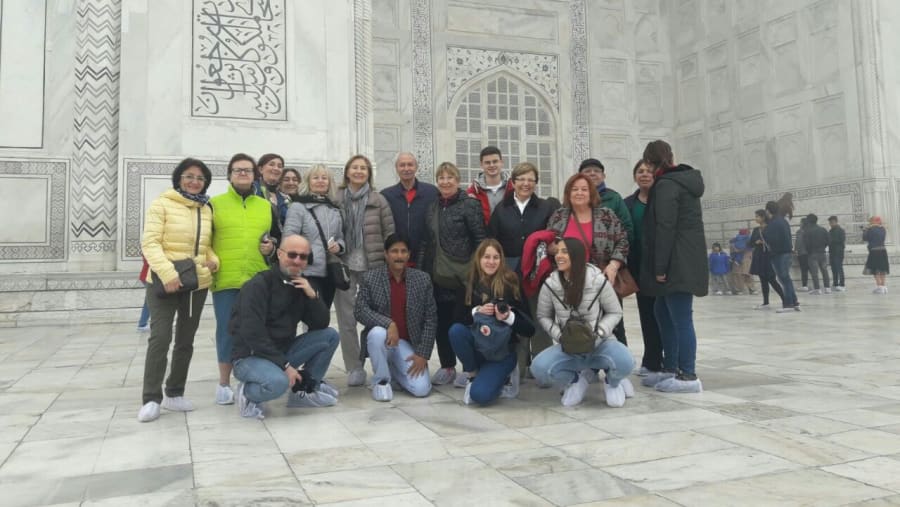
Proceed for Taj Mahal sightseeing. The Taj Mahal is one of the wonders of the world and is also known as a symbol of love. It was built by the fifth Mughal Emperor Shahjahan in memory of his beloved queen Mumtaz Mahal (Arjuman Begum Bano) from 1631 to 1653. It took 22 years to complete with the help of 20 thousand workers. The Taj is famous for its symmetry and the precise stone inlay work done in marble with semi-precious stones.
Begin your Agra Heritage Walk, which includes:
Jama Masjid, a mosque built by Mughal Emperor Shahjahan in 1648 and dedicated to his favourite daughter, Jahanara Begum. The Jama Masjid of Agra is constructed of red sandstone with intricate white marble decorations. The walls and ceilings of the mosque are painted blue. It is a huge mosque in the centre of Agra, surrounded by a great bazaar.
Mankameshwar Mandir (Temple) in Agra, one of the most ancient temples devoted to Lord Shiva. The temple is situated at Rawatpara, near Agra Fort Railway Station. It is said that the Shiv linga is covered with silver metal and was founded by Lord Shiva himself during the Dwapara era, when Krishna was born in Mathura. Shiva wished to get a darshan of Lord Krishna in child form. While coming from Mount Kailash, he rested here. Yamuna used to flow here, and Shiva meditated and spent the night at the Mankameshwar Temple.
Stop at Lohar Gali, where the narrow lanes sell many articles such as bangles, decorated artefacts, artificial jewellery, and decorative items used for adorning images of Gods and Goddesses.
Rawat Para (Spice Market), one of the oldest localities in the historic city of Agra. It is situated very close to Agra Fort and the Yamuna River. Rawatpara draws its name from the title Rawat. There are several spices to choose from, including red chili, coriander powder, turmeric, black pepper, fennel, asafetida, bay leaf, mace, mint, saffron, tamarind, and cloves.
Khoya Gali, where many types of Indian sweets and desserts are sold, such as Rasmalai, Gulab Jamun, Jalebi, Rabri, Rasgulla, Gujiya, Son Papdi, and Kaju Katli.
Namak Ki Mandi, where artisans beat gold and silver to make foils of gold and silver for medicinal use in Ayurveda.
Sindhi Market, very famous in Agra for Indian textiles such as sarees, kurta pajama, Punjabi suits, Lehenga choli, and Indian wedding dresses.
Conclude the walk at Bijli Ghar, from where you will be transferred to your hotel in Agra.