
Day 01
Arrival in Kathmandu and Hotel Transfer
Arrival in Kathmandu and transfer to your hotel.


Explore the world with tourHQ
The journey
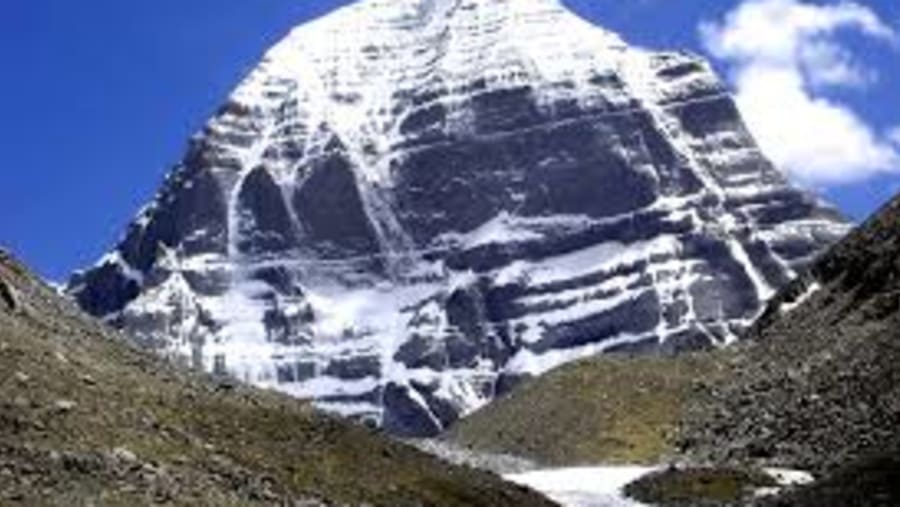
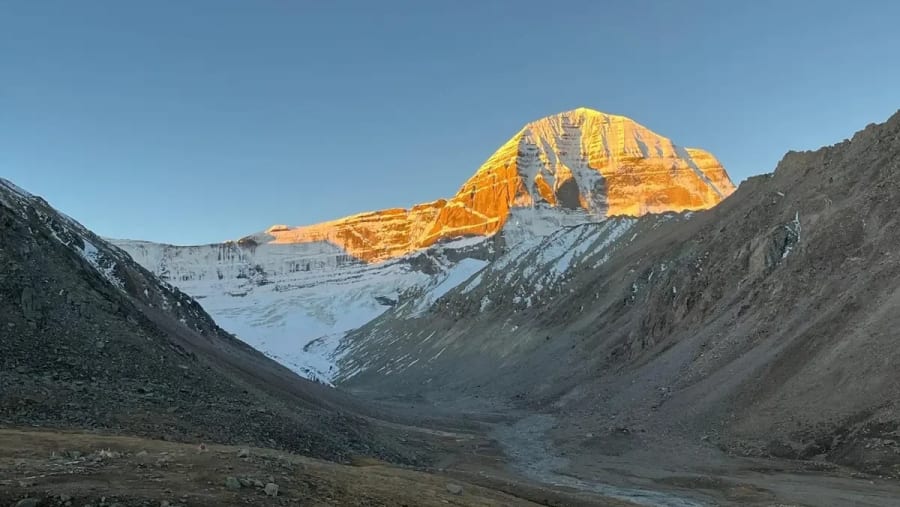
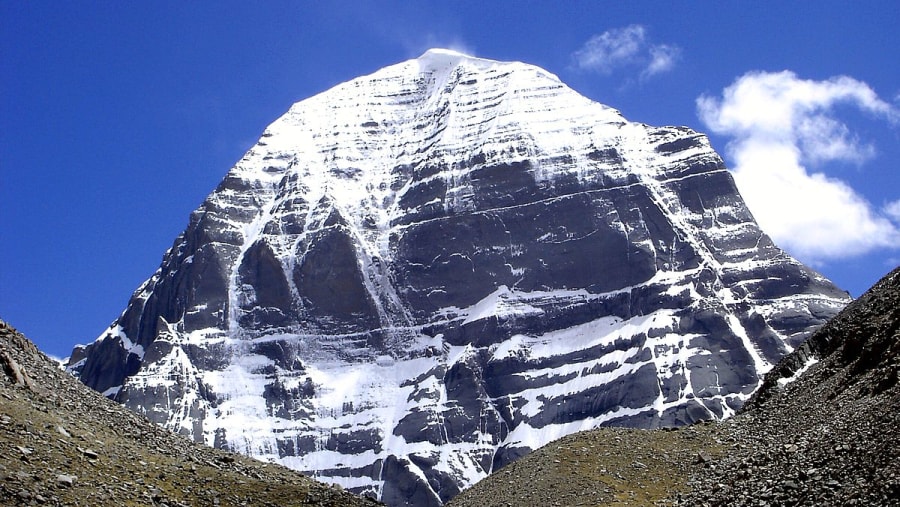
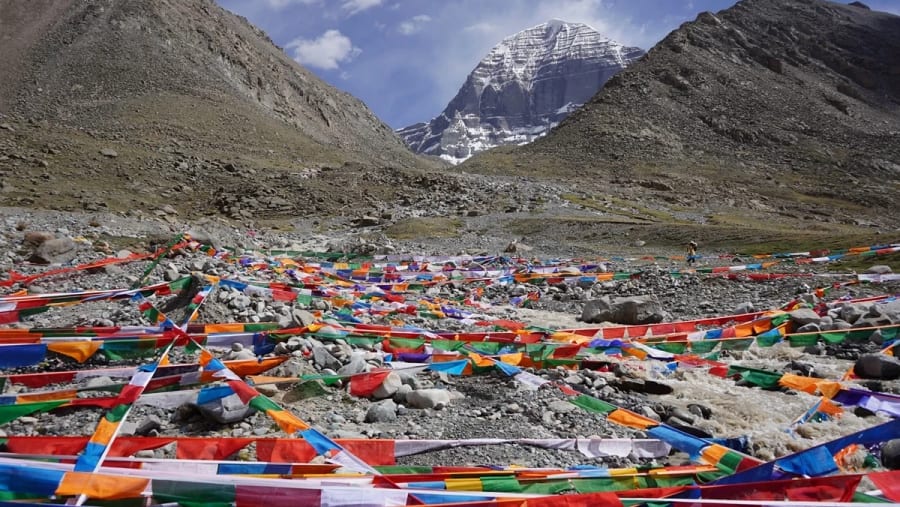
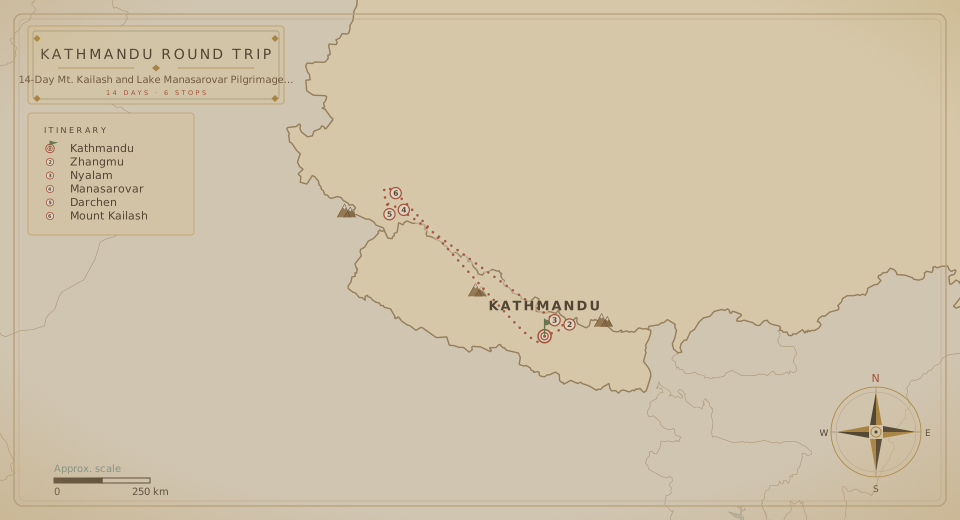
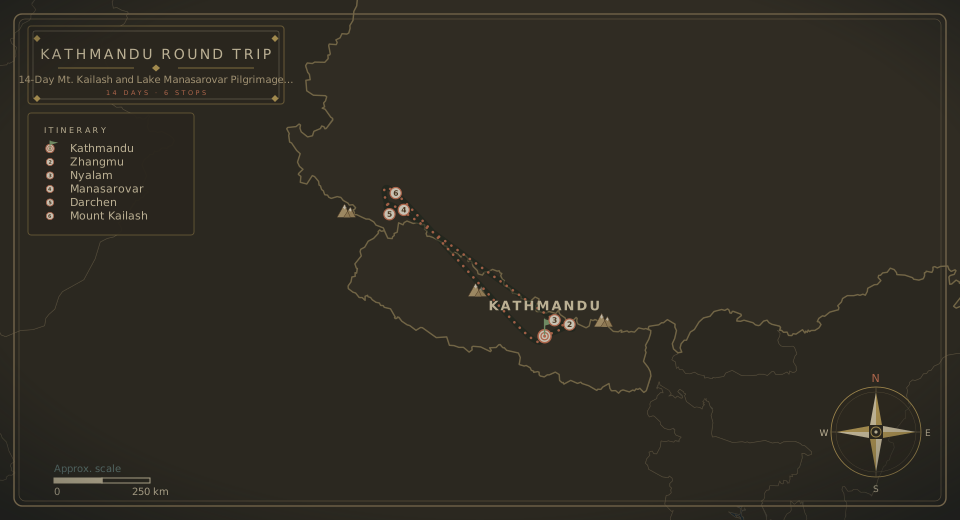
Embark on a 14-day overland pilgrimage from Kathmandu into Tibet, following a classic Himalayan route to the sacred landscapes of Mt. Kailash and Lake Manasarovar. This journey balances long scenic drives with crucial acclimatization, including a rest day in Nyalam before continuing deeper onto the Tibetan plateau. The spiritual heart of the tour is the 3-day Mt. Kailash Kora (Parikrama), completed from Darchen via Diraphuk and ZutulPuk. After visiting Lake Manasarovar, you retrace the overland route through Prayang, Saga, and Nyalam before returning to Kathmandu.
At a glance
Day by day
Arrival in Kathmandu and transfer to your hotel.
Today, drive from Kathmandu to Zhangmu/Nyalam (3750m).
Nyalam rest day.
Drive from Nyalam to Saga.
Travel from Saga to Prayang.
Travel from Prayang to Lake Manasarovar (4560m).
Travel from Manasarovar to Darchen (4560m).
Begin the Kailash Kora / Parikrama from Darchen to Diraphuk.
Continue the Kailash Kora / Parikrama from Diraphuk to ZutulPuk.
Complete the Kailash Kora / Parikrama from ZutulPuk to Darchen.
Travel from Darchen via Manasarovar to Prayang (4750m).
Drive from Prayang (4750m) to Saga.
Drive from Saga (4600m) to Nyalam (3750m).
Travel from Nyalam to Kathmandu (1400m) via the Araniko Highway.
The route
The fine print
Airport pick-up and drop-off in Kathmandu by private vehicle.
Hotel stays in Kathmandu on a twin-sharing basis with breakfast.
Guesthouse or lodge accommodations during the journey in Tibet (Zhongmu or Kerung, Saga, Lake Mansarovar, Darchen, and Zuthulpuk).
Pure vegetarian meals (breakfast, lunch, and dinner) along with tea and coffee during the trip.
All ground transport by private vehicle, coach, or land cruiser as per the itinerary, plus a support truck for luggage in Tibet.
Tibet/China Group Visa and border/customs clearance taxes.
Tibet Travel Permit, Kailash entry permits, and restricted area permits.
Experienced English-speaking Tibetan/Chinese guides and Nepali tour leaders.
Supporting local crew, cooks, and assistants.
Portable oxygen cylinders and comprehensive first-aid medical kits for high-altitude safety.
Complimentary items like a down jacket and duffel bag.
All government taxes and company service charges.
International airfare to and from Kathmandu.
Nepal entry visa fees (obtainable on arrival at Kathmandu airport).
Personal travel insurance and emergency evacuation, including helicopter rescue if needed.
Personal expenses such as tips for guides and drivers, bottled drinks, extra snacks, laundry, or Wi-Fi.
Extra cost for hiring personal horses or porters during the 3-day Kailash Kora (Parikrama).
Thermal innerwear
Down jacket
Waterproof outer shell
Sturdy waterproof trekking boots with good ankle support
Woolly hat
Gloves
UV-protection sunglasses
High-SPF sunscreen
Reusable thermos
First-aid kit with personal medications
Cash in Chinese Yuan
Permits and documents required: You need a valid passport, a Chinese visa, a Tibet Travel Permit, an Alien Travel Permit, and specific regional permits for Kailash.
Copies: Carry multiple printed and digital photocopies of your passport and permits, as checkpoint inspections are frequent along the overland route from Kathmandu via the Kerung border or Kodari Border.
Altitude and health - high altitude risk: The journey peaks at over 5,000 meters, notably during the crossing of the Dolma La Pass (5,636 meters). Low oxygen levels can cause acute mountain sickness (AMS).
Physical fitness: Build cardiovascular endurance 4 to 5 weeks prior through regular walking, cardio, and light hiking. Consult a doctor beforehand, especially if you have heart or lung conditions.
Packing and gear - clothing: Pack thermal innerwear, down jackets, waterproof outer shells, sturdy waterproof trekking boots with good ankle support, and woolly hats or gloves.
Essentials: Bring UV-protection sunglasses, high-SPF sunscreen, a reusable thermos, a first-aid kit with personal medications, and enough cash in Chinese Yuan since ATMs are rare in remote western Tibet.
Seasons: Plan your trip between May and mid-October. June to August offers milder daytime temperatures, while September provides clear skies and stable visibility. Avoid November through April due to heavy snow and severe road closures.
Logistics
Your 14 days finish where they began, in Airport.
 Watch the film
Create your own adventure
Say goodbye to travel stress.
Starting from
When
Travellers
Total
—