5-Day Botswana Elephant Tracking Safari with Mobile Bush Camp

5 Days Round trip from Maun Challenging pace

The journey

Trip highlights
  • 01 Walk with an armed guide and tracker, learning to read fresh spoor and bush signs while following elephant movements
  • 02 Experience eye-level wildlife encounters on foot, with safety-focused formations and downwind positioning
  • 03 Enjoy a true mobile bush camp setup with hearty fire-cooked meals, bucket showers, and nights in canvas tents
  • 04 Relocate to a new unfenced campsite on a linear cross-country trek through changing wildlife territories
  • 05 Choose terrain-based adventures such as Delta mokoro excursions, Khwai/Moremi game drives, and waterhole hide sessions

Track elephants on foot across Botswana's wild concessions and waterways on this immersive 5-day mobile safari, travelling with an armed professional guide, expert tracker, and a supportive bush-camp crew. From arrival in Maun or Kasane, you settle into the rhythms of a classic unfenced camp with early starts, fresh tracks in the sand, and evenings by the fire beneath a huge, star-filled sky. Each day combines deep-bush walking safaris with midday rest in camp, followed by sunset activities shaped by the terrain, from quiet mokoro rides in the Delta channels to focused explorations around waterholes and predator areas in Khwai or Moremi. Midway through, you relocate on foot to a brand-new wilderness campsite before ending with a final sunrise walk and transfer back to the airstrip or airport.

At a glance

What this trip includes

Duration 5 Days
Tour type Private
Activity level Challenging
Accommodation Included · Budget
Transport Included
Wheelchair access No
Cities Johannesburg, Maun, Cape Town, Chobe National Park, Kasane, Moremi game reserve, Okavango Delta
Languages English

Day by day

The itinerary

1
Day 01

Touchdown at the Hub

You will land at either Maun International Airport (MUB) (for Okavango Delta, Khwai, and Moremi safaris) or Kasane International Airport (BBK) (for Chobe-based safaris).

  • Step off the aircraft directly onto the tarmac and walk to the terminal.

  • Queue for passport control. Most international travelers (US, UK, EU, Canada, Australia) receive a free 30-day tourist visa upon arrival.

  • Collect your checked bags from the single luggage carousel

  • The Safari Meet-and-Greet

    • Exit the baggage claim area into the main arrivals hall.

    • Look immediately for a representative holding a placard with your name or your safari operator’s logo.

    • The Onward Transition

      • If taking a bush plane: Your representative will escort you across the parking lot or to a dedicated charter desk to re-weigh your bags and hand over your light aircraft boarding passes.

      • If taking a 4x4 vehicle: You will load your gear directly into an open-air safari vehicle or an air-conditioned transfer van parked right outside the terminal.
2
Day 02

Morning: The Main Tracking Expedition

  • 05:30 — Dawn Awakening: Your camp assistant taps gently on your tent frame, leaving a jug of hot water for washing. You head straight to the central campfire for hot coffee, tea, and fresh porridge.

  • 06:15 — The Safety Briefing: Before your boots hit the trail, your armed lead guide and backup tracker brief the group. You review walking formations (strict single file), hand signals for absolute silence, and critical safety rules for encountering large mammals on foot.

  • 06:30 to 10:30 — The Deep Bush Trek: You walk directly out of camp as the sun breaks the horizon. This is the coolest part of the day when animal tracks are freshest.

    • What you do: Rather than just looking at animals, you learn to read the wild. Your guide will interpret fresh claw marks on a tree trunk, explain the alarm calls of birds warning of a nearby leopard, and track the footprints of an elephant herd that passed by just hours earlier.

    • The encounters: Encountering giraffes, zebras, or an elephant herd while standing at eye level on the ground is completely different from a vehicle. Your guide maintains a safe, respectful distance downwind so the animals remain calm.

  • 09:00 — Island Coffee Break: You stop under the deep shade of a leadwood tree or on a high termite mound for a rest, unpacking trail mix, biscuits, and hot drinks from the guide’s pack.

Midday: The Rhythms of Camp

  • 11:00 — Return & Big Brunch: You arrive back at your mobile camp to the smell of fresh baking. A large, hearty brunch is served (baked breads, eggs, meats, and fresh salads prepared over the fire).

  • 12:00 to 15:30 — Siesta & Bush Showers: The sun is now intense, and wildlife moves into the thick brush to sleep. This is your time to rest. Camp staff will fill your overhead canvas bucket shower with hot water. You can spend the afternoon reading, napping in your tent, or sitting quietly by the edge of camp watching birds and elephants cross the nearby dry riverbed or floodplain.

Afternoon & Evening: Water or Foot Exploration

  • 15:30 — High Tea: The camp gathers again for iced tea, fresh lemonade, and light snacks.

  • 16:00 to 18:30 — The Sunset Excursion: Depending on your exact campsite location, Day 2 afternoon activities vary:

    • In the Delta: You glide out in traditional, low-profile mokoro (dugout) canoes, pushed silently by a poler through reed-lined channels to watch the sunset over a lagoon filled with hippos.

    • In Khwai/Moremi Concessions: You embark on a shorter, focused afternoon walk to a nearby watering hole, or take a slow open-vehicle drive to locate predators starting their evening hunt.

  • 18:30 — Fireside Stories & Night Dinner: Back at camp, you pull up a safari chair around a roaring fire. Sundowner drinks are served as the night sounds begin—lions roaring in the distance or the unique barking call of baboons alerting the bush to predators.

  • 19:30 — Three-Course Dinner: A hot, multi-course meal is served under the stars. By 21:30, everyone is back in their canvas tents, falling asleep to the raw sounds of the African night.

3
Day 03

Morning: The Wilderness Relocation Walk

  • 05:30 — Packing Up & Wake-up Call: You wake up early to the smell of woodsmoke. Before breakfast, you pack your personal duffel bag and leave it outside your tent frame. The camp crew will take it from here. [1, 2]

  • 06:30 to 11:00 — The Linear Cross-Country Trek: Instead of walking in a loop back to where you started, Day 3 is a linear hike. You set out on foot with your armed guide and tracker, walking through completely new ecosystems—moving from dense acacia woodlands into wide, open savannah floodplains.

    • The Wildlife Focus: On Day 3, your tracker will pay close attention to territorial boundaries. You might track a pride of lions moving along a tree line or find paths used by massive buffalo herds. Because you are changing territories, the landscape and the animals you encounter change dramatically.

    • Wilderness Snack Break: Around 09:00 AM, you stop on a scenic river bank or a shaded kopje (rocky hill) to rest your feet, drink fresh water, and enjoy trail snacks packed by the chef.

  • Midday: Arriving at the New Camp

    • 11:30 — The "Magic" of the New Campsite: You walk right into your brand-new home for the next two nights. While you were hiking, the crew passed you via an alternate route, pitched your tents in an entirely new, pristine unfenced location, and set up the dining tables. Your personal bags are already waiting safely inside your tent flap.

    • 12:00 — Welcome Lunch & Siesta: Enjoy a freshly prepared lunch under the shade of massive jackalberry or mangosteen trees. Afterward, enjoy a long afternoon siesta or wash off the trail dust with a hot canvas bucket shower.

  • Afternoon: Water Exploration or Tracking

    • 15:30 — Afternoon Briefing & Tea: Regroup around the camp tables for cold drinks and savory snacks while your guide explains the layout and unique wildlife patterns of this new area.

    • 16:00 to 18:30 — The New Territory Exploration:

      • If you are deep in the Delta: Day 3 afternoon is often spent exploring deeper water channels. You might hop onto a specialized motorboat or a mokoro to watch elephants crossing channels at sunset or look for rare birds like the Pel's fishing owl.

      • If you are in Khwai/Moremi: You take a slow afternoon game drive to map out where the local predator dynamics are before nightfall, focusing on tracking wild dogs or cheetahs.

    • 18:30 — Sundowners & Night Call: Celebrate the successful relocation with drinks at a scenic sunset point before returning to camp.

  • Evening: A New Night Landscape

    • 19:30 — Firepit Dinner: Dine under a completely different night sky. Because you are in a new area, the nocturnal sounds around your campfire will change—you might hear the distinct whistling calls of fruit bats or the deep, resonant grunting of hippos right outside the camp perimeter.

    • 21:30 — Bedtime: Retreat to your tent, zip up the canvas, and drift off to sleep in a completely fresh corner of the African wild.

4
Day 04

Morning: The Long-Distance Predator Track

  • 05:30 — Dawn Rise: Wake up to a cold water basin at your tent flap and the crackle of the morning fire. You gather for a quick breakfast of toast, fruit, and camp-brewed coffee.

  • 06:15 — Reading the Morning News: Before leaving camp, your tracker scans the immediate perimeter to see what animals walked past while you slept. If hyena or lion tracks are found pressed into the sand around the camp, these become the primary target for the morning walk.

  • 06:30 to 11:00 — The Deep-Wilderness Trek: This is the most adventurous walk of the safari. You venture deep into remote islands or thick mopane woodlands where vehicles cannot go.

    • The Tracking Strategy: Your guide and tracker work in unison. The tracker reads the subtle signs on the ground—broken twigs, disturbed soil, or fresh dung—while the guide keeps their eyes up, scanning the brush and listening for the alarm calls of impalas or kudu that give away a predator's position.

    • Eye-Level Encounters: You may encounter a herd of buffalo grazing in an open clearing or spot a pride of lions resting under an umbrella thorn tree. Your guide safely positions the group downwind on high ground, teaching you how to stand completely still so the animals accept your presence without feeling threatened.

  • 09:15 — The Bush Oasis Break: You stop for a rest near a safe water pan or river bend to watch hippos and birds while enjoying snacks and cool drinks from the guide’s pack.

  • Midday: High Heat Rest

    • 11:30 — Return to Camp & Fresh Lunch: Arrive back at camp to cold towels and refreshing drinks. The chef serves a fresh buffet lunch, often featuring fire-baked quiches, cold meats, and fresh garden salads.

    • 12:30 to 15:30 — The Ultimate Siesta: The afternoon heat peaks, and the bush falls completely silent as the animals sleep. Take a long canvas bucket shower, rest on your camp bed, or sit with binoculars in the dining tent to watch elephants and giraffes visit the local waterhole.

  • Afternoon: Specialized Tracking or Hidden Blinds

    • 15:30 — Afternoon High Tea: Regroup for iced coffee, fresh cakes, and a briefing on the evening plan.

    • 16:00 to 18:30 — Hidden Hides or Water Excursions:

      • The Wildlife Hide Experience: On Day 4, many premium mobile operators utilize semi-permanent ground hides or tree-house platforms near a busy water pan. You spend the afternoon sitting silently at water level, watching elephants drink and bathe just meters away.

      • The Final Dusk Walk: Alternatively, take a short, slow-paced walk focusing on the smaller wonders of the bush—identifying medicinal plants, learning about termite mound engineering, and tracking smaller nocturnal creatures like porcupines or genets just as they wake up.

    • 18:30 — The Final Campfire Sundowner: Sip a classic gin and tonic as the sun sets over the floodplains, reflecting on the tracking skills you have developed over the last four days.

Evening: The Bush Feast

  • 19:30 — The Safari Farewell Dinner: The kitchen crew prepares a special traditional feast over the open coals, often featuring local braai (barbecue) meats, safari stews, and a fire-baked dessert like a potjie pudding.

  • 21:30 — Night Sounds: You head to bed under a star-filled sky, now completely attuned to the deep roars, grunts, and calls of the Botswana night.

5
Day 05

The Final Wake-Up & Sunrise Walk

  • 05:45 AM: You wake up for one last sunrise around the campfire.

  • 06:30 AM to 08:30 AM: You embark on a shorter, slow-paced farewell bush walk. This walk focuses on capturing final photos, reviewing the tracks of the night before, and appreciating the peaceful stillness of the morning bush.

  • Farewell Camp Brunch

    • 08:45 AM: Return to camp for a final hot breakfast. You wrap up any remaining packing, tip the dedicated camp crew (chef, camp assistants, and trackers), and say your goodbyes to the campsite.

  • The Wilderness Exit Transfer

    • 09:30 AM: You depart camp. Depending on your package, you will either board an open-top 4x4 safari vehicle for a rugged drive out of the park gates or take a short game drive directly to the nearest bush airstrip.

  • The Bush Plane Hop

    • If flying, your light charter aircraft (e.g., Mack Air) will land on the dirt runway around 10:30 AM to 11:30 AM. You load your soft-sided bags and take a highly scenic, low-altitude flight back over the Okavango Delta channels, landing at Maun or Kasane airport.

  • Checking In for Commercial Flights

    • You arrive at Maun International Airport (MUB) or Kasane International Airport (BBK) by 12:00 PM to 12:30 PM. This gives you a comfortable 2-hour window to check your bags, clear immigration, and clear security before the afternoon regional flights depart.

  • Critical Departure Flights & Timetables

    To ensure you do not miss your onward connections, most safari itineraries are built to feed directly into these major daily afternoon commercial flight schedules:

    • Airlink Flights to South Africa:

      • Maun (MUB) to Johannesburg (JNB): Departs around 14:00 PM, arriving at ~15:40 PM. This aligns perfectly with evening international flights departing Johannesburg to Europe, the US, or Asia.

      • Maun (MUB) to Cape Town (CPT): Departs around 13:50 PM, arriving at ~16:30 PM.

    • Air Botswana Flights:

      • Maun (MUB) to Johannesburg (JNB): Daily departures around 14:00 PM.

      • Kasane (BBK) to Johannesburg (JNB): Departs around 14:15 PM, arriving at ~16:00 PM.

Key Departure Tips

  • Tipping Customs: It is customary to tip your safari team on the final morning. Tipping is entirely at your discretion, but general guidelines are $20–$30 USD per day for your lead guide and $15–$20 USD per day to be split among the camp staff pool (chef, waiters, trackers). You can pay this in USD, EUR, GBP, or Botswana Pula cash.

  • Keep Layers Handy: The morning walk and the open-air vehicle transfer to the airstrip can be freezing cold, but by the time you reach the airport, it will be quite hot. Wear easily removable layers.

  • Luggage Reminder: The same rules apply on departure—your bags must remain soft-sided and under the strict 15 kg to 20 kg weight limit to fit safely inside the light aircraft luggage pods.

The route

Where you'll travel

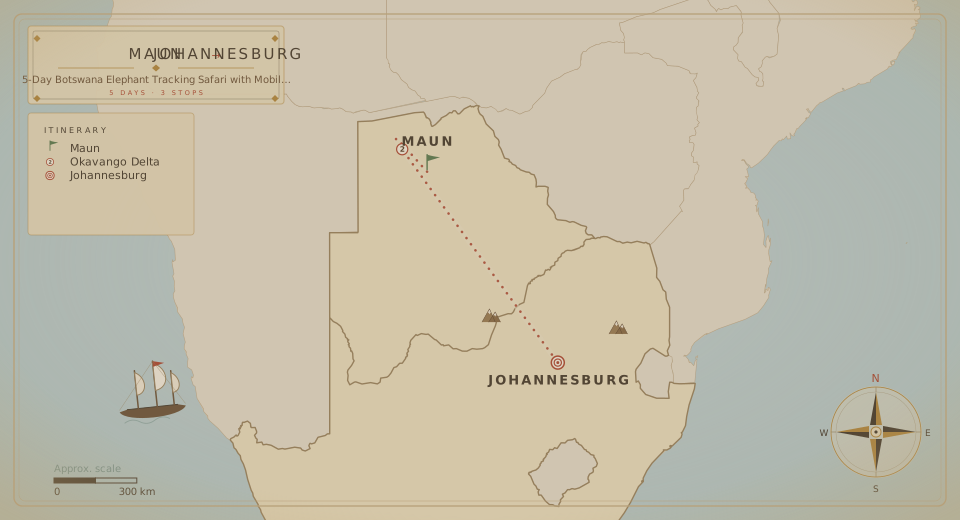
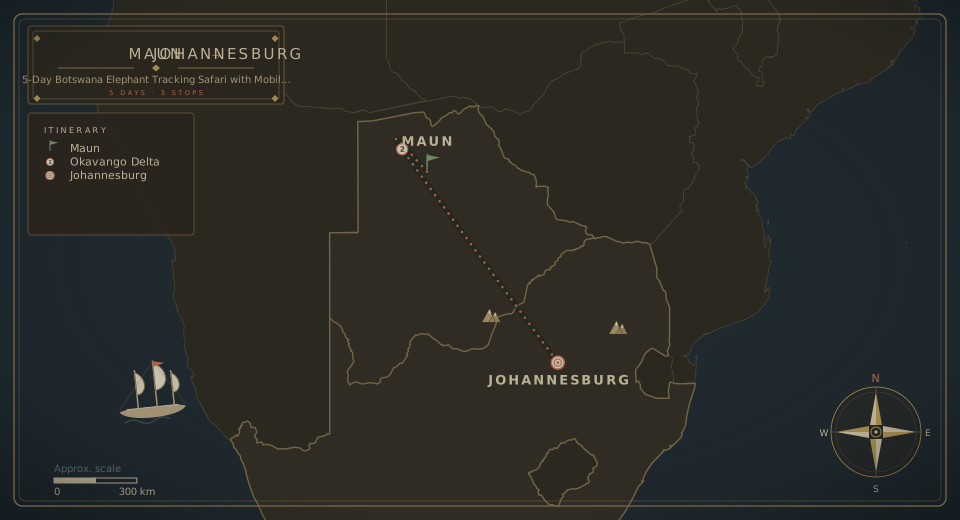
Tour route map
Round trip from Maun 7 cities · 5 Days

The fine print

Trip details

What's Included

  • Security and Expert Guiding

  • Licensed Professional Guide: A highly trained, armed lead guide who commands the walking formation, tracks the wildlife, and manages all animal encounters safely.

  • Backup Tracker / Park Ranger: A second eagle-eyed tracker or an armed government wildlife scout who walks at the back of the line to ensure 360-degree security.

  • Accommodation and Camp Amenities

  • Canvas Safari Tents: Heavy-duty, insect-proof walk-in safari tents or dome tents equipped with camp beds, mattresses, pillows, sheets, and warm duvets.

  • Private Bush Bathrooms: En-suite or private bucket showers filled with fire-heated hot water on request, along with eco-friendly eco-toilets.

  • The Mobile Camp Crew: A dedicated team of camp assistants who handle all the heavy lifting - pitching tents, packing up camp, making fires, and moving the infrastructure to the next site while you walk.

  • Food and Beverages

    • Three Fresh Meals Daily: Prepared over an open campfire by a bush chef. This includes light early-morning breakfasts, massive midday recovery brunches, afternoon high teas, and three-course dinners under the stars.

    • All Drinks: Bottled drinking water, sodas, juices, local beers, house wines, and standard spirits, such as gin and tonic for sundowners.

  • Logistics and Transit

    • Inner-Concession Transfers: All rugged 4x4 open safari vehicle transfers between airfields, camps, and park gates.

    • Water Transits: Traditional mokoro (dugout canoe) excursions or motorized boat transfers if your walking itinerary crosses Okavango Delta water channels.

  • Park Fees and Levies

  • National Park Entry Fees: Daily entry and vehicle permits for protected zones like Moremi Game Reserve or Chobe National Park.

  • Community Concession Fees: Conservation levies paid directly to local communities when walking inside private tribal concessions, such as Khwai or NG32.

What's Not Included

  • International Flights: Your main commercial flights getting to and from Maun or Kasane.

  • Staff Tips: Discretionary cash tips for your guide, tracker, chef, and camp crew, paid on the final morning.

  • Travel and Medical Insurance: Mandatory coverage for emergency medical evacuation, which is a strict requirement for entering the delta.

  • Personal Safari Gear: Your personal clothing, specific hiking boots, flashlights, and camera equipment.

  • Visas & Premium Spirits: Any entry visa fees, if applicable to your nationality, or ultra-premium champagne and rare spirits not on the standard camp menu.

What to bring

  • The Right Bag

  • 100% Soft-Sided Duffel Bag: No hard plastic shells, no rigid frames, and no built-in wheels. It must be completely squashable to fit into aircraft cargo pods.

  • Small Daypack (20-30L): To carry your own water, camera, sunscreen, and layers during the 4-hour morning walks.

  • Footwear & Trail Clothing

    All clothing must be in neutral colors: khaki, olive green, brown, beige, or grey. Avoid blue/black (attracts tsetse flies), white/bright colors (startles wildlife), and camouflage (illegal for civilians in Botswana).

    • 1 Pair of Worn-In Trail Shoes: Lightweight hiking boots or sturdy trail running shoes with thick soles to protect against acacia thorns.

    • 1 Pair of Camp Shoes: Comfortable sandals, flip-flops, or light sneakers to wear around the campfire.

    • 3-4 Pairs of Thick Trekking Socks: Helps prevent blisters and keeps hot sand out of your shoes.

    • 3 Lightweight Trail Shirts: Long-sleeved breathable shirts are highly recommended to protect against the intense sun and scratchy bush thorns.

    • 2-3 Pairs of Safari Pants: Lightweight trousers. Convertible zip-off cargo pants are excellent for transitioning from chilly mornings to hot afternoons.

    • 1 Wide-Brimmed Safari Hat: Essential for face and neck sun protection; it must have a chin strap so it does not blow off in open safari vehicles.

    • Chilly Morning Layers: The African bush is freezing at dawn. Bring a warm fleece or lightweight down jacket, a beanie, and a light windbreaker.

  • Health & Personal Care

  • High-Strength Insect Repellent: Look for formulas containing DEET or Picaridin to ward off mosquitoes and tsetse flies.

  • Malaria Prophylactics: Bring your prescription anti-malarial medication as directed by your travel clinic.

  • Broad-Spectrum Sunscreen & Lip Balm: SPF 30+ minimum; the Botswana sun is exceptionally harsh.

  • Personal Medical Kit: Pack painkillers, antihistamines, rehydration sachets, blister pads (Moleskin), and anti-diarrhea medication.

  • Biodegradable Wet Wipes: Perfect for a quick refresh on the trail or in the middle of a hot afternoon siesta.

  • Electronics & Gear

  • High-Capacity Power Bank: Mobile camps rely on solar power, meaning charging slots are scarce. Bring your own backup power to recharge cameras and phones.

  • Headlamp or Flashlight: Absolutely mandatory for navigating your unfenced campsite safely after dark. Bring spare batteries.

  • Binoculars (8x42 or 10x42): Vital for a walking safari, as you will view predators from a safe, respectful distance on foot.

  • Camera Equipment: Bring a dust-proof sleeve or bag to protect your lenses from the fine Kalahari sand thrown up during walks and drives.

Know before you go

  • Mandatory Evacuation Insurance: You cannot step foot in the bush without comprehensive travel insurance that explicitly covers emergency airborne medical evacuation. If a wildlife or medical emergency occurs deep in the Okavango Delta, a helicopter or light aircraft must fly you out to a trauma center.

  • Malaria Precaution: The entire northern safari belt (Okavango, Khwai, Chobe) is a malaria risk zone. Consult a travel clinic well in advance regarding preventative anti-malarial medication and bring high-strength insect repellent containing DEET or Picaridin.

  • Strict Luggage Limits: Light aircraft flights and mobile supply trucks enforce a rigid weight limit of 15 kg to 20 kg (33 lbs to 44 lbs) total per person. Your luggage must be a 100% soft-sided duffel bag; bags with hard shells, rigid frames, or built-in plastic wheels cannot fit into the narrow cargo pods of bush planes.

  • Bush Safety & Fitness

    • Strict Single File: On a walking safari, you do not walk side-by-side. For safety and stealth, you walk in a disciplined single-file line directly behind the armed lead guide, with the backup tracker bringing up the rear.

    • Absolute Silence: When tracking game or approaching wildlife on foot, you must maintain total silence. Your guide will use specific hand signals to tell the group to stop, crouch, or retreat.

    • Modest Physical Fitness: You do not need to be an elite athlete, but you must be comfortable walking on uneven, sandy, or marshy terrain for 3 to 4 hours (roughly 5 to 10 kilometers) in hot morning temperatures.

  • Dress Code & Packing Rules

    • Strictly Natural Tones: You must wear khaki, olive green, beige, or brown clothing to blend seamlessly into the bush. Bright colors (red, yellow, white) scare away wildlife, while dark blue and black attract biting tsetse flies. Military camouflage patterns are strictly illegal for civilians in Botswana.

    • Footwear Choices: Do not wear heavy, stiff mountain boots that blister your feet. Instead, opt for lightweight, breathable trail runners or worn-in trekking boots with good ankle support and thick socks to protect against thorns and sandburrs.

    • Power & Charging: Mobile camps operate on solar power or small generators. Bring a high-capacity power bank to charge your camera batteries and phone, as charging outlets in tents are often limited or absent.

  • Cultural & Environmental Respect

  • The Cash Ecosystem: Tipping your guide and camp staff is customary on the final day. Bring cash in crisp, clean bills (US Dollars, Euros, British Pounds, or Botswana Pula), as there are absolutely no ATMs or card machines in the wilderness.

  • Unfenced Reality: Mobile campsites have zero fences. Animals can and will walk directly through camp at any hour. Never leave your tent at night without your guide, and never keep food, candy, or scented toiletries inside your tent, as they attract curious hyenas and elephants.

Logistics

Meeting & route

Meeting point
Maun Airport or your lodging area in Maun
Tour start
Maun
Tour ends at the same location as the start point.
End of the journey

Your 5 days finish where they began, in Maun.

Watch the tourHQ film Watch the film

Create your own adventure

Can't find the perfect tour? Tailor your dream trip.

  • Tell us your destination, dates and group size.
  • Our travel experts and local guides design a tailored itinerary, just for you.
  • Enjoy your trip with peace of mind, knowing everything is taken care of.
Plan my holiday

Say goodbye to travel stress.

Price on Request

Book This Tour
Price On Request

When

Travellers