
12-Day Madagascar Wildlife and Coast Tour through Andasibe to Ifaty

12 Days Round trip from Antananarivo Moderate pace

The journey

Trip highlights
  • 01 Explore Andasibe’s rainforest reserves, including a night walk to look for nocturnal wildlife
  • 02 Guided hikes in Ranomafana National Park with chances to spot lemurs, chameleons, and endemic birds
  • 03 Highland route to Antsirabe and craft-focused stops in Ambositra and Ambalavao (paper factory and silk weaving project)
  • 04 Full day hiking in Isalo National Park amid dramatic eroded sandstone formations and unique endemic plants
  • 05 Unwind in Ifaty with options for snorkelling/diving, Reniala Forest visits, Vezo fishing culture, and seasonal whale watching (July to mid-September)

Travel from the rainforests of Andasibe to the beaches of Ifaty on this immersive 12-day journey through Madagascar’s most diverse landscapes. Spot iconic wildlife like indri and other lemurs, explore rich national parks on guided walks, and discover the culture of the highlands through vibrant towns, local crafts, and community-run initiatives.

From the sandstone massifs of Isalo to the spiny forests and coral-protected lagoons of the Deep South, this itinerary blends nature, scenery, and authentic encounters—finishing with relaxed coastal time and a return to Antananarivo for final sightseeing before departure.

At a glance

What this trip includes

Duration 12 Days
Tour type Private
Activity level Moderate
Accommodation Included · Standard
Transport Included
Wheelchair access No
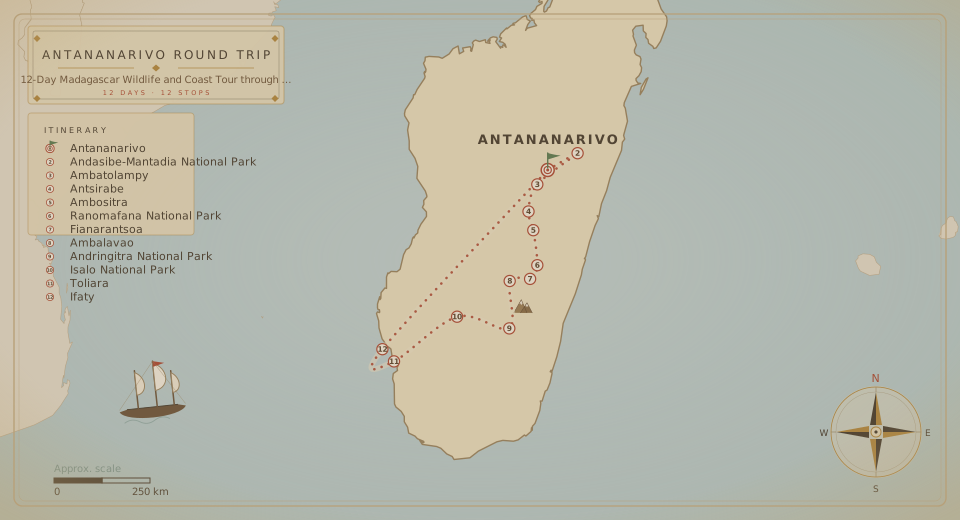
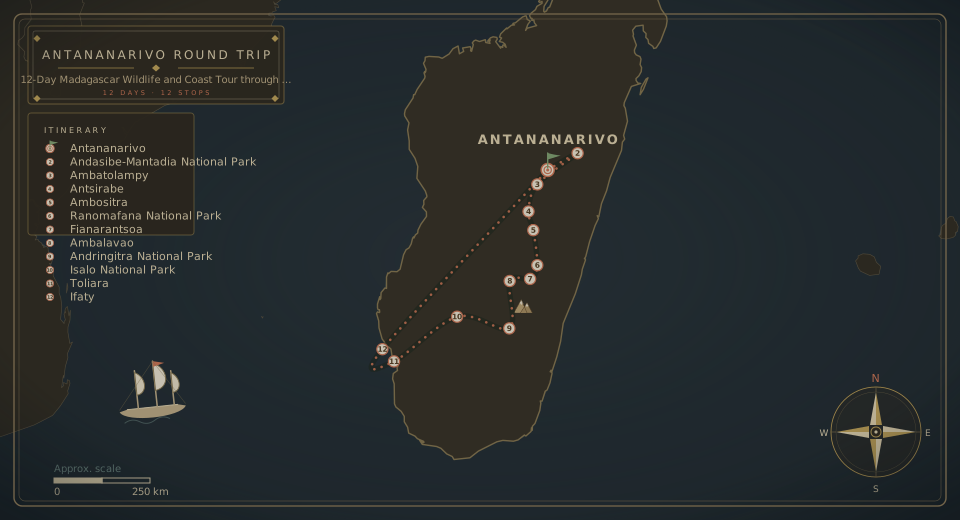
Cities Antananarivo, Antsirabe, Fianarantsoa, Toliara, Isalo National Park, Andasibe-Mantadia National Park, Ranomafana National Park, Andringitra National Park, Ambalavao, Ambositra, Ifaty, Ambatolampy
Languages English

Day by day

The itinerary

1
Day 01

Arrival in Antananarivo

  • Arrival: On arrival in Antananarivo, the capital of Madagascar, you will be welcomed and assisted by one of our friendly staff before transferring to your hotel in the city.

  • Leisure: Spend the rest of the day at your leisure.

  • Accommodation: Palissandre Hotel & Spa, Raddison Water Front Hotel, or similar (rooms with en-suite bathrooms)
2
Day 02

Antananarivo to Andasibe Rainforest

  • Drive: In the morning, we begin our journey with a drive to Andasibe through the green and luxuriant vegetation of eastern Madagascar.

  • Scenery: This brings us to a very humid part of the country with many primary forests and lakes.

  • Along the way: Along the way, we will see Merina villages spread across the rocky mountains.

  • Arrival: We arrive in Andasibe around lunchtime.

  • Visit: In the afternoon, visit the V.O.I.I.M.A community reserve.

  • Wildlife: Here, you will also come across a variety of wildlife, ranging from brown lemurs and indri to chameleons, geckos, and birds.

  • Reserve: This reserve provides a sustainable way of saving the remaining rainforests in the area by creating a livelihood for local communities through reforestation projects.

  • Night walk: In the evening, we set off from the hotel at approximately 18h00 (depending on the season) on a night walk to observe nocturnal lemurs and other night-active animals.

  • Overnight: We return to the hotel for our overnight stay.

  • Distance: 150 km

  • Departure: 10h00

  • Accommodation: Mantadia Lodge, Andasibe Cyperus Hotel, or similar (rooms with en-suite bathrooms & veranda)

3
Day 03

Andasibe Reserve and Return to Antananarivo

  • Visit: We start our morning with a visit to the Special Reserve of Andasibe to see the Indri, the largest lemurs on the island.

  • Reserve: This 810 ha reserve is unique for its endemic fauna and flora and contains a wide variety of orchids, canopy, and endemic animals such as chameleons, tenrecs, and many birds.

  • Transfer: In the afternoon, we transfer back to Antananarivo.

  • Distance: 150 km

  • Departure: 07h00

  • Accommodation: Palissandre Hotel & Spa, Raddison Water Front Hotel, or similar (rooms with en-suite bathrooms)

4
Day 04

Antananarivo to Antsirabe via the Highlands

  • Drive: Today we head south to Antsirabe, crossing the highland landscape with its beautiful rice fields on display.

  • Scenery: The spectacular eroded hills called 'lavaka' remind us of the Far East, with its rice fields and green landscape filled with vegetables and fruit trees.

  • Stop: We stop in Ambatolampy for a quick visit to this huge agricultural city, also recognised as the "capital of aluminium recycling".

  • Arrival: Arrival in Antsirabe is in the late afternoon.

  • City: 'The place of salt' is an elegant city and is known as the centre of the beer industry - we can smell the Star Brewery as we enter the town!

  • History: Founded by Norwegians in 1856, it is the only place that really feels and looks like a European city.

  • Climate: It has a temperate climate, and therefore fruit and vegetables that grow in colder climates are found in Antsirabe.

  • Distance: 170 km

  • Accommodation: Plumeria Hotel, Arotel, or similar (rooms with en-suite bathrooms)

5
Day 05

Antsirabe to Ranomafana National Park

  • Drive: After breakfast, we drive to Ambositra, the centre of Madagascar's wood carving industry.

  • Architecture: The highlands are characterised by their architecture: the houses are made with ornately carved wooden balconies and shutters in bright colours.

  • Scenery: Further on, we pass the 'le col de tapia', a type of tree resistant to bush fires.

  • Landscape: The landscape is still dominated by rice fields, pine forests, eucalyptus trees, and rocky mountains.

  • Destination: We turn off from the main road to reach our destination for the day: Ranomafana National Park.

  • Distance: 250 km

  • Accommodation: Setam Lodge, Hotel Thermal, or similar (rooms with en-suite bathrooms)

6
Day 06

Exploring Ranomafana National Park

  • Park: The approximately 40,000 ha of Parc National de Ranomafana, with its rainforest-covered hills and abundant wildlife, has long been considered one of Madagascar's highlights and is one of the country's most heavily visited national parks.

  • Entrance: Its entrance lies about 7 km from Ranomafana village, and altitudes in the park range from 800 m to 1200 m.

  • Terrain: In addition to its densely forested hills, Ranomafana's terrain is characterised by numerous small streams that plummet down to the beautiful Namorona River.

  • Forest: Although much of the region has been logged, the easternmost part of the park retains relatively large areas of primary forest.

  • Walks: You will go for long walks in the national park, spotting some of the lemurs, chameleons, and other animals.

  • Accommodation: Setam Lodge, Hotel Thermal, or similar (rooms with en-suite bathrooms)

7
Day 07

Ranomafana to Isalo via Fianarantsoa and Ambalavao

  • Drive: Returning on the road we came on, we leave Ranomafana and visit a local wine farm for wine tasting near Fianarantsoa, 'the city where one learns good things'.

  • Note: Please note that visits to the wine farms may not be possible on weekends.

  • City: The city is the gateway to the South, the capital of the Betsileo tribes, and the centre of the Catholic religion.

  • Schools: Most of the best schools in the country are also found here.

  • Visit: We then head southwards to Ambalavao and visit the 'Anteimoro Paper Factory', which is a vestige of the Arabian civilisation on the island.

  • Project: Afterwards, we take part in a community-based silk weaving project run by the women's association 'Soalandy'.

  • Scenery: We pass through the mountain chain of Andringitra, which serves as a transition between the dry south and the green highlands, with its famous '3 hillocks' and its huge 'archbishop's cape'.

  • Along the way: Along the way, we will see from afar a spectacular huge granite dome with twin rock towers called 'the gate of the south', which in fact marks the end of the highlands and the beginning of the south.

  • Formation: The 'Bishop's hat' is another noticeable and imposing formation, as well as a sacred location for the local people - a place where their ancestors chose collective suicide rather than give in to the Merina tribes.

  • Drive: We then continue to Ihosy, the capital of the Bara tribes, who are shepherds of Zebu, and further on through the huge 'Plateaux de Horombe' with its very deep red soil, which reminds us of 'no man's land', before arriving in Isalo.

  • Distance: 355 km

  • Accommodation: Isalo Rock Lodge, Jardin du Roy, or similar (room with en-suite bathroom & air-conditioning)

8
Day 08

Hiking in Isalo National Park

  • Visit & hike: Today, we will visit and hike in Isalo National Park.

  • Park: The park covers an area of 81,540 ha, comprising the entire stretch of the Isalo massif.

  • Scenery: This huge mountain is very spectacular with its eroded sandstone elevations.

  • Vegetation: Along the way, we will see vegetation such as Uapaca bojeri, Pachypodium rosulatum or 'elephant's foot', and Aloe isaloensis, a native species of aloe endemic to Isalo.

  • History: The eroded mountains also served as a place where the Bara kept their dead before they could bury them in their actual tombs.

  • Walk: We start our climb and reach the massif after walking for about 20 minutes, where we will have a spectacular view of the huge sandstone mountains with their beautiful colours and strange, battered formations creating many different images such as 'the tortoise', 'the masks', and 'the crocodiles'.

  • Streams & rivers: We see small streams of water and rivers marked by lines of brilliant green, generally made up of numerous Pandanus pulcher and the delicate, slim-stemmed, feathery-leaved palm Chrysalidocarpus isaloensis.

  • Accommodation: Isalo Rock Lodge, Jardin du Roy, or similar (room with en-suite bathroom & air-conditioning)

9
Day 09

Isalo to Ifaty via Tuléar

  • Drive: After breakfast, we continue to Tuléar, the terminal of National Road N° 7.

  • Scenery: This part of our journey brings us to new scenery among the dry forests of the west and the spiny desert of the south.

  • Along the way: On the way, we admire the different 'Mahafaly tombs' and the 'Antandroy tombs'.

  • Visit: After a short visit to Tuléar, we drive to Ifaty, which lies about 27 km from Tuléar.

  • Drive time: Thanks to the newly tarred road, it will take us about 1 hour to reach Ifaty, the driest part of the country.

  • Landscape: Situated in the Deep South, the landscape is dominated by the cactus-like spiny forest of different euphorbiaceae and didieraceae.

  • Local life: We will cross the dry and sandy soil where the local people battle to find drinking water.

  • Coast: Mangrove trees line the coast, alternating with Vezo communities that earn their living from fishing.

  • Fishing: We will see many small pirogues with men who go out fishing twice a day, while children and women wait on the coast to collect the fish before taking them to Tuléar for sale.

  • Distance: 265 km

  • Accommodation: Hotel Vovotelo, Les Dunes D'Ifaty, or similar (rooms with en-suite bathrooms)

10
Day 10

Leisure Day in Ifaty

  • Leisure day: Ifaty lies on the beach.

  • Activities: It is therefore an ideal place for diving and snorkelling and a popular destination for birdwatchers.

  • Local life: Here, you can also experience the Vezo fishermen's way of life.

  • Excursions: Many excursions are possible on this leisure day.

  • Visit: Visit the Reniala Forest, where you can see two kinds of baobabs, spiny bush, reptiles such as 'boa madagascariensis', geckos, and the 'chameleon parsoni', which is one of the largest chameleons in the world.

  • Optional: You can also take a boat trip to see whales.

  • Season: From July to mid-September, whales come to the cool seas of Madagascar to give birth to their young.

  • Lagoon: Situated in the largest lagoon in the country, Ifaty is also protected by a large coral reef, which makes it an ideal place for diving and snorkelling.

  • Walk: In the afternoon, we can walk to the village of Mangily to visit a local school and experience the Vezo fishermen's way of life, especially as they return from fishing.

  • Accommodation: Hotel Vovotelo, Les Dunes D'Ifaty, or similar (rooms with en-suite bathrooms)

11
Day 11

Ifaty to Tana via Tuléar

  • Transfer: Early in the morning at around 6h00, we transfer to the airport for the flight back to Tana.

  • Free time: After check-in at the hotel, you have the afternoon free to explore and do some sightseeing.

  • City: The capital of Madagascar is also called the 'City of Thousands', and it is where the first king started to unify the different kingdoms of the island.

  • History: Tana was built in three stages: the high city, the first area occupied during the regal period where the old queen's palace is situated; the mid-city, where all the chic boutiques of the capital are found; and then the low city, which is the commercial area of the town.

  • Walk: Walk from the high city to see the Rova, the queen's palace, and the house of the first minister from those days, which is now a museum.

  • Buildings: All of these were built by Frenchman Jean Laborde during the royal period.

  • Mid-city: The mid-city, or the administration area, ends at the Rainiharo tombs, and the lower town is situated on the main avenue called 'L'avenue de l'independence', dominated by the railway station.

  • Distance: 20 km

  • Accommodation: Palissandre Hotel & Spa, Raddison Water Front Hotel, or similar (rooms with en-suite bathrooms)

12
Day 12

Departure from Tana

  • End of tour: Today marks the end of our tour, and you will be transferred to the airport for your onward flight.

The route

Where you'll travel

Tour route map
Round trip from Antananarivo 12 cities · 12 Days

The fine print

Trip details

What's Included

  • Accommodations: 11 nights of lodging in twin-sharing rooms at mid-range 3-to-4-star standard hotels (such as Mantadia Lodge in Andasibe and Setam Lodge in Ranomafana).

  • Meals: Breakfast daily at your hotels across all 11 mornings.

  • Ground Transport: All group transfers, private vehicle transport along the RN7 highway, and fuel surcharges.

  • Airport Transfers: Scheduled airport pickup on Day 1 and drop-off on Day 12.

  • Guiding Services: A main English-speaking tour guide for the core road trip (typically Days 1-9), plus certified specialist local trackers inside each national park.

  • Park Fees & Excursions: All park entrance permits and scheduled safari activities, including the Andasibe night walk, Ranomafana tracking, and Isalo sandstone canyon hikes.

What's Not Included

  • Flights: Both international airfares and the domestic flight from Tulear back to Antananarivo at the end of the line are usually billed separately.

  • Most Meals: All lunches and dinners are excluded to give you the flexibility to sample local restaurants.

  • Beverages: Bottled water, soft drinks, and alcoholic beverages at the lodges.

  • Personal Costs: Gratuities/tips for guides and drivers, travel insurance, souvenirs, and your Madagascar entry visa.

What to bring

  • Lightweight Hiking Pants: Bring 2-3 pairs of quick-dry trekking pants. Avoid jeans, as they do not dry in the rainforest.

  • Moisture-Wicking Shirts: Pack 4-5 breathable t-shirts or long-sleeve shirts to shield against sun and insects.

  • Warm Layers: Bring a fleece jacket or lightweight down jacket. The central highlands (Antananarivo/Antsirabe) get surprisingly cold at night.

  • High-Quality Rain Jacket: A breathable, fully waterproof jacket is mandatory for the downpours in Andasibe and Ranomafana.

  • Swimwear: Needed for the natural rock pools in Isalo and the beaches in Ifaty.

  • Broken-In Hiking Shoes: Sturdy trail shoes or light boots with excellent grip are required for muddy roots and loose canyon rocks.

  • Long Hiking Socks: Bring several pairs. You will need to tuck your pants into your socks in the rainforest to protect against leeches and brush.

  • Teva-Style Sandals: Great for letting your feet breathe in the vehicle and wading through shallow streams in the canyons.

  • Binoculars: Essential for spotting tiny mouse lemurs and chameleons hiding high up in the jungle canopy.

  • Camera with Telephoto Lens: A lens with at least 200mm-300mm focal length is ideal for capturing clear wildlife shots.

  • Headlamp or Flashlight: Crucial for the guided night walks in Andasibe to spot nocturnal lemur eyes reflecting in the dark.

  • Waterproof Dry Bag: Protects your camera gear, phone, and passport from sudden rainforest downpours.

  • Insect Repellent: Bring a high-strength spray containing DEET or Picaridin to guard against mosquitoes.

  • High-UV Sun Protection: Pack reef-safe sunscreen, polarized sunglasses, and a wide-brimmed sun hat for the unshaded southern desert.

  • Power Bank & Adapter: Charging points can be limited in remote eco-lodges. Madagascar primarily uses Type C and E European-style plugs (220V).

  • Personal First Aid Kit: Include malaria prophylactics, motion sickness pills for the bumpy roads, anti-diarrhea medication, and rehydration sachets.

Know before you go

  • Visa Required: You must get a tourist visa either online via the official e-Visa Madagascar portal before departure or upon arrival at the airport. The cost is approximately €35 for stays up to 30 days.

  • Cash is King: Credit cards are rarely accepted outside of major luxury hotels in Antananarivo. You must carry the local currency, Malagasy Ariary (MGA). Carry Euros (€) to exchange at the airport, as they yield the best conversion rates.

  • Baggage Weight Limits: Because this trip relies on a domestic flight from Tulear back to the capital, strict internal flight weight limits apply. Your checked luggage must stay under 20 kg (44 lbs), and soft-sided duffel bags are highly recommended over hard suitcases for vehicle packing.

  • Health Requirements: Ensure your routine vaccines are up to date. While yellow fever is only required if arriving from an endemic country, malaria prophylactic medication is highly recommended for the coastal and rainforest segments.

  • Fitness Level: You will need a moderate fitness level. You should be comfortable walking 3 to 5 hours daily over uneven, muddy rainforest slopes (Andasibe/Ranomafana) and hot sand or rocky trails (Isalo).

  • Leech Alert: The rainforests are humid and home to small terrestrial leeches. Bring long hiking socks, sturdy trail shoes, and lightweight long pants to tuck into your socks.

  • Layering is Essential: The RN7 route cuts through vastly different microclimates. The central highlands (Antananarivo and Antsirabe) can be surprisingly cold and windy at night, requiring fleeces or light jackets.

  • Rain and Sun Gear: The eastern rainforests require full waterproof rain gear and covers for your camera packs. Conversely, the southern desert (Isalo) and coast (Ifaty) are scorching hot, demanding high-UV sunscreen, wide-brimmed hats, and swimwear.

  • Long Drive Times: Infrastructure along parts of the RN7 is heavily degraded. Potholes are frequent, and a 200 km stretch can easily take 6 to 8 hours of bumpy driving. Pack motion sickness medication if you are prone to car sickness.

  • Respect the 'Fady': Malagasy culture is governed by Fady - sacred local taboos or prohibitions. These vary by village and can include bans on pointing directly at tombs, wearing certain colours, or eating specific foods near sacred sites. Always follow your local guide's instructions explicitly.

Logistics

Meeting & route

Meeting point
Ivato International Airport (TNR), Antananarivo
Tour start
Antananarivo
Tour ends at the same location as the start point.
End of the journey

Your 12 days finish where they began, in Antananarivo.

Watch the tourHQ film Watch the film

Create your own adventure

Can't find the perfect tour? Tailor your dream trip.

  • Tell us your destination, dates and group size.
  • Our travel experts and local guides design a tailored itinerary, just for you.
  • Enjoy your trip with peace of mind, knowing everything is taken care of.
Plan my holiday

Say goodbye to travel stress.

Starting from

EUR 1,073 /person
Book This Tour

Estimated room rates

Single Room €1,073.00
Double Sharing €3,225.00

When

Travellers

Total