Arrival in Arusha
On arrival at Kilimanjaro Airport, the tour representative will meet you and assist with your transfer to your hotel in Arusha.
Overnight stay at the hotel in Arusha on a bed and breakfast basis.
Tanzania · Trekking
The journey
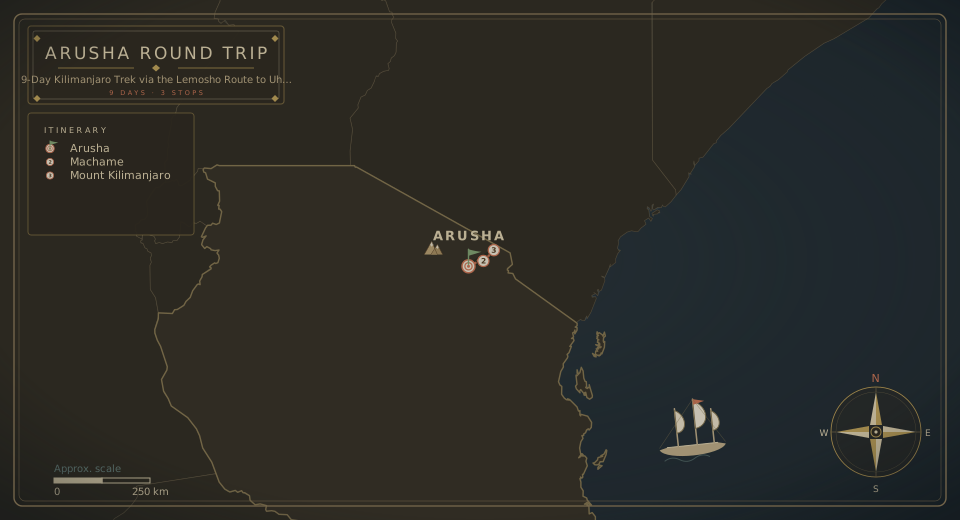
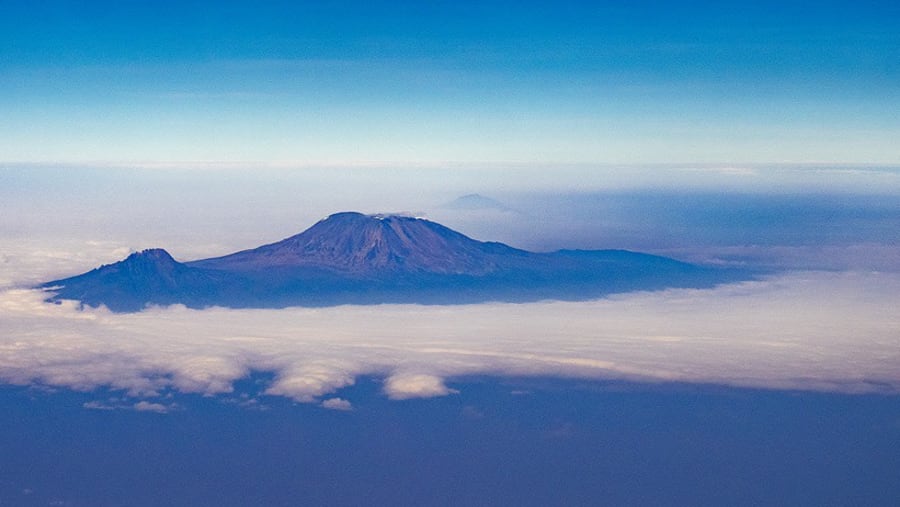
Take the challenging and less-travelled Lemosho route to the highest peak in Africa on a 9-day Mount Kilimanjaro trek. Often considered one of the most beautiful approaches on the mountain, this route leads through forest trails, moorland, and rocky alpine landscapes to the Shira Plateau and onward to Uhuru Peak. Along the way, admire magnificent views of Kilimanjaro, pass camps such as Shira, Moir, Barranco, Karanga, and Barafu, and experience the incomparable natural beauty of this iconic climb.
At Stella Point (5,685 m), stop for a short rest and be rewarded with the most magnificent sunrise you are ever likely to see, weather permitting.
From the itinerary
At a glance
Day by day
On arrival at Kilimanjaro Airport, the tour representative will meet you and assist with your transfer to your hotel in Arusha.
Overnight stay at the hotel in Arusha on a bed and breakfast basis.
After breakfast, the tour guide will give you instructions for the day-by-day trekking program.
Start with a 2-hour drive from Arusha to Londorossi Park Gate (2,100 m). The guides and porters prepare and pack the supplies and your equipment in the village. You will receive a lunch pack, and you can also buy mineral water in the village.
From here, a forest track leads you to Lemosho Glades (2,100 m, 11 km, 45 minutes).
Stop for lunch about halfway, and then continue the journey after lunch to reach the Machame camping area in the late afternoon.
Walk along forest trails to Mti Mkubwa campsite (2,750 m).
Overnight stay.
Wake up early in the morning at Mti Mkubwa Camp.
After breakfast, trek for an hour or so to the top of the forest, then continue as the trail gradually steepens and enters the giant heather moorland zone.
A gentle walk across the plateau leads to Shira 2 Camp on moorland meadows next to a stream (3,840 m). By now, you will be able to see the Western Breach with its stunning glaciers. The porters will boil drinking and washing water before serving dinner. The night at this bare camp will be even colder than the previous night, with temperatures dropping to well below freezing.
Enjoy dinner and an overnight stay (B, L, D) at an altitude of 3,840 m.
The route now turns eastwards into a semi-desert and rocky landscape surrounding Lava Tower.
Leave Shira for Moir Camp, which is nestled near enormous beds of volcanic rock and surrounded by rocky hills and cliffs.
On arrival, check in to the tent, which is already set up with your belongings inside.
Overnight stay.
The route now turns east into a semi-desert and rocky landscape surrounding Lava Tower, where you reach an altitude of 4,630 m after about a 5-hour walk.
Lunch is served in a designated area before ascending the rocky scree path to Lava Tower (4,630 m). Today is definitely the toughest day, as this is the point from where some climbers will start feeling breathlessness, irritability, and headaches.
After lunch, descend again by almost 680 m to the Barranco camping area.
Overnight stay at the camp.
After breakfast, leave Barranco and continue on a steep ridge, passing the Barranco Wall through to Karanga Valley campsite. This is a short day meant for acclimatisation.
Overnight stay at Karanga Camp.
After breakfast, leave Karanga and head to the junction that connects it with Mweka Trail. Continue up to Barafu Hut. At this point, you have completed the South Circuit, which offers views of the summit from many different angles. The route then heads down through the Karanga Valley over intervening ridges and valleys before joining the Mweka Route.
Turn left up the ridge and, after another hour or so, reach Barafu Hut.
Dinner and overnight stay at Barafu Hut.
Wake up at around 11:30 pm and, after some tea and biscuits, shuffle off into the night. Head in a northwesterly direction and ascend through heavy scree towards Stella Point on the crater rim. This 6-hour walk to Stella Point is, for many climbers, the most challenging part, both mentally and physically.
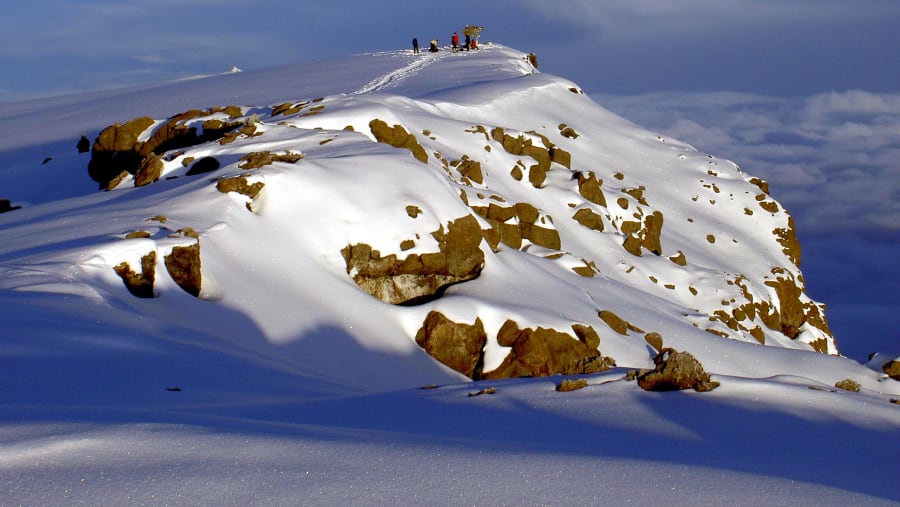
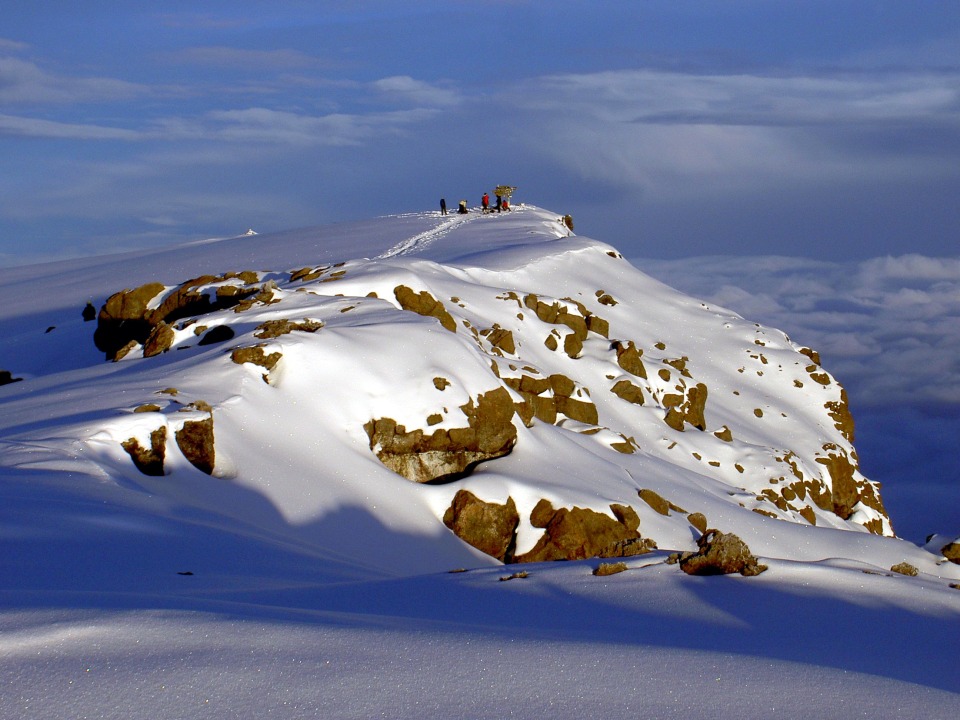
At Stella Point (5,685 m), stop for a short rest and be rewarded with the most magnificent sunrise you are ever likely to see, weather permitting.
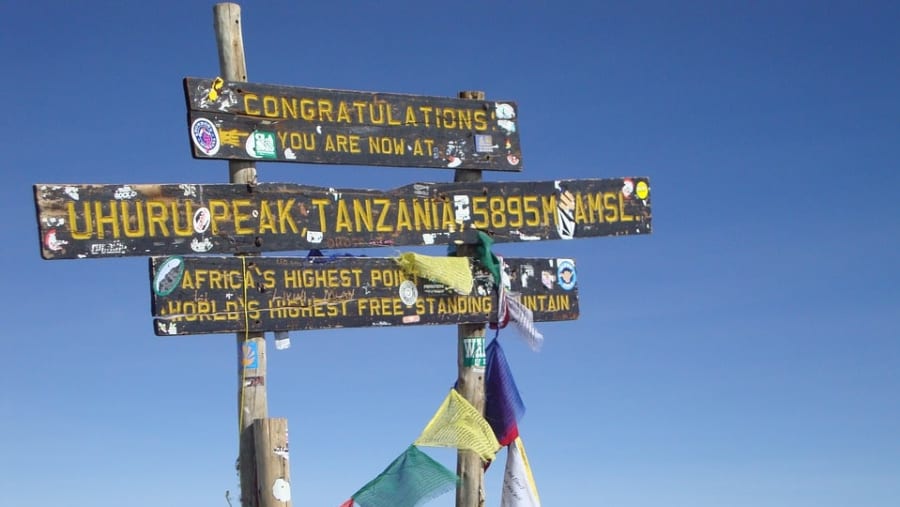
From Stella Point, you will normally encounter snow all the way through your 2-hour ascent to Uhuru Peak. The time you spend on the summit will depend on the weather conditions.
After spending some time at the peak and enjoying gorgeous views of nature, climb down to Barafu Camp, from where you walk down to Mweka Camp for dinner and an overnight stay.
After an early and well-deserved breakfast, it is a short 3-hour and scenic hike back to the park gate. At Mweka Gate, you sign your name and details in a register. This is also where successful climbers receive their summit certificates. Those who reached Stella Point (5,685 m) are issued green certificates, and those who reached Uhuru Peak (5,895 m) receive gold certificates.
Meet the driver at the gate for your private transfer from Mweka Gate to your accommodation in Arusha.
End of the tour.
Where this trip takes you
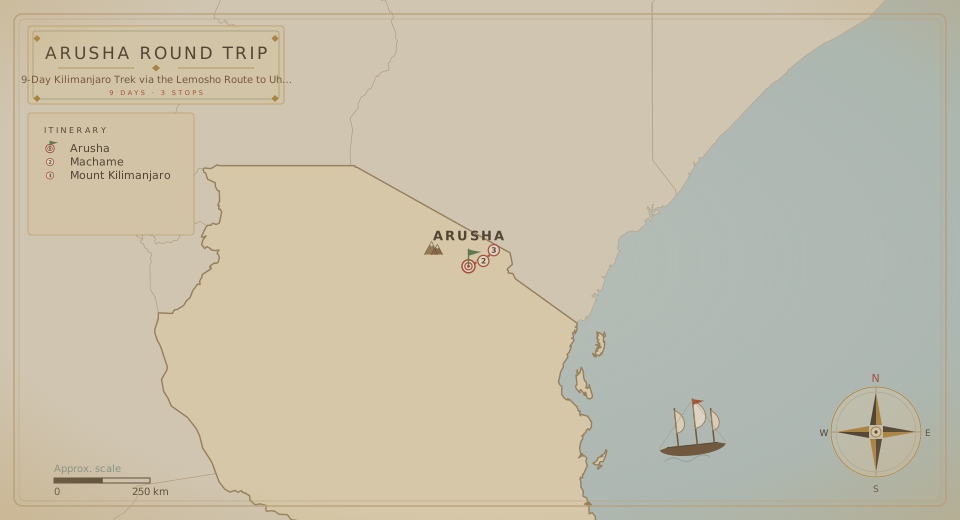
Lemosho Glades, Shira 2 Camp, Lava Tower, Uhuru Peak
The route
The fine print
Large portions of fresh, healthy, and nutritious food
All Kilimanjaro National Park gate fees, camping fees, and climbing permits
Kilimanjaro National Park rescue fees (Kilimanjaro Rescue Team)
Basic first aid kit (for use in emergencies only)
Qualified, English-speaking Kilimanjaro mountain guide, assistant guides, porters, and cook
Camping equipment (tents, camp chairs, tables, toilet, and sleeping mattress)
Water for washing up daily
Porter to carry your duffel bag (maximum weight 15 kg / 32 lbs) from one camp to the next
Kilimanjaro National Park certificate for your successful summit attempt
Flying doctor service
Flights and airport taxes
Items of a personal nature
Compulsory tips for guides, porters, and cook
Safety Equipment:
Automated external defibrillator (optional on most treks): Included on treks with a night at crater camp.
Trauma & medicine kit box: Fully equipped as per Wilderness First Responder guidelines.
Mobile phones: Daily communications with our base in the BGA office.
A medical equipment porter stays with the group at all times to ensure that the safety gear is always nearby and ready to use if anything happens to a climber.
A safety briefing is performed by the head guide at the second camp on each trek, demonstrating all the safety gear and its use to ensure the best possible safety response.
Hyperbaric chamber: A portable altitude chamber for emergency use only.
Pulse oximeter: The head guide checks and records these numbers daily at dinner time for each climber.
Oxygen cylinder kit for emergency use only: For groups from 6+, two kits (400L medical oxygen bottles, each with a regulator and 2 nasal cannula masks) are provided.
Mountain Crew:
Staff are trained by an expert in mountaineering techniques, including setting hand lines with reliable anchors, route safety training, rockfall protocol training, and the use of an ice axe for cutting steps and self-arrest.
A professional chef/cook is trained to the highest standards on a set menu plan.
Campsite location: BGA always ensures not only the best camp location on the mountain but also the proper setup and breakdown of each camp.
Porters: Trekking on Mount Kilimanjaro would not be possible without porters. They are the backbone of all Kilimanjaro expeditions, and they have long been exploited by the tourism industry. However, change has been happening, and slowly there is a growing consciousness, both in terms of porter expectations and the practices of a few tour operators. The Kilimanjaro Porter's Assistance Project (KPAP) has been the driving force behind this change in attitude and practice for the past 10 years. Based in Moshi, they are a Tanzanian non-governmental organization committed to improving the working conditions of porters.
An element of our Kilimanjaro fair porter treatment system:
We choose porters by means of a database that tracks all their work and performance and selects them in a way that fairly distributes the work.
We go to great lengths to uphold weight limits for porter loads (20 kg per porter). We carry scales on each trek to ensure that daily loads are never exceeded.
We have porter welfare officers stationed at the start gates of every trek to inspect porters and ensure adequate footwear, warm clothing, sleeping gear, and eye protection, while making sure that our system of fair porter treatment is truly being practised.
We give our porters medical treatment for injury equal to that provided for paying trekkers.
We provide annual professional wilderness first-aid training and language courses for our porters, including all costs (transport, accommodation, and meals) during the course duration for all porters.
Furthermore, we are committed to these fair practices and have an experienced, professional, and passionate team of managers, guides, and porter welfare officers to ensure that we are on it.
We are widely recognized for these efforts by everyone, including the most important segment of the population: the porters. Because of our commitment to fair practices, we have attracted the most reliable, strongest, friendliest, and most dependable porters available.
Camping Equipment & Mountain Gears:
Mountain Hardwear Trango 3.1 sleeping tents, a triple tent used as a double tent or single tent (with supplement).
All sleeping tents have custom-made groundsheets covering both vestibules to allow clean and dry storage of gear and to keep water, mud, or dust from entering the tent.
Cold-weather sleeping mats (closed-cell foam) cover the entire floor of the sleeping tent, ensuring that you and all your gear stay dry throughout the climb.
Large custom-designed and fabricated weatherproof dining tents with a flysheet, four doors, windows and ventilation, and full floors with storm skirt and ropes.
Washstands are provided for washing hands before each meal, with fresh hand towels provided for each climber before each meal.
Washbasins are provided for each trekker.
Hot water is prepared for climbers' bottles at night.
We purify all climbers' and staff drinking water using the PUR packet.
We offer high-quality rental gear and trekking clothing such as synthetic sleeping bags, Gore-Tex outerwear, warm layers, trekking poles, and more.
Sleeping tent (optional) features a
Logistics
Your 9 days finish where they began, in Arusha.
Watch the film
Create your own adventure
Say goodbye to travel stress.
Starting from
When
Travellers
Total
—