Arrival in Tanzania and Transfer to Arusha
On arrival at Kilimanjaro International Airport or the shuttle bus stand, meet a member of the tour staff.
Transfer to your hotel in Arusha for an overnight stay.
Tanzania · Trekking
The journey
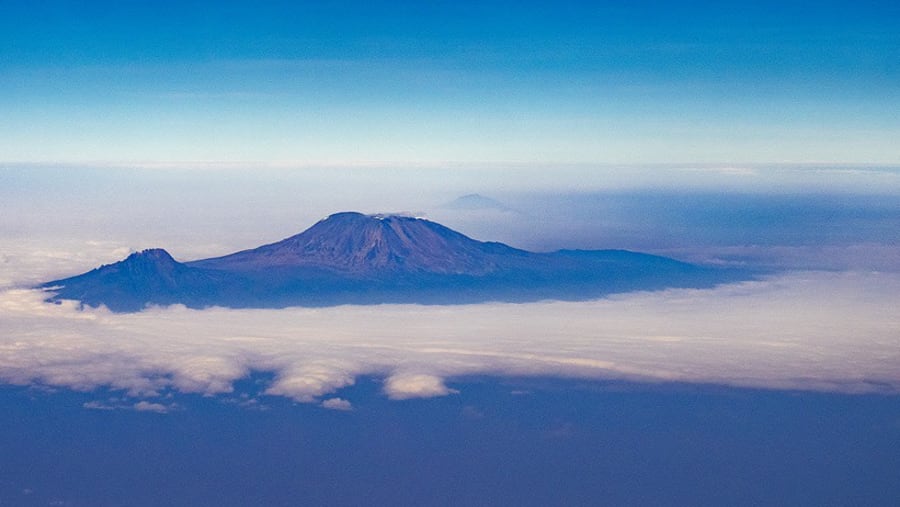
Take on a challenging, at times steep, trek along the Machame Route, with stunning scenery as it traverses Kilimanjaro's five diverse climatic zones. This route provides the opportunity to "trek high and sleep low," which is considered important in minimising the potential for altitude sickness. Experience the incomparable natural beauty of Mount Kilimanjaro on this 8-day trek to Uhuru Peak.
Arriving at the summit, feel a huge sense of elation and accomplishment - you have done it; you have made it to the highest point in Africa.
From the itinerary
At a glance
Day by day
On arrival at Kilimanjaro International Airport or the shuttle bus stand, meet a member of the tour staff.
Transfer to your hotel in Arusha for an overnight stay.
Depart from Machame Gate and trek upward through the montane rainforest, characterised by dense vegetation, a muddy trail, and short sections of steep climbs, where you may hear the calls of many exotic birds. If we are lucky, we may see blue monkeys in the forest canopy and hear the grunting calls of the magnificent black colobus monkeys.
Our first campsite, Machame Camp, lies just beyond the dense tree cover in an area of lower but still thick bush, where Podocarpus (African yellowwood), Hagenia, and Hypericum (St John's Wort) dominate.
In the evening, you may hear the unmistakable shrieking call of the tree hyrax.
Continue through increasingly sparse trees and bushes into the moorlands. Picturesque hanging mosses often cover the trees, giving the landscape an ethereal quality.
Finish the day at Shira Camp, set on a small plateau in the high moorlands, with views of Kibo to the northwest and Mount Meru to the east. White-necked ravens can be seen throughout the day and around our campsite.
Turn east and continue climbing through increasingly rocky and desolate terrain. Leave the moorland behind and follow a rocky path through typical Kilimanjaro mountain vegetation of Senecios and Lobelia.
Pass through the alpine moorland zone, where plants are extremely hardy and consist of lichens, grasses, and heather, before reaching Kilimanjaro's alpine desert zone.
Have lunch at Lava Tower (4630 m), and those who feel up to it can undertake an optional non-technical rock scramble to the top of Lava Tower, where you will have spectacular panoramic vistas of the Karanga Valley below, the Shira Plateau, and the spectacular Western Breach above.
From Lava Tower, descend steeply for 2 hours, dropping more than 600 m into the Great Barranco Valley. This descent affords fantastic views and excellent photo opportunities of the Western Breach and Breach Wall. You will also feel the clear benefits of this acclimatisation day as we lose altitude down to camp.
Undertake the Great Barranco Wall - an imposing face above Barranco Camp.
The steady climb up the eastern wall takes us just below the Heim Glacier, where we may have some breathtaking views of the Heim Glacier and Mt. Kilimanjaro, depending on the weather and cloud cover.
The trail continues down into the alpine desert of the Karanga Valley, where we finish this second acclimatisation day at Karanga Camp at 4046 m.
The trail continues down into the alpine desert of the Karanga Valley.
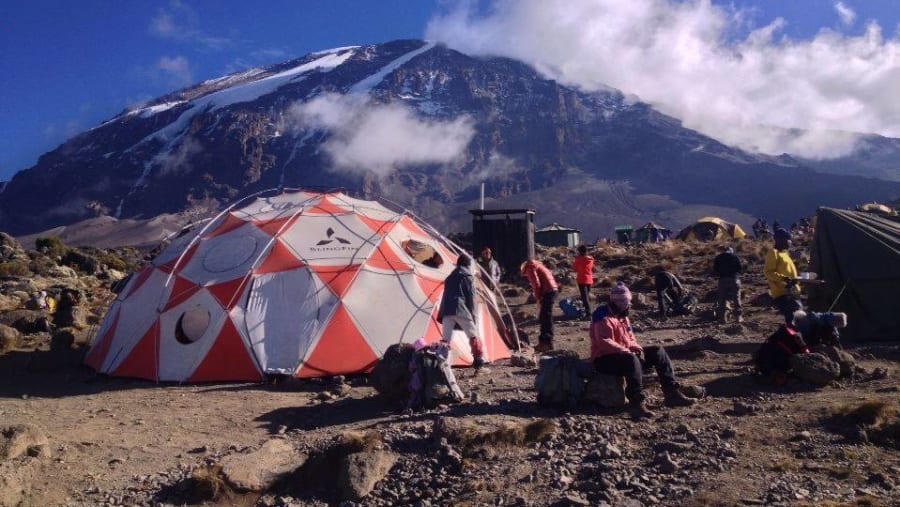
Here, the temperature grows colder as we follow the trail climbing through this barren and dry landscape up to Barafu Camp. Our campsite at 4600 m offers spectacular views of the nearby peaks of Kibo and Mawenzi.
In preparation for your final ascent tonight, you will familiarise yourself with the terrain before dark and prepare your equipment and thermal clothing for the summit attempt.
Sleep will be difficult, though you will retire to your tents after dinner to rest for the 1385 m final ascent to the roof of Africa.
Rise early to leave camp at around 12 am and, after a warm drink and a light snack, begin the most difficult yet most rewarding day of the trek - your hike to the roof of Africa.
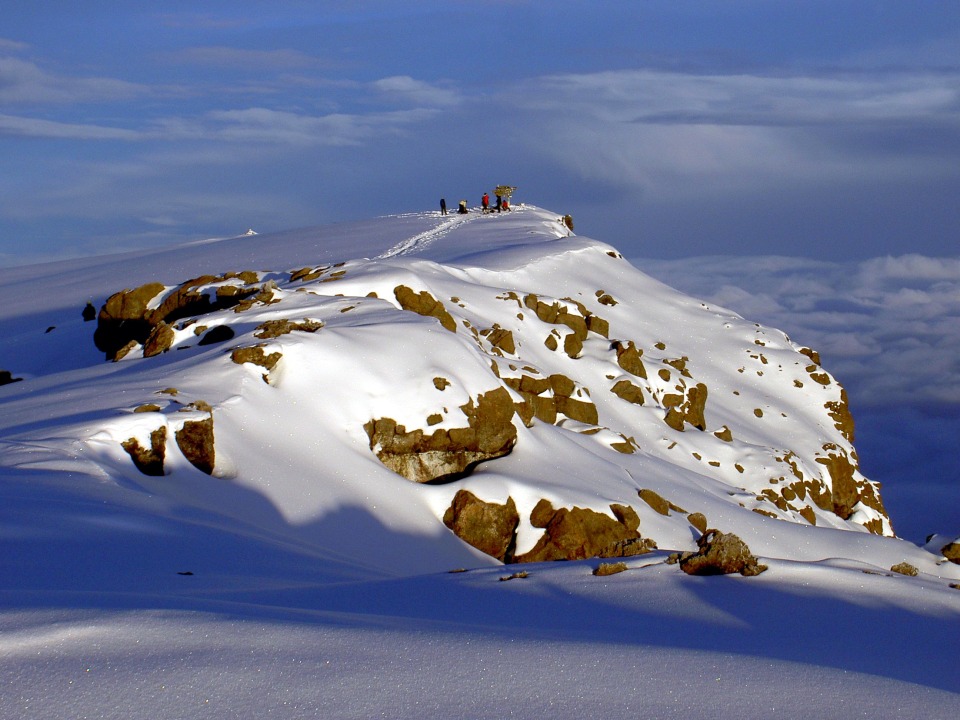
After approximately 6 hours of slow but strenuous hiking, reach the rim of the main crater, Stella Point, at 5685 m. At this point, stop to rest, eat lunch, and take in the views above the clouds.
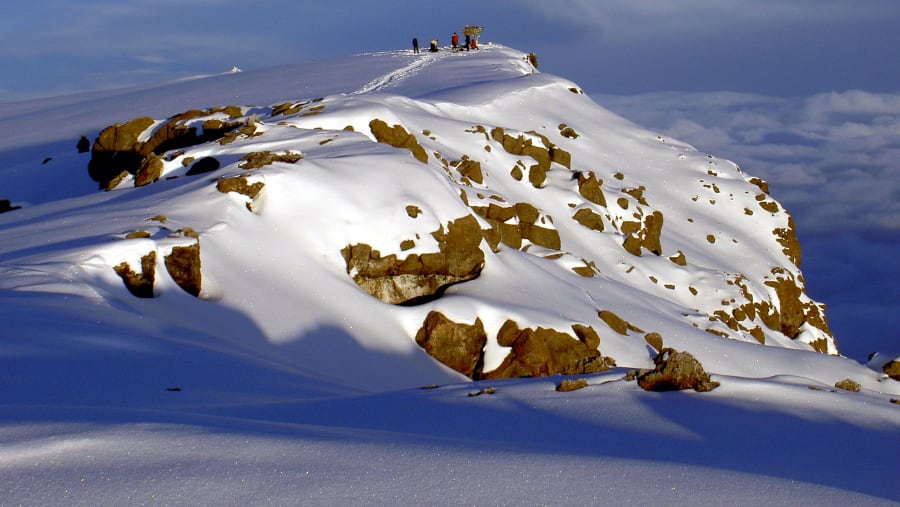
From Stella Point, the trail is normally snow-covered, and every step of the two-hour final ascent to Uhuru Peak is challenging.
Arriving at the summit, feel a huge sense of elation and accomplishment - you have done it; you have made it to the highest point in Africa.
Spend as much time as you need to appreciate your accomplishment, as this is a day to remember for the rest of your life. The time you spend on the summit will depend on the weather conditions and temperature.
Start back down the same trail and descend to Barafu Camp. Here, have a well-earned but short rest and remove some of your many layers of clothing as the day begins to heat up.
Head down the rock and scree path into the moorland zone, reaching the forest and eventually arriving at Mweka Camp in the early afternoon, where a hot shower and meal await. Today is the longest and most mentally and physically challenging day of the trek, but also a life-changing day that will stay with you forever, as you have conquered the summit of Kilimanjaro.
Today your legs will be tested further as the trail descends steeply through the lush Mweka rainforest. The trail is steep in places, and the going can be slippery when wet. The route follows the crest of a broad ridge separating two river valleys until it meets a road that leads us for the last 40 minutes to the Mweka Park Gates, where we stop for a well-deserved picnic lunch.
Here, successful hikers will receive their summit certificates (gold for Uhuru Peak, green for Stella Point) from the Kilimanjaro National Park Authority.
After the celebrations, travel by either private bus or jeep to Arusha or the airport.
Where this trip takes you
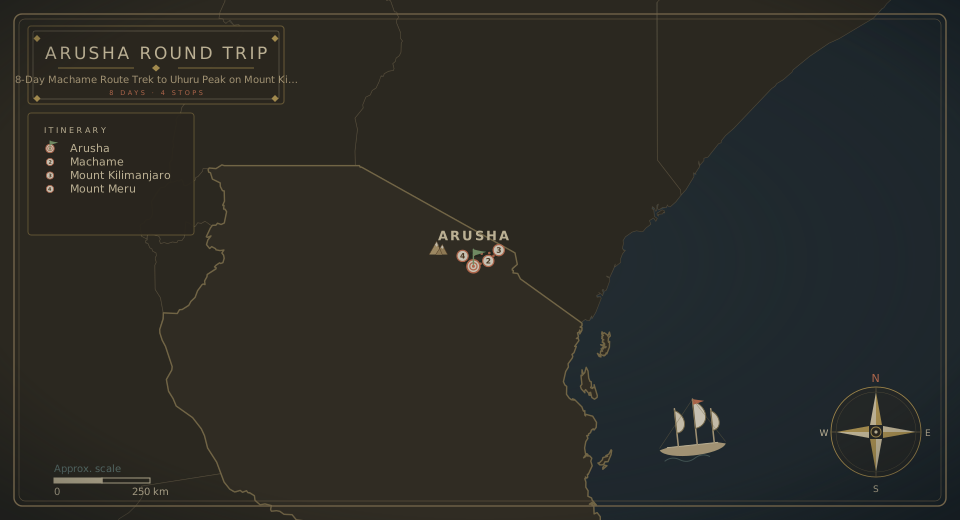
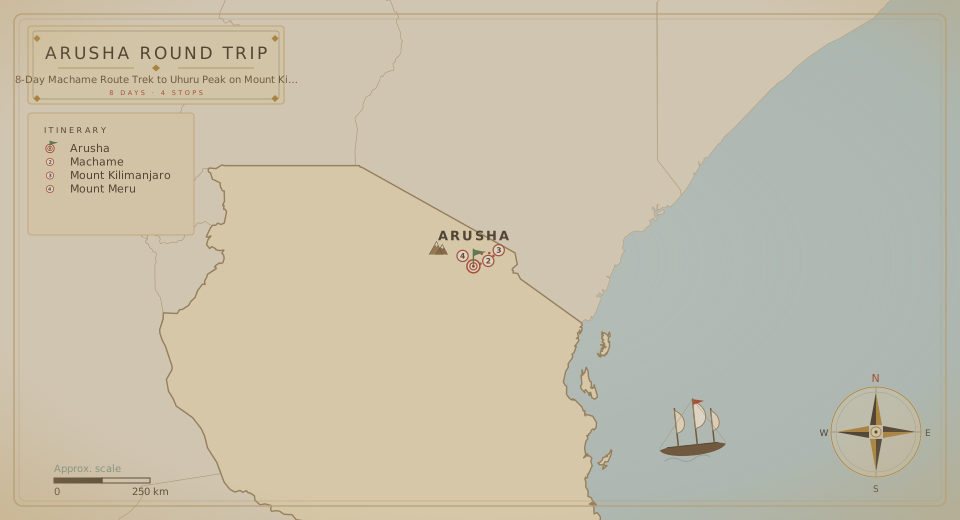
Machame Gate rainforest, Lava Tower, Great Barranco Valley, Uhuru Peak summit
The route
The fine print
Airport transfers
1-night accommodation with bed and breakfast before the climb
Kilimanjaro National Park entrance, camping/hut, and rescue fees
Professional, trained, English-speaking guide
Porters carrying a maximum of 20 kgs
Expedition medical kit
Expedition tents
Return transfer from Arusha/Moshi hotel to the park gate
Large portions of fresh, healthy, nutritious food
Fair and ethical treatment of porters
Salary for the porters
Salary for the guides
Salary for the cooks
Government taxes
International airfare, excess baggage charges, airport departure taxes, airport transfers, visa costs, and immunisations
Personal expenses such as beverages (other than those included with meals, as listed in each itinerary), room service, souvenirs, laundry, communication charges, medical or extra evacuation fees, staff gratuities, and personal trekking equipment
Additional transportation, accommodation, and meals incurred by a client unable to continue the planned itinerary due to illness, health or medical conditions, or airline schedule changes
Logistics
Your 8 days finish where they began, in Arusha.
Watch the film
Create your own adventure
Say goodbye to travel stress.
Starting from
When
Travellers
Total
—