Corinth Canal - Ancient Olympia
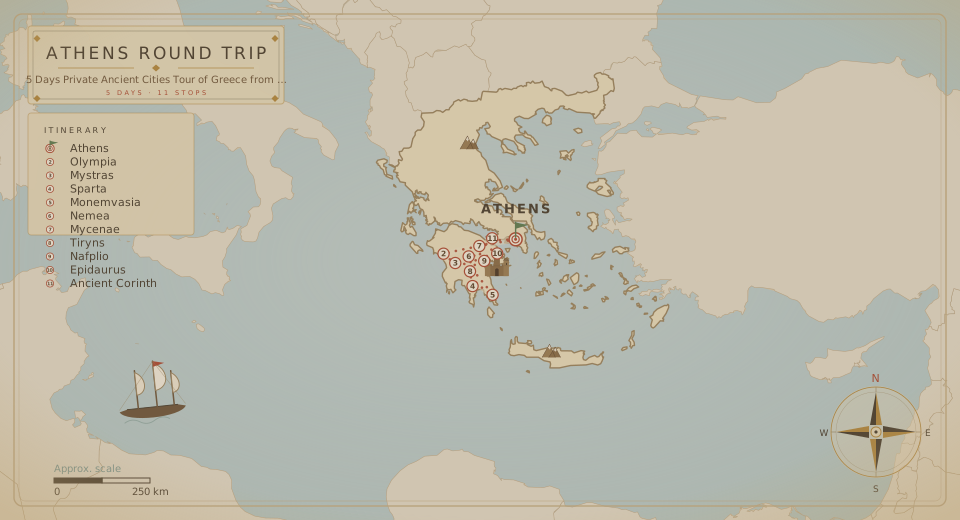
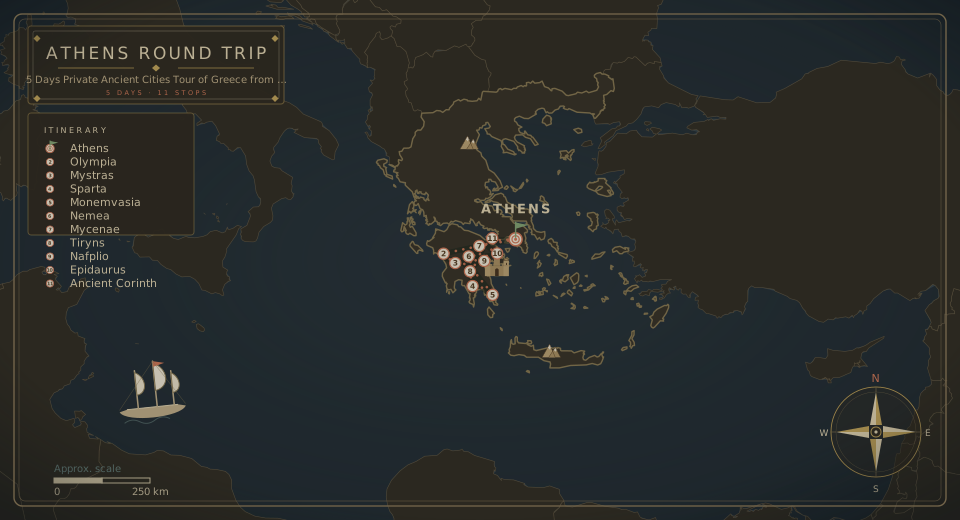
After crossing the famous Corinth Canal we will head to the birthplace of the Olympic Games where we will overnight.
Corinth Canal
On the way passing coastal villages and the island of Salamis (set of the historical naval battle between the Athenians and Persians). Our first stop is the Corinth Canal. Finally opened in 1892, and separating the Peloponnese Peninsula from the rest of Greece while connecting the Saronic Gulf to the Corinthian Sea. You’ll have time to walk across on a pedestrian bridge and admire the canal closer. (If you’re game) on some days bungee jumping is an option.
Archaeological Site of Olympia
We will visit the archaeological site and the museum of Ancient Olympia. This is one of the largest sites in Greece, the birthplace of the Olympic Games and the Sanctuary of Olympian Zeus. Walking through the site you will pass by the Gymnasium, the Palaistra, the workshop of Phidias, the Temple of Zeus and you will end up at the Stadium where every four years the Greeks competed for glory and for spiritual elevation honoring their cities.
Archaeological Museum of Olympia
The museum is also quite unique as it includes the renowned statue “Hermes of Praxiteles” with its perfect analogies and tools that belonged to Phidias himself. With these tools he created one of the seven wonders of the world “the gold ivory statue of Zeus”. Apart from ancient art, the visitor has the possibility of detailed information through the rich visual material.
Museum of the Olympic Games
The Museum of the History of the Ancient Olympic Games hosts 463 ancient works, from the Temple of Zeus at Olympia, and other museums in the Greek territory. The exhibits cover a wide chronological range, from the 2nd millennium BC until the 5th century AD. Ancient exposed in thematic units and through them yperchilietis shows the history of the Olympic games, the longest ancient institution.