
Day 01
Kathmandu Heritage Sites and Sacred Temples
- Visit the following on your sightseeing tour of Kathmandu:
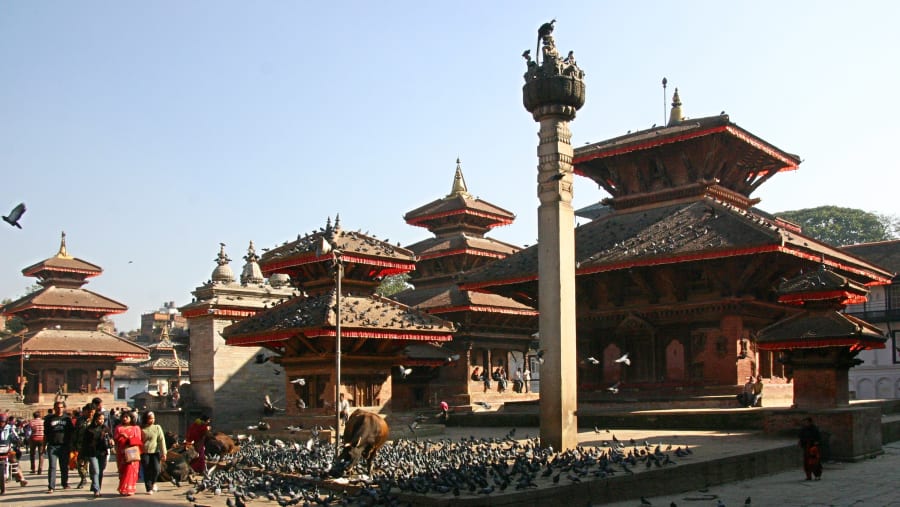
- Kathmandu Durbar Square:
- UNESCO Heritage Site - Kathmandu Durbar Square, in the heart of old Kathmandu city in Basantapur, never fails to impress first-time visitors with its intricate woodwork and rich history. The Durbar is divided into two courtyards: the outer section with Kasthamandap, Kumari Ghar, and Shiva-Parvati Temple, and the inner section consisting of Hanuman Dhoka and the main palace. Some floors have been converted into museums dedicated to three generations of Shah kings.
- Most parts of the palace premises are open to tourists throughout the week. Some important monuments to see in this area are:
- Taleju Temple, the tallest of all structures, built by King Mahendra Malla in 1549 AD.
- Jagannath Temple, built in the 16th century and known for the fascinating erotic figures carved on the wooden struts.
- Kal Bhairav, one of the largest 17th-century stone statues in Kathmandu, representing the terrifying aspect of Lord Shiva.
- Swet Bhairav - the temple is open to the public once a year during the Indra Jatra Festival.
- The 17th-century Kumari Temple (the temple of the Living Goddess), an example of highly developed Nepali craftsmanship. Kaandasthamp, from which Kathmandu derives its name, is said to have been built from the timber of a single tree.
- Nautalle Durbar, the nine-storeyed palaces.
- Patan Durbar Square:
- UNESCO Heritage Site - Patan Durbar Square complex is perhaps the most photographed of the three durbar squares. Located in the heart of Patan city, this was once the palace of the kings of Patan. The square is a display of Newari architecture that reached its pinnacle during the reign of the Malla kings, who were great builders and patrons of the arts. The palace has three main courtyards, of which the central and oldest is Mul Chowk.
- To the west of the complex are a dozen free-standing temples of various sizes, built in different styles. The Krishna Temple, Bhimsen Temple, the Golden Temple of Hiranya Varna Mahavira, and Sundari Chowk mark the artistic brilliance of the Newar craftsmen of that era. Sundari Chowk, with the sunken bath of Tusha Hiti, showcases exquisite woodcarvings, stonework, and metal sculpture. Like the other palaces, Patan Durbar Square also houses a temple dedicated to Taleju Bhawan.
- Some important monuments to see in this area are:
- Golden Gate and the golden windows of the old palace.
- The famous Krishna Temple with 21 golden pinnacles.
- The bath with many stone carvings at Sundari Chowk.
- Taleju Temple.
- The Temple of Bhimsen, with a magnificent golden balcony overlooking the square.
- Char-Narayan Temple, which is among the finest examples of woodcarving.
- Chyasi Dega, Manga Hiti, and Mul Chowk.
- Pashupatinath Temple:
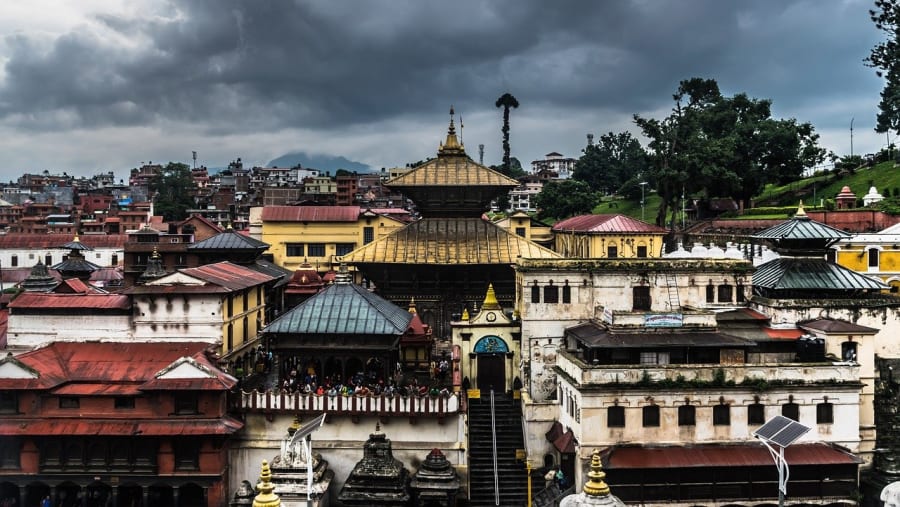
- UNESCO Heritage Site - The holiest shrine dedicated to Lord Shiva, Pashupatinath is one of the four most important religious sites in Asia for devotees of Shiva. Built in the 5th century and later renovated by the Malla kings, the site itself is said to have existed from the beginning of the millennium, when a Shiva lingam was discovered in the forest. The largest temple complex in Nepal, it stretches on both sides of the Bagmati River, which is considered holy by Hindus.
- The main pagoda-style temple has a gilded roof, four sides covered in silver, and wood carvings of the finest quality. Temples dedicated to several other Hindu and Buddhist deities surround the temple of Pashupatinath. Nearby is the temple of Guheshwori, dedicated to Shiva's consort, Sati Devi. Cremation of Hindus takes place on raised platforms and is always in use.
- Only Hindus are allowed inside the gates of the main temple. The inner sanctum has a Shiva lingam, and outside sits the largest statue of Nandi the bull, the vehicle of Shiva. There are hundreds of Shiva lingams within the compound. The big Shivaratri festival in spring attracts hundreds of thousands of devotees from within Nepal and from India.
- Boudhanath Stupa:
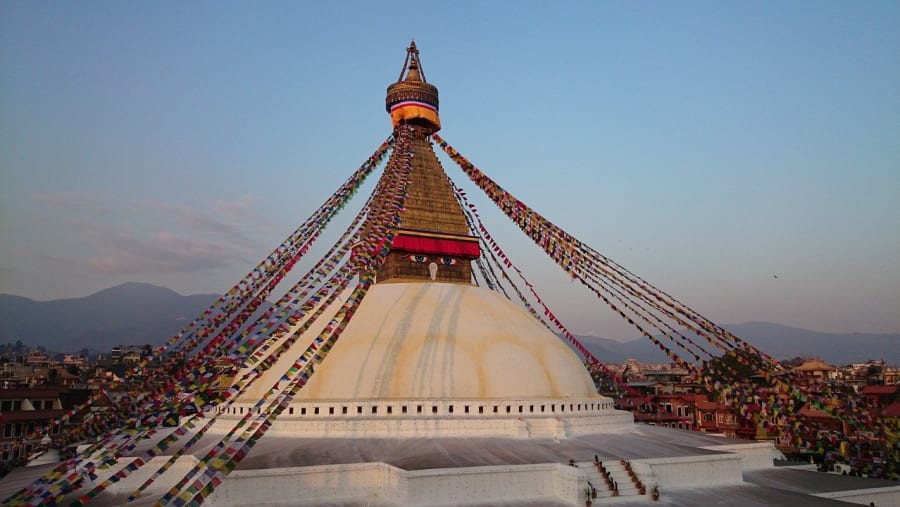
- Boudhanath Stupa is in the eastern part of Kathmandu Valley. The 36-meter-high stupa of Boudhanath is one of the largest stupas in South Asia.
- With countless monasteries surrounding it, Boudhanath is the center of Tibetan Buddhism in Nepal. Built in the shape of a mandala designed to replicate the Gyangtse of Tibet, the stupa was renovated by Licchavi rulers in the 8th century. The location of the stupa is interesting, as it once lay on the ancient trade route to Tibet, and it was here that Tibetan merchants rested and offered prayers for centuries. Boudha even today has a strong Tibetan presence, as countless Tibetan refugees found a home around the stupa.
- On top is the harmika, and on each side are painted the All-Seeing Eyes of the Buddha, symbolizing awareness. The canopy has thirteen stages. At ground level, there is a brick wall with 147 niches and 108 images of the meditated Buddha inset behind copper prayer wheels.
- Swoyambhunath:
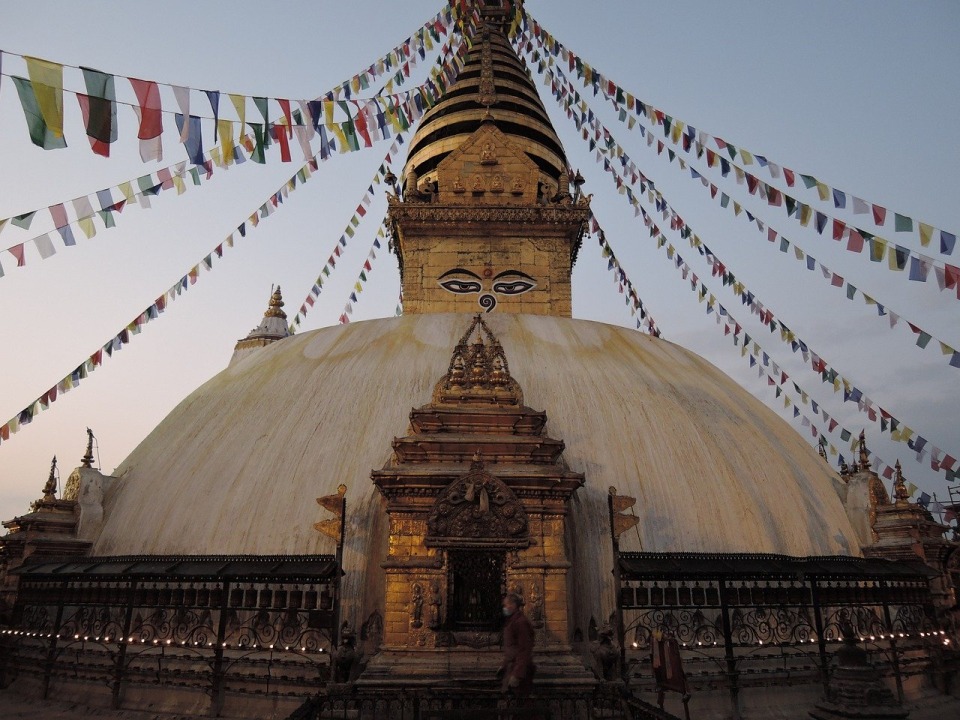
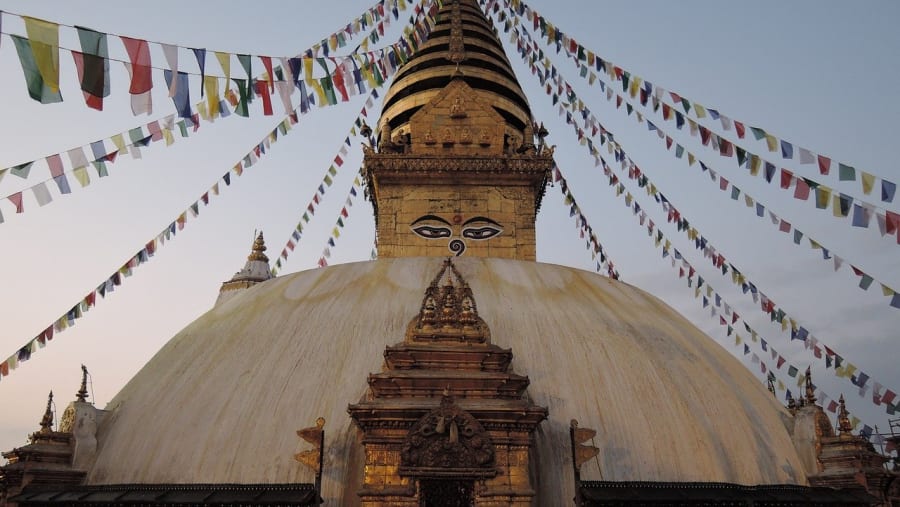
- UNESCO Heritage Site - Swoyambhu literally means self-existing. Swoyambhunath is believed to have been established more than 2,500 years ago. According to translations from an inscription dating back to 460 A.D., it was built by King Manadeva, and by the 13th century, Swoyambhunath had developed into an important center of Buddhism. Legend has it that Swoyambhu was born out of a lotus flower that bloomed in the middle of the lake which Kathmandu Valley once was. The largest image of the Sakyamuni Buddha in Nepal was recently built on the western boundary of Swoyambhu.
- Behind the hilltop is a temple dedicated to Manjusri or Saraswati, the Goddess of learning. Chaityas, statues, and shrines of Buddhist and Hindu deities fill the stupa complex.
- Large numbers of Buddhists and Hindus alike visit Swoyambhunath throughout the day. Swoyambhu is perhaps the best place to observe religious harmony in Nepal.
- Some important monuments to see in this area are:
- The huge gold-plated Vajra thunderbolt set on the east side of the stupa.
- Buddha statue on the west side of Swoyambhu.
- Sleeping Buddha.
- Temple dedicated to Harati, the Goddess of all Children.
- Dewa Dharma Monastery, noted for a bronze icon of Buddha and traditional Tibetan paintings.