
Day 01
Arrival in Kathmandu
Arrival at Tribhuvan International Airport (TIA), Kathmandu.
Orientation program in the evening.
Overnight at the hotel.


Explore the world with tourHQ
Nepal · Trekking
The journey
Take on the challenging Everest Base Camp trek on this 15-day journey from Kathmandu, combining a 13-day trek from Lukla with a city tour of Kathmandu Valley's UNESCO World Heritage Sites. Pass through welcoming villages, alpine meadows, glaciers, and steep gradients as you make your way to Everest Base Camp and Kala Patthar for panoramic views of Everest. Along the route, trek through Phakding, Namche Bazaar, Tengboche, Dingboche, Lobuche, and Gorak Shep, with acclimatization days built in for a safer ascent. The trip begins and ends in Kathmandu, where you also explore Swayambhunath, Boudhanath, Pashupatinath Temple, and Patan Durbar Square.
Known to have the best views of Everest, this is a challenging trek, but worth it on a clear day.
From the itinerary
At a glance
Day by day
Arrival at Tribhuvan International Airport (TIA), Kathmandu.
Orientation program in the evening.
Overnight at the hotel.
Enjoy a full-day sightseeing tour in the Kathmandu Valley.
Explore Swayambhunath (Monkey Temple), Boudhanath (Buddha Stupa), Pashupatinath Temple, and Patan Durbar Square.
Overnight at the hotel.
Meet the Sherpa guides and porters before heading off towards Phakding.
The journey passes through Dudh Koshi ("Milk River").
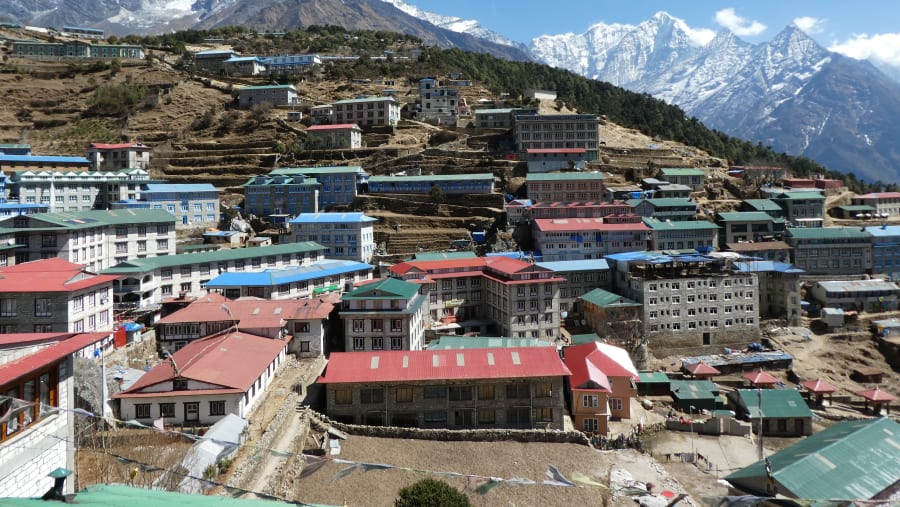
Trek to Namche Bazaar, the main administrative and trading center for the Khumbu region.
With magnificent forests of blue pine, fir, juniper, and rhododendron, as well as the first view of Everest, the trail builds anticipation for a thrilling journey.
Acclimatization is best done with a hike to the valley of the Bhote Koshi River ("River from Tibet").
Overnight at the guesthouse.
The trek from Namche to Tengboche is unbelievably stunning.
Far below lies the Dudh Koshi and Thamserku.
Trek to Dingboche and enjoy the scenic views of Ama Dablam.
It is the only place in the region where barley is produced.
Tame pheasants are regularly seen in this area.
Enjoy some time away from the trek to adjust to the higher altitude.
Enjoy the scenery and prepare for the next day.
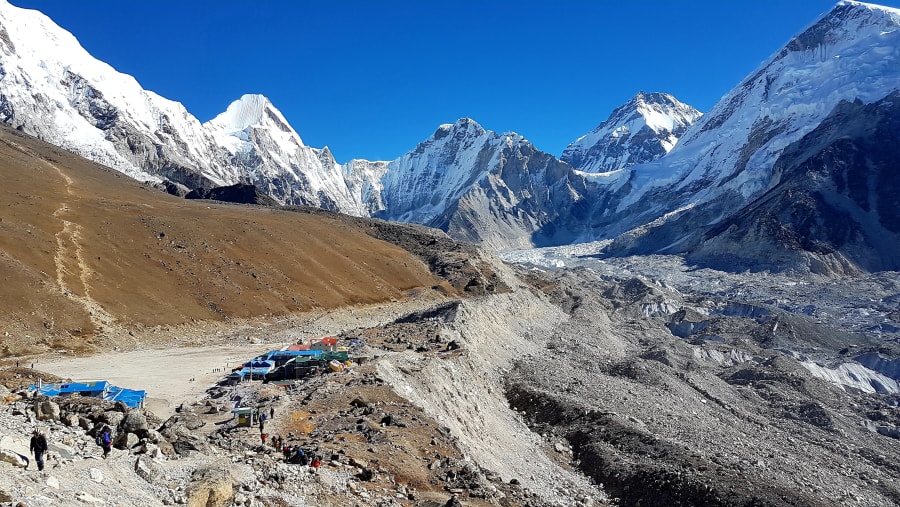
The ascent towards Everest Base Camp continues through alpine meadows and summer yak pastures towards the end of the moraine of the Khumbu Glacier.
From here, it is a steep, tough climb towards the village of Gorak Shep.
Continue the trek towards Lobuche, where the view is straight towards Nuptse and the sunset is truly magnificent.
The higher altitude makes this day's trekking quite challenging.
The Changri Glacier looms ahead as the trek heads for Gorak Shep.
Relax and get adjusted to the altitude before the attempt to reach Everest Base Camp.
Return to Gorak Shep. (8 hours.)
Overnight at the guesthouse.
Try to see a different view of Everest today with a trek up to Kala Patthar.
Known to have the best views of Everest, this is a challenging trek, but worth it on a clear day.
Begin the descent from Kala Patthar, heading for Pheriche.
This is not the most challenging of hikes, but the altitude can make the many uphill sections below Gorak Shep seem tough.
Stop to look around; the views are quite spectacular.
Trek back to Namche Bazaar, which takes around 6 hours.
Enjoy the surroundings and meet local people.
The final day of the trek returns to Lukla.
Relax after the rigorous adventure and reflect on the challenges just undertaken.
Take the short flight back to Kathmandu, where the rest of the day is free for shopping, sightseeing, or relaxing in one of the many rooftop cafes.
Transfer to the airport for your homeward journey.

Where this trip takes you
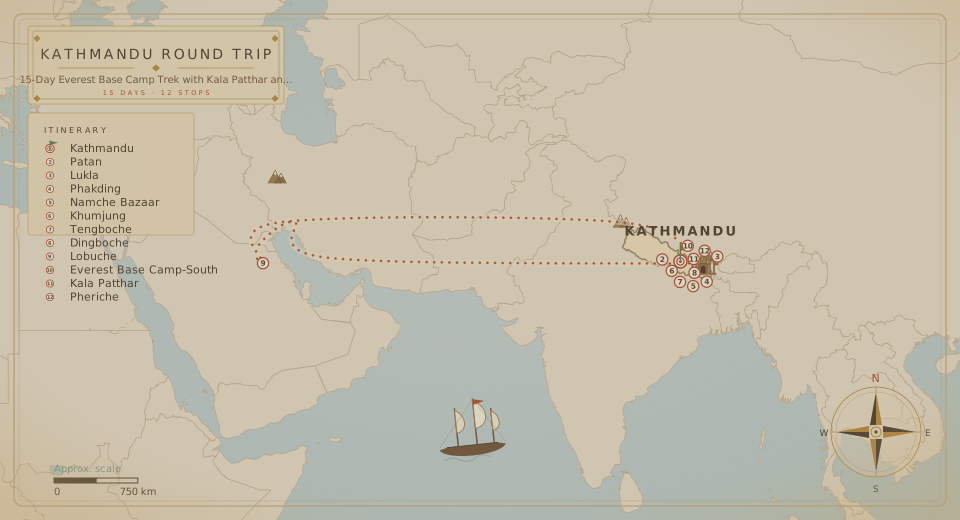
Kala Patthar, Everest Base Camp-South, Namche Bazaar, Swayambhunath
The route
The fine print
Airport pick-up and departure, and all ground transportation during the trip
Hotel in Kathmandu (two- or three-star category on a twin-sharing basis with breakfast)
Kathmandu sightseeing with a city tour guide
Accommodation in lodges and full-board meals during the trek
Government-trained guide and the necessary number of porters, with their insurance, salary, and meals
All fees for the TIMS card and trekking permit
Domestic flights according to the itinerary
Sleeping bag, down jacket, and necessary equipment during the trek
One cultural show and dinner program
International flight ticket and personal expenses
Major meals in cities
Cold and alcoholic drinks
Battery recharging, laundry charges, etc.
Tips for the guide and porter, and personal insurance
T-shirts
Hiking shorts
Undergarments
Full-sleeve shirts
Long lightweight cotton pants
Fleece or wool pants (seasonal)
Waterproof shell pants (preferably breathable fabric)
Insulated pants / nylon windbreaker
Light and expedition-weight thermal tops
Fleece jacket or pullover
Waterproof shell jacket
Down jacket
Light warm fleece hat / woolen hat
Sun hat
Lightweight gloves
Heavyweight gloves or mittens with a waterproof shell outer (seasonal)
Hiking boots
Light and comfortable camp shoes
Thin, lightweight inner socks
Thick, warm wool hiking socks
Down sleeping bag
Trekking bag / duffle bag (for the porter to carry)
Day pack (for trekkers to carry the things required during the daytime)
Large plastic bags (to keep items dry inside the trekking bag)
Water bottle
Headlamp with spare bulb and batteries
Trekking poles
Personal medicine box
Sunglasses with UV protection
Books, diary, pen, walkman, and any other game instruments
Quick-drying small towel
Toothbrush / paste
Soap
Face and body moisturizer
Sun block for lips
Tissues / toilet rolls
Wet wipes
Feminine hygiene products
Antibacterial hand wash
Trekking Group Size
We organize trekking in the Everest region for any number of people. If the group consists of more than 16 pax, we will split the group and arrange accordingly. We will assign one trek leader, one assistant leader for a group of four pax, and porters (one porter between two members) to carry members' luggage. This arrangement ensures that the group can still go ahead as scheduled, even if any member gets sick on the way during the trek.
Experience and Health Requirements
Everest Sanctuary trekking starts as moderate and is followed by moderate and strenuous trekking too. The trek is suitable for those who can hike for 6-8 hours a day. Obviously, hiking at high altitude will not be easy and is physically more demanding; however, our itinerary is scheduled for proper acclimatization while gradually gaining altitude during the trek. It is advisable to do some walking, hiking, or other outdoor activities for more than two weeks, which will contribute to comfortably accomplishing the trek to Everest Base Camp. No technical skills or use of crampons are required for this trekking. It is highly recommended that trekkers consult doctors before coming for this trek. Trekkers who have asthma, allergies, or any other diseases related to the heart or lungs should take extra precautions for this trek.
Travel Insurance
Trekkers need to have travel insurance that covers the comprehensive expenses that might incur due to medical issues or accidents. This includes air ambulance, helicopter rescue, and medical treatment costs. Insurance companies in Nepal do not provide travel insurance for foreigners, and trekkers need to get travel insurance from one of the international insurance companies. Sunrise Adventure Trek will have accident insurance for the trekking staff.
Accommodations
Accommodation in Kathmandu will be arranged on a twin-sharing basis on a BB plan, except for the extra cost of the single supplement (depending on room availability), according to the chosen hotel standard before and after the trek. Accommodation during the trek will be arranged at standard teahouses/lodges with unheated rooms, wooden beds, and foam mattresses on a twin-sharing basis. Trekkers will have to share washing and toilet facilities. If the trekker is a solo traveler, he/she will have to share a room with a trekker of the same sex.
Meals
Trekkers are provided three meals a day (breakfast, lunch, and dinner) during the Everest Base Camp trek. They can enjoy a wide variety of food, from typical Nepali food, Sherpa food, and Tibetan food to all types of international cuisine (Continental, Italian, and Indian). Unlike other trekking companies, Sunrise Adventure Trek allows trekkers to choose food from the menu at the hotels/lodges on the trek. When the group is too big for the hotels/lodges to provide individual dishes, a set menu will be arranged in most places. We use lodges/hotels that serve hygienic, nutritious, and good food so trekkers get enough energy for hiking.
Acclimatization
Any trekker can get altitude sickness while trekking at high altitude despite strong physical fitness. What is important is giving enough time for proper acclimatization during the trek. Sunrise Adventure Trek has planned the itinerary with gradual altitude gain, giving enough time for acclimatization for trekkers. Hiking slowly, especially at high altitude, helps prevent AMS (Acute Mountain Sickness). If anyone feels dizzy, suffers palpitations or severe headaches, or loses appetite, he/she will be moved to a lower altitude immediately, or helicopter rescue will be arranged in severe cases of AMS, and the client has to pay for it.
Equipment and Packing List
A variety of clothing is necessary for the Everest Base Camp trek. While choosing equipment, trekkers need to give emphasis to two simple aspects: lightweight and functional. The items should be lightweight, dependable, and adaptable to a variety of extreme weather conditions. The quality of the trekking equipment you choose has a lot to do with how warm, dry, and safe you will remain. For this reason, you have to be critical of quality and the proper fit of clothing.
Clothing
T-shirts
Hiking shorts
Undergarments
Full-sleeve shirts
Long lightweight cotton pants
Fleece or wool pants (seasonal)
Waterproof shell pants (preferably breathable fabric)
Insulated pants / nylon windbreaker
Light and expedition-weight thermal tops
Fleece jacket or pullover
Waterproof shell jacket
Down jacket
Light warm fleece hat / woolen hat
Sun hat
Lightweight gloves
Heavyweight gloves or mittens with a waterproof shell outer (seasonal)
Footwear
Hiking boots
Light and comfortable camp shoes
Thin, lightweight inner socks
Thick, warm wool hiking socks
Accessories
Down sleeping bag
Trekking bag / duffle bag (for the porter to carry)
Day pack (for trekkers to carry the things required during the daytime)
Large plastic bags (to keep items dry inside the trekking bag)
Water bottle
Headlamp with spare bulb and batteries
Trekking poles
Personal medicine box
Sunglasses with UV protection
Books, diary, pen, walkman, and any other game instruments
Toiletries and Personal Hygiene
Quick-drying small towel
Toothbrush / paste
Soap
Face and body moisturizer
Sun block for lips
Tissues / toilet rolls
Wet wipes
Feminine hygiene products
Antibacterial hand wash
Trek Leader(s) and Staff
All our trek leaders are very experienced and have led trekking in the Everest region for more than eight years. Their in-depth knowledge of culture, customs, geological surroundings, professionalism, sincerity, and hospitality helps make your dream of a successful trek an enjoyable and memorable event in your life. Although our trek leaders are not highly educated, they are well experienced, professionally trained, and possess good leadership skills to operate the trip smoothly. Their smiling faces and loving, caring attitude will make even a hard walking day a pleasant one. All trekking staff of Sunrise Adventure Trek are locally employed and have adequate knowledge about culture, ecosystem, flora, fauna, geography, history, and safety measures in running the trips. Their attitude and efforts will always be concentrated on minimizing the impact of trekkers on the local culture, customs, nature, and ecosystem.
Porter Care
We are strongly committed to porters' rights. We make sure that they are well paid and have proper clothing, footwear, and shelter. We are aware that no porter should be asked to carry a load that is too heavy for their physical abilities, and the weight limit should be adjusted for altitude, weather, and trail conditions. We request our members not to have more than 15 kg of luggage to give to the porters. Porters who become sick during the trek are treated with high priority, just like the other trekking staff or members. If needed, a helicopter is sent for rescue in severe cases of sickness or accident. All porters are insured for sickness and accidents.
Season
Nepal, as a tourist destination, is good for all seasons; however, the best seasons for trekking in the Everest region are Spring (March-May) and Autumn (mid-Sept.-mid-Dec.). Trekking in autumn is noted for clear weather and excellent views of silvery mountains against a blue sky. It gets colder towards the end of December. This trek can be done in any month except January and February.
Logistics
Your 15 days finish where they began, in Kathmandu 44600.
 Watch the film
Create your own adventure
Say goodbye to travel stress.
Starting from
When
Travellers
Total
—