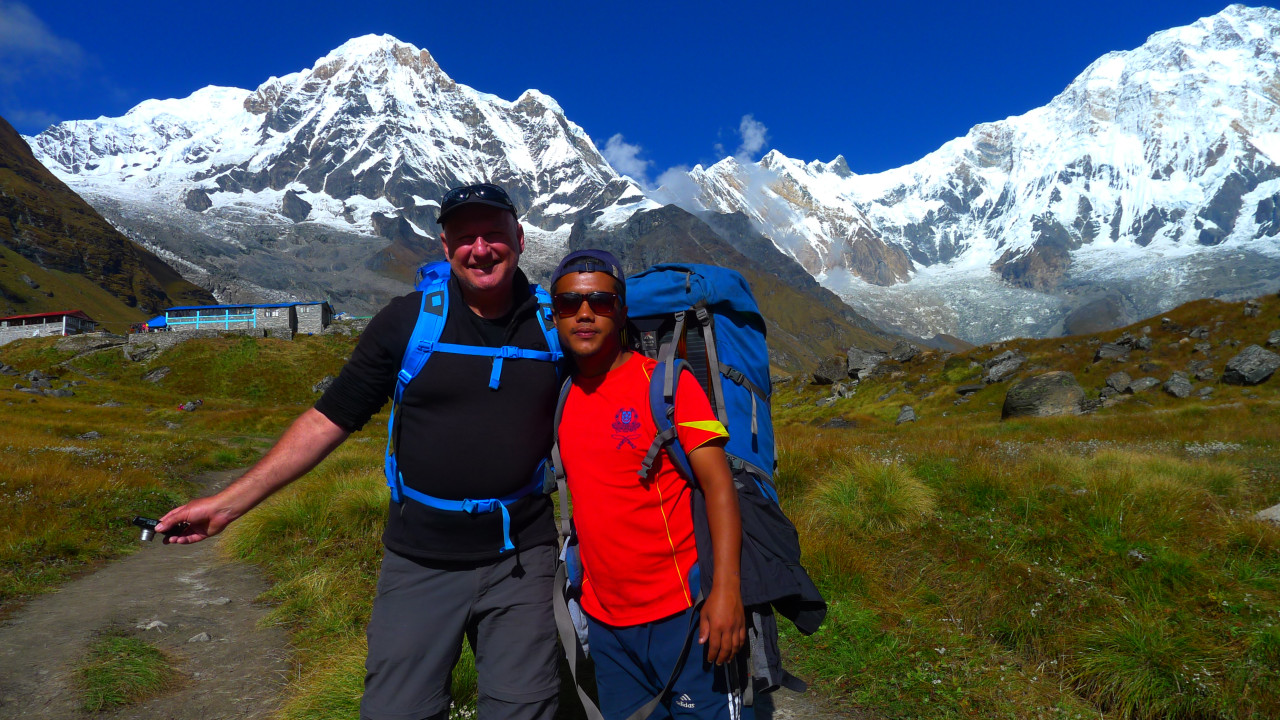
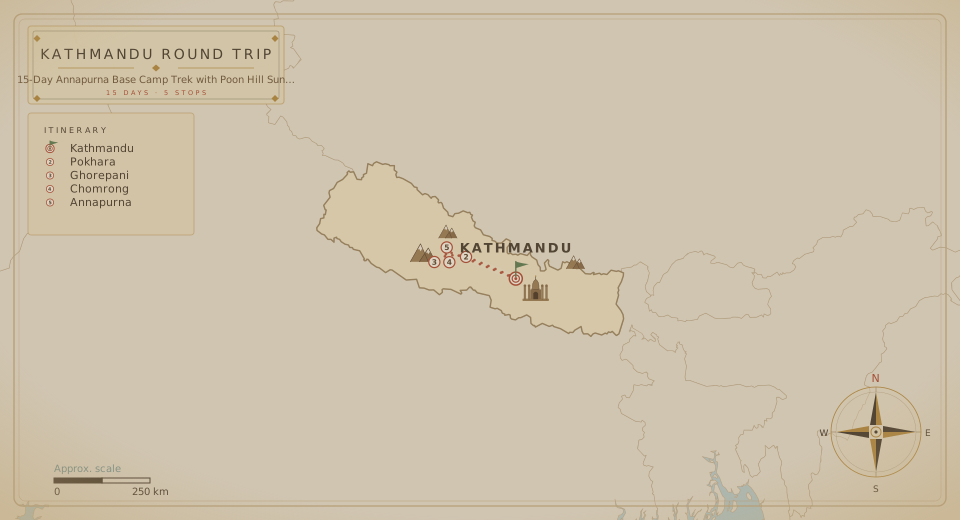
A trekker or walker who is able to hike normally for 5-6 hours per day while carrying a lightweight backpack will be fit enough to do this trek.
There are uneven stone steps going up and down, and due to some long descents, your legs may feel shaky, so walking poles are recommended to help you feel safer.
Normally, the maximum altitude of the trek is 4130 m, so you should be more careful about your health and altitude-related risks.
To reduce the risk, please walk slowly and drink more water and other fluids.
Basically, you can get mineral water bottles in lower places, but as you go higher, you may not find them. In that case, it is suggested that you drink boiled water, which may be available for a small fee in teahouses, and it is better to bring chlorine tablets to purify water.
Due to the lack of plastic bottle provision, it is better to use boiled water rather than mineral water, which is also helpful for protecting the environment.
Hydroelectricity or solar power sources are used to charge your electrical items such as cameras, batteries, iPods, and iPhones.
Teahouses or lodges may charge a small fee per hour for charging facilities. It is better to buy adapters before the trip since plugs are limited. In Nepal, 220-240 volt power is used, and sockets fit round and flat plugs.
You may see some beautiful and sweet children and may want to distribute balloons, chocolates, money, and pens, as many trekkers have felt the same. However, it is better not to do so because it encourages them to beg from trekkers.
During the trek, keep your valuables safe. Do not leave anything unattended. Ensure that you lock your door when you leave your room and do not hang things outside at night.
Use a dustbin and do not throw anything into the fire. Carry your garbage where dustbin facilities are not available and help conserve the environment.
It mainly depends on your spending habits. Normally, you should allocate US$ 9-12 per meal in Kathmandu and Pokhara. During trekking, US$ 10-15 a day is usually enough to buy drinks and chocolates.
You should be sufficiently protected and need to have travel insurance that covers emergency evacuation, lost items, liabilities, injuries, and medical treatment. Ensure the insurance covers all the activities in the Himalayas. Trekking Planner can offer the appropriate medical response based on your policy and insurance.
All guesthouses offer hot showers, which may be in the bathroom or provided as a bucket of hot water.
Please note that at high altitudes there may not be enough hot water for all trekkers. Limit the use of hot water unless the water is solar-heated or firewood-heated for ecological reasons. Every lodge has some kind of washing facility, but you must carry a bar of soap. If the water freezes, ask your guide to get a warm bowl of water.
The toilets are mainly Asian squat style. Basically, the toilet is outside your room and cleanliness may vary. You should not throw toilet paper into the toilet hole; instead, use the rubbish bin kept inside the toilet.
On this trekking route, local people have built teahouse lodges with food and beverage facilities. A simple room usually has two narrow beds. While staying in the teahouses, you will meet charming local people and experience their good hospitality.
Trekking Planner is a government-licensed trekking company in Nepal, as you can see from the legal documents in the About Us section. Under the following terms and conditions, your booking is accepted:
A non-refundable deposit of 15% is required in advance to book flight tickets, hotel bookings, and process permits. Booking must be made 5 days earlier, and the amount can be paid by bank transfer, Western Union, MoneyGram, or credit card. The remaining amount must be paid upon your arrival in Nepal.
Trekking Planner's sleeping bag, down jacket, tee-shirt, cap, duffle bag, and city and trekking route maps can be provided if necessary.