Fly to Lukla and Trek to Phakding
Catch a flight to Lukla from Kathmandu. Upon arrival in Lukla, reach the predecided point from where the trekking tour to Phakding begins.
Arrive in Phakding and stay the night.
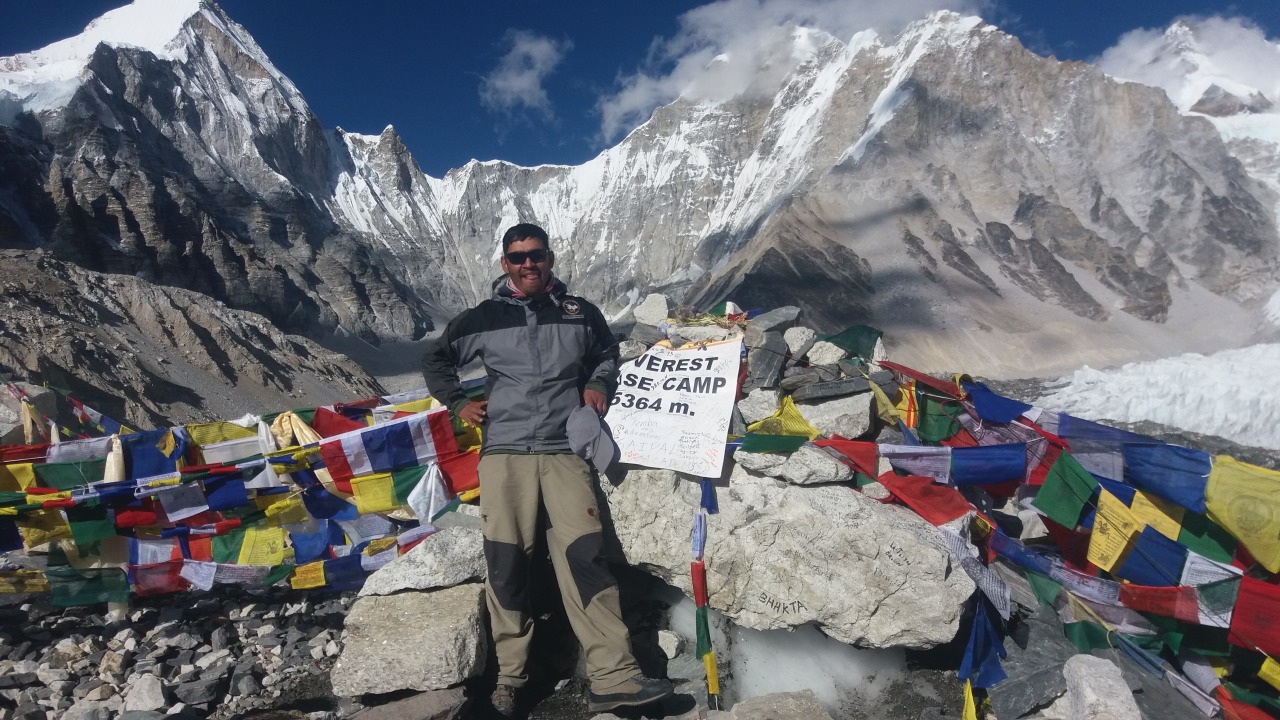
Nepal · Trekking
The journey
Climb all the way up to Everest Base Camp to enjoy views of the world's highest peak, Mount Everest. Pass through several villages, including Lukla and Tengboche, and visit Namche Bazaar in the Khumbu region. The trek also takes you to Kala Patthar, the highest point reached on this journey, for panoramic mountain views.
Climb all the way up to Everest Base Camp to enjoy views of the world's highest peak, Mount Everest.
From the itinerary
At a glance
Day by day
Catch a flight to Lukla from Kathmandu. Upon arrival in Lukla, reach the predecided point from where the trekking tour to Phakding begins.
Arrive in Phakding and stay the night.
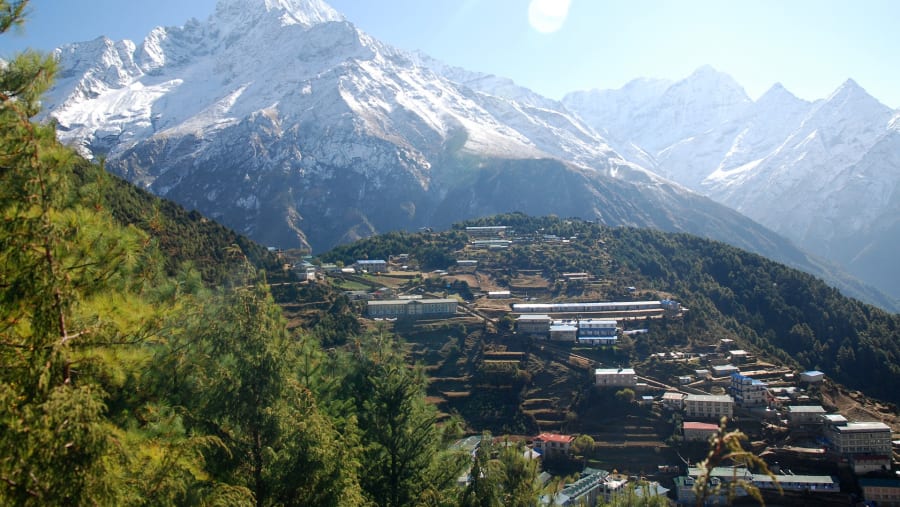
Go trekking from Phakding to Namche Bazaar, famous for its homemade yak cheese and butter.
Enjoy the views of the giant mountain peaks and then return to the accommodation for an overnight stay.
Embark on a short hike for acclimatization in Namche.
Enjoy scenic views.
Overnight stay at the accommodation.
Today, you will start your trek towards Tengboche (3,860 meters).
Arrive in Tengboche and stay the night at the accommodation.
Go trekking to Dingboche.
Overnight stay at the camp in Dingboche.
Enjoy an acclimatization day in Dingboche.
Explore on your own or spend the day at leisure.
Overnight stay.
Leave Dingboche and start trekking to Lobuche.
Overnight stay.
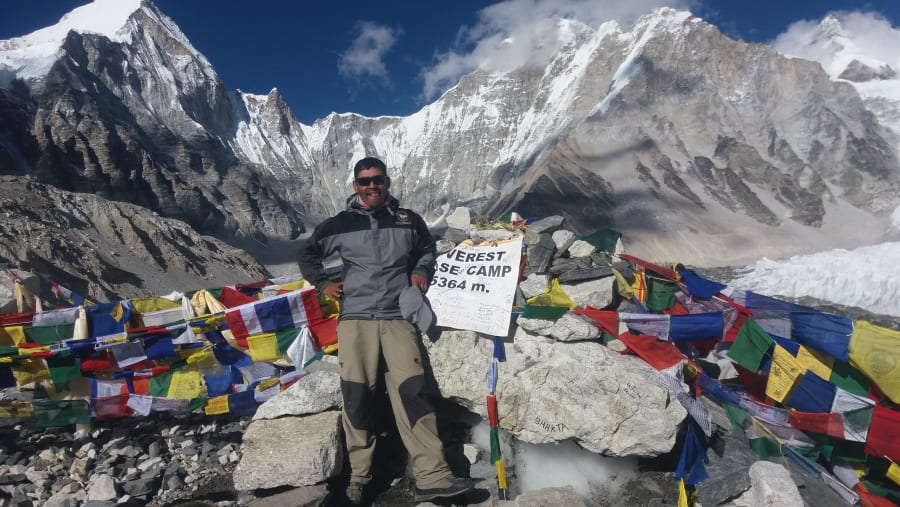
Go trekking to Gorakshep and hike to Everest Base Camp.
When you reach, enjoy gorgeous views of towering Mount Everest.
Overnight stay at Gorakshep.
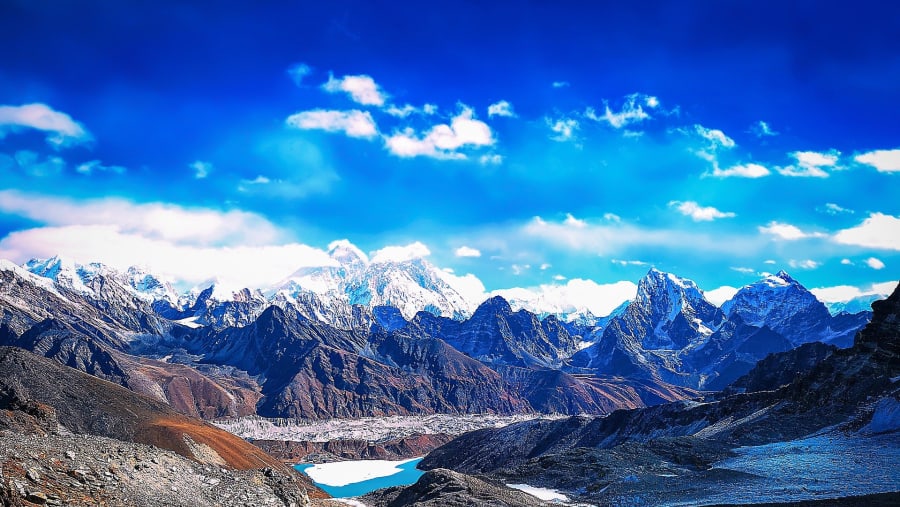
Start hiking to Pheriche and Kala Patthar to see incredible summit views of Mount Everest.
Return to Pheriche.
Overnight stay in Pheriche.
Today, it is time to trek back to Namche.
Overnight stay in Namche.
Trek down to Lukla from Namche with your Nepal tour guide.
Overnight stay.
Board a flight from Lukla to Kathmandu for departure.
End of the tour.
Where this trip takes you
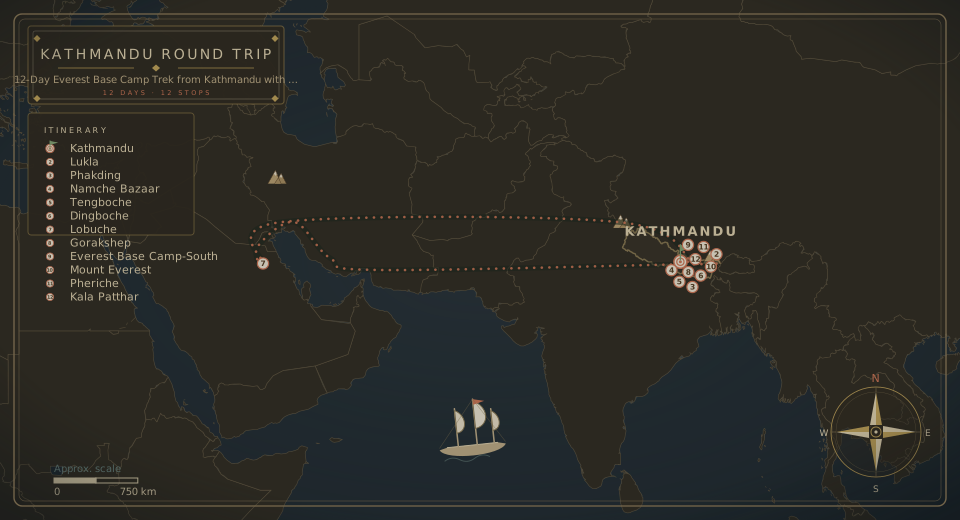
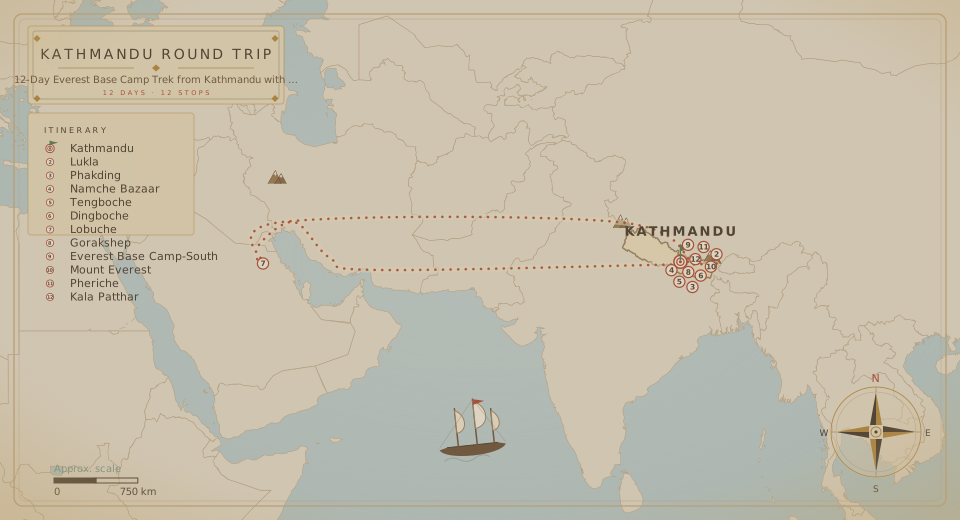
Kala Patthar panoramic views, Everest Base Camp, Namche Bazaar, Tengboche
The route
The fine print
Pick-up and drop-off, airport/hotel/airport, by car or jeep
Hotel accommodation in Kathmandu and Pokhara, including breakfast
Trekking and Nepali tour guide licensed by the government
1 porter for 2 trekkers during the trekking period
Trekking permit in the trekking area
Daily meals (breakfast, lunch, and dinner) during the trekking
Entry visa fee in Nepal
Lunch and dinner in Kathmandu and Pokhara city
All types of drinks and desserts during the trekking period
Personal expenses
Travel insurance
Personal trekking equipment
Tips for the tour guide, trekking staff, and driver
Climb all the way up to Everest Base Camp, which lies in Sagarmatha National Park and is abundant in diverse flora and fauna. Views of the highest mountain in the world - Mount Everest - promise to leave you spellbound.
High altitude sickness is known as mountain sickness. If you walk or climb to a higher elevation, it can appear very quickly, so you have to know the symptoms of high altitude sickness. If you are wondering why it happens, here is some information: it is caused by air pressure. When you go to a higher elevation, the air pressure drops and there is less oxygen, so your body needs time to adjust to the change in air pressure. According to doctors, it starts from 8,000 feet (2400 meters) if you are from sea level.
Types: There are three types of altitude sickness.
Acute Mountain Sickness (AMS): it is very common, and symptoms include tiredness, dizziness, headache, thirst, muscle aches, and nausea.
High Altitude Pulmonary Edema (HAPE): it affects the lungs, can be very dangerous, and can become life-threatening.
High Altitude Cerebral Edema (HACE): it affects the brain, is the most difficult to treat, and requires hospital attention right away.
Cause: Here are causes of high altitude sickness:
You live near sea level and travel to a high elevation.
You have had the sickness before.
You climb quickly.
You have not acclimatized to the altitude.
You drink alcohol when you ascend.
You have medical problems related to the heart, nervous system, or lungs.
Symptoms
These symptoms will appear depending on your speed of ascent and how hard you push yourself. Symptoms range from mild to serious. They can affect the nervous system, lungs, muscles, and heart.
Here are symptoms of high altitude sickness:
Difficulty sleeping
Dizziness
Fatigue
Headache
Loss of appetite
Nausea or vomiting
Rapid pulse (heart rate)
Shortness of breath with activity
Blue colour of the skin or grey, pale skin
Chest tightness or blockage
Confusion
Dry cough or coughing with blood
Cannot walk in a straight line
Prevention: Important keys to preventing high altitude sickness are:
Climb the mountain gradually.
Stop every 2,000 feet (600 meters) of the climb above 8,000 feet (2,400 meters) and sleep there for one or two nights.
Sleep at a lower altitude when possible.
Make sure that you have the ability to quickly descend if needed.
Learn how to recognize early symptoms of mountain sickness.
If you plan on climbing quickly or climbing to a high altitude, ask your provider about medicines that may help.
If you are at risk for a low red blood cell count (anaemia), ask your provider if your planned trip is safe. Also, ask if an iron supplement is right for you. Anaemia lowers the amount of oxygen in your blood. This makes you more likely to have mountain sickness.
While climbing, you should know these things:
Drink plenty of water.
Climb slowly.
Take it easy.
Do not drink alcohol.
Eat regular meals that are high in carbohydrates.
Sleep at a lower elevation.
Take medication (diomax) according to your doctor.
Logistics
Your 12 days finish where they began, in Kathmandu 44600.
Watch the film
Create your own adventure
Say goodbye to travel stress.
Starting from
When
Travellers
Total
—