


Day 01
Arrival in Tirana
Arrival at Tirana Mother Teresa Airport. Transfer and accommodation in Tirana.


Explore the world with tourHQ
Albania · UNESCO Heritage Sites
The journey
The dramatic mountain scenery, untouched beaches, and crystal-clear lakes of Albania and Macedonia stand in sharp contrast to their lack of economic prosperity. Small, little known, and hidden in the heart of the Balkans, these two countries offer visitors a unique blend of natural wonders, traditions, culture, and hospitable people. Virgin beaches, mountains and lakes, churches and chapels, remains of ancient civilizations, breathtaking gorges, and diverse wildlife all await travellers who wish to enjoy this round trip through two European countries.
The dramatic mountain scenery, untouched beaches, and crystal-clear lakes of Albania and Macedonia stand in sharp contrast to their lack of economic prosperity.
From the itinerary
At a glance
Day by day
Arrival at Tirana Mother Teresa Airport. Transfer and accommodation in Tirana.
In the morning, visit the medieval town of Kruja, located on the slope of Mount Sari Salltiku.
Walk along the old Bazaar, known as the best place to find craft items, before proceeding to the 6th-century fortress.
Visit the ethnographic museum and the history museum. After visiting Kruja, continue to Ardenica. The Monastery of Ardenica was built by the Byzantine emperor Andronicus II Palaeologus in 1282, after the victory against the Angioni in the Siege of Berat. The monastery features Byzantine Orthodox architecture with many Romanesque elements and covers an area of 2,500 square meters. Departure for the Apollonia Archaeological Park.
Visit Apollonia Archaeological Park. Following the paths under the shade of olives, oaks, and vigorous vegetation, see the imposing walls of stone blocks, the agora, the Buleterioni, also known as the Agoneoteti, marble colonnades, the amphitheatre, the library, the stoa, necropolis, the baths, the gymnasium, nymphaeum, mosaics, and other monuments that enrich this enchanted world. After visiting the park, depart for Vlora, known as the place where Albania's independence was proclaimed on 28 November 1912.
Overnight in Vlora.
After breakfast, travel all morning along the Albanian Riviera, passing through small villages such as Lukova, Qeparo, Borsh, Himara, and Dhemi.
Stop along the route in Llogara National Park, where the altitude at the Llogara Pass reaches up to 1,010 m above sea level. Later, continue to the ancient city of Butrint.
Visit the ancient amphitheatre, the Temple of Aesculapius, the baptistery with colourful mosaics, and the ancient city walls. An old fortress housing a small museum overlooks the entire site, which is one of the last pristine ancient natural areas of the Mediterranean. Visit the Blue Eye (Albanian: Syri I kaltër), a natural water source and phenomenon. A trendy tourist attraction, the crystal-clear water of the river flows from a beautiful pool of over fifty meters. Divers have descended to fifty meters, but the actual depth of the karst hole remains unclear. Leave the Blue Eye and drive to Gjirokastra.
Accommodation and overnight in Gjirokastra.
This will be an interesting day in the museum city of Gjirokastra, which is also one of the three UNESCO sites in Albania. The city is dominated by the fortress of Gjirokastër, where the Gjirokastër National Folklore Festival takes place every five years. It is the birthplace of former Albanian Communist leader Enver Hoxha and the well-known writer Ismail Kadare. Many houses in Gjirokastër have a distinctive local style that has earned the city the nickname "City of Stone" because most of the old houses have flat stone roofs. Gjirokastër features an ancient Ottoman bazaar originally built in the 17th century and rebuilt in the 19th century after a fire. Today, more than 500 houses in Gjirokastër are preserved as "cultural monuments".
Proceed to the city of "A Thousand and One" windows.
Overnight in Berat.
In the morning, explore the Berat UNESCO Site.
Start from the citadel, where families still live today. Within the castle's massive stone walls, some churches have survived. Visit the "Onufri" Museum.
Continue to the medieval part of the city, where there are other monuments such as the Lead Mosque, the Bachelor Mosque, the Gorica Bridge, and many houses from the eighteenth and nineteenth centuries.
After visiting Berat, cross the border with Macedonia and arrive in Ohrid.
Overnight in Ohrid.
After breakfast, visit Ohrid. It is the largest city on Lake Ohrid and the eighth-largest city in the country. Ohrid is famous for once having had 365 churches, one for each day of the year, and it has been referred to as the Jerusalem of the Balkans. Lake Ohrid has been recognized by UNESCO as both cultural and natural heritage; in fact, Ohrid is one of only 28 UNESCO World Heritage sites that are both cultural and natural sites.
Lunch at a local restaurant. Visit the Church of St. Sophia, Samuil's Castle, and the Church of Saint Clement. Also visit the Monastery of San Naum.
Overnight in Ohrid.
This morning, leave Macedonia and return to Albania.
Today, visit the Albanian capital of Tirana. Take a panoramic tour of Tirana along the main boulevard, where the main university, the President's Office, and other important buildings are located.
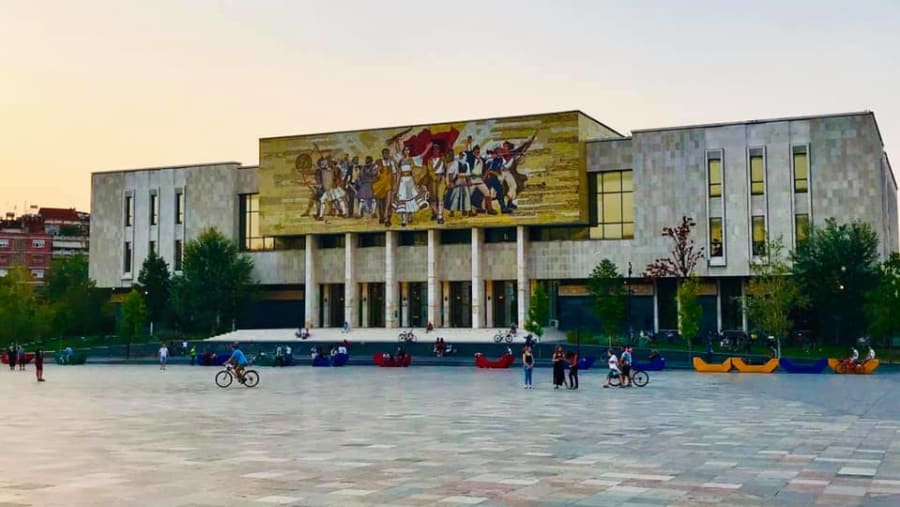
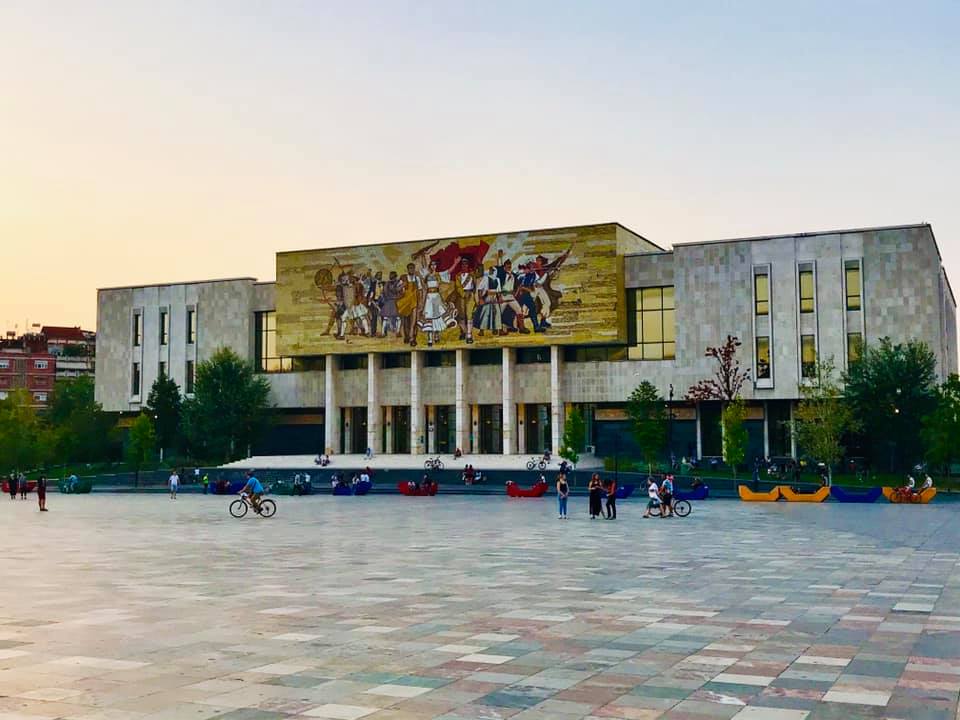
Continue to Skanderbeg Square, where the National History Museum, the Et'hem Bey Mosque, and the Palace of Culture are located.
Overnight in Tirana.
After breakfast, transfer to the airport and end of tour.
Where this trip takes you
Blue Eye, Butrint National Park, Apollonia Archaeological Park
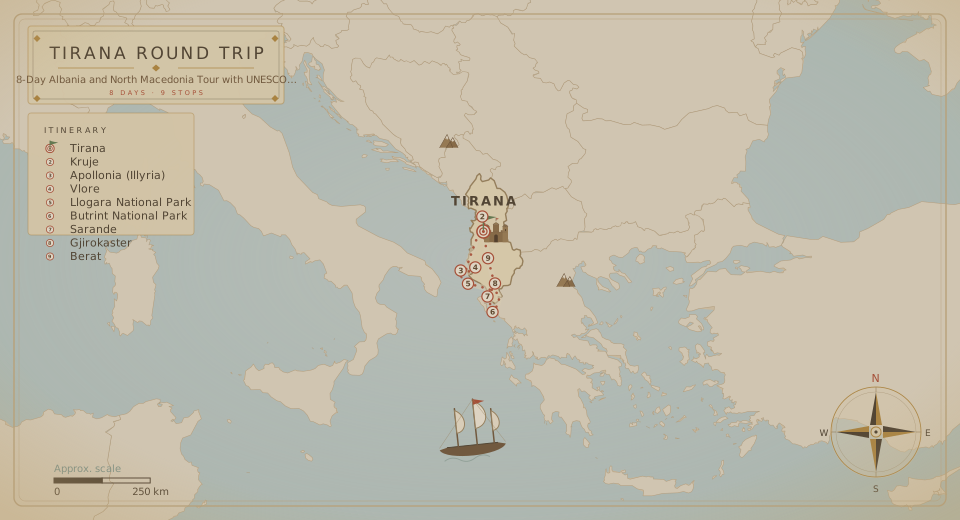
The route
The fine print
Accommodation in good 3-star and 4-star standard hotels with breakfast.
Transportation in a comfortable air-conditioned vehicle.
English-, French-, German-, Italian-, and Spanish-speaking tour guide/driver.
All taxes.
Lunches
Dinners
Entrance fees
Logistics
Your 8 days finish where they began.
 Watch the film
Create your own adventure
Say goodbye to travel stress.
Starting from
When
Travellers
Total
—