


Day 01
Arrival in Ljubljana
Arrive in Ljubljana and transfer to your hotel for an overnight stay.


Explore the world with tourHQ
Albania, Bosnia and Herzegovina, Croatia, Montenegro, Slovenia · Heritage Walks
The journey
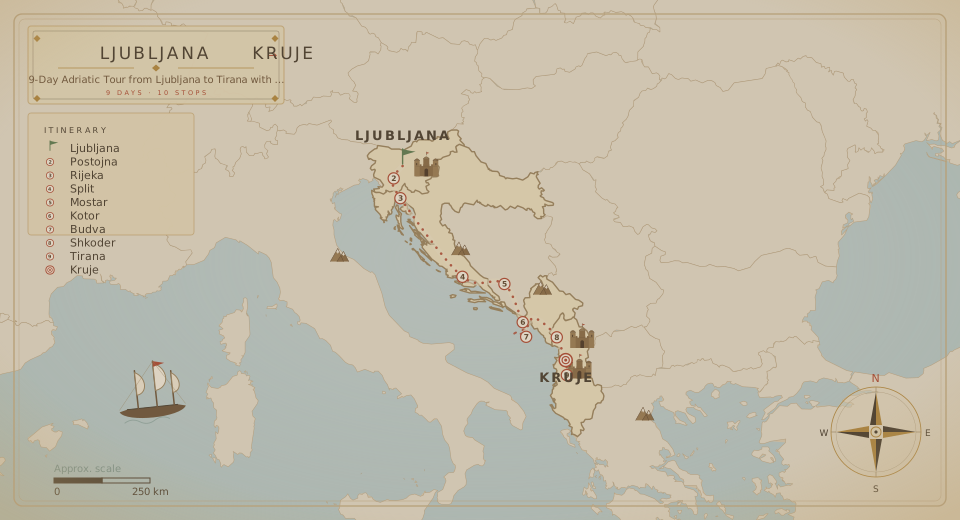
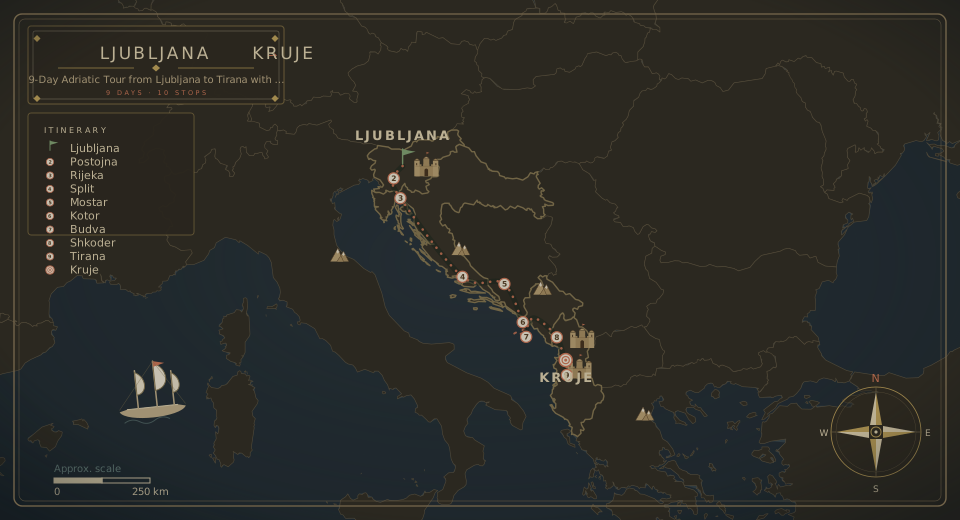
This 9-day Adriatic journey begins in Slovenia and travels through Croatia, Bosnia and Herzegovina, Montenegro, and Albania, linking some of the region's most historic and culturally rich cities. Explore Ljubljana, Postojna Cave, Rijeka, Split, Mostar, Kotor, Budva, Shkodra, Kruja, and Tirana while discovering castles, cathedrals, old towns, museums, and dramatic coastal and mountain scenery. Along the way, experience Roman, Ottoman, Venetian, Austro-Hungarian, Mediterranean, and Oriental influences reflected in the architecture and heritage of each destination. The tour ends in Tirana after visits to Albania's cultural landmarks, historic bazaars, and panoramic hilltop sites.
The reconstructed Old Bridge and Old City of Mostar are symbols of reconciliation, international cooperation, and the coexistence of diverse cultural, ethnic, and religious communities.
From the itinerary
At a glance
Day by day
Arrive in Ljubljana and transfer to your hotel for an overnight stay.
After breakfast, we will visit Ljubljana. Ljubljana is Slovenia's capital and largest city. It is known for its university population and green spaces, including expansive Tivoli Park. The curving Ljubljanica River, lined with outdoor cafes, divides the city's old town from its commercial hub. Ljubljana has many museums, including the National Museum of Slovenia, displaying historic exhibitions, and the Museum of Modern Art, home to 20th-century Slovene paintings and sculptures. Ljubljana Castle, standing on a hill above the city for about 900 years, is Ljubljana's main attraction. You can reach it by funicular railway or climb it on foot. The castle's tower and ramparts offer the most beautiful views of the city. There are two permanent museum exhibitions, two restaurants, a café, and a nightclub. The dragon is a symbol of Ljubljana and has proudly reigned in the city coat of arms since the late Middle Ages. Masterfully designed dragon sculptures at the Dragon Bridge, built in 1901, are both scary and magnificent at the same time. If you haven't taken a photo with either one of them, it is considered that you have not really visited Ljubljana.
The Town Hall, National Gallery, the cathedral of the city, the Franciscan Church, and the Central Market are also among the attractions to visit in Ljubljana.
Overnight in Ljubljana.
After breakfast, we travel to one of the most famous caves in the world, Postojna Cave. It seems that anyone who steps on Slovenian soil wants to be part of this beautiful underworld experience. Postojnska Jama in Slovenia is a pearl in the record books, having been visited by as many as 40 million people in the last 200 years since it was opened to outside visitors. In Postojna Cave, several halls are decorated with beautiful drip-stones, known as stalagmites and stalactites. In addition to stalagmites and stalactites, there are also other cave formations, such as the famous drip-stone pillar named Brilijant, a symbolic form in the cave. In 1872, the first cave railway in the world was built in Postojna Cave, and it has been improved and expanded throughout the years. In the past, people visited the cave on foot; however, today you can take a tour inside the cave on a unique miniature electric train.
Then we drive to the city of Rijeka in Croatia. Rijeka is a Croatian port city on Kvarner Bay in the northern Adriatic Sea. It is known as a gateway to Croatia's islands. Korzo, the main promenade, is lined with Habsburg-era buildings. Nearby, the 19th-century Ivan pl. Zajc Croatian National Theatre has ceiling paintings by Gustav Klimt. The hilltop Trsat Castle complex, which includes a religious shrine, has sweeping views of the islands of Kvarner Bay.
Overnight in Rijeka.
After breakfast, we drive to the city of Split. Split, the second-largest city in Croatia, is a mix of modern life and ancient history. With ruins dating back to the Roman Empire, a bustling waterfront, and fresh seafood served daily at many of the restaurants in town, Split is well worth a visit on a tour through Croatia.
What to visit: Diocletian's Palace, St. Domnius Cathedral, the Old Town, and the Riva Promenade.
Overnight in Split.
After breakfast, we travel to Mostar, where we will visit the historic town spanning a deep valley of the Neretva River. It developed in the 15th and 16th centuries as an Ottoman frontier town and later during the Austro-Hungarian period in the 19th and 20th centuries. Mostar has long been known for its old Turkish houses and the Old Bridge, Stari Most, after which it is named. During the conflict of the 1990s, however, most of the historic town and the Old Bridge, designed by the renowned architect Sinan, were destroyed. The Old Bridge was recently rebuilt, and many of the edifices in the Old Town have been restored or rebuilt with the contribution of an international scientific committee established by UNESCO. The Old Bridge area, with its pre-Ottoman, eastern Ottoman, Mediterranean, and western European architectural features, is an outstanding example of a multicultural urban settlement. The reconstructed Old Bridge and Old City of Mostar are symbols of reconciliation, international cooperation, and the coexistence of diverse cultural, ethnic, and religious communities.
Overnight in Mostar.
After breakfast, we drive to Kotor, Montenegro. Kotor is a fortified town on the Adriatic coast, in a bay near the limestone cliffs of Mt. Lovćen. Characterized by winding streets and squares, its medieval old town has several Romanesque churches, including Kotor Cathedral. It is also home to the Maritime Museum, which explores local seafaring history. Sveti Đorđe, one of two tiny islands off the ancient town of Perast, features a centuries-old church.
After Kotor, we proceed to Budva. Budva is a town in Montenegro on the Adriatic Sea. Part of the Budva Riviera, it is known for sandy beaches and nightlife. Stone walls built by the Venetians surround the narrow streets of the medieval old town, Stari Grad. This historic district is home to a seaside citadel and religious sites such as the Church of Santa Maria in Punta, established in the 9th century.
Overnight in Budva.
After breakfast, we drive to Shkodra, Albania. The city is an important cultural and economic center of Albania. Shkodra is also known as the center of Albanian Catholicism and is perfect proof that different religions can coexist in one country. It became the capital of Illyria in the 3rd century B.C.
We will visit Rozafa Castle, the Cathedral of Saint Stefan, the Franciscan Church, and the Old Town.
Then we travel to the capital of Albania, Tirana. Overnight in Tirana.
After breakfast, we will visit Kruja. Kruja is just 32 km away from Tirana. This historic city is 608 m above sea level and offers an open vista with an amazing panoramic view. The name and importance of the city are closely related to the 25 years of activity of our national hero, Skanderbeg, who in the fifteenth century made Kruja a bastion of uncompromising resistance against the Ottomans. The Gjergj Kastrioti Skanderbeg Museum is situated inside the castle walls, which date back to the fifth and sixth centuries A.D. Also in Kruja, we will visit the Old Bazaar, the best place to buy souvenirs in Albania.
Then we return to Tirana, where we will do a walking tour. Tirana is situated in a valley at the foot of Mount Daiti. For the past 400 years, the city has combined Turkish, Italian, and Soviet Union architecture and can offer tourists many historical values and vivid nightlife.
We will visit Scanderbeg Square, the Main Boulevard, Government Buildings, and Bunk'Art. Then we stop for a coffee or drink in Blloku, a famous area full of coffee shops, restaurants, and nightclubs. Blloku was once an area where communist leaders lived.
Overnight in Tirana.
After breakfast, transfer to the airport.
End of our service.

Where this trip takes you
Postojna Cave, Stari Most, Kotor Cathedral, Ljubljana Castle
The route
The fine print
Accommodation in good 3-star to 4-star standard hotels with breakfast
Transportation in a comfortable air-conditioned vehicle
English-speaking tour guide/driver
All taxes
Lunches
Dinners
Entrance fees
Logistics
Your 9 days finish where they began, in Ljubljana.
 Watch the film
Create your own adventure
Say goodbye to travel stress.
Starting from
When
Travellers
Total
—