Nepal · Trekking

17-Day Mera Peak Climbing Adventure in Nepal with Summit Training

17 Days Moderate pace

The journey

Trip highlights
  • 01 Summit Mera Peak (6,476 m), the highest trekking peak in Nepal
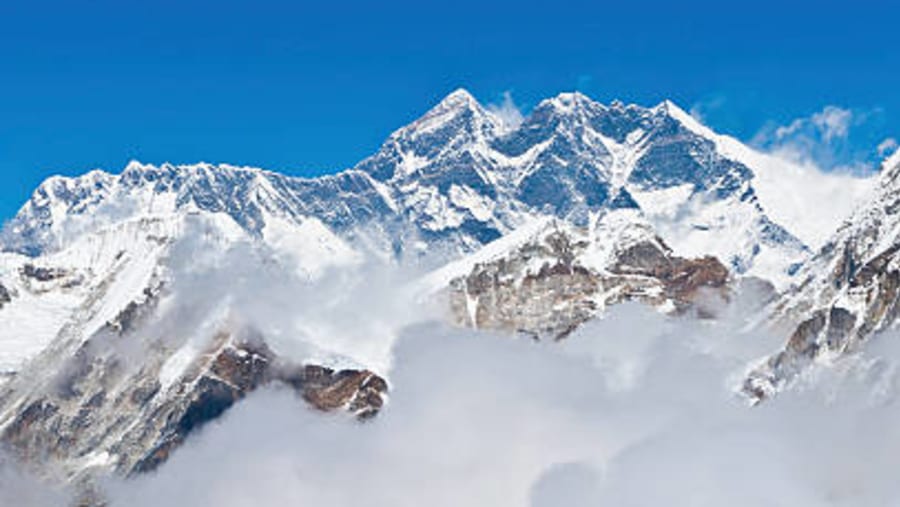
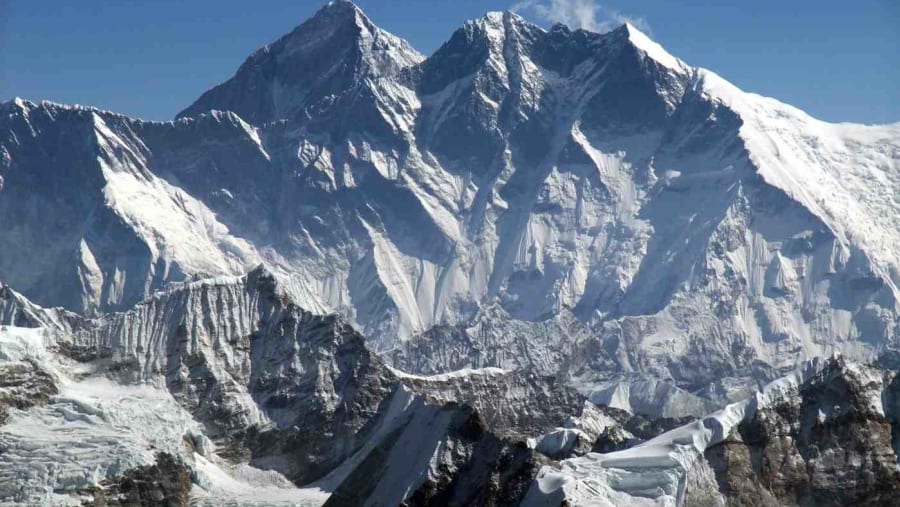
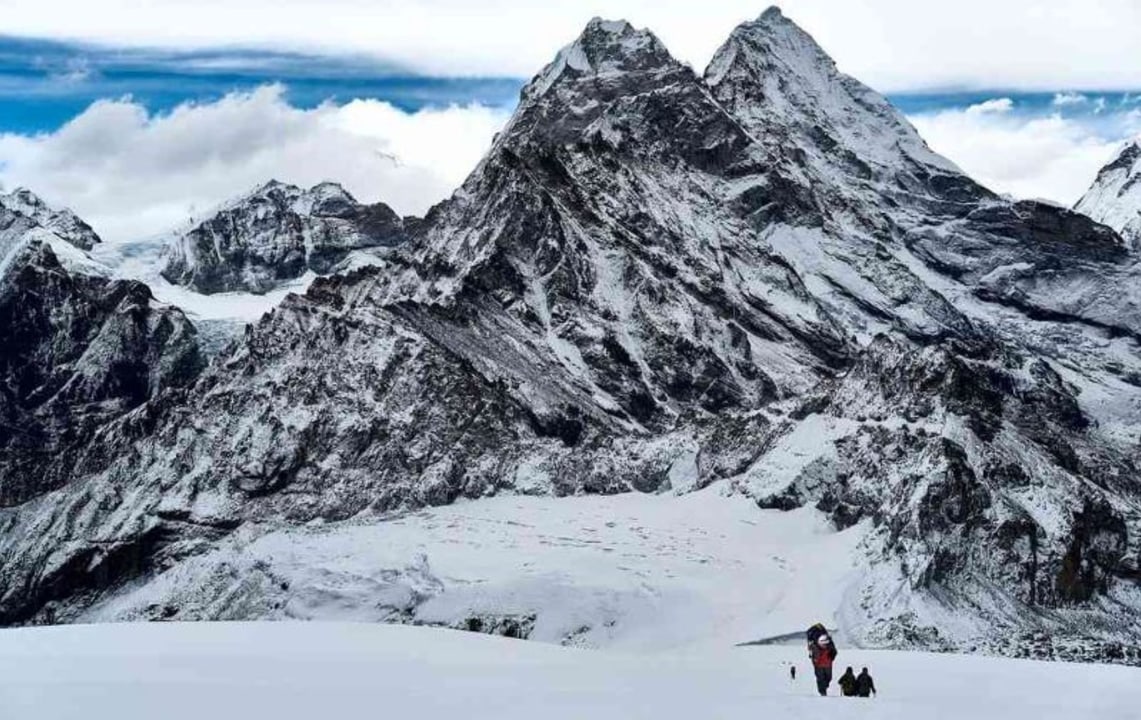
  • 02 Take in panoramic views of Everest, Lhotse, Makalu, Cho Oyu, and Kanchenjunga
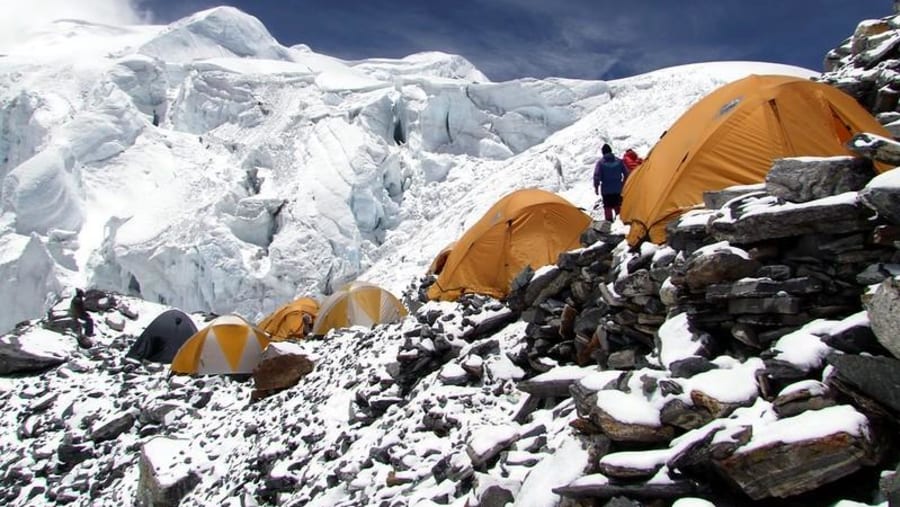
  • 03 Trek through the remote Hinku Valley, alpine meadows, and glacier terrain
  • 04 Train with your guide in crampons, ice axes, harnesses, jumars, and fixed ropes
  • 05 Enjoy a guided climb suited to first-timers with moderate mountaineering experience
  • 06 Experience authentic Sherpa culture in the Everest region

Mera Peak Climbing is an exhilarating high-altitude adventure in the Everest region, ideal for novice climbers aiming to conquer their first Himalayan peak. Standing at 6,476 m, Mera Peak is the highest trekking peak in Nepal and rewards climbers with panoramic views of Everest, Lhotse, Makalu, Cho Oyu, and Kanchenjunga. This journey combines trekking through remote valleys and alpine landscapes with a guided summit push that requires basic mountaineering skills such as using crampons and ice axes. It is a rewarding challenge for adventurous trekkers seeking breathtaking Himalayan scenery and a true sense of achievement.

Standing at 6,476 m, Mera Peak is the highest trekking peak in Nepal and rewards climbers with panoramic views of Everest, Lhotse, Makalu, Cho Oyu, and Kanchenjunga.

From the itinerary

At a glance

What this trip includes

Duration 17 Days
Tour type Shared
Activity level Moderate
Accommodation Included · Standard
Transport Included
Wheelchair access No
Cities Kathmandu, Makalu, Lukla, Mera Peak
Languages English, Hindi, Korean

Day by day

The itinerary

1
Day 01

Arrival in Kathmandu

Upon your arrival in the vibrant city of Kathmandu, our representative will be there to greet you and escort you to your designated hotel. You can use your free time to rest or explore the city at your own pace.

  • Accommodation: 3 Star Hotel
2
Day 02

Kathmandu Heritage Sightseeing

Explore the historical and cultural treasures of Kathmandu. Your guide will take you to several UNESCO World Heritage Sites in the city, including the famous Durbar Square, the sacred Hindu temple of Pashupatinath, the iconic "Monkey Temple" (Swayambhunath), and the majestic Boudhanath Stupa.

  • Meal: Breakfast
  • Accommodation: 3 Star Hotel
3
Day 03

Fly to Lukla and Trek to Paiya

Catch a thrilling flight to Lukla. After enjoying a cup of tea, meet your porters and begin your trek. Walking through lush forests and crossing several suspension bridges, you will reach Paiya, a charming Sherpa village, for an overnight stay.

  • Meal: Breakfast, Lunch, Dinner
  • Transportation: Air Flight
  • Accommodation: Teahouse
4
Day 04

Trek to Pangkoma via Kari La Pass

After breakfast, follow a mountain trail and cross the Kari La Pass. The route takes you through dense rhododendron and bamboo forest before reaching Pangkoma.

  • Meal: Breakfast, Lunch, Dinner
  • Accommodation: Teahouse
5
Day 05

Trek to Ningsow

Today's trail leads you through terraced fields and lush forest, passing mani walls, small streams, and occasional viewpoint glimpses of Mera Peak. After ascending and descending through a mix of forested and rocky trails, you will arrive at Ningsow.

  • Meal: Breakfast, Lunch, Dinner
  • Accommodation: Teahouse
6
Day 06

Trek to Chhatra Khola

Today begins with a steep ascent and continues through a series of ups and downs in the Makalu Barun buffer zone. You will enter the remote and peaceful Hinku Valley. If the timing is right, you may encounter wild animals such as red pandas and Himalayan thars. After navigating the forest trails, you will reach Chhatra Khola for an overnight stay.

  • Meal: Breakfast, Lunch, Dinner
  • Accommodation: Teahouse
7
Day 07

Trek to Kothe

After breakfast, you will trek through dense bamboo and rhododendron forest, with occasional glimpses of snow-capped peaks, to reach the small settlement of Kothe.

  • Meal: Breakfast, Lunch, Dinner
  • Accommodation: Teahouse
8
Day 08

Trek to Thaknak

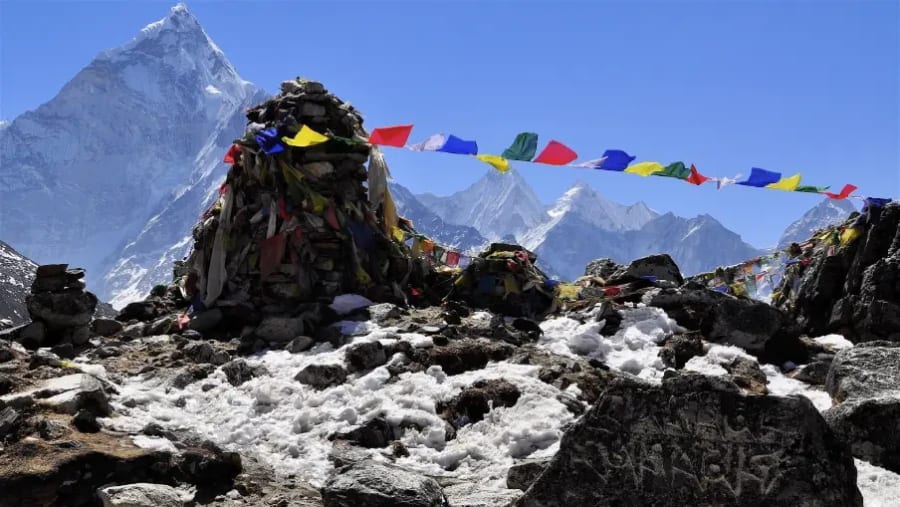
Today's journey takes you farther along the Hinku Valley. The trail gradually ascends through alpine meadows, passing summer herding settlements and prayer stones with majestic views of Mera Peak. You will arrive at Thaknak, an ideal stop for acclimatization and rest.

  • Meal: Breakfast, Lunch, Dinner
  • Accommodation: Teahouse
9
Day 09

Trek to Khare

Continue your trek with stunning views of Charpate Himal and the northern face of Mera Peak as you approach Khare, the base camp area for Mera Peak. Khare is a small but vital hub for climbers, offering time to rest, acclimatize, and prepare for the summit push.

  • Meal: Breakfast, Lunch, Dinner
  • Accommodation: Teahouse
10
Day 10

Acclimatization and Climbing Preparation

This is an acclimatization and pre-climb preparation day. Spend your day resting, hydrating, and allowing your body to adjust to the high altitude. In the afternoon, your climbing guide will conduct a training session and teach techniques such as using crampons, ice axes, a harness, jumar, and fixed ropes. This is an important day to help ensure your safety and success on Mera Peak.

  • Meal: Breakfast, Lunch, Dinner
  • Accommodation: Teahouse
11
Day 11

Trek to Mera High Camp

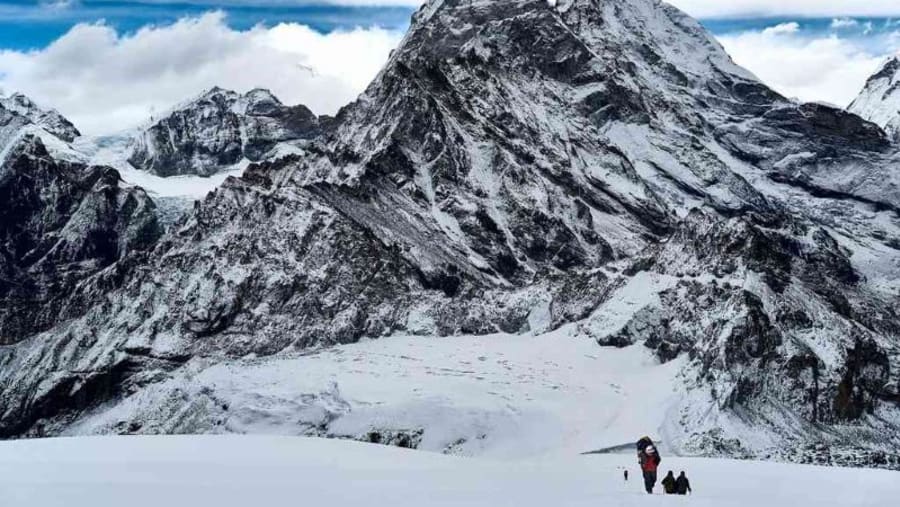
Begin an early morning trek across rocky terrain and glacier moraine toward Mera High Camp. Enjoy the breathtaking views of the surrounding mountains. At this high altitude, conserve your energy, rest well, stay hydrated, and prepare for your upcoming summit attempt.

  • Meal: Breakfast, Lunch, Dinner
  • Accommodation: Teahouse
12
Day 12

Summit Mera Peak and Descend to Khare

Start early for your summit attempt on Mera Peak. After successfully reaching the summit and soaking in the views, you will descend back to Khare.

  • Meal: Breakfast, Lunch, Dinner
  • Accommodation: Teahouse
13
Day 13

Descend to Kothe

Begin your descent through the beautiful Hinku Valley. Passing alpine meadows, yak pastures, and dense forests, make your way back to the village of Kothe.

  • Meal: Breakfast, Lunch, Dinner
  • Accommodation: Teahouse
14
Day 14

Trek to Thuli Kharka

Today, you will trek through beautiful alpine landscapes, passing through lush forest and open meadows as you retrace your route back to Thuli Kharka. This peaceful spot is perfect for an overnight stay.

  • Meal: Breakfast, Lunch, Dinner
  • Accommodation: Teahouse
15
Day 15

Trek to Lukla via Zatrwa La Pass

Begin your challenging yet rewarding trek with a steep ascent to cross the Zatrwa La Pass (4,600 m), where you will be rewarded with breathtaking views of Lukla Valley, the Dudh Kosi River, and distant Himalayan peaks. After soaking in the scenery, continue a gradual descent through forest and small settlements, and eventually conclude your trek at Lukla. Enjoy your last evening in the mountains with your trekking team.

  • Meal: Breakfast, Lunch, Dinner
  • Accommodation: Teahouse
16
Day 16

Fly Back to Kathmandu

Take a morning flight back to Kathmandu. Spend your day resting, refreshing, or exploring the vibrant streets of Thamel for some last-minute shopping or cultural sightseeing.

  • Meal: Breakfast, Lunch, Dinner
  • Transportation: Air Flight
  • Accommodation: 3 Star Hotel
17
Day 17

Departure from Kathmandu

You will be transferred to the airport by our representative for your departure, marking the end of your adventure in Nepal.

  • Meal: Breakfast
Mera Peak summit panoramas, Hinku Valley alpine meadows, Zatrwa La Pass ridgeline, Thamel streets

Where this trip takes you

Mera Peak summit panoramas, Hinku Valley alpine meadows, Zatrwa La Pass ridgeline, Thamel streets

The route

Where you'll travel

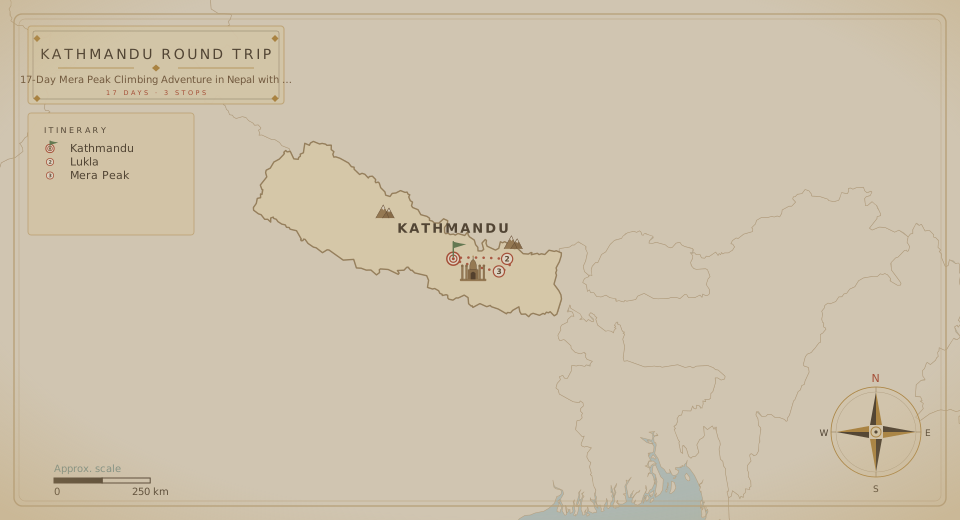
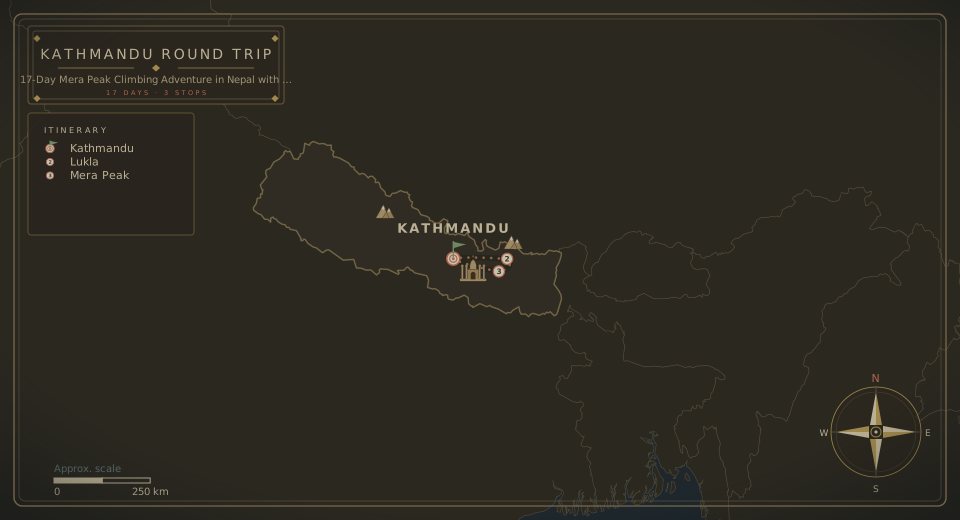
Tour route map
4 cities · 17 Days

The fine print

Trip details

What's Included

  • Airport transfers: Pick-up and drop-off at Kathmandu's Tribhuvan International Airport.
  • Accommodation: Hotels in Kathmandu before and after the trek, and lodges or teahouses during the trek. Tents are typically provided for the camping portion of the climb.
  • Meals: All meals during the trek and climb, plus breakfast in Kathmandu. Also includes two hot beverages (at breakfast and lunch) and seasonal fruits after dinner.
  • Trekking and climbing permits: Includes the local area permit and the Mera Peak climbing permit.
  • Experienced guide and porters: A professional climbing guide and porters to carry luggage, along with their food, accommodation, salary, insurance, and equipment.
  • Climbing equipment: Group climbing gear such as ropes, ice screws, and snow bars.
  • First aid kit: Basic medical supplies for treating minor injuries or illnesses.
  • Transportation: Ground and/or air transportation to and from the trek starting point (typically Lukla).
  • Equipment: Duffle bag and sleeping bag (if necessary).

What's Not Included

  • International flights: The cost of international airfare to and from Nepal is typically not included.
  • Nepal visa fee: The cost of the Nepalese visa is usually not covered.
  • Travel insurance: Comprehensive travel insurance, including emergency evacuation and high-altitude trekking coverage, is generally not included.
  • Personal climbing gear: Climbing gear for individual use, such as boots, helmet, ice axe, crampons, and harness, is usually not included.
  • Personal expenses: Costs for personal items like drinks, snacks, Wi-Fi, charging devices, and hot showers during the trek are not included.
  • Tips: Tipping guides, porters, and climbing Sherpas, while customary, is not included in the package price.
  • Additional meals: Meals in Kathmandu, other than breakfast, are typically not included.

What to bring

Clothing & Layering System

Upper Body:

  • Base Layers: Moisture-wicking and quick-drying shirts and thermal tops.
  • Insulation Layers: Fleece or down jackets to provide warmth.
  • Waterproof Shell Jacket: A durable and breathable jacket to protect against wind and rain.
  • Softshell Jacket: A lightweight and water-resistant jacket for added protection.
  • Climbing Harness: A comfortable harness to secure yourself to the rope.
  • Helmet: A strong and well-fitting helmet to protect your head from falling objects.
  • Gloves: A combination of lightweight liner gloves and insulated gloves or mittens for warmth and dexterity.
  • Buff or Neck Gaiter: To protect your neck and face from cold and wind.
  • Sunglasses: Polarized and UV-protected sunglasses to shield your eyes from the sun and snow glare.
  • Goggles: Ski or mountaineering goggles for added eye protection in extreme weather conditions.

Lower Body:

  • Base Layers: Moisture-wicking and quick-drying thermal bottoms.
  • Insulation Layers: Fleece or insulated pants for added warmth.
  • Waterproof Shell Pants: Durable and breathable pants to protect against wind, rain, and snow.
  • Softshell Pants: Lightweight and water-resistant pants for added protection.
  • Mountaineering Boots: Sturdy and insulated boots designed for snow and ice.
  • Crampons: Attachable spikes that provide traction on icy terrain.
  • Gaiters: Waterproof and breathable gaiters to keep snow out of your boots.
  • Socks: A combination of moisture-wicking liner socks and thick, warm mountaineering socks.

Climbing Equipment

  • 12-point crampons (compatible with your boots)
  • Ice axe (appropriate length)
  • Climbing harness
  • Helmet
  • Carabiners (2-3 locking)
  • Prusik cord for glacier travel

Other Essential Items:

  • Backpack: A spacious and sturdy backpack to carry your climbing gear and personal belongings.
  • Sleeping Bag: A warm and lightweight sleeping bag that can withstand sub-zero temperatures.
  • Trekking Poles: Adjustable trekking poles for added stability and support.
  • Headlamp: Essential for climbing in low-light or dark conditions.
  • Water Bottles: Insulated water bottles to keep your water from freezing.
  • Sunscreen: High SPF sunscreen to protect your skin from the strong sun at high altitudes.
  • First Aid Kit: A comprehensive first aid kit with essential medications and supplies.
  • Climbing Snacks: Energy bars, nuts, and other lightweight snacks for quick fuel during the climb.

It is important to invest in high-quality gear and ensure that everything fits properly and is in good condition. Additionally, consult with experienced climbers or a professional guide to ensure you have all the necessary gear and receive proper training on how to use it effectively and safely.

Know before you go

  • Best time to visit: Spring (Mar-May) and Autumn (Sep-Nov), with favorable weather and clear skies.
  • Summit height: 6,476 m; proper acclimatization is necessary.
  • Moderate trekking experience and basic mountaineering skills are required.
  • A guided climb is recommended with experienced guides and mountaineering equipment.
  • Weather can be unpredictable; carry warm clothing, gloves, and water-resistant gear.
  • Teahouses and basic lodges are available on trekking routes; camping may be necessary at higher elevations.
  • High-altitude travel insurance is necessary for rescue and medical evacuation.
  • Best for trekkers looking for adventure, Himalayan summits, and stunning views.

Logistics

Meeting & route

Meeting point
Kathmandu, Nepal
End of the journey

Your 17 days finish where they began.

Watch the tourHQ film Watch the film

Create your own adventure

Can't find the perfect tour? Tailor your dream trip.

  • Tell us your destination, dates and group size.
  • Our travel experts and local guides design a tailored itinerary, just for you.
  • Enjoy your trip with peace of mind, knowing everything is taken care of.
Plan my holiday

Say goodbye to travel stress.

Starting from

USD 2,520 /person
Book This Tour

Estimated room rates

Single Room $2,520.00 — $2,700.00
Double Sharing $2,520.00 — $2,640.00

When

Travellers

Total