



Day 01
Sal Island Highlights from Pedra de Lume to Buracona
- Visit Salinas de Pedra de Lume, located on the northeastern coast of Sal Island, overlooking the sea in a landscape of remarkable beauty.
- Learn how the Salinas sit inside the crater of an ancient volcano and discover that the island takes its name from the salt of Pedra de Lume.
- Hear how natural channels once connected the crater with the sea, creating deposits of rock salt estimated at more than fifty million tons.
- See the old salt mine, which now receives many visitors who come to enjoy floating baths and spa-style salty pools.
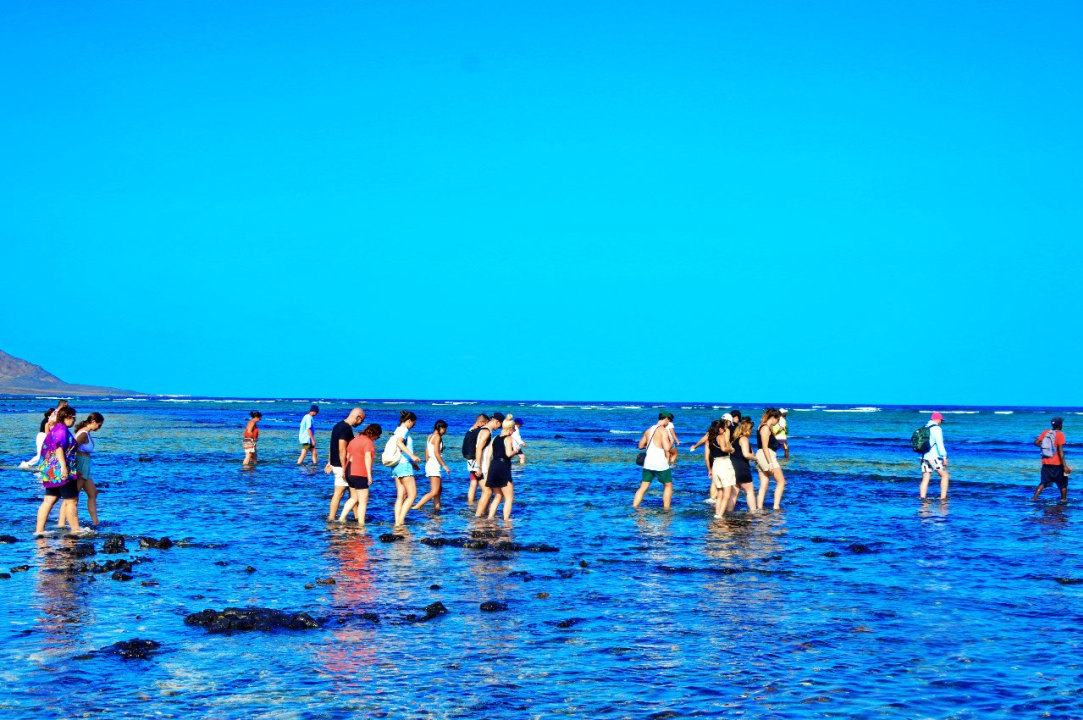
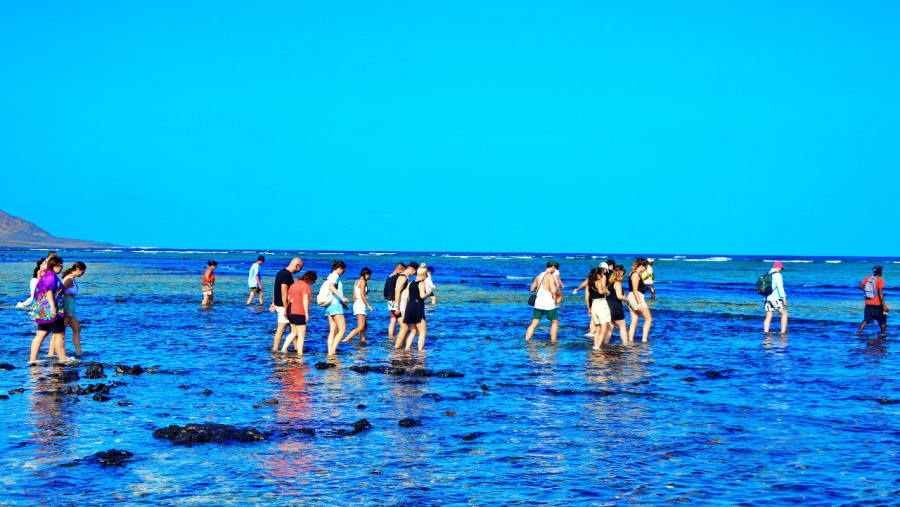
- Travel to Shark Bay, located a few kilometres south of Pedra de Lume, famous for its rocky beach and long shallow waters.
- Understand why this area is an ideal nursery for lemon sharks, which spend their first years protected from deep-water predators.
- Learn that baby lemon sharks are harmless to humans and that visitors can safely enter the water to observe them closely.
- Receive advice to wear suitable footwear because the seabed is rocky, slippery, and full of sea urchins, and flip-flops do not work well here.
- Discover that it is possible to rent suitable shoes and that local guides sometimes attract sharks using fresh fish entrails.
- Continue to Buracona, on the northwest coast of Sal, known as the Blue Eye, where sunlight creates a brilliant blue reflection inside a cave.
- See how seawater enters the cave through a natural tunnel and learn that the best viewing time is usually between 11 a.m. and 1 p.m. in summer.
- Learn that divers can enter the sea through an underwater tunnel when conditions allow.
- Visit Miragem Fatamorgana at Terra Boa, where shimmering illusions appear like lakes across the desert plains.
- Discover that Terra Boa lies north of Sal, near Espargos, with vast barren sand and distant mountains such as Monte Grande.
- Learn that despite its desert appearance, the area historically contained rare moist ground that once supported small patches of agriculture.
- Explore Murdeira Bay Nature Reserve, located between Rabo de Junco peak and Rife Point, protected for its rich underwater ecosystems.
- Discover nesting areas for turtles, habitats for rare seabirds such as terns and red-tailed tropicbirds, and the seasonal presence of whales.
- Understand how the Terrestrial Buffer Zone controls coastal impact and protects the entire coastline of the bay.