Explore the Highlights of the City of Love
Meet your tour guide at your hotel and proceed to Île de la Cité, one of the two remaining natural islands in the Seine within Paris.
Enjoy sightseeing at Notre-Dame Cathedral, better known as Notre-Dame de Paris, one of the finest examples of French Gothic architecture. It is also one of the best-known church buildings in France, as well as in the world. Let's find out why.
Visit the Conciergerie Prison, the former royal palace known as the Palais de la Cité, which consisted of the Conciergerie, Palais de Justice, and Sainte-Chapelle. During the French Revolution, many prisoners were executed by guillotine here.
Arrive at Sainte-Chapelle, a royal chapel built in Gothic style. It served as the residence of the Kings of France until the 14th century.
The Latin Quarter, or Quartier Latin, is our next stop. This area will take you back to your college days, as it is full of universities such as the École Normale Supérieure, École des Mines de Paris, Panthéon-Assas University, Schola Cantorum, and the Jussieu university campus.
Admire the Neo-Classical architecture of the Panthéon, the temple of gods. It was once dedicated to Saint Genevieve but now functions as a secular mausoleum containing the remains of distinguished French citizens.
Take a stroll in the Luxembourg Garden, Le Jardin du Luxembourg. Spread over 23 hectares and built in 1620, it is famous for its lawns, tree-lined promenades, flowerbeds, model sailboats on its circular basin, and the picturesque Medici Fountain.
Hop into the Musée d'Orsay, or Orsay Museum. Here, you will find the largest collection of Impressionist and Post-Impressionist masterpieces in the world, by painters including Monet, Manet, Degas, Renoir, Cézanne, Seurat, Sisley, Gauguin, and Van Gogh.
Proceed to the Louvre Museum, the world's largest art museum and a historic monument in Paris.
As we move from the Louvre Museum towards Place de la Concorde, we find the beautiful Tuileries Garden. It was created by Catherine de' Medici as the garden of the Tuileries Palace in 1564 and was opened to the public after the French Revolution.
While returning from the garden, we will stop at Place de la Concorde, a mute witness to many executions during the French Revolution.
Walk along the Champs-Élysées, an avenue in the 8th arrondissement of Paris known for its theatres, cafés, and luxury shops, as well as for the annual Bastille Day military parade. It is also the finishing point of the Tour de France cycle race.
Move to the Arc de Triomphe de l'Étoile, one of the most famous monuments in Paris. It honours the brave soldiers who fought and died for France in the French Revolutionary and Napoleonic Wars.
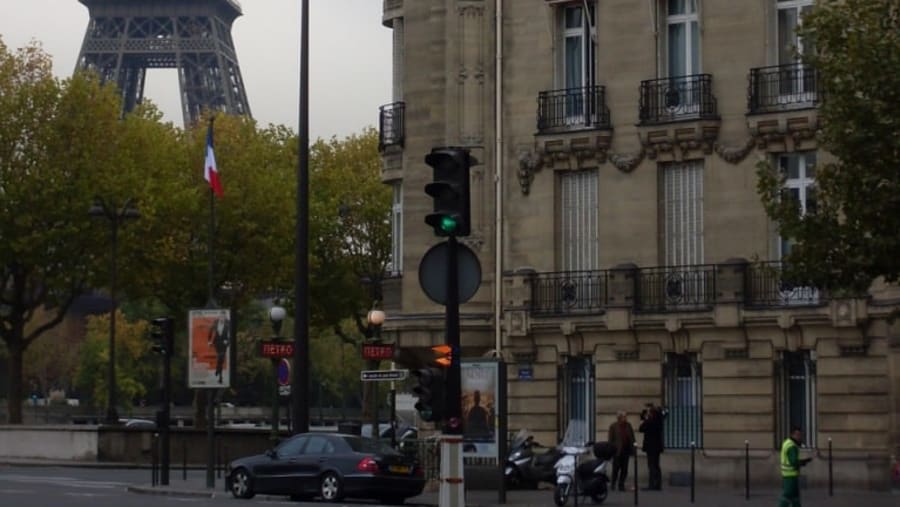
The tour ends at the wrought-iron lattice tower on the Champ de Mars in Paris, the Eiffel Tower, one of the most recognisable structures in the world. It was named after Gustave Eiffel, the engineer of this tower.