

Bucharest Landmarks and Historic Sights Tour
Get picked up by your Bucharest guide/driver from your accommodation and head out for the tour.
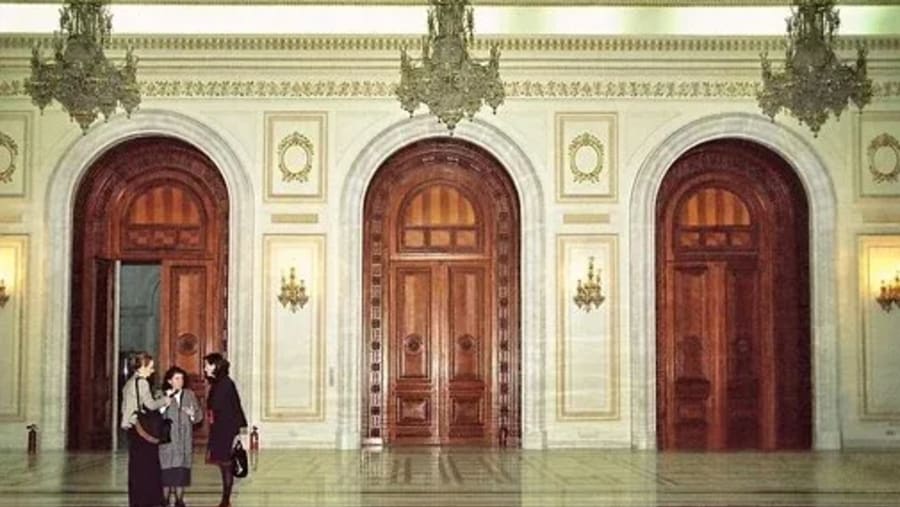
Visit the Palace of Parliament, known as the House of the People during communist times. It is the second-largest building in the world and was constructed at the end of the 1980s together with the grand boulevards in the downtown area. For its construction, 21 churches, 40,000 houses, and 1 stadium were demolished. The interior is worthy of a 19th-century palace, with marble-plated rooms, silk tapestries, and 2,800 chandeliers. It is considered the best building in the world made entirely using Romanian workforce and materials.
Explore the Village Museum. Showing traditional Romanian households from centuries ago, it is the second-largest outdoor museum in Europe. Each individual house comes from a different area of Romania, making this museum special, as visitors get a good perspective of Romania while still not leaving Bucharest.
Stop by the Patriarchal Church. As the main church of the country, one can say it is the equivalent of the Vatican for the Catholic Church. The 400-year-old church displays great frescoes of Judgment Day on its front wall, while the interior has gold decoration worthy of the most important church in the country. Next to it stands the splendid building of the old Parliament of Romania.
Between these landmarks, you will see the beautiful Victory Avenue, the oldest boulevard in the city. In the center, stop to hear about Revolution Square, the place from where Ceausescu held his famous last speech. The memorial and nearby buildings still bear the scars of the bullets fired in December 1989.
Also drive alongside the Dambovita River, heading to the Military Academy, where the communist-made bas-relief shows the strong propaganda of those days.
Optionally, you can also have the chance to visit the Old Princely Court, established by Prince Vlad the Impaler, known worldwide as Dracula, and, close to it, the old commercial area named Lipscani.
View the Kretzulescu Church, a monument synthesizing in its architecture the art of the Brancoveanu epoch. It was built in 1720-1722 through the care of Great Chancellor Iordache Kretzulescu and his wife, Safta, one of the daughters of Constantin Brancoveanu. The interior wall painting was realized in 1859-1860 by Gheorghe Tattarescu. Erected between 1857 and 1869 according to the plans of architect Al. Orascu, who was helped in decorating the exterior by Karl Storck, this massive construction houses the oldest institution of university education in Bucharest.
Gaze upon the Romanian Athenaeum, one of the most representative buildings of the capital, erected in 1886-1888 following the plans of the French architect Albert Galleron. The necessary sums for the erection of the building were raised by public subscription. Its exterior architecture represents a combination of styles, including neo-classic, baroque, and ionic.
See the Arch of Triumph, inaugurated on 1 December 1936. It glorifies the bravery of the Romanian soldiers who fought in the First World War, while also celebrating the 1918 Union of Romanian provinces. Designed by architect Petre Antonescu, the monument is 27 m high.
Witness the National Art Museum, located in the building of the former Royal Palace. After more than 10 years of restoration, it preserves an extensive treasure painted by Rembrandt, Veneziano, Monet, Sisley, El Greco, Breughel, and Rubens. During the Romanian Revolution in December 1989, 448 works of art were destroyed or went missing, and another 716 were damaged.
Then, return to your accommodation in Bucharest.