South Korea · Walking Tours

3-Hour Walking Tour in Busan with Seokbulsa Temple and Maaebul

3 Hours Round trip from Busan Moderate pace

The journey

Trip highlights
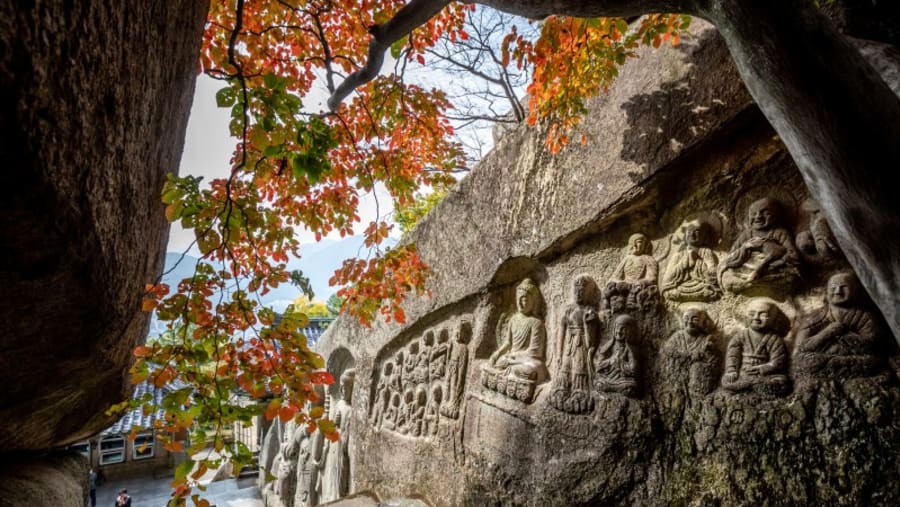
  • 01 Visit Seokbulsa Temple, famous for its beautiful Buddha statue carved on the wall
  • 02 Walk around the beautiful Geumjeongsan Mountain in the spirit of Buddha
  • 03 See the famous Maaebul rock-carved Buddha image at Huejeongam
  • 04 Follow a scenic walking route from Seokbulsa Temple to Geumgang Park

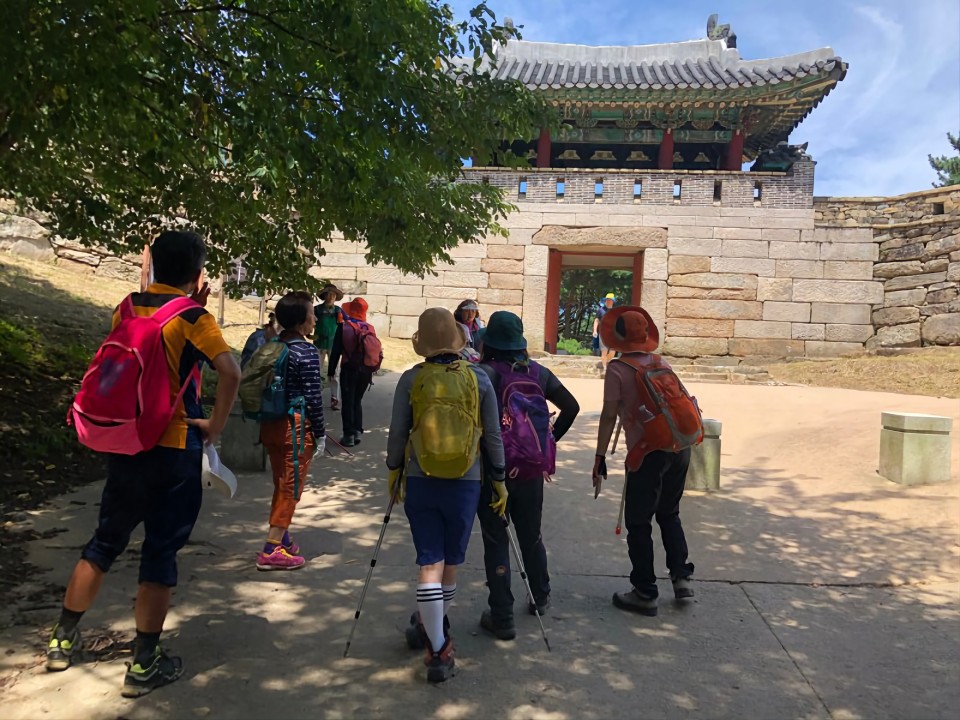
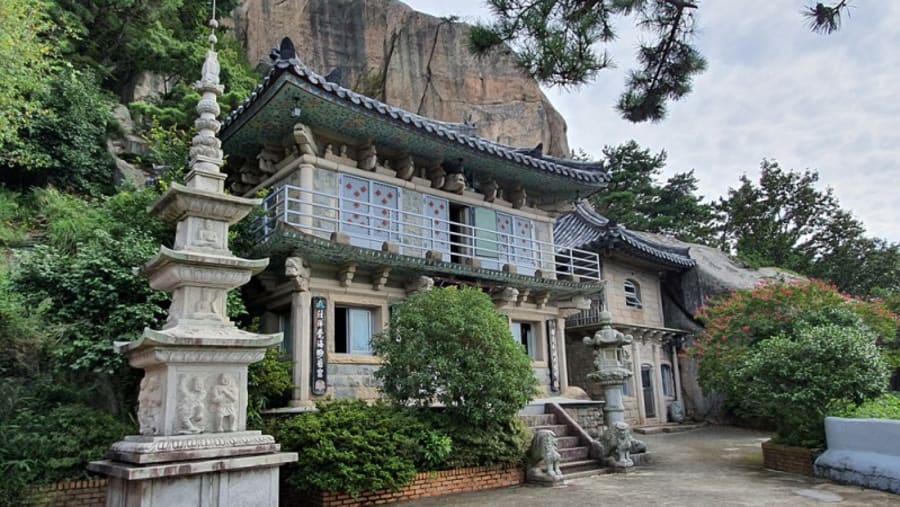
Walk from Mandeok Station to Seokbulsa Temple and explore this beautiful temple and its surrounding landscape. Continue through Geumjeongsan Mountain toward the south gate of Geumjeongsanseong Fortress, then head to Huejeongam to admire the famous Maaebul carved into the rock wall. The tour ends with a walk down to Geumgang Park, with the option to continue on to Oncheonjang subway station.

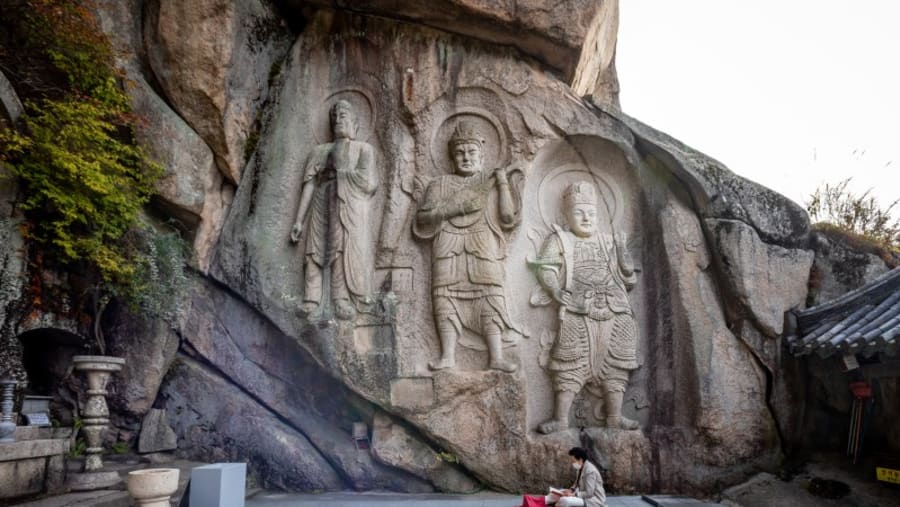
Huejeongam is famous for Maaebul, a Buddha image carved into a rock wall.

From the itinerary

At a glance

What this trip includes

Duration 3 Hours
Tour type Shared
Activity level Moderate
Accommodation Not included
Transport Not included
Wheelchair access Not applicable
Languages English

Day by day

The itinerary

1
Day 01

Seokbulsa Temple Walk to Geumgang Park

  • Meet at Exit 2 of Mandeok Station, where I will be holding a flag.
  • Travel from Mandeok subway station to Seokbulsa Temple in about 40 minutes.
  • Spend about 30 minutes at Seokbulsa Temple as you explore the temple and its surrounding landscapes.
  • Walk from Seokbulsa Temple to the south gate of Geumjeongsanseong Fortress in about 40 minutes.
  • Continue from the south gate of Geumjeongsanseong Fortress to the cable car stop, Huejeongam, in 20 minutes. Huejeongam is famous for Maaebul, a Buddha image carved into a rock wall.
  • Walk from Huejeongam Hermitage to Geumgang Park in about 30 minutes.
  • End the tour at Geumgang Park.
  • Head to Oncheonjang subway station.
Seokbulsa Temple, Geumjeongsan Mountain ridgeline, Maaebul at Huejeongam, Geumgang Park

Where this trip takes you

Seokbulsa Temple, Geumjeongsan Mountain ridgeline, Maaebul at Huejeongam, Geumgang Park

The fine print

Trip details

What's Included

  • English and Chinese-speaking South Korean tour guide
  • Fold trekking poles (free rental)
  • Towels
  • A bottle of water
  • Korean snacks
  • A refrigerator magnet to commemorate your trip to Busan
  • Heater pack (winter)

What's Not Included

  • Traveller's insurance
  • Cable car fare
  • Meals and alcohol

Know before you go

  • Maaebul is found in India, China, Japan, and Korea, and its methods vary, including embossing (relief), engraving, and line carving. It is one of the most common Buddhist sculpture styles in Korea. Experts believe that the Maaebul style originated from the cave temples of ancient India in the 2nd and 3rd centuries AD and was brought to China and Korea through the West. In temples such as the Ajanta Caves or Ellora Caves in India, large rock walls were carved out to create spaces for meditation, and Buddha or Buddhist icons were carved on the inner walls. In the early days, the biography of Buddha and stories of his past lives were placed on the cave walls, but this gradually developed into a method of engraving Buddha images.
  • Maaebul in Korea first appeared in the coastal region of Chungcheong-do around the 7th century. The representative statue of the three Buddhas in Yonghyeon-ri, Seosan, famous for "Baekje's smile" (National Treasure No. 84), has been widely known since the Three Kingdoms period. Hyujeongam Maae Trinity Buddha is a Buddha statue made in the 1950s and shows a very realistic sculptural technique in Busan. From the Geumgang Cable Car stop, follow the hiking trail for about 20 minutes to reach Hyujeongam. Behind the temple hall, there are three Buddhas of Maae engraved on the rock that surrounds them like a folding screen. When the Hall of Fame in Hyujeongam was extended in the 1940s, it was a quiet valley with thick fog and no footsteps. It is said that in the old days, this place was where people who had failed in life came to commit suicide.
  • Compared to other temples and hermitages on Mt. Geumjeong, Seokbulsa has a very short construction history. It was founded by the Buddhist monk Jo Il-Hyeon in 1930, during the Japanese colonial period, and a stone Buddha was built on the rock wall while he was governor. The temple was named Seokbulsa because it looked as though a stone Buddha was connected between the rocks, as if linked by carvings. People usually call it "Byeongpungam Seokbulsa Temple" because of its spectacular scenery.

Logistics

Meeting & route

Meeting point
Exit 2 of Mandeok Station
Tour start
Busan, South Korea
Tour ends at the same location as the start point.
End of the journey

Your 3 hours finish where they began, in Busan.

Watch the tourHQ film Watch the film

Create your own adventure

Can't find the perfect tour? Tailor your dream trip.

  • Tell us your destination, dates and group size.
  • Our travel experts and local guides design a tailored itinerary, just for you.
  • Enjoy your trip with peace of mind, knowing everything is taken care of.
Plan my holiday

Say goodbye to travel stress.

Starting from

USD 110 /person
Book This Tour

When

Travellers

Total