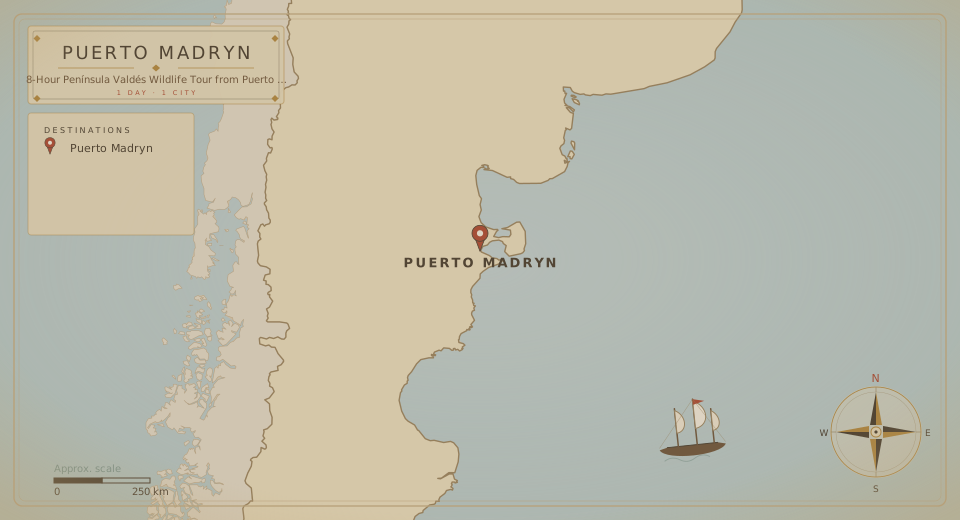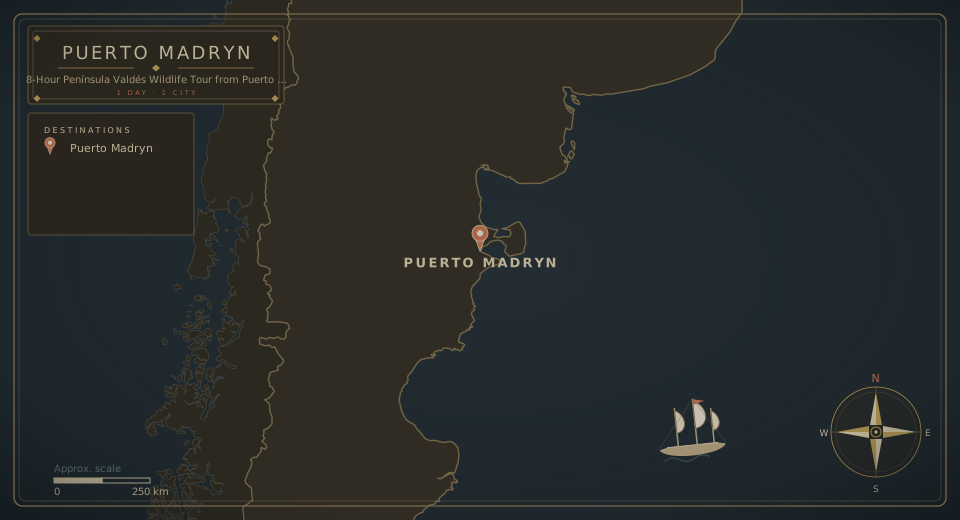


Day 01
Península Valdés and Whale Watching from Puerto Madryn
- Meet your tour guide at 8:00 a.m. at the agreed-upon location and depart from the city of Puerto Madryn դեպի the north, following Provincial Route No. 2. Arrive at the control post, where the entrance fee is paid, approximately 40 km from Madryn.
- Begin discovering the enchantments of the Peninsula, including its landscape, flora, and fauna. At this point, you are on the Carlos Ameghino Isthmus, a narrow strip of land that connects the Peninsula with the continent.
- Stop at the Carlos Ameghino Interpretation Center, which provides information about the Peninsula's ecosystem, Patagonia's land animals, the marine fauna species concentrated in great numbers around the Peninsula, and the flora and history of the region. See a whale skeleton, some animals, and a little history about the Peninsula's first settlers.
- Climb a tower to view the narrowest part of the isthmus. To the south, see the waters of Gulf Nuevo, and to the north, the waters of Gulf San José. You can also see Bird Island, an important nesting site for marine birds. Unfortunately, the island is a protected area, and visitors are not permitted.
- Continue to Puerto Pirámides, the only village on the Peninsula and the only departure point for marine fauna boat trips. The beaches here are surrounded by cliffs that resemble pyramids, which is how the village got its name. Stop here for approximately 2 hours. If you have selected this option, enjoy the unforgettable experience of sailing the waters of Gulf Nuevo, or simply take in the enchantments of the village. Boat trips operate on vessels of varying capacities, from 5 to 70 passengers, and last approximately one and a half hours.
- From June to December, spot Southern Right Whales in the gulf. These curious and slow-moving animals sometimes swim beneath the boat, allowing you to observe their movements and hear their breathing. With luck, you may witness the wonderful spectacle of breaching or at least a flap of the tail. From January to March, Marine Fauna Cruises are available, as the whales migrate to Antarctic seas.
- Sail first to the sea lion colony of Punta Pirámides. This colony of Southern Sea Lions allows you to observe the activity that dominates the colony according to the time of year, including the formation of harems, mating, and births.
- Visit the Island of Cormorants and the Precipice of the Birds, home to colonies of Rock Cormorants and Neotropic Cormorants.
- Travel to caves filled with fossils. If the weather permits, you may also see Dusky Dolphins. This cruise also offers the option to go snorkelling. The boat stops for about 20 minutes and provides the necessary equipment, including a wetsuit, mask, and fins, so you can enjoy this unforgettable experience.
- Leave Puerto Pirámides and continue the excursion along Provincial Route No. 2. On the way, pass by the Great Salt Lake and Small Salt Lake, the most important depressions in South America. They are 42 and 35 meters below sea level, respectively. Depending on the time of day and cloud cover, they may appear pink due to their chemical composition and the incidence of sunlight.
- Head to the southeastern end of the Peninsula and arrive at Punta Delgada, an old naval station. From here, observe one of the greatest concentrations of elephant seals. Along the west coast, continue to another viewpoint where you can see even more elephant seals.
- Visit Caleta Valdés, an exceptional geological formation consisting of a thin strip of land running parallel to the coast and enclosing a portion of the sea. Connected to the surrounding sea through a small mouth, its calm waters, naturally isolated beaches, and steep cliffs make it an excellent place for elephant seals.
- Descend the cliff by stairs to observe the elephant seals on the beach. Caleta Valdés also has a Magellan Penguin colony of several hundred individuals. Between October and March, depending on road conditions and fauna migrations, you may also visit Punta Norte, a breeding site for elephant seals and sea lions. Orcas can be seen here during high tide in February, March, and April, when they feed on young sea lions. They can also be seen in September, October, and November off the coast of Caleta Valdés, feeding on young elephant seals.
- Return to the city of Puerto Madryn.
Note: The time and order of places may change depending on the season, weather, or group interest.