

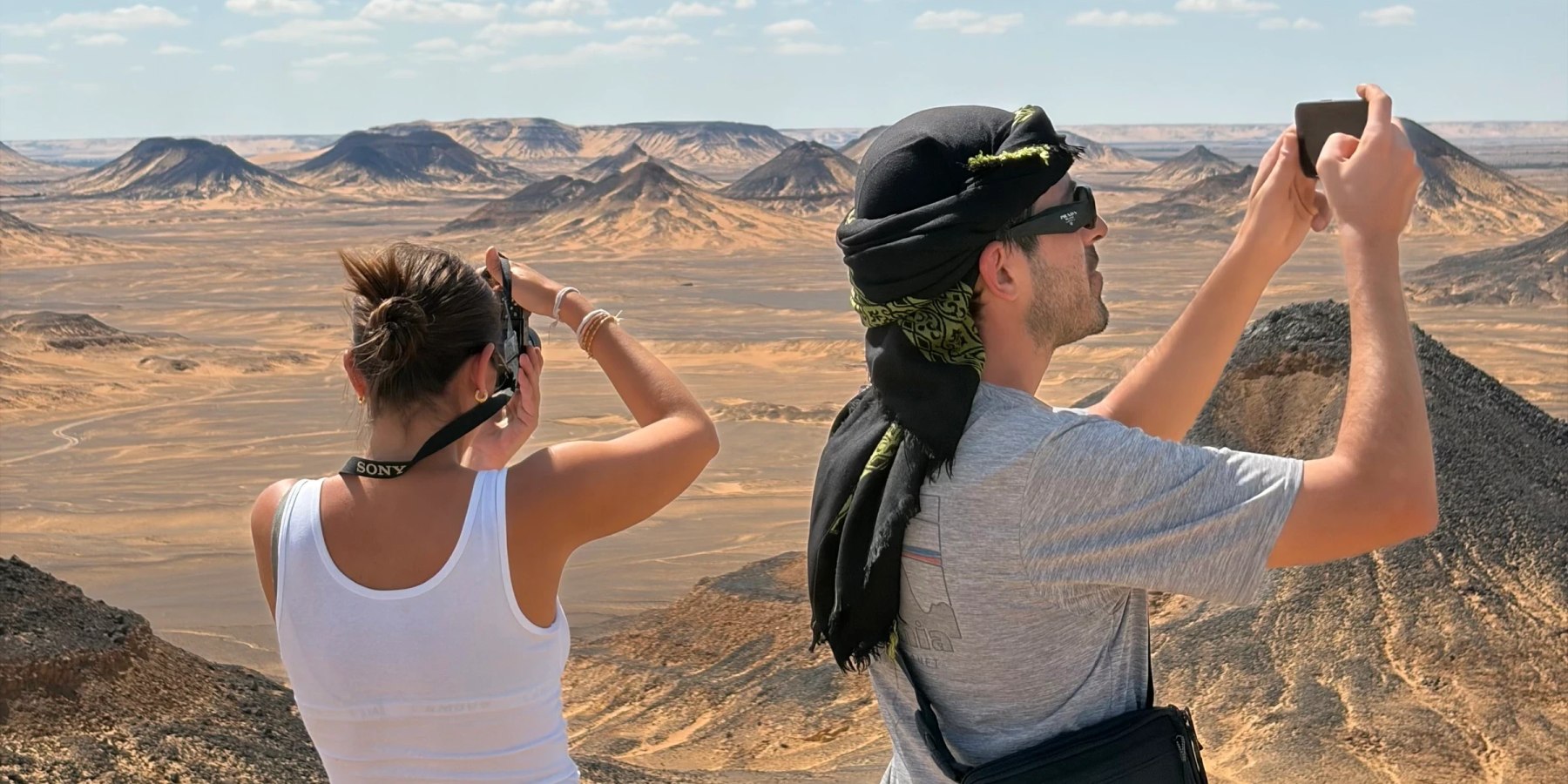

What to Pack for a White Desert Safari
Packing for the White Desert is different from packing for Cairo, Luxor or a Red Sea resort. During the same journey you may experience a warm road transfer, strong afternoon sun, wind in an open valley and a surprisingly cold night at camp. The goal is not to bring more luggage. It is to bring the right small set of useful items.
Clothing for the day
Choose light, breathable clothing that covers the skin without restricting movement. Long trousers are practical around sand, rocks and camp. A comfortable shirt with sleeves provides better sun protection than relying only on sunscreen.
Avoid clothing that you do not want exposed to dust. Desert travel is beautiful but not spotless, especially when entering and leaving a 4x4 or sitting near a campfire.
Warm layers for the night
Even when the day is warm, temperatures can fall quickly after sunset. Pack a fleece, hoodie or warm sweater plus a wind-resistant outer layer. In December and January, bring a proper jacket, warm socks and a hat.
Ask what blankets or sleeping bags the operator provides. Do not assume that basic camping bedding will match your personal tolerance for cold.
Footwear
Comfortable closed shoes are the safest all-round choice. You may walk on soft sand, gravel and uneven rock. Heavy hiking boots are not necessary for a standard safari unless your program includes long hikes.
Sandals can be useful at camp, but they should not be your only footwear. Pack spare socks because fine sand finds its way into almost everything.
Sun and wind protection
Bring sunglasses with good UV protection, high-SPF sunscreen and a hat that stays secure in wind. Lip balm is useful because dry air affects many travelers.
A light scarf or buff protects the face and neck from sun, dust and wind. It also takes very little space in a daypack.
Personal health items
Carry all prescription medication in your hand luggage, not in a suitcase stored elsewhere. Include basic pain relief, any allergy medicine you use, tissues, wet wipes and hand sanitizer.
If you have asthma, allergies, diabetes or another condition that affects remote travel, tell the operator before departure. Bring more essential medication than the exact amount needed in case the return time changes.
Electronics and photography
A fully charged power bank is one of the most useful items. Electricity at a mobile camp may be limited or unavailable. Bring the correct cables and protect devices from sand in a sealable bag.
Photographers should carry spare batteries and memory cards. Cold nights can reduce battery performance, so keep batteries protected. A small tripod is useful for night photography, but confirm luggage space if your equipment is large.
Water and food
A professional tour should explain whether drinking water and meals are included. It is still helpful to carry a reusable bottle and a small personal snack, especially if you have dietary needs.
Tell the team about allergies, vegetarian requirements or foods you cannot eat before the trip. Do not wait until dinner is being prepared in the desert.
Toiletries and camping items
Pack a toothbrush, small toiletries, toilet paper or tissues and a compact towel if desired. Facilities vary between programs. Some camps have a portable toilet arrangement, while others are more basic.
Ask for the exact setup before booking. Clear expectations are essential for comfort.
Documents and money
Carry the passport or identification requested by the operator because permits and checkpoints may require traveler details. Keep a small amount of Egyptian cash for personal purchases and tips.
Do not carry unnecessary valuables. The desert itself is safe when properly organized, but sand and repeated vehicle transfers can damage delicate items.
Choosing the right bag
Use a small soft overnight bag or duffel rather than a large hard-shell suitcase. Space in a 4x4 is shared with guests, water, food and camping equipment.
Ask whether your main luggage can be stored safely in Bahariya Oasis. Keep essentials, medication and electronics with you.
Seasonal adjustments
In winter, add thermal layers and warmer sleepwear. In spring, be ready for stronger wind. In summer, prioritize sun protection, hydration and light clothing, and discuss whether the itinerary is appropriate for the heat.
Local advice before departure
Eyad Elzaghandi and the Egypt Desert Trips team confirm camp arrangements and the expected conditions with guests before departure. A final check with the local team is more useful than relying on a generic packing list alone.
For a detailed example of a two-day journey:
https://egyptdeserttrips.com/booking/2-day-white-desert-tour-from-cairo/
View additional desert itineraries:
https://egyptdeserttrips.com/tours/
Pack light, prepare for temperature changes and ask specific questions about the camp. The right preparation lets you focus on the landscape instead of worrying about what you left in Cairo.