

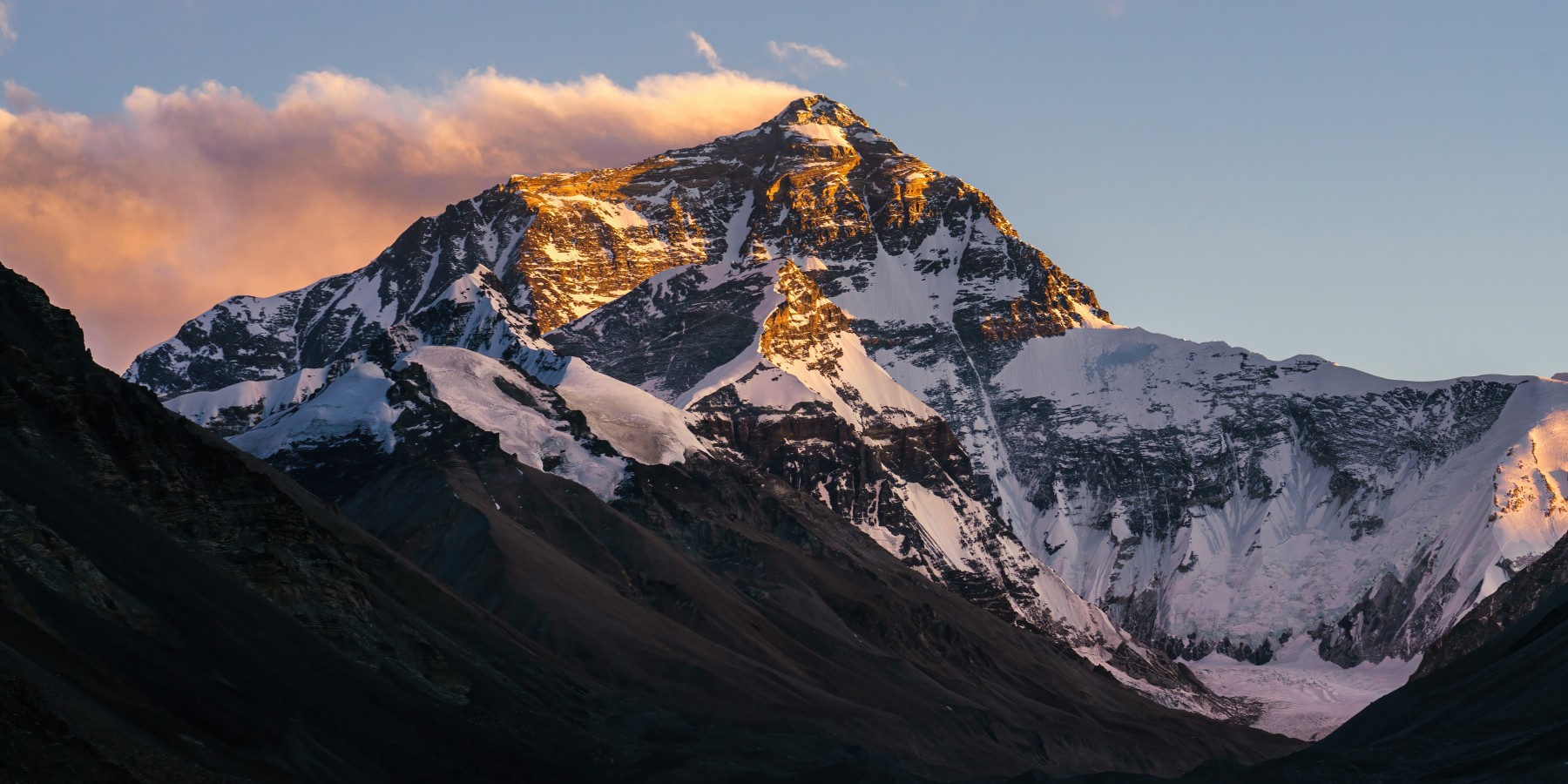

Everest Beyond the Summit: What Fifteen Seasons in the Khumbu Have Taught Me
I still remember that during the first time a guest asked me, right there at Lukla airport with the props still spinning behind us, "So we're climbing Everest today, right?" He wasn't joking. He genuinely believed that walking to Base Camp and climbing to the summit were the same trip, just different amounts of walking.
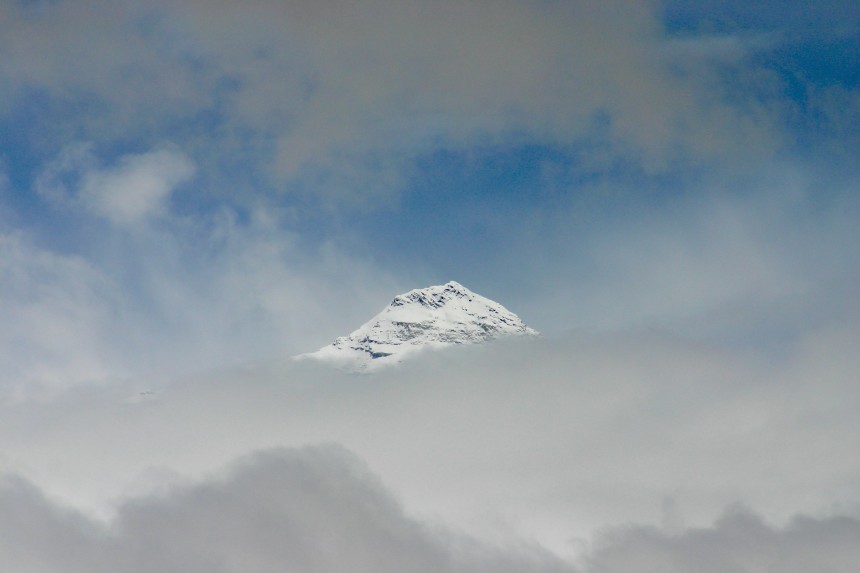
I had to explain, as gently as I could over the noise of the runway, that trekking to Everest Base Camp and climbing Mount Everest are two completely different undertakings — different training, different permits, different skills, different risks entirely. One is a demanding but achievable walk that thousands of ordinary, reasonably fit people complete every year. The other requires years of technical mountaineering experience, rope and ice-axe skills, high-altitude climbing permits that cost tens of thousands of dollars, and a tolerance for risk that most people, quite sensibly, don't have. I've been asked some version of that question more times than I can count since, and I never mind explaining it — but it tells you something important: most people's idea of Everest comes from headlines about summits, not from the mountain itself.
After more than a decade guiding and organizing treks through the Khumbu, I've stopped thinking of Everest as a "highest point on Earth" kind of story. To me it's a place, a people, and a slow education that never really finishes.
It's Not Just a Number
Everest measures 8,848.86 meters. Most trekkers can recite that figure before they've even booked their flight to Lukla. But I've watched that number mean less and less to people the deeper they go into the Khumbu. By day four or five of a trek, nobody's talking about meters anymore. They're talking about the tea house owner who insisted they eat a second helping of dal bhat, or the yak train that nearly walked them off the trail, or how cold their hands got at 4:30 in the morning waiting for a sunrise.
The mountain sits in the Mahalangur section of the Himalaya, straddling the border between Nepal's Khumbu region and the Tibetan plateau. On our side, it rises out of Sagarmatha National Park, a UNESCO World Heritage site, surrounded by Sherpa villages, glacial rivers, and monasteries that have stood for centuries. That's the Everest I want people to know — not a statistic, but a whole world built around one mountain.
Three Names, Three Ways of Seeing the Same Peak
Something I bring up on almost every trek: Everest wasn't "discovered" by the West. It was named by us, long before any surveyor arrived with a theodolite.
In Nepali, we call it Sagarmatha — "Forehead of the Sky." Across the border, Tibetans call it Chomolungma, "Goddess Mother of the World," a name that carries real reverence, not conquest. The English name came later, in the 1800s, after the Great Trigonometric Survey of India, named for Sir George Everest — who, interestingly, apparently thought local names should have been kept.
I like telling guests this because it reframes the whole trip before it even starts. You're not walking toward a British colonial survey marker. You're walking toward a goddess, according to the people who've lived under her for a thousand years. That changes how you walk.
A Mountain Born Underwater
Here's a fact that stops people in their tracks every single time I share it on the trail: there are marine fossils near the summit of Everest. The rock up there was once the floor of an ancient sea called the Tethys, before the Indian tectonic plate slammed into Eurasia and pushed the ocean floor five and a half miles into the sky. The Himalayas are still rising today, just a few millimeters a year — imperceptible to us, but Everest is, quite literally, still growing.
I've had guests go quiet for a full minute after hearing that. It's one thing to see a photo of Everest. It's another to realize you're standing on what used to be the bottom of the ocean.
The Climb Everyone Pictures — and the Trek Almost Everyone Actually Takes
Back to that Lukla conversation, because it comes up constantly and I think it's worth being direct about here too.
Climbing Everest means joining an expedition with weeks of acclimatization rotations through the Khumbu Icefall, the Western Cwm, and the death zone above 8,000 meters, using fixed ropes, supplemental oxygen, and a team of highly experienced climbing Sherpas. It typically costs anywhere from $35,000 to well over $100,000, takes about two months, and carries real, well-documented risk.
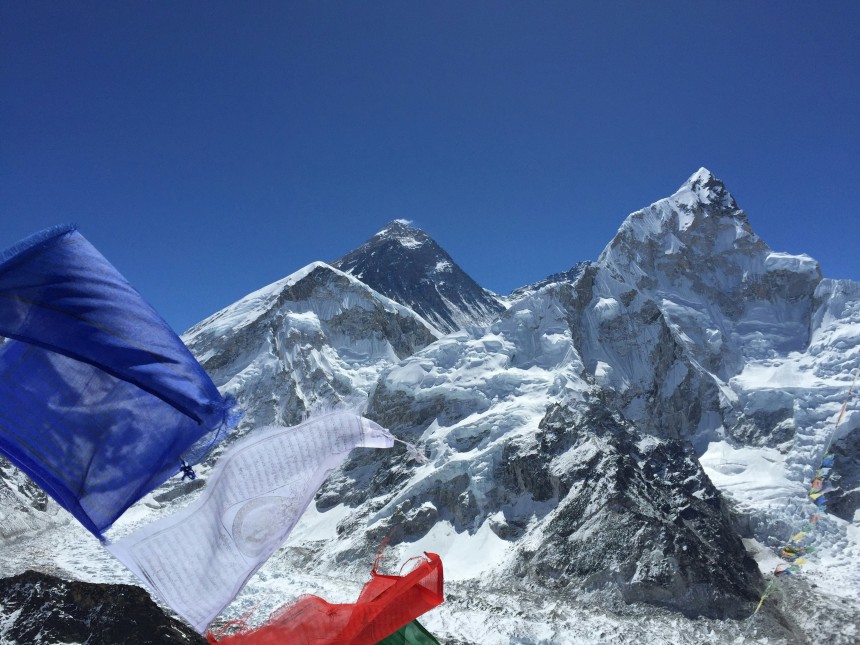
Trekking to Everest Base Camp is a twelve-to-fourteen-day walk on well-established trails through Sherpa villages, reaching roughly 5,364 meters at Base Camp itself (you don't set foot on the mountain — you're looking at it from the valley floor). It requires good fitness, sensible acclimatization, and respect for altitude, but no ropes, no oxygen, no technical climbing skill.
I explain this distinction almost every season because the confusion is so common, and honestly, I don't blame people — the word "Everest" gets used loosely in travel marketing everywhere. But knowing the difference matters. It changes what you train for, what you pack, what you should expect from your body at altitude, and what you're actually signing up for.
The People Who Make the Mountain What It Is
If you ask me what I remember most from fifteen years of leading groups through the Khumbu, it's never really about the mountain in isolation. It's the Sherpa families who've hosted us in Namche, Khumjung, Pangboche, and Thame. It's the elderly woman in a tea house who, without being asked, brought an extra blanket to a shivering trekker in the middle of the night. It's watching kids sprint across a swaying suspension bridge on their way to school like it's nothing, while a first-time trekker white-knuckles the same crossing behind them.
Sherpas are often reduced, in outside coverage, to their role on expeditions — as guides, climbers, rope-fixers, rescue teams. That work deserves enormous respect; it genuinely is skilled, dangerous, and essential. But it's only part of who they are. Their villages carry generations of Buddhist tradition, farming adapted to brutal altitude, and a form of hospitality that, frankly, I've never seen matched anywhere else I've traveled.
At Tengboche Monastery, I always try to time our arrival for the morning prayer ceremony if the group is willing to wake early enough. Monks chanting inside, prayer wheels turning outside, snow peaks silent above — I've led that walk more times than I can count and it still gets me every time. I always ask guests to dress modestly there and to ask before photographing anyone. It's someone's living faith, not a photo backdrop.
You Don't Have to Reach Base Camp to Feel This
Not everyone who comes to me wants — or is able to do — the full Base Camp trek, and that's completely fine. Some prefer shorter walks to viewpoints like Hotel Everest View, where you get that first jaw-dropping look at Everest without the multi-day commitment. Others take a scenic mountain flight, and I've had older guests or people with limited mobility book helicopter tours just to see Everest up close. There's no single "right" way to experience this region.
What People Actually Bring Home
After all these years, I've noticed a pattern in how people talk about their trip once they're back home. Almost nobody leads with "I reached Base Camp." They lead with the small stuff — the tea house owner's laugh, the sound of yak bells drifting through a valley at dusk, the moment Everest, Lhotse, and Ama Dablam all caught the first light at once and the whole group just stopped talking.
That, to me, is the real gift of this place. Not the summit. Not even Base Camp, really. It's what the mountain quietly does to your sense of scale — how a two-week walk through Sherpa country has a way of putting the rest of your life back into perspective.
I've been doing this work for a long time now, and I still feel that pull every single season. If you're thinking about coming, come with curiosity about the people and the place, not just the peak. That's the Everest that stays with you.
Rajan Pandit
Trekking Planner and a Guide
Blissful Himalayas Treks and Tours
Kathmandu, Nepal
www.blissfulhimalayas.com