

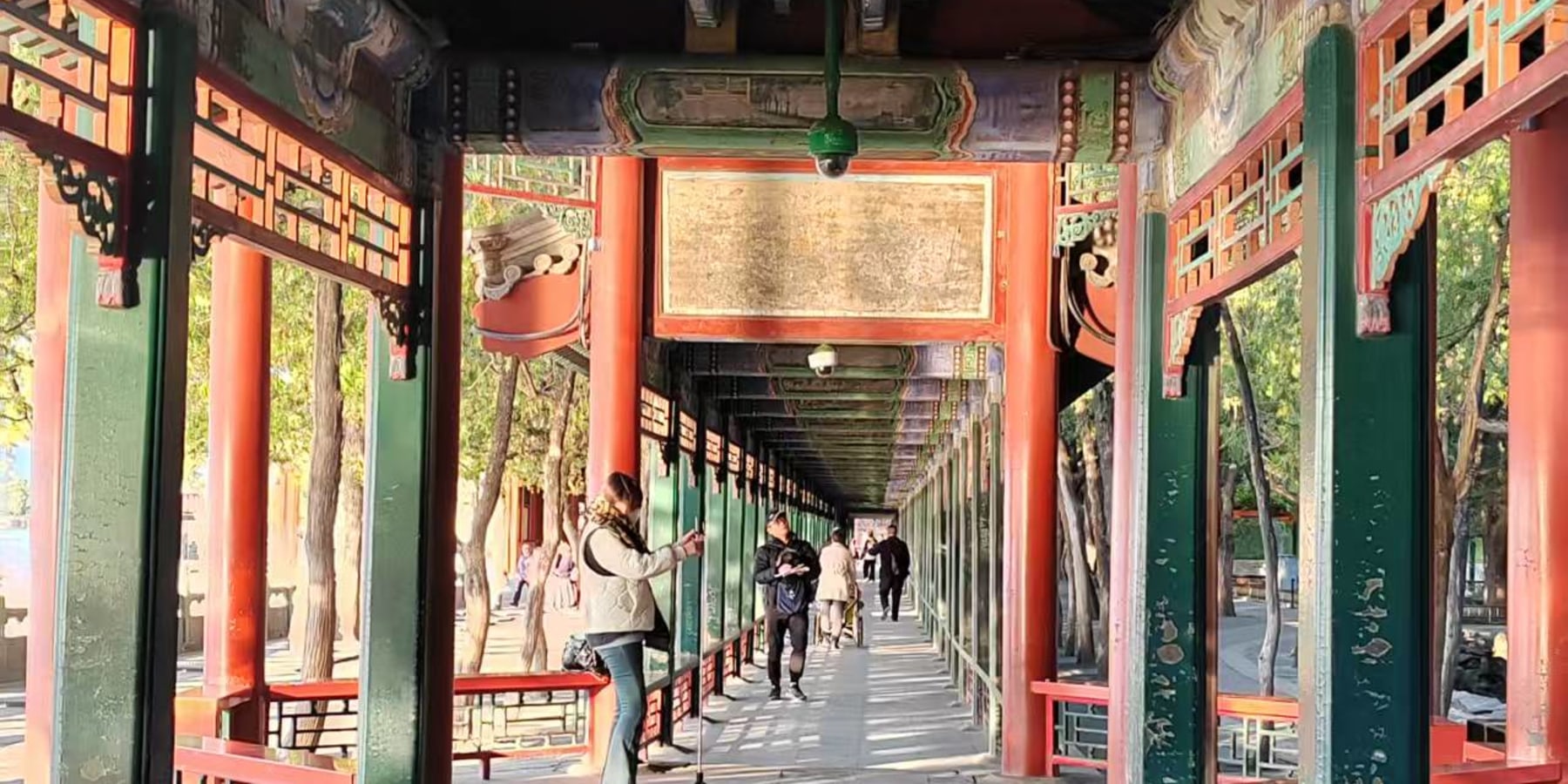

The Summer Palace is one of the most well-preserved imperial gardens in China and a UNESCO World Heritage Site. Located in northwest Beijing, it was originally designed as a royal retreat where emperors and their families could escape the summer heat while enjoying nature, art, and leisure.
The garden is centered around Kunming Lake and Longevity Hill, which together form a harmonious landscape inspired by traditional Chinese philosophy. Walking through the Summer Palace, visitors encounter elegant pavilions, temples, bridges, and corridors that are carefully positioned to blend with the natural surroundings. The Long Corridor, decorated with thousands of painted scenes, is especially famous for its artistic detail and historical stories.
Beyond its beauty, the Summer Palace also reflects important moments in Chinese history. It played a significant role during the late Qing Dynasty and is closely associated with Empress Dowager Cixi. Many structures were rebuilt after periods of destruction, showing both resilience and continuity in Chinese imperial culture.
A visit to the Summer Palace offers more than visual enjoyment. It provides insight into traditional garden design, where nature and architecture are balanced to create harmony. Seasonal changes add different moods to the landscape, from blooming flowers in spring to frozen lake scenes in winter.
With the guidance of a knowledgeable local guide, visitors can better understand the cultural symbolism, historical background, and daily life of the imperial court. For travelers seeking a mix of history, culture, and natural beauty, the Summer Palace remains one of Beijing’s most rewarding and relaxing destinations.