

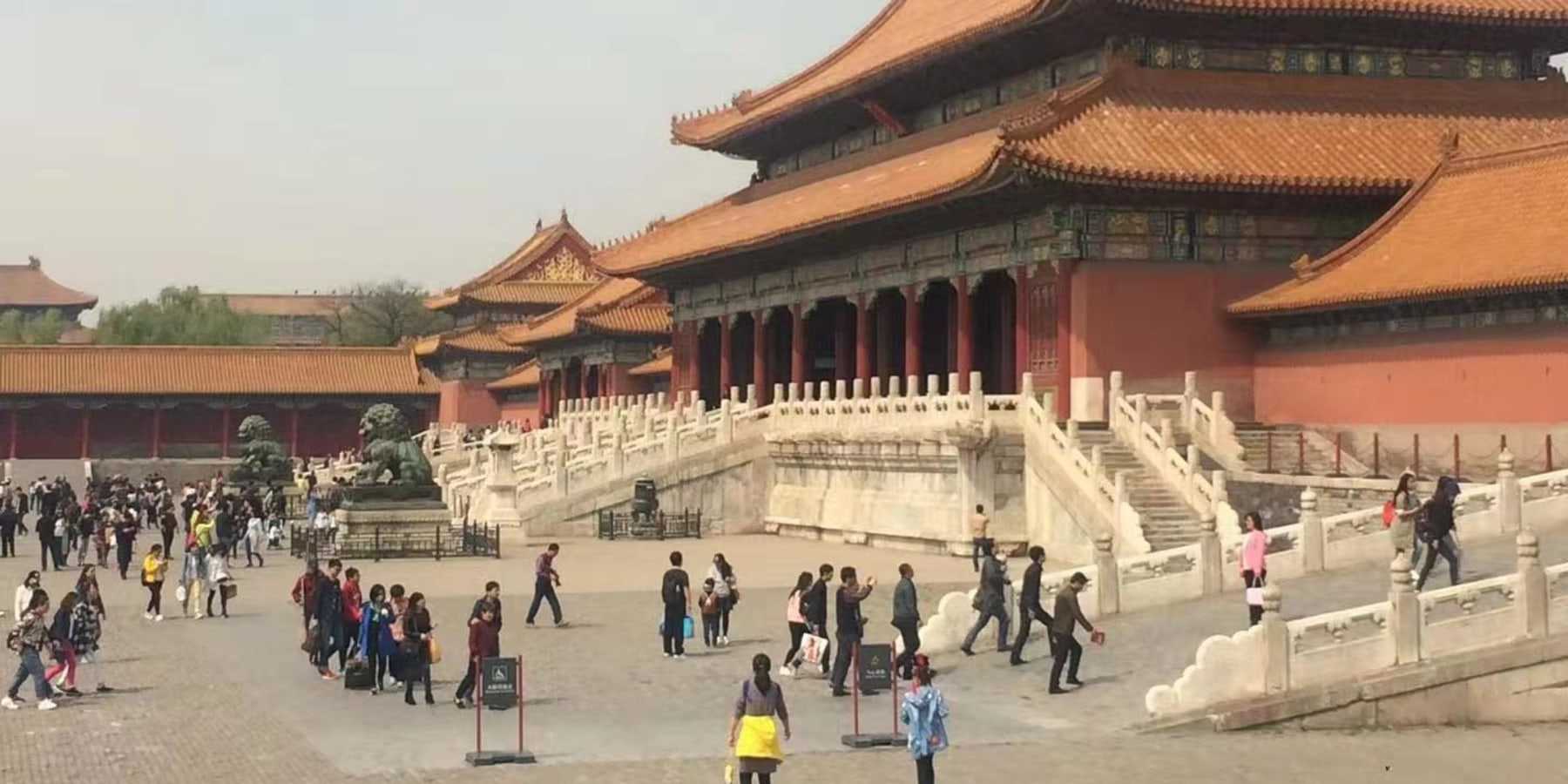

The Forbidden City, officially known as the Palace Museum, is one of the most iconic historical landmarks in China. Situated at the center of Beijing, it was the imperial residence of 24 emperors during the Ming and Qing Dynasties, serving as the political and ceremonial heart of the empire for nearly five centuries.
Covering an area of more than 180 acres, the Forbidden City consists of over 8,000 preserved buildings arranged along a strict north–south axis. This layout reflects ancient Chinese cosmology and the importance of order, hierarchy, and balance. Grand halls such as the Hall of Supreme Harmony were used for major state ceremonies, while the Inner Court served as the private living area for the imperial family.
The architecture is distinguished by red walls, golden roofs, and intricate wooden structures, each element carrying symbolic meaning related to power and authority. Decorative details, including dragon motifs and carved beams, reveal the craftsmanship and artistic standards of imperial China.
Today, the Forbidden City functions as a world-class museum housing an extensive collection of imperial artifacts, paintings, ceramics, and historical documents. Due to its popularity, visitor numbers are limited daily, making advance planning essential.
With a professional guide, visitors gain deeper insight into palace life, court rituals, and historical events that shaped Chinese civilization. A guided tour helps transform the vast complex into a meaningful narrative, allowing travelers to fully appreciate its cultural and historical significance.