

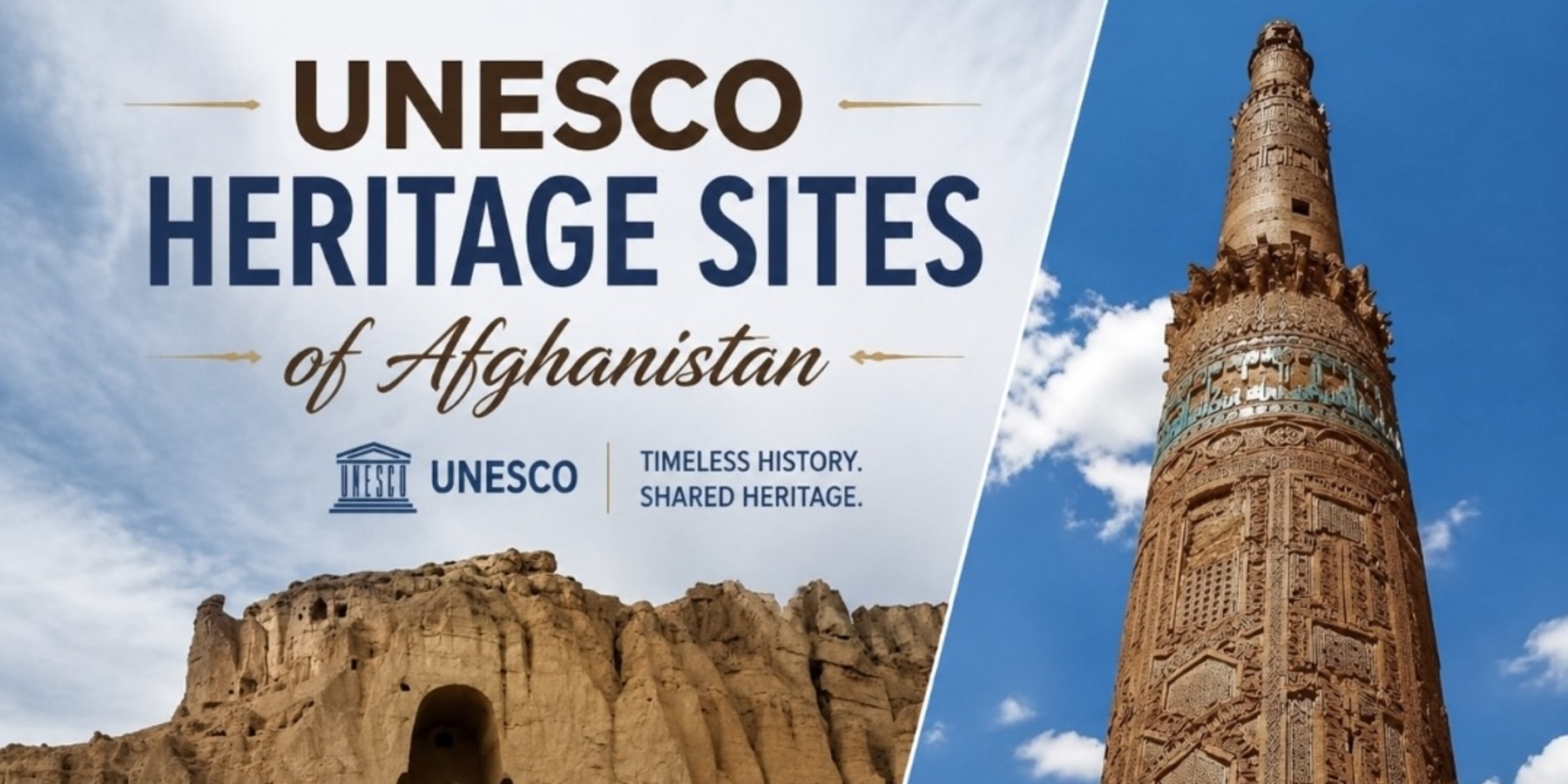

Afghanistan has stood at the crossroads of civilizations for thousands of years. From the caravans of the Silk Road to the empires of Central and South Asia, the country has preserved remarkable monuments that tell the story of humanity's shared past. Today, Afghanistan is home to two UNESCO World Heritage Sites, each offering visitors an unforgettable journey through history, culture, and breathtaking landscapes.
Whether you are a history enthusiast, an archaeology lover, or a traveler searching for authentic experiences, these extraordinary destinations deserve a place on your itinerary.
1. The Cultural Landscape and Archaeological Remains of the Bamiyan Valley
Nestled among the dramatic mountains of central Afghanistan, the Bamiyan Valley is one of the country's most iconic destinations. For centuries, it served as a major stop along the Silk Road, where merchants, monks, and travelers exchanged goods, ideas, and cultures.
The valley is best known for the two colossal Buddha niches that once held the world's tallest standing Buddha statues. Although the statues were destroyed in 2001, the site remains one of the most significant archaeological landscapes in Asia. Visitors can still explore:
The giant Buddha niches
Ancient Buddhist cave monasteries decorated with murals
Historic fortresses overlooking the valley
Traditional villages surrounded by spectacular mountain scenery
Bamiyan is also one of Afghanistan's most peaceful and scenic provinces, making it a favorite destination for cultural tourism and photography.
2. Minaret and Archaeological Remains of Jam
Hidden within the remote mountains of Ghor Province, the Minaret of Jam rises more than 65 meters above the surrounding valley. Built in the 12th century during the Ghurid Empire, it is considered one of the finest masterpieces of Islamic architecture.
Constructed entirely of baked brick, the minaret is decorated with intricate geometric designs, beautiful Kufic and Naskh calligraphy, and verses from the Holy Qur'an. Nearby archaeological remains reveal the existence of a once-prosperous medieval city that flourished centuries ago.
Reaching Jam is an adventure in itself, rewarding travelers with breathtaking landscapes and one of Afghanistan's most remarkable historical monuments.
Why UNESCO Recognizes These Sites
UNESCO protects places that possess Outstanding Universal Value—sites that are important not only to one nation but to all humanity.
Afghanistan's two World Heritage Sites represent:
The meeting point of Eastern and Western civilizations.
Outstanding achievements in Buddhist and Islamic architecture.
The country's vital role along the ancient Silk Road.
A rich cultural heritage that continues to inspire visitors from around the world.
Both sites are also listed as World Heritage in Danger, highlighting the importance of international cooperation and responsible tourism in preserving these irreplaceable treasures for future generations.
Responsible Travel
Visitors are encouraged to respect local customs, follow the guidance of experienced local guides, and help protect archaeological sites by avoiding damage to historical structures and leaving no trace behind.
Responsible tourism plays an important role in supporting local communities while helping preserve Afghanistan's remarkable cultural heritage.
Experience Afghanistan's Living History
Afghanistan offers far more than spectacular landscapes—it offers a journey through thousands of years of human civilization. From the peaceful valleys of Bamiyan to the majestic Minaret of Jam, every step reveals stories of ancient kingdoms, religious traditions, artistic brilliance, and cultural exchange.
For travelers seeking destinations beyond the ordinary, Afghanistan's UNESCO World Heritage Sites provide an authentic and unforgettable experience unlike anywhere else in the world.
History lives here—and every journey helps keep its story alive.