

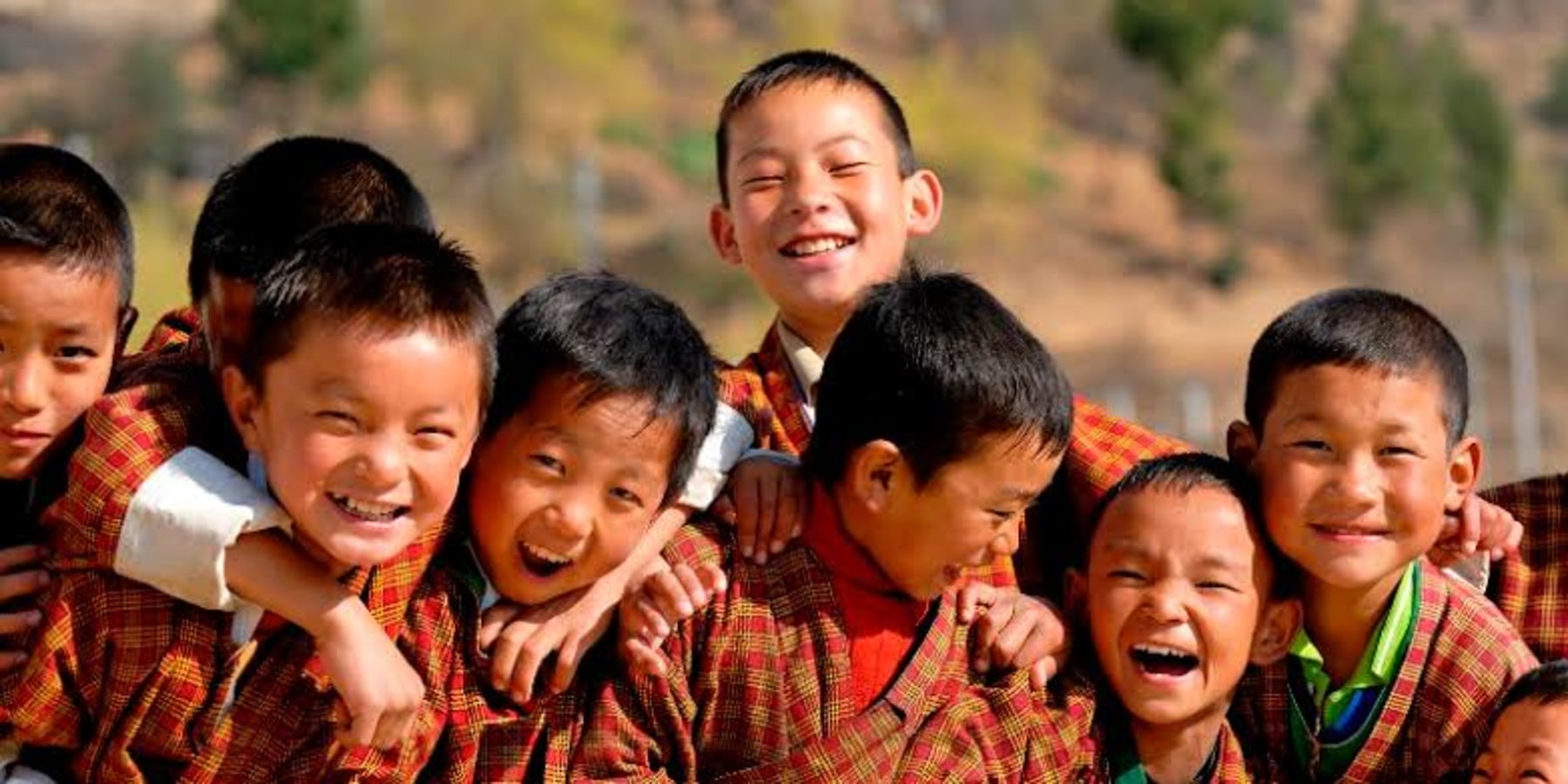

In the folds of the Himalayas, where prayer flags carry whispers to the wind and rivers chant ancient mantras, our kingdom of Bhutan—Druk Yul, the Land of the Thunder Dragon—has nurtured a quiet revolution. We did not set out to gift the world an ideology. Rather, we simply chose to remain faithful to what our ancestors always knew: that a life worth living cannot be tallied in coins alone. From this sacred conviction, Gross National Happiness was born—not as a mere policy, but as the very breath of our nation.
The Seed That Sprang from Our Soil
The story is often retold: in 1972, soon after the untimely passing of our beloved Third Druk Gyalpo, our young King Jigme Singye Wangchuck, barely sixteen, faced a foreign journalist’s question about Bhutan’s Gross National Product. His reply was not prepared by speechwriters. It arose from the marrow of our Buddhist heritage. “Gross National Happiness is more important than Gross National Product,” he said.
To us, this was not a dismissal of material progress but a profound reordering. We are a people who understand that all sentient beings seek happiness, and that lasting joy springs from a mind free of craving, a heart connected to community, and a life lived in harmony with nature. Our King simply gave this timeless understanding a modern voice. In time, the philosophy would be woven into the very fabric of our Constitution of 2008, which commands the state to “promote those conditions that will enable the pursuit of Gross National Happiness.” For us, this is a sacred covenant between the throne, the government, and every Bhutanese citizen.
The Architecture of Our Contentment: Four Pillars Rooted in Dharma
GNH is not a vague aspiration drifting among clouds; it stands upon four pillars, each deeply embedded in our cultural and spiritual landscape:
Equitable and Sustainable Socio-Economic Development: We believe that prosperity must reach the farthest village, the most humble home. Development that leaves behind the lonely widow or the highland herder is no development at all. Our King and government have always walked to the borders of our land, ensuring that modernity becomes a servant, not a master.
Preservation and Promotion of Culture: Our culture is the sacred vessel carrying our identity. The kira and gho we wear, the dzongkha language we speak, the masked dances of the Tshechu, and the etiquette of Driglam Namzha — these are not relics. They are the daily practices that ground us in who we are, reminding us that we belong to something ancient and enduring.
Conservation of the Environment: We do not see our forests as timber or our rivers as megawatts. They are the dwelling places of deities, the lungs of the earth, and the heritage of our grandchildren’s grandchildren. Our sacred mountains stand unclimbed, our forests nurtured as sanctuaries. This reverence has made us the world’s only carbon-negative country, a fact we hold not in boastfulness but humble gratitude
Good Governance: We have traveled from a monarchy guided by Bodhisattva kings to a dynamic democracy under our beloved Fifth Druk Gyalpo, Jigme Khesar Namgyel Wangchuck. This pillar is our promise that power shall always bow before compassion, integrity, and the well-being of the people. It is governance rooted in the practice of tha damtshig — sacred commitment — between ruler and ruled.
The Science of the Soul: Nine Domains of a Flourishing Life
How do we know our people are truly happy? We do not guess. Our Centre for Bhutan and GNH Studies has crafted a rigorous tool, the GNH Index, which surveys families across the kingdom, listening deeply to their lived experience through nine domains:
Psychological Well-being: Beyond the absence of sorrow, we measure life satisfaction, emotional balance, and the centrality of spiritual practice. We ask about prayers, about jealousy, about compassion.· Health: A holistic state of physical, mental, and spiritual vitality.
Time Use: A life where there is room for family, for rest, for prayer, for festival—a schedule not devoured entirely by labor.· Education: Not just literacy in science and mathematics, but the inculcation of wisdom, values, and an intimate knowledge of our own heritage.
Cultural Diversity and Resilience: The vibrancy of our thirteen traditional arts (Zorig Chusum), the strength of local dialects, and the ability of communities to hold onto their nga treng (drumbeat) even amidst change.
Good Governance: Our people’s sense of safety, their ability to participate in zomdus (village meetings), and their trust in institutions.
Community Vitality: The gewog spirit of mutual help, the voluntary labor that repairs a neighbor’s roof, the collective joy of lombaak (village traditions). We ask: Do you feel you can trust your neighbors?
Ecological Diversity and Resilience: The health of our blue pines and rhododendrons, the wild tigers and snow leopards that share our land.
Living Standards: Adequate material comfort—a roof, a hearth, sufficient food—placed humbly among many other dimensions, not above them.
Every number in our Index corresponds to a human face, a family story, a hilltop village’s quiet dignity. A person is deemed deeply happy only when they have sufficiency in at least six domains. This allows us to see not just an average, but the precise texture of suffering and well-being, so we can polish the areas where our national life has become dull.
The Mirror We Offer the World
When the United Nations adopted its 2011 resolution inviting member states to pursue holistic well-being, it honored the seed our King planted. We have become, perhaps unexpectedly, a teacher of sorts. But our lesson is gentle. We do not prescribe a Bhutanese model to be copied. We invite every society to ask its own deepest questions: What is your collective longing? Does your GDP heal loneliness? Does your stock market replant a forest?
We are not a utopia. We are a small nation navigating the pounding tides of globalization, youth migration to cities, and the quiet ache of a changing world. We have our struggles, our debates, our imperfections. Yet, we face these with a compass that points to something beyond profit. When a new road is planned, our GNH Policy Screening Tool asks not just “what will it cost?” but “what will it do to the peace of that valley, the songs of those birds, the bonds of that community?”
An Inheritance of Light
Gross National Happiness is, ultimately, the Bhutanese way of saying that life is precious and interconnected. It is the echo of Guru Rinpoche’s blessing, transforming our landscape into a hidden land of spiritual treasure. It is the face of a child spinning a prayer wheel in Punakha, and the wrinkled hands of a weaver in Trashiyangtse threading ancestral patterns.
We walk this path not to be declared the world’s happiest nation, for happiness is a pilgrimage, not a trophy. We walk it because it is our inheritance to honor the earth, to serve one another, and to govern with the prayer that all beings may be free from suffering. From this small kingdom, tucked between giants, we offer the world a quiet certainty: the truest measure of a nation’s wealth is the awakened happiness of its people, cherished here and now, and passed like a butter lamp from generation to generation.